Home » Jazz Articles » Album Review » ALLVEI: ALLVEI
ALLVEI: ALLVEI
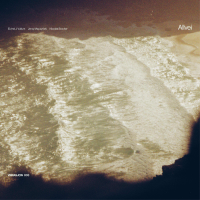
Vullum's experience in Oslo's experimental and electronic music communities, together with his work in sound design, informs the relationship between this dwelling's structure and its inhabitants. Composed passages establish coordinates from which improvisation can venture, their outlines yielding to the pressures of collective expression. Recorded in two sessions bracketing audiovisual performances in Norway and Poland with artist Katarzyna Dębska, the album extends its concern with form into an explicitly visual conversation. Its dimensions emerge through occupancy, every contribution altering the proportions available to the next. Mączyński's movement from free jazz into electronic music meets Stocker's sensitivity to melodic rhythm within this mutable architecture, where a sustained sound can bear the weight of an orchestral gesture. Authorship becomes a question of how much room an idea can make for another person. Even the most carefully drawn threshold must accommodate a footstep its designer could never have anticipated.
The first threshold opens onto the mountain terrain of "Almberg," where delicate cymbal sounds puncture a field of electronic cries and spectral circuitry. Repeated motifs move through the foreground with the persistence of dreams that have misplaced their sleepers. Their recurrence gives the expanse a peculiar intimacy. Out of these circling figures, the saxophone begins its slow ascent, a fledgling consciousness testing the resistance of a sky without a material border. Each phrase makes the effort of departure audible, breath negotiating the interval between shelter and exposure. Beneath it, the guitar sustains a web whose filaments rise and fall under the pull of an extraterrestrial tide. The music allows these movements to coexist without assigning them a single horizon. Height becomes an internal condition, measured by how far a sound can travel into the person receiving it.
With that vertical opening still perceptible, the subliminal groove coursing through "Driva" gives the journey a rotational axis. Stocker brings the pulse into focus without stripping away its secrecy, while saxophone and hushed electronics pass through the changing exposures of an immense time-lapse image. Daylight thins into the dark; stars gradually stipple the upper reaches of the music, pinpricks in the breathing membrane of a sleeping god. These minute displacements render the Earth's turning imaginable, its infinitesimal place in the universe registered as a sensation beneath the skin. Rhythm supplies a bodily foothold in this otherwise vertiginous perspective. An even-keeled urgency carries the piece forward, leaving sufficient openness for an oncoming meteor shower to inscribe its own score. Propulsion negotiates with scale: the hand can keep time even while the mind loses track of the dimensions in which that time occurs.
From this cosmic perspective, the brushed-metal surfaces of "Mariensztat" bring the ear into a more cinematic enclosure. A cyberpunk western seems to flicker across its implied screen, with the threat of a standoff held inside the grain of the sound. Yet every apparent confrontation dissolves before it can claim the scene. The tension opens a passage through which a reed-infused song travels from some great beyond, uncertain whether to draw us outward or acquire a body here. That uncertainty gives the melody its tenderness. It approaches without possessing an address, bearing the strange vulnerability of a message whose sender has ceased to exist. As melodic shapes gather within the electronics, looping echoes fold into meshes of digital beauty, and the pressure accumulated along the way becomes the mechanism of release. A wandering spiral replaces the straight line of confrontation. The piece's gorgeousness resides in this capacity to turn suspense into receptivity, making room for an encounter the scene's original geometry could not contain.
Such receptivity takes on a harsher significance in the near-crawl of "Züri," where the viewing glass turns slowly until an image consents to emerge. Time has scratched the lens and fractured its edges, so that every glimpse arrives bearing the injuries of its transmission. Our listening implicates us in what we observe. Through those abrasions, the ear peers over cliffs into abysses where the skeletons of newly extinct animals occupy a terrifying proximity to the present. Their disappearance has barely entered history; already, the music seems to be examining the cavities they have left in existence. Looking upward offers no easy consolation. Songs hang in the cold air, detached from the lives that once gave them necessity, and the damaged glass refuses to distinguish between an obstruction in our vision and a wound in the world. The pace permits this difficulty to deepen. Attention acquires the uncomfortable patience of an excavation conducted while the ground is still settling.
Against that exposed ground, the movement gathering in "Kristiania" feels charged with the possibility of recovering those suspended songs. Mounting density spins a web around the innermost recesses of thought, catching what has remained private and drawing it toward a point of release. The strands tighten until inwardness itself becomes tensile, capable of launching its contents into the night. What travels outward retains the force of having been held, yet begins to acquire a life beyond the consciousness that first enclosed it. Here, the album's concern with shared space reaches its most intimate consequence. An idea can be inhabited so fully that its owner loses the ability to determine where it belongs. The music gives this relinquishment momentum, carrying the journey into a city whose rooms are being rearranged by the very thoughts escaping through their windows.
Perhaps the deeper consequence of this cartography concerns inheritance. Those vanished animals in the abyss have left places in the world that no deed records, just as a melody can preserve the dimensions of a presence without preserving its possessor. Imagine an archaeology that excavates obligations, an empty chamber revealing what its builders owed to someone they would never meet. ALLVEI's unfinished dwelling makes that possibility audible. The space opened by one musician becomes available to a consciousness arriving from beyond the limits of the composition, and generosity acquires a reach no individual life can measure. Somewhere ahead of us, an unnamed listener has already begun to alter the proportions of the room. We have been calling that part of the house empty. It may be the part we owe them.
 FOLLOW Tyran Grillo
and get notified whenever a new article published.
Music writer, singer, translator, scholar.
Track Listing
Almberg; Driva; Mariensztat; Züri; Kristiania.
Personnel

Album information
Title: ALLVEI | Year Released: 2026 | Record Label: Vibrasjon
About Eivind Vullum
Tags
PREVIOUS / NEXT


Become a Sustaining Member

Since 1995, All About Jazz has championed jazz as an art form and supported the musicians who create it. Over three decades, it has grown into one of the world's leading jazz resources, serving hundreds of thousands of readers, musicians, presenters and industry professionals each month.
Help Build the Future of All About Jazz
Your support helps us continue building All About Jazz for the next generation—expanding our editorial coverage, preserving jazz history, developing new community features and creating better ways to discover the music and the people behind it.
Become a sustaining member for as little as $20 per year and you'll immediately enjoy an ad-free experience along with access to subscriber features and future articles for a full year.
Together, we're not simply sustaining All About Jazz—we're building its future. Thank you for being part of the journey.