Home » Jazz Musicians » Sonny Rollins
Sonny Rollins
It’s no state secret that Sonny Rollins has never been fond of the recording studio. Never mind that he’s recorded his full share of gems there—not only early, celebrated albums such as Saxophone Colossus and Way Out West, but also digital-era efforts such as Old Flames and This Is What I Do. The man often embraced as the greatest living improviser requires too much creative freedom to start playing, as he puts it, “when the red light comes on.” And his perfectionism makes it difficult, sometimes painfully so, to go through multiple takes in search of what he thinks is the least flawed one.
But in Rollins’s preferred element—on stage, in front of an adoring crowd, free to follow his every impulse and dazzle with his inventions—he is fully at home. And that’s not just because in those situations this iconic tenor saxophonist is unencumbered by time restraints and issues in the control booth. The best thing about performing for him, by far, is seeing how happy his playing makes all the excited people who turn out to see him. The next best thing is making some of those performances—ones “that present parts of me I want to have presented”—available on record to his fans. With the expert help of longtime associate Richard Corsello, his engineer at Fantasy during the 1980s, that’s what Rollins has been doing with his remarkable Road Shows series, an ongoing collection of concert highlights being released on his own Doxy Records label. Road Shows, vol. 1, which came out in 2008, was largely drawn from superfan Carl Smith’s tapes, spanning nearly 30 years. It climaxed with a 2007 performance of “Some Enchanted Evening” by a trio for the ages featuring Roy Haynes and Christian McBride. All of the music on the second volume, released in 2011, was recorded in 2010, including highlights from Rollins’s 80th birthday concert, featuring his first-ever encounter with Ornette Coleman. Road Shows, vol. 3—which is being distributed under the terms of a new agreement by Sony Music Masterworks through its revived jazz imprint, OKeh Records—was recorded between 2001 and 2012 in Saitama, Japan; Toulouse, Marseille, and Marciac, France; and St. Louis, Missouri. It features a familiar core band including pianist Stephen Scott, trombonist Clifton Anderson, and Rollins's bassist of a half-century, Bob Cranshaw, with Bobby Broom and Peter Bernstein alternating on guitar; Kobie Watkins, Perry Wilson, Steve Jordan, or Victor Lewis on drums; and Kimati Dinizulu or Sammy Figueroa on percussion.
Read moreTags
Radio & Podcasts
Sonny Rollins Tribute, part 2: After the Bridge

by Larry Slater
Sonny Rollins, one the music's great improvisers, died May 25th, 2026 at age 95. By the late 1950s, Rollins had become the most revered tenor saxophonist in jazz. He was respected by his peers, the critics and the jazz public, so he shocked the jazz world when he withdrew from performing for 2 years, using New York City's Williamsburg Bridge as his practice location. Upon his return to performing in 1961, he asked the guitarist Jim ...
Continue ReadingSonnymoon for Two Bastards (Part 2)
by Patrick Burnette
In this installment, the boys look at some albums by the great Sonny Rollins after the second and best-known of his several sabbaticals, when he spent hours honing his craft on the Williamsburg Bridge. (We talk about the iconic album named after that period on Episode 34.) Mike asks us to tackle these in reverse chronological order--tune in to see why. (How do you “tune" a podcast? You tell me.) .Playlist Discussion of Sonny Rollins' album The Solo ...
Continue ReadingRadio & Podcasts
Sonny Rollins tribute, part 1: Sonny in the '50s
by Larry Slater
Sonny Rollins, the saxophone colossus, left us on May 25th 2026 at age 95. Rollins, one of the music's great improvisers, left a rich legacy of recordings. His early recordings date from 1949, when he was 19. Even at that age, he was recognized as a rare talent. In this hour, you'll hear Rollins' recordings from the 1950s, with several iconic performances. “Saxophone Colossus," from 1956, was a tour de force that established him ...
Continue ReadingSonnymoon for Two Bastards (Part 1)
by Patrick Burnette
The great Sonny Rollins left this dimension on May 25, 2026, and the boys find it only fitting to devote two episodes to the jazz colossus. This first installment looks at four albums from the magical 1950s, when every album Sonny released was an event and even John Coltrane was just an up and coming challenger.Playlist Discussion of Sonny Rollins' album Tenor Madness! (Prestige Records) 7:55 Discussion of Sonny Rollins' album Volume 2 (Blue Note) 30:27 Discussion of ...
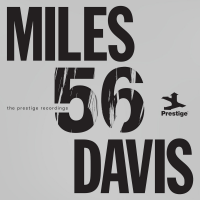
Continue ReadingMiles Davis: Miles '56: The Prestige Recordings
by Mark Corroto
The ancient Greek philosopher Heraclitus never met Miles Davis, but his famous observation, “No man ever steps in the same river twice, for it's not the same river and he's not the same man," seems tailor-made for the trumpeter. Few artists transformed themselves as completely or as often as Davis. Listeners encountering his music today can struggle to reconcile the cool, lyrical trumpeter of the bebop era with the architect of jazz-rock fusion, the creator of On the Corner (Columbia, ...
Continue ReadingEmmett Cohen, Gunhild Carling, Gregory Golub, Henry Robinett & Sonny Rollins
by Joe Dimino
With heavy hearts and deep gratitude, we open the 963rd Episode of Neon Jazz by celebrating the extraordinary life and legacy of the legendary Sonny Rollins. The jazz giant passed away on May 25, 2026, at the age of 95, leaving behind a towering body of work and a spirit that forever changed the course of music. To honor his memory, we revisit a special 2014 Neon Jazz interview and spin the fitting classic “You Stepped Out of a Dream" ...
Continue ReadingMiles Davis: Miles '56: The Prestige Recordings
by Mike Jurkovic
Let us imagine for the moment that it is a day or two after the Big Spirit Beyond Wonder has separated the wheat from the chafe. The terrible, unwanted wars have ceased. Global climate change is no longer a threat. Autocracy is in the dustbin of history where it rightfully belongs. Illness has passed. The world, as it was in the beginning, is free of the subterfuge and manipulations of humankind. Now the Big Spirit turns their attention ...
Continue ReadingBackgrounder: Sonny Rollins - Alfie (1966)
Source:
JazzWax by Marc Myers
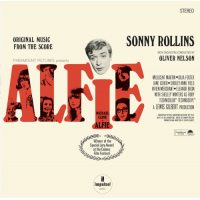
No album better reflects Sonny Rollins's personality than his Alfie: Original Music From the Score, arranged by Oliver Nelson. Recorded in New York in January 1966, the original music has his energy, passion, tenderness and his melancholy in one fell swoop. It's all very mid-1960s. To learn more about the recording, consult my two-part post on The Making of Alfie, from 2010. The first part was devoted to the popular song by Hal David and Burt Bacharach and the second ...
read more
Dazzling Live Sides By Sonny Rollins Receive First Authorized Release On Resonance's Record Store Day Offering 'Freedom Weaver: The 1959 European Tour Recordings'

Source:
Terri Hinte Publicity
Resonance Records, the award-winning home of archival jazz treasures, will proudly present a new, fully authorized live collection by tenor master Sonny Rollins, Freedom Weaver: The 1959 European Tour Recordings, as a limited edition four-LP set on Record Store Day, April 20. Never before issued as a legitimate release, these much-bootlegged sides—which feature Rollins, at the height of his early powers, with bassist Henry Grimes and drummers Pete La Roca, Kenny Clarke, and Joe Harris—will subsequently reach stores as a ...
read more
Backgrounder: Sonny Rollins Plus 4

Source:
JazzWax by Marc Myers
The sound of the Clifford Brown-Max Roach Quintet on their studio recordings for EmArcy starting in 1954 was unmistakable. Trumpeter Brown's pointed and lyrical blowing combined with Roach's restless drums and the deliberate sound of Harold Land's tenor saxophone poured the foundation for a new daring and elegant form of hard bop. By 1956, tenor saxophonist Sonny Rollins had replaced Land. He did so after turning down Miles Davis's offer to join his quintet (John Coltrane would take the job). ...
read more
Jazz Musician of the Day: Sonny Rollins
Source:
Michael Ricci
All About Jazz is celebrating Sonny Rollins' birthday today!
It’s no state secret that Sonny Rollins has never been fond of the recording studio. Never mind that he’s recorded his full share of gems there—not only early, celebrated albums such as Saxophone Colossus and Way Out West, but also digital-era efforts such as Old Flames and This Is What I Do. The man often embraced as the greatest living improviser requires too much creative freedom to start playing, as he ...
read more
Backgrounder: Sonny Rollins Plays for Bird, 1957

Source:
JazzWax by Marc Myers
Sonny Rollins idolized Charlie Parker, as did all saxophonists in the late 1940s. But for Sonny, Parker was more of a mentor, someone to impress and seek his approval. Sonny achieved that in 1953, when he recorded with Parker and Miles Davis for Prestige. At the time, Parker was under contract to Norman Granz's Norgran label, so he recorded on tenor saxophone instead of alto and was listed as Charlie Chan on the session and recording. Parker would die two ...
read more
Jazz Musician of the Day: Sonny Rollins
Source:
Michael Ricci
All About Jazz is celebrating Sonny Rollins' birthday today!
It’s no state secret that Sonny Rollins has never been fond of the recording studio. Never mind that he’s recorded his full share of gems there—not only early, celebrated albums such as Saxophone Colossus and Way Out West, but also digital-era efforts such as Old Flames and This Is What I Do. The man often embraced as the greatest living improviser requires too much creative freedom to start playing, as he ...
read more
Jazz Musician of the Day: Sonny Rollins
Source:
Michael Ricci
All About Jazz is celebrating Sonny Rollins' birthday today!
It’s no state secret that Sonny Rollins has never been fond of the recording studio. Never mind that he’s recorded his full share of gems there—not only early, celebrated albums such as Saxophone Colossus and Way Out West, but also digital-era efforts such as Old Flames and This Is What I Do. The man often embraced as the greatest living improviser requires too much creative freedom to start playing, as he ...
read more
Sonny Rollins: In Holland, 1967

Source:
JazzWax by Marc Myers
In 1967, Sonny Rollins was restless. Everything in the U.S. was changing fast. As an artist, Sonny was changing, too. Just as he had was reaching the apex of his playing prowess, jazz seemed to be sliding as a valued art form at home. To find truth, Sonny toured extensively in Europe, particularly Scandinavia and the Netherlands. There, he found emotionally open fans who understood his history and fully accepted his art and heritage. Back in the U.S., what seemed ...
read more
Jazz Musician of the Day: Sonny Rollins
Source:
Michael Ricci
All About Jazz is celebrating Sonny Rollins' birthday today!
It’s no state secret that Sonny Rollins has never been fond of the recording studio. Never mind that he’s recorded his full share of gems there—not only early, celebrated albums such as Saxophone Colossus and Way Out West, but also digital-era efforts such as Old Flames and This Is What I Do. The man often embraced as the greatest living improviser requires too much creative freedom to start playing, as he ...
read more
Sonny Rollins at 90
Source:
JazzWax by Marc Myers
Today is Sonny Rollins's 90th birthday. I never talk to Sonny on his birthday. I know how he feels about this day. It brings too much attention to him, and Sonny is happiest off the grid. But that doesn't mean I cant write about him. My bond with Sonny goes back to to an afternoon we spent in the summer of 2010 just before his 80th birthday. I had just started writing for The Wall Street Journal and came up ...
read more

Ben Bishop
guitar, electric
Dennis Mitcheltree
saxophone, tenor
Jenny Hill
saxophone
Mike Downes
bass
Myanna Pontoppidan
saxophone
Dale Bruning
guitar
Michael Adkins
saxophone
Richard Oppenheim
saxophone, alto
Russ Nolan
saxophone, tenor
Ada Rovatti
saxophone, tenor
Albert Rivera
saxophone
Don Braden
saxophone
Aaron Bennett
saxophone
Jorge Sylvester
saxophone, alto
Chuck Israels
bass, acoustic
Jackie McLean
saxophone, alto
Greg Osby
saxophone, alto

Francis Wong
saxophone, tenor
Jason Rigby
saxophone
Ike Levin
saxophone, tenor
Dale Fielder
saxophone, baritone
Ted Hogarth
saxophone, baritone
Simon Cato Spang-Hanssen
saxophone
Ben Britton
saxophone
Fred Haas
saxophone
Tellef Ogrim
guitar
Dave Anderson
saxophone
Cold Spring Jazz Quartet
band / ensemble / orchestra
Phil Scarff
saxophone, tenor
Pernille Bevort
saxophone, tenor
Fredrik Lundin
woodwinds
Shabaka Hutchings
woodwinds
Scott Reeves
tromboneChris Tedesco
trumpet
Martin Uherek
saxophone, tenor
Gregory Dudzienski
saxophone, tenor
Scott D Marshall
saxophone
Jason Arce
saxophone
Dann Zinn
woodwinds
Michael Blicher
saxophone
Chris Gale
saxophone, tenor
Chris Kelsey
saxophone, soprano
Darin Layne
guitar
Dan Wilensky
saxophone
JC Sanford
trombone
Sue Orfield
saxophone, tenor
Tim Wolfe, Jr.
bass
Louie Belogenis
saxophone
Iman Spaargaren
saxophone, tenor
Pat Marafiote
keyboards
Laurent Doumont
saxophone
Charlie Jennison
saxophone, alto
Johnny Padilla
saxophone
Tito Mangialajo Rantzer
bass, acoustic
Ben Bryden
saxophone
Gina Saputo
vocals
Mike Field
trumpet
Dan Miller
trumpet
Saul Zebulon Rubin
guitar
Carl Clements
saxophone
Jonathan Saraga
trumpet
Aaron Summerfield
guitar
Zhenya Strigalev
saxophone, alto
Chris Engel
saxophone, alto
Yiannis Kassetas
saxophone, tenor
Vince Scuderi
saxophone, tenor
Aldo Salvent
saxophone, tenor
Roy Futaba
saxophone, tenor
Nat Steele
vibraphone
Chris Pitts
saxophone, tenor
Julian Nicholas
saxophone, tenor
Julian Hartwell
keyboards
Kevin Fort
piano
Neil Brathwaite
saxophone, tenor
Katy Jungmann
saxophone
Caleb Dillon-Murray
saxophone
Chris Rand
saxophone
Borys Janczarski
saxophone
Jon Bentley
saxophone, tenor
Stefan Karl Schmid
saxophone
Allison Au
saxophone, alto
Ryan Baker
vocals
Jason Kush
saxophone
Filippo Bianchini
saxophone, tenor
Mike Gebhart
drums
Robert Dunn
guitar, acoustic
David G Bailis
guitar
Ben Higham
tuba
Ulli Juenemann
saxophone, alto
Kenny Kirkwood
vocals
Art Edmaiston
saxophone, tenor
Dom Franks
saxophoneBill Stieger
drums
Philippe Vieux
saxophone, alto
Anthony E Nelson, Jr.
saxophone
Johannes Gammelgaard Lauritsen
saxophone, tenor
Ed Harlow
saxophone
Michael Hudson-Casanova
saxophone
Harrison Argatoff
saxophone, tenor
BrandonLee Cierley
saxophone
Amir Segall
piano
Renato Podestà
guitar
Lucas Martinez
saxophone
Boaz Marva
guitar
Tal Klein
piano
Richard Pavlidis
saxophone, tenor
TuneTown
band / ensemble / orchestra
Eyal Netzer
saxophone
Bill Hauser
saxophone, tenor
Muhammad Dawjee
saxophone
Mark R DeJong
saxophone
Itay Goldberg
saxophone, tenor
Mike Schwebke
multi-instrumentalist
Claudio Rubio
saxophone, tenor
Gabriel Bismut
violin
Anderson Quevedo Farias
saxophone
Sean Mason - piano
piano
Jackson Cotugno
saxophone, tenor
Gavin Halloran
saxophone
Hard Bop Messengers
band / ensemble / orchestra
Jacob Chung
sousaphone
Funk Elastic
band / ensemble / orchestra
David Cain
multi-instrumentalist
Eric Mullins
saxophone, tenor
Marco Bianchi "Vibes"
vibraphone
Chris Torkewitz
saxophone, tenor
Cecilie Grundt
saxophone
Brian Sacco
saxophone
Rohan Buch
saxophone
Angelo Bernardi
bass
Jeremy Terry
saxophone
Julie O'Hara
vocals
Joshua Moshe
saxophoneEli Hershiser
saxophone
Dave Salvator
saxophone
Tyler Levy
saxophone, tenorSea Greene Miller
saxophone
Gus Leighton
saxophone
Nico Moreno
guitar, electric
Dom Pusey
saxophone, tenor
Anthony Bruno
saxophone
Leon Cotter
saxophone, tenor
Cody McCafferty
saxophone, tenor
Tomas Martinez
saxophone, alto
Malcolm Mosteller Hunter
saxophone, tenor
Zishi Liu
saxophone
Thomas Hutchings
saxophone
Kobie Dozier
saxophone, tenor
Carlos Ferreyra
saxophone, tenor
Reuben Paterson
saxophone, alto
Nikola Spasojevic
saxophone
Andrea Zacchia
guitar
Justin Fitzgerald
piano
Bauke Meersman
saxophone, tenor
Jeremy Gold
saxophone
Martí Mitjavila
clarinet
John Sweenie
saxophone, tenor
Spherical
various
Alessandro Florio
guitar
Clemens Köhler
saxophone
Adithya Vaidhyan
saxophone, tenor
Billie Eidson
vocalsPhotos
Music


Videos
Similar

Miles Davis
trumpet
Thelonious Monk
piano
Duke Ellington
piano
John Coltrane
saxophone
Charlie Parker
saxophone, alto
Wayne Shorter
saxophone
Cannonball Adderley
saxophone
Sonny Stitt
saxophone
Dexter Gordon
saxophone, tenor
Joe Henderson
saxophone
Coleman Hawkins
saxophone, tenor
Hank Mobley
saxophone, tenor
Jackie McLean
saxophone, alto
Sonny Rollins
Instrument: Saxophone
Born: September 7, 1930
Died: May 25, 2026
Publicist: Terri Hinte Publicity