Home » Jazz Articles » Album Review » Miles Davis: Miles '56: The Prestige Recordings
Miles Davis: Miles '56: The Prestige Recordings
Perhaps this difficulty stems from the nature of modern listening. In the digital age, music is often divorced from chronology, shuffled into playlists and algorithms that flatten an artist's development into a collection of disconnected moments. The context that once helped listeners follow a musician's evolution can easily be lost.
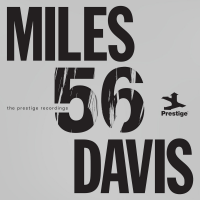
Craft Recordings' ongoing centennial celebration of Davis' Prestige years helps restore that context. Following Miles '54 (2024) and Miles '55 (2025), the release of Miles '56: The Prestige Recordings, available as a 180-gram four-LP box set or three-CD collection, allows listeners to experience Davis' growth as audiences would have nearly seventy years ago, tracing a clear and linear path through a pivotal period in his career.
The historical backdrop is significant. Just one year earlier, Charlie Parker, Davis' mentor, inspiration, and the reason he left his Midwestern home for New York, had died at the age of 34. Meanwhile, Davis' star was rapidly ascending. His celebrated performance of Thelonious Monk's "'Round Midnight" at the 1955 Newport Jazz Festival reportedly caught the attention of Columbia Records executive George Avakian, leading to a major-label contract. The implications were enormous. Columbia could provide larger recording budgets, rehearsal time, superior distribution, and, perhaps most importantly, the marketing power to elevate Davis from respected musician to cultural figure.
There was one complication: Davis was still under contract to Prestige Records. In a savvy arrangement, Prestige founder Bob Weinstock allowed him to record simultaneously for both labels. Prestige would then strategically release its Davis recordings alongside the more heavily promoted Columbia albums, benefiting from the increased attention while helping cement Davis' growing reputation.
Returning to Heraclitus' river, Miles '56 captures Davis at a critical bend in the current. Twenty-six of the collection's 29 tracks feature what is now recognized as his first great quintet. Long before the celebrated second quintet with Wayne Shorter, Herbie Hancock, Ron Carter and Tony Williams, Davis assembled a group of relatively-unknown musicians: tenor saxophonist John Coltrane, pianist Red Garland, drummer Philly Joe Jones, and teenage bassist Paul Chambers. Together they forged one of the defining small-group sounds in jazz history.
Playing largely standards and show tunes, the quintet developed extraordinary cohesion through constant touring and nightclub performances. Their popularity helped propel Davis to the top of the 1955 Downbeat Readers Poll among trumpeters, confirming his arrival as a major force in jazz.
The collection opens with three tracks recorded on March 16, 1956, featuring a different lineup: Sonny Rollins on tenor saxophone, Tommy Flanagan on piano, Art Taylor on drums, and Chambers on bass. While included primarily for historical completeness, the session yields a gem in Dave Brubeck's "In Your Own Sweet Way," a performance of remarkable warmth and elegance.
The remaining 26 tracks were recorded during two marathon sessions on May 11 and October 26, 1956 and would eventually be released as Cookin' (1957), Relaxin' (1958), Workin' (1960) and Steamin' (1962). Remarkably, every performance except one was captured in a single take. This efficiency was possible because the musicians were essentially documenting the material they played nightly in clubs, music embedded so deeply in their collective memory that it required no rehearsal.
The Davis-Coltrane partnership was still in its formative stages, and listeners can hear both artists finding their footing while already displaying unmistakable brilliance. Whether navigating the rapid-fire changes of "Oleo" and "Woody 'N You" or exploring the emotional depths of "My Funny Valentine," Davis projects complete authority. His trumpet possesses a vocal quality comparable to Frank Sinatra's phrasing and emotional precision. Just as he would later channel the spirit of Jimi Hendrix and Sly Stone in the 1970s. Davis in 1956, embodied a different ideal: elegance, confidence and absolute command.
More than a historical document, Miles '56 captures a musician in the midst of transformation. The recordings reveal a Davis who is simultaneously consolidating his past and preparing for the breakthroughs that would follow. Heard in sequence, they remind us that artistic evolution is rarely abrupt. It unfolds gradually, one performance at a time, like a river in constant motion. Seventy years later, these sessions remain compelling not simply because they document jazz history, but because they allow us to hear Miles Davis becoming Miles Davis.
 FOLLOW Mark Corroto
and get notified whenever a new article published.
FOLLOW Mark Corroto
and get notified whenever a new article published.
Mark misses his dogs Louie & Freddy, but endeavors daily to find and listen to new and interesting sounds.
Track Listing
CD 1: In Your Own Sweet Way (March 16, 1956 version); No Line; Vierd Blues; In Your Own Sweet Way (May 11, 1956 version); Diane; Trane’s Blues; Something I Dreamed Last Night; It Could Happen to You; Woody’n You; Ahmad’s Blues. CD2: Surrey with the Fringe on Top; It Never Entered My Mind; When I Fall in Love; Salt Peanuts; Four; The Theme (Take 1); The Theme (Take 2); If I Were a Bell; Well, You Needn’t. CD3: ’Round Midnight; Half Nelson; You’re My Everything; I Could Write a Book; Oleo; Airegin; Tune Up; When Lights Are Low; Blues by Five; My Funny Valentine.
Personnel

Miles Davis
trumpet
John Coltrane
saxophone
Red Garland
piano
Paul Chambers
bass, acoustic
Philly Joe Jones
drums
Sonny Rollins
saxophone
Tommy Flanagan
piano
Art Taylor
drumsAlbum information
Title: Miles '56: The Prestige Recordings | Year Released: 2026 | Record Label: Craft Recordings
About Miles Davis
Tags
PREVIOUS / NEXT


Become a Sustaining Member

Since 1995, All About Jazz has championed jazz as an art form and supported the musicians who create it. Over three decades, it has grown into one of the world's leading jazz resources, serving hundreds of thousands of readers, musicians, presenters and industry professionals each month.
Help Build the Future of All About Jazz
Your support helps us continue building All About Jazz for the next generation—expanding our editorial coverage, preserving jazz history, developing new community features and creating better ways to discover the music and the people behind it.
Become a sustaining member for as little as $20 per year and you'll immediately enjoy an ad-free experience along with access to subscriber features and future articles for a full year.
Together, we're not simply sustaining All About Jazz—we're building its future. Thank you for being part of the journey.