Home » Jazz Articles » Club Profile » Dug and Jazz Spot Intro in Tokyo
Dug and Jazz Spot Intro in Tokyo
Courtesy Sanford Josephson

There used to be jazz kissa (cafes) everywhere.
—Hozumi Nakadaira
But, I also hung out at the many coffee houses and bars in Tokyo and outlying areas that played recorded jazz music. The walls shelved hundreds of LPs, and whatever was currently playing was displayed on an easel above the bar. In the Shinjuku section of Tokyo some of these cafes were named after famous American jazz clubs such as the Village Gate and the Village Vanguard. There was also a local club called the Grotto in a town called Machida, one train stop from where I lived. My American friends (mostly teachers in the Department of Defense school system) and I would buy albums from the PX and give them to the bartender to add to their inventory.
By the time I returned to the United States and moved to New York City in 1968, I was a passionate jazz fan, thanks to my experience in Japan. Several years ago, though, pianist Tomoko Ohno informed me that very few of the recorded jazz cafes still existed.
As my wife, Linda, and I began planning for a trip to Asia in June 2019 and a first visit to Tokyo in 36 years, I wondered if I would find any of these jazz oases. And, then, somewhat inexplicably, about a week before we left, I came across an article online from the Japan Times about a bar/coffee house called the Dug, which was still thriving in the Shinjuku section of Tokyo. "There used to be jazz kissa (cafes) everywhere," the owner Hozumi Nakadaira, also a photographer, told the Japan Times. "I started taking photographs of musicians," he said, "because I wanted to display them in my cafe. Art Blakey's tour in 1961 was the start. I hid the camera because photographs were not allowed, and I took an action shot."
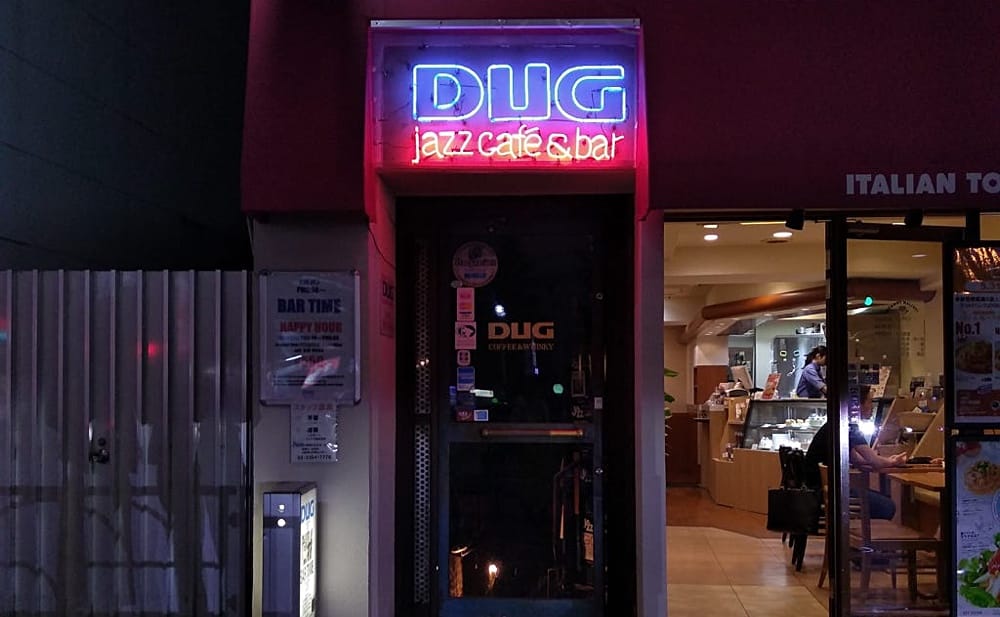
Unfortunately, on the afternoon that Linda and I visited the Dug, Nakadaira was not there. But we enjoyed coffee while listening to the Bill Evans album, Sunday Night at the Village Vanguard (Riverside: 1961), followed by Charles Lloyd's 2017 Blue Note album, Passin' Thru. As you enter the Dug, you're greeted by a display of vinyl album covers ranging from Jimmy Smith's House Party (Blue Note: 1957-58) to Ray Brown and Milt Jackson's Much in Common (Verve: 1964) to Shirley Horn's Travelin' Light (ABC-Paramount Records: 1965). At the Grotto in Machida, Horace Silver's Songs for My Father (Blue Note: 1965) and Sonny Clark's Cool Struttin' (Blue Note: 1958) were the undisputed favorites, but I remember the bartender-artist, Sato, telling me that he was introduced to jazz via Art Blakey.
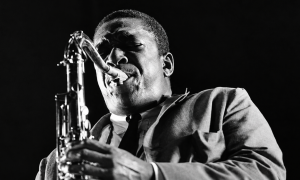
The walls of the Dug also contain Nakadaira's photographs. Among those on display are photos of Miles Davis, Sonny Rollins, Thelonious Monk, Bill Evans, and John Coltrane. In the '60s and '70s, Nakadaira told Japan Times, "There were many famous visiting musicians performing on any given night, and I had to decide which one to go to."
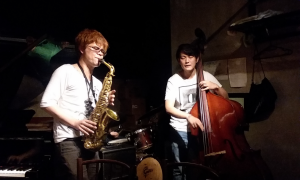
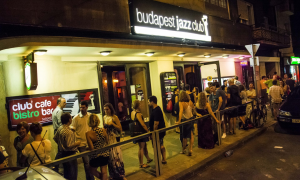
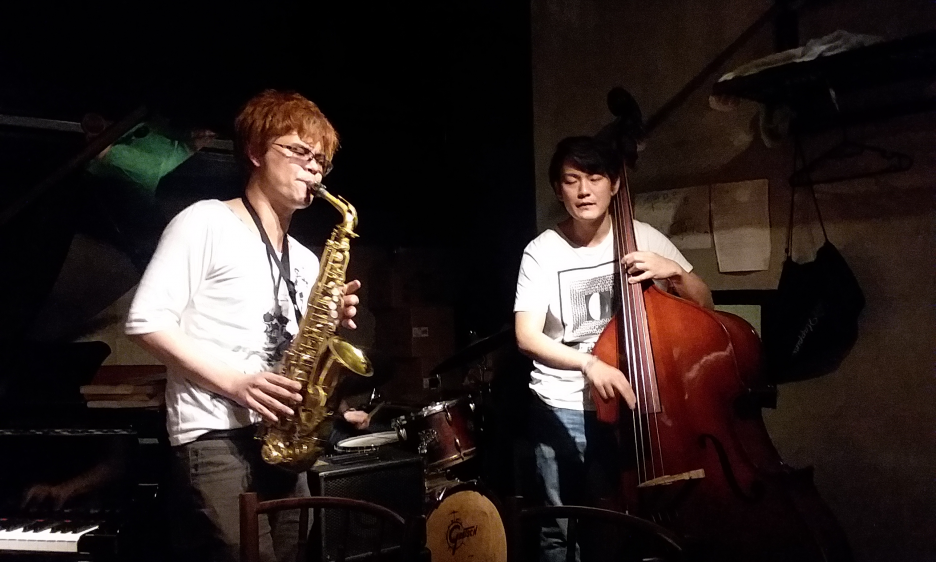
Linda and I also wanted to hear some live jazz during our short stay in Tokyo but wanted to avoid the big nightclubs and/or tourist spots. Some exploration online uncovered a club called Jazz Spot Intro, located in the Takadanobaba section of Tokyo, known as a hangout for college students, primarily from Waseda University. The Jazz Spot Intro website mentioned that there was no music charge during the week because the club featured up-and-coming musicians in a jam session atmosphere. The club was in a tiny basement. The few tables upfront constituted the "no smoking" section, but, because smoking was allowed at the bar, located just behind the tables, it was truly a smoke-filled room. The musicians were mostly young, although a veteran drummer sat in on one tune. The young woman who acted as hostess also played bass. We probably would have stayed longer if not for the smoke, but we enjoyed the music from several different mixtures of musicians, playing mostly standards in a hard bop mode; and I was able to introduce myself to the manager, Kuni Mogushi.
According to an article in TokyoWeekender.com, well-known American jazz musicians occasionally drop by the club to join the amateurs. The article mentioned Larry Coryell and Herbie Hancock as two who have visited and performed. Since 1988, the TokyoWeekender.com reported, "Intro has been the place for rare musical moments, witnessed by small audiences that huddled into its limited space... Intro isn't just for jazz aficionados—the uninitiated do get converted." Japan is where my passion for jazz began. It was great to rekindle some of those memories, albeit very briefly.
About Art Blakey

Tags
PREVIOUS / NEXT

Become a Sustaining Member

Since 1995, All About Jazz has championed jazz as an art form and supported the musicians who create it. Over three decades, it has grown into one of the world's leading jazz resources, serving hundreds of thousands of readers, musicians, presenters and industry professionals each month.
Help Build the Future of All About Jazz
Your support helps us continue building All About Jazz for the next generation—expanding our editorial coverage, preserving jazz history, developing new community features and creating better ways to discover the music and the people behind it.
Become a sustaining member for as little as $20 per year and you'll immediately enjoy an ad-free experience along with access to subscriber features and future articles for a full year.
Together, we're not simply sustaining All About Jazz—we're building its future. Thank you for being part of the journey.