Home » Jazz Articles » Live Review » Baku Jazz Festival 2025: Part 1
Baku Jazz Festival 2025: Part 1
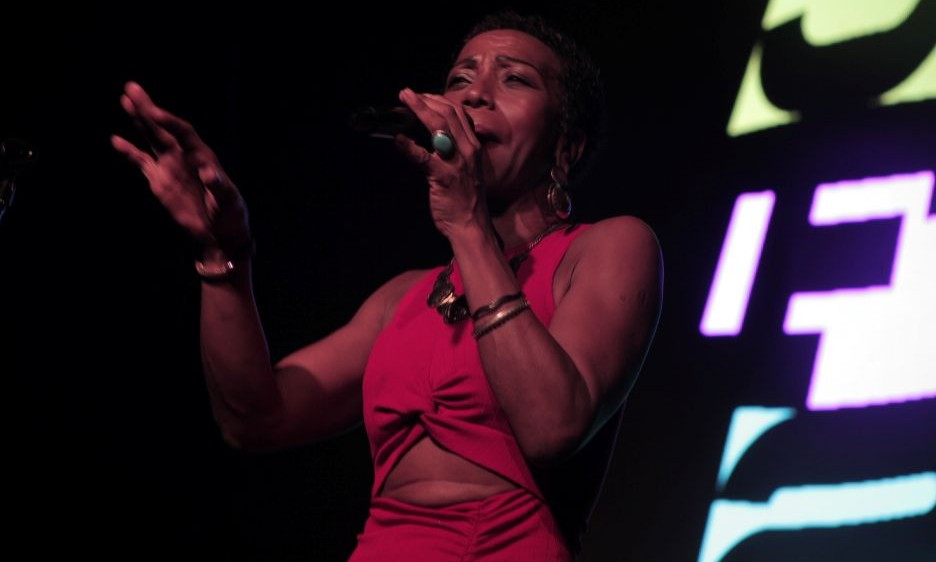
Courtesy Rustam Huseynov
Jazz truly knows no boundaries, and it broadens our perception of life.
—Rain Sultanov, Artistic Director, Baku Jazz Festival
Baku Jazz Festival 2025
Various venues
20th Edition
Baku, Azerbaijan
October 24-31, 2025
For any jazz festival to clock up 20 years is a notable achievement. But in Azerbaijan, where jazz is often met with indifference, this landmark is of particular merit. The birth, growth and survival of Baku Jazz Festival is down to the vision, faith and tireless efforts of its founder and Artistic Director, Rain Sultanov.
Back in 2005, Sultanov launched the adventure that is BJF with the Joe Zawinul Syndicate headlining. Two decades later Sultanov still pinches himself at the thought that the former Miles Davis keyboard player graced the inaugural festival.
Other Davis alumni would follow. First, Herbie Hancock in 2006, then in the ensuing years Billy Cobham, Mike Stern and Kenny Garrett.
The roll call of marquee names in the festival's early editions also saw Al Jarreau, Hiram Bullock, Dianne Reeves, Richard Bona, Charles Lloyd, Maria João and Branford Marsalis light up the Baku stage. In more recent years the likes of Gonzalo Rubalcaba, Theo Croker, Gregoire Maret and Venezuelan harp phenomenon Edmar Castaneda have brought a contemporary edge to the BKF's programme.
But as a curator, Sultanov is not spellbound by celebrity or reputation. In fact, the famous names represent only a fraction of the artists that have played the BJF over the years.
"I don't need famous, big names," Sultanov told AAJ in a 2018 interview. "I need good music, good musicians, and I try to show a lot of styles of jazz music, not only traditional, old-school jazz, but more contemporary jazz as well." His broad-church approach to programming was certainly true of BJF 2025.
Sultanov has been a constant champion of Azeri jazz, giving space to acclaimed Azeri artists such as Aziza Mustafa Zadeh, Salman Gambarov, Shahin Novrasli—who was mentored by Ahmad Jamal—Isfar Sarabaski and Elchin Shirinov as well providing a platform for young, emerging talent.
For Sultanov, the BJF is about much more than just the promotion of music. It is a celebration of community and of common ground. "Jazz brings people together," says Sultanov. "It is a cultural bridge, an international language that unites people from very different backgrounds."
The first twenty years of BJF have not been easy. In fact, it has often been a struggle simply to find suitable venues and to attract sponsors. The exorbitant appearance fees asked by many of jazz's most revered names has resulted in less starry programmes than those heady days of two decades ago. Yet despite all the challenges, the BJF has evolved in enterprising and progressive ways. Jazz talent development programmes, exhibitions, films, workshops and talks have nurtured local talent and taken the festival into new urban spaces.
The eight venues of BJF 2025 highlighted this city of 2.5 million inhabitants in all its modern architectural glory and its rich historical past. The shadow of history is never from sight in a city where East and West have co-existed for centuries.
This story of past-meets-present and the fusion of cultures is also the story of jazz. BJF 2025 was proof of that.
For eight days musicians from 21 countries presented jazz in myriad colors. Like the parable of the elephant and the six blind men, anyone coming to jazz for the first time at BJF 2025 would perhaps have wondered what jazz is. Ensembles of acoustic, electric and acoustic-electric hybrids came and went. The Great American Songbook rubbed shoulders with Afro-Caribbean and Brazilian flavors. Bebop, swing and blues shared the same stages as jazz-fusion. Improvising musicians combined with chamber orchestra, and jazz blended with folk music from the Caucasus and the Balkans to the Mediterranean.
As Sultanov puts it: "Jazz truly knows no boundaries, and it broadens our perception of life."
Jazz Without Borders; Fateh & Sinem; K.Zia
Friday, October 24, Jolly Joker
The opening act of BJF 2025 was a reminder that jazz is an inclusive language—or at least that it can and should be. So often jazz talks about inclusivity, diversity and equality without really delivering. BJF 2025 delivered on its mission to make jazz an inclusive medium—a community without borders.In Jolly Joker, a purpose-built events venue a short drive from Baku's center, young men and women with disabilities from the Inclusive Development and Creativity Centre (DOST) showed off their musical talents. Backed by a professional rhythm section, a percussionist, an accordionist and five singers gave spirited renditions of "Stevie Wonder's "Isn't She Lovely" and "Don't You Worry 'Bout a Thing," the jazz standard "Autumn Leaves" and Frank Sinatra's "My Way." Dressed to impress and clearly reveling in the occasion, DOST's musicians' admirable performances and infectious enthusiasm earned them a deserved ovation. An inspiration to others—people with disabilities and jazz festival programmers alike.
The blues was front and center with Turkish duo Fateh & Sinem—the stage name for electric guitarist Fateh Çağlayan and singer Sinem İslamoğlu. Spare arrangements of Jimi Hendrix's "Little Wing," Willie Dixon's "I Just Wanna Make Love To You" and Muddy Water's version of "Got My Mojo Workin'" were followed by Etta James' torch song "At last," where Sinem's voice was heard to most potent effect. Fateh brought riffing intensity to Little Walter's "My Baby" but the set felt a little workaday and processional. Most satisfying was the Turkish ballad that closed the set on a tender note—the duo's softly woven vocals conveying emotions that had eluded them in the preceding songs.
Brussels-born, Berlin-based K.Zia (Kezia Quental) hoisted her neo-soul, r&b and Afro-pop colors to her mast from the beginning of a feel-good set that resonated with the small but appreciative audience. Backed by guitarist Laurent Louis, Eren Solak on keyboards, Clinton Agu on drums and Shanice Bennet on bass, Quental delivered polished songs from her debut album Genesis (Groove Attack, 2023).
The singalong soul-funk of "I Got Your Back"—featuring a tasty solo from Solak—and an upbeat French-sung tune raised the room's energy levels. A suitably feisty version of Nina Simone's "I Feel Good" proved a good vehicle for K.Zia to demonstrate her range and power. Simone would doubtless also have approved of the singer's earlier comments about the challenges of navigating Black Lives Matter: "I'm an artist, and it is my responsibility to talk about these subjects," she told the audience. Though not one to shy away from difficult issues (one song addressed a friend's battle with depression), K.Zia's remit was clearly to uplift and entertain. They were up and dancing by the end. Job done.
Azeri Jazz Speaks Vinyl
Saturday, October 25, Flame Towers
From almost any point in Baku the extraordinary Flame Towers (a reference to Azerbaijan's nickname "The Land of Fire") are visible. The three flame-shaped skyscrapers, perched at one of the city's highest points, soar to a height of over 180 meters. The towers gleam in the daylight but it is at night when they come into their own. Entirely covered in LED screens, the three towers display giant flames, the colors of Azerbaijan's flag, and a man waving the country's flag. It is a mesmerizing sight.It was in one of the towers that a meet-and-greet with Azeri jazz legend—and BJF artistic director—Rain Sultanov took place. Photos of jazz luminaries (including one of Ahmad Jamal and his protégé Shahin Novrasli) and old posters of the BJF adorned the walls. State-of-the-art Naim audio systems powered music by Sultanov, who chatted with fans and signed autographs.
It is worth remembering Sultanov's unique contribution to jazz in Azerbaijan. In a 30-plus-year career Sultanov has played with the likes of Bobo Stenson, Kenny Wheeler, Paco Séry, Enzo Favata, Simin Tander, James Cammack, Arild Andersen and Anja Lechner.
His discography as leader holds many gems: Voice of Karabakh (Ozella, 2015), which features legend of Azeri mugham, singer Alim Qasimov; Inspired by Nature (Ozella, 2017), which draws on Azerbaijan's culture and stunning landscapes for inspiration; and Cycle (Ozella, 2018), an intimate duo recital for soprano saxophone and church organ (played by Isfar Sarabaski) recorded in the Gothic Church of the Redeemer in Baku—all are worth seeking out.
And if people seek Sultanov's autograph it is not only for his music, but for the respect he commands as a cultural ambassador for his country. Nobody has done more to promote Azeri jazz than Sultanov. His commitment to promoting emerging Azeri jazz talent is unfailing. The I Am Jazzman young talent program has been part of the BJF from the beginning. Sultanov is also an enthusiastic advocate of the history of jazz in Azerbaijan, having penned The Jazz History of Azerbaijan (Efendi Publishing House, 2015)—a comprehensive, 320-page study.
Like The Flame Towers, Sultanov is a towering figure in Azerbaijan's cultural landscape. Long after Baku's famous towers are dust, however, Sultanov's music and legacy will continue to shine.
Heloisa Luma Lourenco; Alex Scheuerer Band feat. Najwa Ezzaher
Jolly Joker
Brazilian music has long held a fascination for jazz musicians. Starting with saxophonist Bud Shank and guitarist Charlie Byrd in the late 1950s, Brazil's myriad rhythms and its great songwriters have been grist to the mill for generations of jazz musicians around the world. France-based Brazilian singer Heloisa Luma Lourenco soon had the audience in The Jolly Joker up and dancing with her booty-shaking samba-jazz.Backed by drummer Miguel Couto, pianist Philippe De Aquino and electric bassist Gerson Saeki, Lourenco commanded the stage with her physicality and won over the crowd with her husky, booming tenor. Her band had the stage to themselves for the instrumental opener, shaking off any lingering jetlag with a succession of finger-loosening solos. Before the final notes had died, Lourenco swept in and launched, surprisingly, into a brushes-steered ballad, "Carinhoso" penned by Pixinguinha in 1917, with lyrics added two decades later by João de Barro.
Lourenco dusted off one Brazilian classic after number. In between Antonio Carlos Jobim's "Dindi"—featuring a lyrical solo from Saeki—and João Donato's and Gilberto Gil's eternal crowd-pleaser "Bananeira" instrumentals afforded her vocal cords a breather and enabled her musicians to stretch out a little more.
The sounds of the Middle East, horns-fired French neo-soul, jazz-funk and classical strings combined in the program of Franco-Swiss guitarist Alex Scheuerer. Bassist Paul Michel, drummer Mike Horn and keyboardist Chris Jerome navigated shifting rhythmic terrain while trumpeter Jackson Mathod and tenor saxophonist Gabriele Pribetti juggled supporting and lead roles.
French Moroccan vocalist Najwa Ezzaher brought some Parisienne romance to a program drawn from her and Scheuerer's album La Vie en Soul (Self-Produced, 2022). Scheuerer's uplifting arrangements of classic French chanson by Charles Aznavour and Serge Gainsbourg were spiced by some handsome solos, not least from the leader who played with limpid fluidity.
Several numbers featured two violins and a cello from the Azerbaijan State Academic Orchestra, the classical musicians bringing textural depth and warmth to the mix, particularly on "Beirut," whose vibrancy and cross-cultural blend of colors reflected the soul of that city.
The arrival of mugham singer Alim Qasimov provided not just a concert highlight but a high point of the entire festival. There are few greater singers of any genre in the world than Qasim, whose emotional intensity and soaring improvisational flights have brought comparison with Nusrat Fateh Ali Khan. UNESCO formally recognized his cultural importance in 1993, while Turkish broadsheet Zaman declared Qasim to be "Central Asia's Greatest Voice."
On a stunning version of "Seri Galin" Qasimov held the audience spellbound with his dazzling vocal flights and aching blues. But it was when the two voices of Qasimov and Ezzaher joined—searching, imploring—that the real magic presented itself. The transporting effect of this unforgettable one-off collaboration framed everything that followed—and everything that had gone before—as polished entertainment.
Qasimov's performance with musicians from a different musical world underlined the potential of music to transcend cultural boundaries and to unite. Scheuerer's musical vision and inclusive spirit served up one of BJF 2025's most memorable moments. As he put it: "We're from London but we're speaking the same language and for us this is beautiful. Music is sharing."
Panel Discussion: Jazz and AI
Sunday. October 26, Jolly Joker
AI is on everyone's lips. Increasingly too, it is on everyone's mind, and the jazz industry is no exception. This midday panel set out to discuss the challenges and opportunities posed by AI for the jazz industry. The five panelists were Anna Russkevych (Artistic Director of Ukraine's Jazz On the Dnipro festival), Jahangir Selimkhanov (musicologist and Adviser to the Azerbaijan Ministry of Culture), Hikmat Baba-Zada (jazz pianist), Rain Sultanov (jazz saxophonist, Artistic Director BJF and this author (All About Jazz). Moderating the panel was Shamsiyya Alakbarova.Each panelist gave a ten-minute presentation outlining their views on AI. Taken together these covered wide ground, from the early roots of AI to experiments with AI by the Cheltenham Jazz Festival in the programming of its fringe festival. Also touched upon were the issues of copyright and ethics and the potential for AI to impact the recorded music industry. Jahangir Selimkhanov mentioned a viral video where jazz pianist Peter Martin was asked to listen to five audio clips of jazz pianists—half real, and the other half AI-generated and decide which was authentic. The task of identifying human-made music from AI-generated music, it transpires, is getting harder by the day.
Revealing her own mischievous streak, Shamsiyya Alakbarova then put the panelists to a similar test. Four rounds of two pieces of jazz music—one real and one fake—were played. No panelists scored 100%. Time to seek other occupations?
In an open-mic Q&A session audience members asked the panel if they thought that AI could potentially replace jazz musicians. The panel was in broad agreement that there is no substitute for the communal experience of a live concert, and no substitute for the thrill of live improvisational communication. "Music," Sultanov said, "is an emotional experience."
Ipek Dinc & Nurlan Huseynzadeh Quartet; Grzech Piotrowski & Tamara Behler
The evening concerts in The Jolly Joker served up two contrasting feasts. One of Turkey's finest jazz vocalists, one of Azerbaijan's greatest jazz pianists and a set of timeless jazz standards added up to a swinging, exhilarating set from singer Ipek Dinc.Dinc has been a celebrated figure on Istanbul's jazz scenes since the mid-2000s and has performed with the likes of Snarky Puppy's Michael League, Soweto Kinch and Gilad Atzmon. A leader of small ensembles and former winner of the I am Jazzman talent competition, Nurlan Huseynzadeh is a rising star of Baku's jazz scene. Sharing the billing, singer and pianist were joined by impressive local musicians Ruslan Huseynov on bass and Hasan Bilalov on drums.
The unashamedly retro set list included "Lullaby of Birdland," "Poinciana," "The Surrey With the Fringe On Top" and Juan Tizol's & Duke Ellington's "Caravan." An exercise in nostalgia perhaps, but it was impossible to deny the quartet's chemistry and the quality of the musicianship. Dinc possesses stellar pipes; her boppish delivery on livelier fare evoked the late Sheila Jordan, her scatting on Horace Silver's "Song for my Father" recalled Anita O'Day. Huseynezadeh's tumbling solos on the bebop charts were thrilling, but his finnesse on ballads such as Michel Legrand's "What are you Doing the Rest of your Life?" was no less impressive. This is a pianist with bags of talent. Whatever the tempo, Huseynov and Bilalov were equal to the task, both enjoying the solo spotlight to boot. A fine performance concluded with an exhilarating version of "Spain/ Concierto de Aranjuez"—Chick Corea's classic homage to Juaquin Rodrigo and the Iberian peninsula.
Perhaps the most adventurous concert of BJF 2025 was that of Polish soprano saxophonist Grzech Piotrowski, vocalist/cellist Tamara Behler and the Azerbaijan Chamber Orchestra. Under the baton of conductor Valid Agayev, the 12-piece orchestra (violins, double bass and cello) provided lush bedding for Piotrowski's melodious, and sometimes keening delivery. Behler's crystalline interpretation of Polish folk songs ranged from bitter-sweet nostalgia to heady wedding reels.
There were shades of Jan Garbarek in Piotrowski's playing, but his arrangements bore the stamp of an original voice. On one tune, Behler's ethereal wordless vocals and Pitrowski's lyrical whistling combined with gossamer strings to quite wonderful effect. The ensemble was joined by soprano saxophonist Rain Sultanov, pianist Hikmat Baba-Zada and a seven-piece choir, with Sultanov carving out a solo of delicate architecture but emotional heft.
There was welcome room for spontaneity, with cello and violins leading a collective improvisation whose unfolding arc was guided by Petrowski. Spurred by percussive rhythms and riffing strings, Petrowski and Sultanov dovetailed gracefully as the music swelled and receded. A violin solo of aching folkloric charm provided a moving coda. No less affecting was "Peace," a solo spot for loops-steered soprano polyphonics that felt like a prayer of hope.
Behler's arresting rendition of "My Funny Valentine," buoyed by legato strings and spare piano accompaniment provided another memorable moment, with Petrowski unleashing a peach of a solo—searching and uplifting. Behler starred on a haunting Polish ballad—also providing one third of a triple cello threat—and on a riotous folk tune of handsome melody and dancing rhythms. Petrowski orchestrated a crowd sing-along on the closer, where overlapping melodies underpinned his lilting soprano saxophone to enchanting effect. A captivating ensemble effort from first song to last.
Mihaela Handuca; Dini Virsaladze
Monday, October 27, Jolly Joker
Before Moldovan singer, pianist and composer Mihaela Handuca took to the stage the quartet of Valeriu Culea on electric keyboard, tenor saxophonist Taras Bakovsky, bassist Ion Virlan and drummer Alex Zavalil warmed up the crowd with a lively post-bop loosener—all fast-walking bass and a chain of probing solos. Handuca's arrival signalled a sea-change in the music, which transitioned to funk-laced neo-soul. Next stop, driving jazz-fusion, with Handuca's wordless vocals—borrowing from Moldovan folk music—climbing over driving rhythms, Culea's knotty chordal progressions and Bakovsky's fiery soloing.Contemporary jazz-fusion, steered by Culea, dominated the set, with Handuca sitting out extended instrumentals of progressive design. A fine keyboardist, Culea is also a keen orchestrator, his compositions suggesting, variously, the influences of Joe Zawinul, Chick Corea, and Herbie Hancock. But on a set of all-original tunes it was the stylistic ebb and flow of the music—from fusion burners and slow-grooving jazz funk to swinging jazz of the old school—and the passion in the delivery that were the main takeaways.
The epic set closer "Between Light and Darkness" blended propulsive rhythms, sinewy unison lines—with integrated vocals—and expansive soloing. Earlier in the set Handuca had said something that touched upon music's potential to effect change: "If we believe in the power of music we believe in the power of ourselves." The quintet's performance was indeed a powerful musical statement.
A mainstay of the Georgian jazz scene since the early '90s, pianist/composer Dini Virsaladze's versatility sees her perform with her own small ensembles as well as with the Tbilisi Big Band. For this performance Virsalazde was joined by Ruslan Huseynov on double bass and Hasan Bilalov on drums—both musicians hailing from Azerbaijan.
Though Virsalazde has recorded several albums of her own compositions, this 90-minute set followed the jazz standard route. From the lively set-opener "Solar"—attributed to Miles Davis but believed to have been written by guitarist Chuck Wayne as early as 1946—Virsaldze gave a jazz piano masterclass. Her deft interpretation of ballads like Toots Thielemans's "Bluesette" and "In a Sentimental Mood" was exquisite, calling to mind Bill Evans no less. Thrilling, her technical prowess on mid-tempo fare such as "Night and Day" and Antonio Carlos Jobim's "Wave."
Huseynov and Bilalov offered impeccable support, with the bassist shining on a couple of solos. The one original tune, Virsaladze's fine ballad "Fairytale," suggested that greater balance between self-penned tunes and standards would not have diminished the set in any way. The trio signed off with a breezy reading of "One Note Samba" and a swinging 12-bar blues that engendered rippling runs the length of the ivories and a beautifully weighted solo from Huseynov. For the encore Virsaladze switched to electric keys and Huseynov to electric bass for Herbie Hancock's jazz-funk classic "Chameleon."
The itch left unscratched was the question as to why a pianist of Virsaladze's class, on such a grand stage, had to play on a Nord keyboard instead of a concert piano. It seemed like a misstep by the festival. It was also an opportunity lost by any of the local instrument companies—or a private music-loving sponsor—to support the BJF in its 20th year, particularly given the presence of national television cameras, international broadcasters Euronews, French radio TSF Jazz and All About Jazz.
Coming up in BKF 2025 Part 2, All About Jazz covers days 5-8 of the festival where incredible young Azeri jazz musicians turn heads. Plus, reviews of Andreas Wandersson's Viaticum project, vocalist David Linx, veteran reeds player Enzo Favata's return to Atlantico, flamenco-jazz from rising star Antonio Lizana and memorable concerts from guitarist Quentin Dujardin, pianist Sorin Zlat, drummer Antoine Pierre and the closing concert in one of the world's most incredible buildings.
 FOLLOW Ian Patterson
and get notified whenever a new article published.
FOLLOW Ian Patterson
and get notified whenever a new article published.
Ian is dedicated to the promotion of jazz and all creative music all over the world, and to catching just a little piece of it for himself.
About Rain Sultanov

Tags
PREVIOUS / NEXT

Become a Sustaining Member

Since 1995, All About Jazz has championed jazz as an art form and supported the musicians who create it. Over three decades, it has grown into one of the world's leading jazz resources, serving hundreds of thousands of readers, musicians, presenters and industry professionals each month.
Help Build the Future of All About Jazz
Your support helps us continue building All About Jazz for the next generation—expanding our editorial coverage, preserving jazz history, developing new community features and creating better ways to discover the music and the people behind it.
Become a sustaining member for as little as $20 per year and you'll immediately enjoy an ad-free experience along with access to subscriber features and future articles for a full year.
Together, we're not simply sustaining All About Jazz—we're building its future. Thank you for being part of the journey.