Home » Jazz Articles » Interview » Dave McMurray Hears Himself In All Of Detroit's Music
Dave McMurray Hears Himself In All Of Detroit's Music
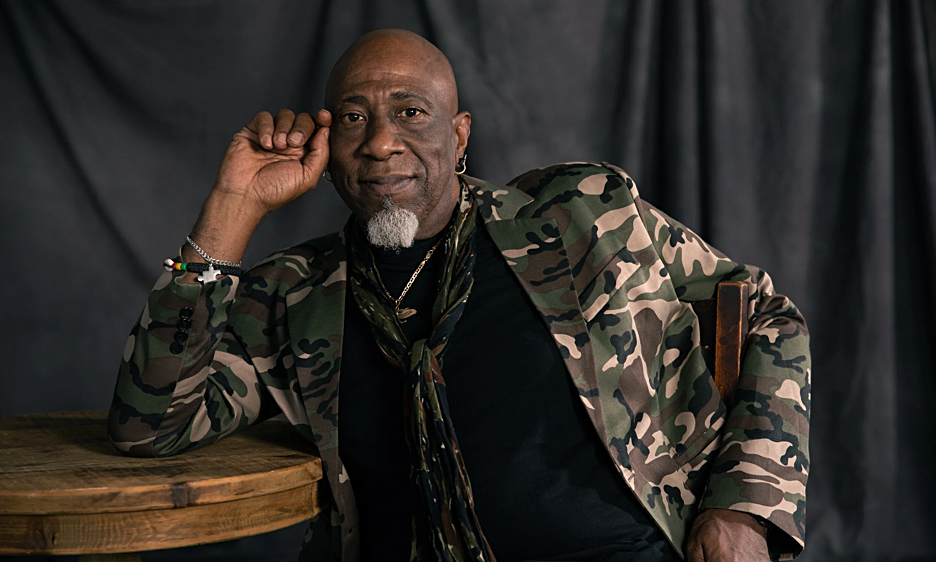
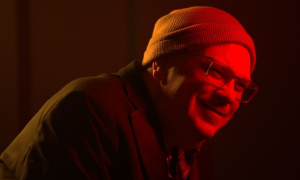
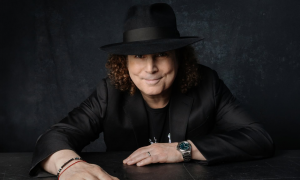
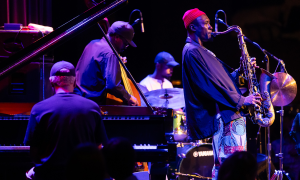
Courtesy Chris Wilson
I grew up with all these musics. And when I would hear each type of those musics, I would hear myself in it.
—Dave McMurray
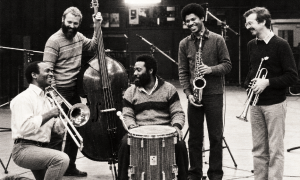
All the strands of that career are gathered by Don Was and the Pan-Detroit Ensemble, in which McMurray is a featured voice. In advance of the band's appearance in Cleveland, Ohio in January 2026, All About Jazz spoke with McMurray about the legacy of Detroit music and his place in the city's fertile music scene.
All About Jazz: Mr. McMurray, thank you so much for taking the time to do this today.
DM: Thanks for having me, man. For sure.
AAJ: Great—and happy Donald Byrd's birthday!
DM: And what better one. I met Donald Byrd one time, and it was great. Unfortunately I never played with him, but I wanted to. Yeah, I wanted to badly.
AAJ: What was it like meeting him? You must have looked up to him as a musician coming up in Detroit.
DM: For sure! I had been listening to him forever, you know? Forever. And he was one of those on Blue Note that had the original sound, but then actually got into a funky space. And so, me, being a young musician, I just loved that he actually did that. And he had musicians from Detroit—which I knew wasn't me. They were a little older than me, Kevin Toney and Allan Barnes. Those are the Detroiters. I was definitely in awe of them.
We had something in Detroit called the Detroit 300. And so we had a lot of older musicians come back that I really respected. And so, me being a younger musician, I just was just kind of relegated to the "don't speak, listen to these older musicians talk," you know? And it was [Byrd] and Barry Harris. So how could I do anything but listen?
AAJ: Oh man, a Ph.D. program in bebop.
DM: I'm telling you! And that's what they were doing. They were way over my head.
AAJ: What did you pick up from Mr. Harris? I have been reading a lot about him, especially from Mark Stryker, who you probably know, and Ethan Iverson and a bunch of other people who are just in awe of what the man represented and what he passed along. And it seems like he was the authentic vessel of the bebop tradition. Did you ever take lessons with him or absorb any of that?
DM: Never. That was as close as I got to him. We had a saxophonist around town. His name was Donald Walden. Excellent musician. He was younger than Barry, but he was out of that tradition. And those two together was just, like, crazy. So when they started talking, I was just all ears just trying to pick up what I can pick up. I think they started at "Giant Steps," and said, "Saxophone players should be able to play all these riffs and licks. They should be able to play one scale from start to finish all the way through the song." I mean, I'm listening to him like, What? I can't do any of that! But it was, it was a great experience. And then watching them deal with themselves, like Donald Byrd and Barry Harris. Just watching them deal with themselves was hilarious. Marcus Belgrave, I mean, it was a great situation where all the masters were in one room. It was very cool. Very cool.
AAJ: And there are a lot of masters there. So when you talk to people about Detroit music, I think the first thing that comes up in a lot of people's minds is Motown, But Detroit is also JDilla, and Detroit's also the MC5. Detroit's also Barry Harris and Donald Byrd and Milt Jackson.
DM: Oh yeah.
AAJ: And Detroit's also Aretha Franklin.
DM: Oh yeah.
AAJ: So there's more to Detroit music than just Motown, just jazz. What makes Detroit such an impossibly musical city that punches way, way, way above its weight? What is it about what's going on in Detroit that makes that possible?
DM: Even growing up, I knew the importance of Detroit. I mean, 'cause it was on the radio. I could hear every type of music there was. We had a rock station here that was WABX, and they would actually play rock music and then play Miles Davis. I mean, that was very rare to have that kind of a musical meshing going on. And so it's like, me growing up, I was always listening to Canadian stations, CKLW. So you had all of it. That was hit radio. Then you had WDET, which was total underground jazz, underground rock—everything. I mean, so I grew up with all these musics. And when I would hear each type of those musics, I would hear myself in it.
Even though I was just learning how to play the saxophone, I would go, "If I was playing on that session, I would do this." I would be thinking this lick or this kind of a note. And I'd be sincerely trying to do that. If I heard a country song, I'd go play this. I play this melody behind it and try not to disrupt the situation. And that's kind of how I accepted all the different types of music because I loved them all, and I heard myself in everything. You know, that was just my way.
AAJ: Yeah. When I was coming up, there were two buttons that you put on your car radio: the local AM station that played the hits, but had a relatively small coverage area, and CK.
DM: Right.
AAJ: And if there was a song you didn't like on one, you'd switch to the other.
DM: You'd switch to the other one, right.
AAJ: But CK had everything we wanted to hear, basically.
DM: Yeah, yeah, yeah.
AAJ: You were in Cleveland last year at the Music Box with Don Was and the Pan-Detroit Ensemble. Tell me how that gig went and how the audience received it.
DM: You know what? All of our gigs have been really, really good. to tell the truth—we didn't know what to expect on a lot of these gigs, 'cause we didn't know if we were getting played, if people knew the history of the band, or if they had any history at all. But once they got in the room and we started playing, it would be great, 'cause we'd just start and they'd go with it, They'd go with it. As you know, we play every different type of music. We'll start a funk song, and it'll be avant-garde in five minutes. I mean, we hit the gamut of all the areas of music, which is the fun part about the group, because everybody brings something to the table. That's uniquely Detroit. That's how I look at it. It sounds like Detroit to me. And that's the fun part about the band. We look at it like we're ambassadors for Detroit, but we're traveling around. Everywhere we go, we're looking at it like we're bringing a Detroit sound. This is what we do: we're bringing this sound and we want you to like it and it's usually a great reaction—as a matter of fact, everywhere.
AAJ: The name of the band is the Pan-Detroit Ensemble, which kind of hints at the fact that Detroit is a universe, not just a city. It's many things at once. What thing do you particularly bring to the band's sound?
DM: You know, it's funny, when I first met Don, which was years ago—in the beginning, it Was (Not Was)—when he called me for the session, I didn't really know him. In his describing of what he was going after, he said, "I want it to be like If Joe Henderson or, Elvin Jones was playing in a punk band, and I was like, What? That sounds like the place I need to be! That sounds like it to me, and when he first played me the songs, he just really played me the bass lines because the [written] music was just formed; and he had the songs written, but that's what he played. And he told me, "I don't want you to play normal." He knew about, all the different kind of groups and my avant-garde things and all that. So he was like, "I don't want you to play normal, just play what you hear." It ended up that the session started at midnight and we just played all night, you know? Me and Luis Resto, we were in the band when it was just an idea. So we kind of went through all these phases with Don. And so, we don't even have to talk. I mean, he'll allude to a situation, and I know exactly where it is. I've been playing with him in so many different situations so long that we just kind of have an unspoken word where we can go, you know?
So that's kind of been my way. It's a weird thing. I love avant-garde music and I love funk music, and I love bebop music. So I just try to meld all that together and that's my sound. And the funny part about it is a lot of the members in this band, they have that same sound, because they went through the same older musicians that I did. They went through the same ones. And it was always an adventurous place here [in Detroit].
There was a guy named Donald Washington. He was very adventurous. We had Marcus Belgrave. We had Harold McKinney. We had Wendell Harrison. We had all these different bands, and they all had powerful sounds that were accessible, and stretched the boundaries of music. So that's kind of what I bring to the table. And I think a lot of the members, that's what we bring. That's our Detroit sound. You know, that's kind of our thing.
AAJ: You talked about the beginning of that band and that was over 40 years ago. So I want you to tell me if you can, what the scene was like back then that all this music emerged out of, because I'm more or less the same age as you and things have changed.
DM: Oh, for sure.
AAJ: Socialization patterns and the kind of places music's heard, the kind of music that's heard in those places—a lot has changed there. So, tell me what Detroit was like at the beginning of the '80s when you and Don started playing together.
DM: Well, being a younger musician, the money wasn't the pursuit so much, because there wasn't any. If I got a $20 gig in high school, I felt great getting $20.
AAJ: That part hasn't changed!
DM: (laughing) So that definitely was the thing. So all you had to do was say, We're jamming, we're playing, we're doing this," and I was there, and most of the musicians I knew would be there. It wasn't "How much is it gonna pay?" Those weren't the questions. It was "Who's gonna be there? I wanna play!" No matter what time it was—okay, it starts at two in the morning? I wanna play! There was actually places to play to where I can be, as a young musician, I can go sit in at two in the morning and it would be older musicians who would be right there looking at me going, "Two choruses. That's all you get!" If you were an older musician, you could play, but if you're a younger musician, that's all you get. And you needed that discipline. It was places like that, all over town. Now, like I said, I don't know how much money these gigs were paying because I wasn't pursuing that. But it was just a lot of music around. And it was a lot of places to play, which is not necessarily how it is right now. You know what I mean? You have your mainstage jazz clubs, but there's not a lot of big jazz clubs around Detroit right now. So that's the main thing that's changed. But as far as the young musicians and older musicians wanting to mentor them, somehow Detroit has stayed true to its reputation. We have a very flourishing young musician crew that's coming up, with excellent musicians. So that part is still flourishing, fortunately, where you have young musicians who are playing, who want to play, who want to get out there and spread jazz to the world—music in general—to the world.
AAJ: Can you tell me who some of them are that we should keep our eyes on? Because Detroit's always turned out great young talent.
DM: Well, it's a few of them. A guy named De'Sean Jones, he's a saxophonist, he's excellent. He actually arranges strings and he's a great tenor player, in a great tradition. He plays with a lot of the Chicago cats and stuff. Another young guy named Marcus Elliott, tenor player. Excellent. Totally different tenor player than De'Sean too—two different kind of players, but excellent musicians. A trumpet player named Allen Dennard. Very good, very adventurous musician. And all these guys are, you know, 25 to 30 years old. Excellent, excellent musicians. And they're carving their own path.
It's funny. A lot of musicians come up, and bebop is what you learn, that's what you're trying to learn, because it's so hard and you want to learn it. And it takes a while for a musician to, once they get out of school or college or wherever they were, they're still playing bebop. And then after that, they'll go and they'll find the music that they really want to play. And that's interesting in itself, because I see some younger musicians around here who were swinging constantly, and now I look at them and they're playing house music. They're playing techno music—very adventurous in an adventurous way, too. But that's what happens. That's what I did. I mean, I was always trying—I'm still trying—to learn how to play music. I'm still trying to learn how to swing—and I'm old. It's an adventure that keeps on happening. But also, I love techno music. I love dance music, and I love hearing myself on it. So you know, I'm still like that. I just love music in general, you know, and Detroit is a good place for that
AAJ: Yeah, it sure is. You mentioned some of the giants and you alluded to the avant-garde and on your new record, I LOVE LIFE even when I'm hurting (Blue Note Records, 2025), "Find Your Peace" is dedicated to one of my favorite Detroit musicians, Tani Tabbal. A friend of mine introduced me to Griot Galaxy back in the '80s.
DM: Oh yeah.
AAJ: Those records were almost impossible to get, and that music was inspiring to say the least. Were you part of that circle or were you—
DM: Oh, of course. Yeah.
AAJ:—hanging around the edges of The Tribe or was that maybe a little before your time?
DM: No, The Tribe, those were the older musicians around me. So I would go and hang around the Strata Concert Gallery and set up chairs. They wouldn't let me play, but they let me in. They knew I was a budding musician. So, they'd say, "Okay, you can get in free. You can come and set up the chairs." So, I'd go in there with Kenny Cox and Charles Moore, and I'd set up the chairs, and then I'd get a chance to see Ornette Coleman. Or go and get a chance to see Elvin Jones. I mean, I'm talking about them [being] three feet away from me, just soaking it all in. I saw all these guys for free, just because they would let me. That's what they were giving me: just, come set up and you could just soak up the music and hang out. I saw, Herbie Hancock's Mwandishi, I mean, everybody, in this place.
And as far as Griot Galaxy, yes, I was a member of the Griot Galaxy. And when I first met Faruq Z. Bey, I thought it was the most different music I had ever heard. I didn't really get it. When I met him, I said, Wow, what are you doing? I mean, what are you doing? He had all these odd songs he was writing and stuff. And I just had to be around him. I just wanted to be around him and kind of soak up what he had, you know, what he had to give. Excellent musician.
AAJ: Oh man. I'm sorry. I should have remembered that.
DM: Yeah, I did two records with them, and they went to Europe. I didn't make the Europe trip; there was one [record] I didn't do, but we did Kins (Soul Jazz Records, 1982), and I mean, the music was excellent. The group, the band, the concept—it was really different. I didn't understand it at the time, but I was just learning it. But then that's when I ventured into the St. Louis sound, you know, Oliver Lake, the AACM, Chicago—we was the Detroit version of all those. We had that concept.
AAJ: Yeah, and it would be great if that scene got its flowers a little more, because it was a really important scene, and I think we're just beginning to come to grips with that now. I'm going to go back to the Pan-Detroit Ensemble and ask you about the 2026 tour, which is grueling. I don't know whether you're doing vans or what, but ...
DM: Nah. We're going to do buses. We have a bus, a legit bus, but I looked at the dates and I was kind of shocked myself. I was like, Wow, this is a real tour. This is, like, one day after the next. At one point it's five, six days in a row, I was like, Okay, this is the real deal.
AAJ: And then you finish up at Big Ears, which is kind of a nice gig to end with.
DM: Oh, it's very cool. I'm excited about that because I'm playing with my band on that Friday. And then I play with Pan-Detroit on Saturday. So, I'm excited about that,
AAJ: Have you ever played Big Ears before?
DM: No, I haven't. You know, Don told me about it at first, and it just happened to come about. I'm hoping that some other things pop up like that because the festival was actually booked, and then they noticed that there were similar members in the band. So, they called me up and asked did I want to play, and I was like, Are you kidding? Yes, I want to play! So they said, Well it's actually booked but we're gonna find a date, and so they found a date for that Friday. So I'm gonna go in the day before and bring my guys early. We have a gig before and then we'll go in the day before and then I'll fly in my two guys—I have another keyboard player and another bassist—and I'm gonna fly those guys in, and then we're gonna do Big Ears too, the day before.
AAJ: Oh, that's great. I mean, it's a little above my pay grade, Big Ears—at least right now. Hopefully someday I can hit the lottery and go. But my understanding is the venues are great. The sound is incredible.
DM: Yeah.
AAJ: For my last question, I want to talk about audiences. With both of us living in the Midwest as we do, I think there's a particular thing about audiences in the Midwest, and your tour is pretty extensive. You're going to a bunch of different places in the Midwest and the South, but Midwestern audiences, I think, are demanding in a nice way. What is it like playing for audiences in this part of the world. What do they expect from a night out with great musicians?
DM: You know what? It's funny. Being from Detroit, I look at it like Detroit is one of the hardest audiences. I look at it that way because I saw people crash and burn in Detroit. I mean, great people come in and not really work as much. And then I'm always curious, like, why would that happen? But Detroit is a pretty demanding place. And I look at it like if we can do it here, we can go anywhere and do it.
So whenever we go anywhere, we take it like, hey, we're moving in. We're coming in. We give it up. I'm not ever afraid. I love taking the first solo, anywhere I play. I love doing that because I like breaking it in. I like breaking the audience in, because I know if I get them—and I'm not talking about applause and all that kind of stuff—but if I get them to come with me on my journey when I'm playing, that's really what I'm trying to do, to get you in my world. And once I do, I can take you where I take you. So I can take you down. I can take you up. I can take you out. That's how I look at it. And I think the guys the band kind of look at it that way too. Because Don, the similar members, those guys have been playing with me for about 12 years in my band. And they're younger than me, so I kind of broke them in to be where we are.
And it's funny how their attitude is: "Dave, no matter how high we get, you could take it up higher." That's like a joke. "No matter what, we could be playing for a long time [and] somehow, you will take one more chorus and then go even further." But I've pushed them to that point where they do that—and that's the fun part of the band. And we have that, Pan-Detroit has that, only we have other members that will take you with it. I don't know if you've heard Vincent Chandler, the trombone player. He is really great. And these are all guys that I've known through the years that I wanted to play with, but I never had the chance to play with them. Now it's so much fun because I learned from them and they learned from me. But the funny part is, we come from similar backgrounds. We have the similar kind of avant-garde kind of thing, but swinging, but learning how to swing, and plus, we love music in general, just love music, period. And that's the key to it to me. That's the key to us traveling through the Midwest and anywhere.
We went to Japan, we was like, Okay, what is this going to be? It was great! The [Japanese audience] didn't know what to expect. They hadn't heard the band. But I mean, somehow, it was great. I've been over there a lot, so I didn't know if people would recognize me or what. But it ended up that it was great and went perfectly. By the time we went through—we played four days—we was killing them. I mean, they knew what to expect. We was able to be ourselves. You know, we were funky and swinging and all that at the same time You get the audience in the right way where they can go with you if you're swinging, they'll go with you. If you're funky they'll go with you. That's what you want.
 FOLLOW John Chacona
and get notified whenever a new article published.
FOLLOW John Chacona
and get notified whenever a new article published.
John Chacona is a freelance journalist, content writer and producer in Cleveland.
About Dave McMurray

Tags
PREVIOUS / NEXT


Become a Sustaining Member

Since 1995, All About Jazz has championed jazz as an art form and supported the musicians who create it. Over three decades, it has grown into one of the world's leading jazz resources, serving hundreds of thousands of readers, musicians, presenters and industry professionals each month.
Help Build the Future of All About Jazz
Your support helps us continue building All About Jazz for the next generation—expanding our editorial coverage, preserving jazz history, developing new community features and creating better ways to discover the music and the people behind it.
Become a sustaining member for as little as $20 per year and you'll immediately enjoy an ad-free experience along with access to subscriber features and future articles for a full year.
Together, we're not simply sustaining All About Jazz—we're building its future. Thank you for being part of the journey.