Home » Jazz Articles » Art Blakey
Jazz Articles about Art Blakey
About Art Blakey

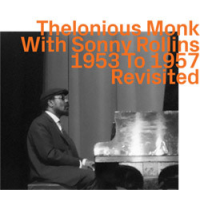
Thelonious Monk, Sonny Rollins: Thelonious Monk with Sonny Rollins 1953 to 1957 Revisited
by Stefano Merighi
Negli anni Cinquanta il jazz era assai potente e si rafforzava anche in virtù di un'attrazione magnetica che ne avvicinava i protagonisti, individualisti sì ma anche sedotti dalle possibilità di avventure comuni. Tale magnetismo si è spesso concretizzato tra le figure torreggianti di Thelonious Monk e di Sonny Rollins. Questo CD della ezz-thetics ricostruisce la loro frequentazione nel periodo di un lustro, da quando Monk era ancora una sorta di reietto per il music business, e Rollins un ...
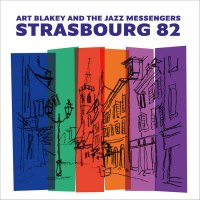
Continue Reading...Art Blakey And His Jazz Messengers: Art Blakey And The Jazz Messengers Strasbourg 82
by Jack Kenny
This album captures a special concert and a pivotal moment in the history of Art Blakey and the Jazz Messengers. It documents the re--formation of the band following the departure of trumpet player Wynton Marsalisand saxophonist Branford Marsalis. The new recruits--trumpeter Terence Blanchard and alto saxophonist Donald Harrison--were eager to prove their abilities, injecting the band with palpable energy. As was his custom, Blakey, the veteran bandleader, played with the fire and intensity of a musician just starting out. The ...
Continue Reading...Charlie Parker: At Birdland 1950 Revisited

by Stefano Merighi
Il 1950 per Charlie Parker è un anno di cambiamenti. Dopo lo scioglimento del quintetto aureo con Miles Davis e Max Roach, le formazioni diventano più effimere, occasionali, almeno fino al sodalizio con Red Rodney. Norman Granz sta per trascinare Parker nella fortunata formula con gli archi, nel frattempo c'è l'impegno di una lunga e tormentata tournèe nel sud del paese. In questo contesto, le registrazioni preservate al Birdland di New York del giugno di quell'anno, possiedono un'aura ...
Continue Reading...Trio and Quintet

by C. Michael Bailey
Pianist and composer Elmo Hope has more in common with Tadd Dameron than most of his other jazz peers. Both men were primarily composers and arrangers who concentrated on their own music rather than standards. Both men spent their professional lives in New York City during the twilight of bebop and the flourishing of hard bop. Neither man boasted large discographies as leaders, but appeared on a significant number of recordings as sidemen. Their careers were both shortened dramatically by ...
Continue Reading...Dug and Jazz Spot Intro in Tokyo
by Sanford Josephson
I owe my love of jazz to the time I spent in Japan in the mid-1960s when I was working as a writer in the public information office of the American Red Cross' Far Eastern Area headquarters, located on a U.S. Army base about 45 minutes from Tokyo. While there, I saw Duke Ellington, Ella Fitzgerald, Herbie Mann, Oscar Peterson, and many other well-known jazz artists at concerts or in clubs. But, I also hung out at the ...
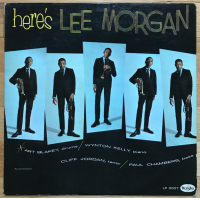
Continue Reading...Lee Morgan: Here's Lee Morgan
by C. Andrew Hovan
While Craft Recordings' new OJC reissue series has largely drawn from its treasure trove of Prestige and Riverside titles, the label recently expanded its scope to include two standout jazz albums from Chicago's historic Vee-Jay Records. Founded in 1953 by husband-and-wife team James Bracken and Vivian Carter, Vee-Jay was not only one of the earliest Black-owned and woman-owned labels but also a remarkably eclectic imprint. Known for its blues releases--and even some early Beatles records--Vee-Jay also documented top-tier ...
Continue Reading...Album Review
Thelonious Monk, John Coltrane: Thelonious Monk with John Coltrane 1957. Revisited.
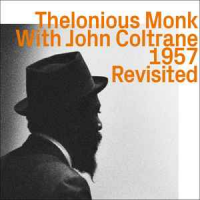
by Stefano Merighi
Ci sono sodalizi artistici che segnano in maniera indelebile la ricchezza creativa dei protagonisti. Tra questi, di sicuro quello tra Thelonious Monk e John Coltrane, anno di grazia 1957. L'estroso pianista e compositore, ancora lontano dal ricevere i riconoscimenti meritati, trova finalmente qualcuno che interpreta le sue partiture con rara dialettica esecutiva: leggerezza e profondità, acume sottile e abbandono istintivo. L'apollineo sassofonista, all'epoca ancora turbato dalla tossicodipendenza, passa dalla frustrazione di un licenziamento da parte di ...
Continue Reading...
Trending
 In Tribute To...
Points of View: Celebrating Dave Holland
 In Tribute To...
John Coltrane At 100: A Global Perspective
 Interview
Boney James: A Simple Man And A Lifetime Study
 Musician 2 Musician
Steve Coleman on Dave Holland
 Interview
Miles Okazaki's Monkathon: The Complete Thelonious...
 Reanimating Conversations Past
John Scofield: Meant To Be
 Live Review
Isaiah Collier Plays Coltrane: Live at Jazz Alley in Seattle
Premium
VOTE!