Home » Jazz Articles » Interview » Virginia MacDonald: In Search Of A New Clarinet Renaissance
Virginia MacDonald: In Search Of A New Clarinet Renaissance
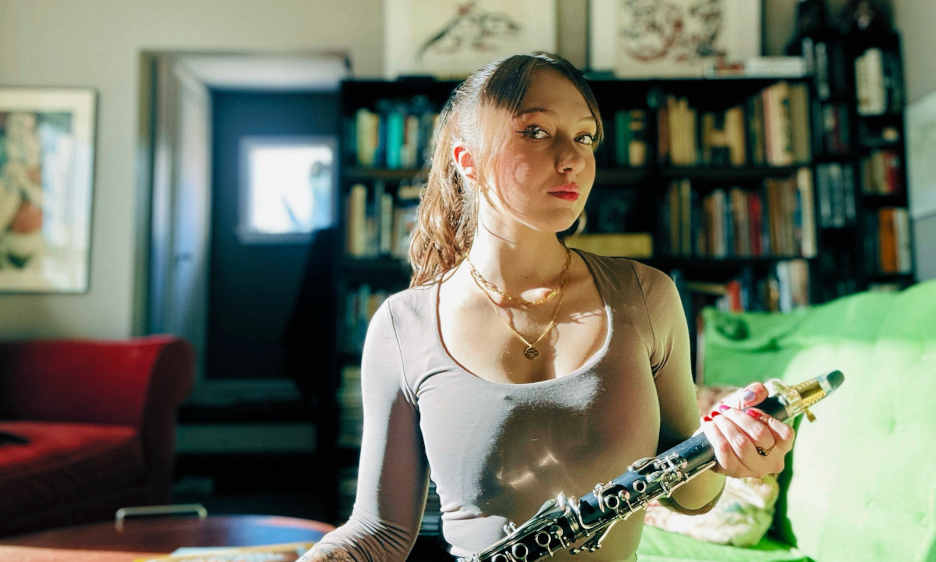
I had to figure out, well, how do I play this instrument that I've really grown to love, but make it feel like it's rooted in a more, again, modern tradition?
—Virginia MacDonald
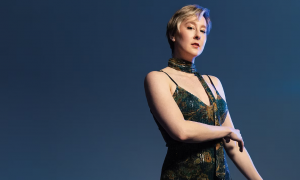
That might be changing, thanks to a new generation of players who are respectful of the clarinet's lineage but are just as eager to extend it. Virginia MacDonald is one such player. A Torontonian by birth and from a musical family, MacDonald is unusual in making the clarinet her primary vehicle for expression. She is a composer and player of grace and ingenuity whose debut recording In Search Of... (Cellar Music Group, 2026) establishes her as a talent to keep an eye—and ears—on.
All About Jazz: You recently moved from your native Toronto, a fabulous city, to New York City. How do you like living there?
Virginia MacDonald: It's been great. It's very, very new for me. I moved in January of this past year, and I do a lot of work on the road, so I spend anywhere up to maybe 75% of the year traveling. So I'm looking forward to hopefully things slowing down a little bit in the fall so I can spend a little bit more time here in New York. But it's obviously been great, a really, really exciting move for me, coming from Toronto, which has a really great scene and some really great musicians. At the same time, coming to a place like New York, I remember being 18 or 19 and taking, at the time, the Megabus overnight—so traveling 12 hours—and then getting here, totally exhausted at like 6 a.m., but spending so many weekends doing that and thinking one day, like, wow, it would be amazing to live in a place like this. So it's exciting after working here for the past few years to finally be here.
AAJ: Toronto has all the makings of the next great jazz city. There's no reason why Toronto can't be the new London. It's got all the ingredients that you need for a scene today. It's a fairly affluent place. There are all sorts of cultures coming together. There are great musicians, people with big ears who like going out. The scene in Toronto, if it hasn't already taken off, is going to take off. What is the scene like that you just left in Toronto, and how do you see it as a working musician who has been there for quite some time?
VM: There's no shortage of great musicians living in Toronto. I think you might know this, but for those who may not know, my dad is a saxophonist who lives in Toronto. His name is Kirk MacDonald.
AAJ: Good move getting dad in there right at the beginning of the interview.
VM: I would get some flak if I didn't.
AAJ: You've got your daughter A-game going. Well played!
VM: I grew up around a lot of musicians constantly coming in and out of the house, and of course, going to see my dad play and being in jazz clubs when I was like four or five years old. It's an issue that a lot of cities are facing: at that time, there were so many places to play, and I think that, unfortunately, that's one of the things that the scene has struggled with. There are so many great musicians living there, but there's a shortage of outlets for their art and music.
But it's a great scene just for the reasons that you're talking about. It's very multicultural. Toronto is very, very much a city of immigrants, so there's a lot of different styles within that jazz umbrella that are fused together. That is one of the things that I really, really loved about Toronto and still love about it as a city. So it's a vibrant scene, you know? There are a couple of school programs, so you've got a lot of students, and that can do a couple of things to the scene. For the better, it means that there's young people who are engaging with the music and going out to hear music, creating their own music. That does something in terms of keeping the scene alive and keeping things going. So yeah, I have a lot of love for my hometown.
AAJ: You brought up your dad, and it seems that music runs in families. Certainly, the exposure to music helps in that regard and it had to have helped you. Yet you took a similar but slightly divergent course. Your dad is a saxophonist, and you specialize in clarinet, a tougher instrument to play. I'm sure you tell them that all the time. Your insistence on concentrating on clarinet had to have been a conscious decision. Why did you make it?
VM: Good question. I think there's a little bit of craziness involved. I started very young. I started playing clarinet when I was six years old. And the story that I always tell is that I was enrolled in a community music program at the time. Until that point, we had been playing some more intermediate, like I don't want to say beginner instruments, but kind of beginner instruments. And I had the experience that pretty much every child in North America has playing the recorder. And I thought that I was hot shit on that. I loved playing recorder. Anyway, I played in this weekly community music program where you played in different ensembles week to week. My dad had laid out a bunch of different instruments for me to think about choosing as my main instrument. And so, of course, there's the option of saxophone. We had a piano in our apartment at the time. I think he had a flute. We had a guitar, maybe. But when I saw the clarinet, I was just like, "Oh my God, what is that?" I just fell in love with it. And I thought it was so cool. I remember thinking, What are those buttons? Which, obviously, I know now are called tone holes, but I was just enamored with the instrument.
At the time, you're young, you don't really think about the bigger context of the music. I wasn't thinking that in the jazz lineage, there's a dozen great clarinet players that you can look at as examples on their instrument. I was just thinking, Wow, I really love this instrument. And then as I got older and I started taking my playing and music a little bit more seriously and diving a bit deeper into what I was doing, it was like, wow. Okay, there really are not very many people who have chosen to focus on this instrument as their primary way of expressing themselves.
The other thing that I noticed and realized is that the few people who were part of that lineage were maybe rooted in something that was a little bit more traditional, like coming from the Big Band Era or the Swing Era or coming from Dixieland. That's not to put any disrespect towards those styles of music, but for me, I had already been listening for such a long time to more modern—I don't like that word—but more contemporary styles of jazz, and so I had that sound in my ear I had to figure out, well, how do I play this instrument that I've really grown to love, but make it feel like it's rooted in a more, again, modern tradition.
So it was a struggle trying to find a way to make that work for myself, but I really love the instrument. I think that there's so many things that can be said on the clarinet that we haven't got to that point yet, which is really exciting for me. There's a lot of untapped potential there, I think, when it comes to the clarinet as an instrument.
AAJ: For sure. Let's go back to the first time you got up on the stand with your father more or less as a peer. Maybe when you were very young and just starting to play, he had you do a proud dad kind of gig. Do you remember your first professional gig with your father? Describe what that was like. Were there butterflies? Did you know that you could do this? Was it a nervous reaction, or were you waiting to show off what you could do?
VM: Yeah, it's a weird thing because I started playing music so young. I was playing my instrument, but I was also playing with other people, and so because of that, I had a lot of performance experience by the time I was a teenager. That being said, I used to be so shy and anxious. I had such bad performance anxiety that I remember being, I don't know, like 13, 14, and what I would do if I was on stage was, I would take the music stand, if I was standing, and literally put it directly in front of my face so no one could see me. I was very insecure, I think, and that lasted for quite some time. But I think that there was definitely a voice somewhere within me that could tell me—or knew that—well, maybe this is unfounded, or maybe you don't need to actually be this self-deprecating or nervous.
So I think it's really about being able to listen to that voice and growing up with a musician in the family and someone who's so great at what he does, I think that there was always a feeling of more than comparison, and I think being compared to such a great musician and trying to work towards being that great served me in a way. You know, I think that getting those opportunities to play next to my dad was something that really fostered my own voice and fostered my own musical development because he's someone who, to this day, is always pushing to be better at his craft and to be better at what he does. And so to be around that energy, whether it's family or not I think is always inspiring. and I think it pushes you to be better at what you do.
And I've been really lucky that some of the opportunities that I've had to work with my dad are my favorite things that I've done in my career. I mean, we've been to India together. I think when I was 20 or 21, we recorded an album together with Harold Mabern, the great Harold Mabern on piano. I was very young at the time, but I think he really saw that potential in me. So that again fostered that voice within me that thought, well, maybe I do have something here. Maybe my voice is worth something rather than the negative, insecure voice. So I'm really grateful to him for that. And I know how seriously he takes the music. So there is a feeling of like, okay, he wouldn't have put me in those situations if he didn't trust in my own abilities to be up there.
AAJ: One of the abilities you have that was so striking on
VM: It is. Yeah, it is.
AAJ: It is quite an auspicious debut, and you certainly challenged yourself by having people like Ira Coleman and Geoffrey Keezer on the date because those guys throw down. They really engaged and the sparks flew, which is one of the best parts about the record. But about your writing. Six of the eight cuts on the record are yours. You do the obligatory standard, "Stardust," a beautiful soaring melody that fits the instrument really well. And "Duke Ellington's Sound of Love," a really canny choice that we'll return to in a second, but talk a bit about your compositions. The notes for the recording said "Last Call at Dimitri's" was perhaps the first thing that you had written. It's a banger.
VM: That was like something I think I wrote when I was in college. The music on the record is kind of a culmination of everything that I've been doing for, you know, I guess the past 10 years or so. I don't know that I ever felt there was an urgency or a need to release something as a bandleader. It never really felt like the right time. There were offers and avenues that I could have taken to make that happen, but it just didn't feel right. And not to deviate too much, but one of the interesting things and the ways that my career has changed over the years that has really surprised me is that I've done a lot of work as a side person. I grew up and went into college, and even coming out of college, I thought, Well, I'm a jazz clarinetist. There's a good chance that I'm probably going to have to lead a lot of my own projects, and that people are probably going to gravitate towards having a more conventional lineup of saxophone, trumpet, and trombone in their own projects.
But one of the things that's been a really pleasant surprise—and one of the things that I really love about my career—is I've done a lot of work as a side person. I've gotten to work with some of my favorite musicians, my favorite artists, people who I grew up listening to. So, in terms of the composition process, I feel two ways about it. It's interesting because there's a sense of focus when I sit down to write something, but it's always been when I have the time to do so. I've spent a lot of the past four or five years touring and being on the road. So, the time I have to myself to actually sit down and practice my instrument or sit at the piano or sit down and try to write or practice is very, very precious to me.
So a lot of what you hear on the record feels like little vignettes or moments in time that I've had over the past five, 10 years to actually sit down and write something where I think, Oh, I like that. I'm going to start off with an idea and maybe come back to that. So it feels for me, like a journey through time over the past decade of my life. And yeah, in terms of "Dimitri's," that was a leaping off point where I was going to try to write what I hear—and I guess in a way that's still what I'm doing. It's never too far off from what's going on in here [points to head], and cerebral writing is not necessarily what I'm drawn to immediately, if that makes sense.
AAJ: You must have a lot going on up in there because you have "Dimitri's," a real banger. You have straight-eight tunes. You have Coltrane changes, vamp tunes. You have ballads. You have a Latin tune. Would it be fair to say that doing so many side gigs exposed you to a lot of different musical situations that you could incorporate into your writing voice?
VM: Absolutely. I've played with a lot of great musicians from a wide umbrella under jazz music or improvised music, and I try to be a sponge as much as I can. I spend a lot of time listening. I listen to a lot of music on my own time in terms of records, albums, different styles of music that I've listened to, not always coming from the jazz realm, trying to let everything seep in and inform me as much as possible. But definitely in terms of some of the artists I've worked with, people like Dick Oatts, Joe Magnarelli, Michael Dease, just to name a few collaborators over the past few years, some of my favorite musicians are the ones whose voice as composers lends itself to their voice as musicians and players and vice versa. It feels like there's a connection there. So that's something that I try to aim for as much as possible: for it to all be connected and cohesive in terms of what comes together as the end product.
AAJ: Duke Ellington wrote so beautifully for the clarinet family. So including Charles Mingus' "Duke Ellington's Sound of Love" was a lovely choice. It's an Ellingtonian piece, though not by Ellington. Did you have Jimmy Hamilton or Barney Bigard or any of the classic Ellingtonians in your mind as you played that? The elegance of your playing and of the arrangement almost sounds more like Ellington than Mingus.
VM: That's interesting. It's obviously a tribute song, and of course, that's on my mind, There's a couple of reasons, why the two ballads that I included on the album are the two outliers in terms of being more from the standard jazz discourse rather than being original compositions of mine. A big part of that reason comes from how much I love playing ballads. Growing up, one of my favorite things to listen to were these extended cadenzas that—it's not always a saxophonist, but it usually is, because sax players love doing that. So I would grow up—and still I still love this—but I would listen to people like Sonny Rollins play a ballad, or Charlie Parker or John Coltrane—definitely Joe Henderson—all of these horn players who would play a ballad, and they would interpret it. But they would also have an extended cadenza or solo section. One example that comes to mind for me is Joe Henderson playing "Lush Life" on his tribute album to Billy Strayhorn. I was really drawn to that. Then of course there's also the connection to classical music, and loving composers who ave those more arpeggiated sections to their music and compositions—people like Liszt or Debussy—and finding that really interesting. So, back to your question, yeah, it's all there. And for the record, I love Jimmy Hamilton. I love his sound. I think he has such a beautiful, beautiful sound on the clarinet. So it's connected. I don't know that I try to think about anyone when I'm recording, especially on standard material, but I do try to come from a place of being as informed as possible. One of my favorite things to do, to this day, if I'm learning standard repertoire, is to go and find as many versions as I can of that song. "Duke Ellington's Sound of Love" is such a beautiful, beautiful composition by Mingus. And, you know, I think the first time that I learned it—it was a while ago, maybe five, six, seven years ago,—I remember trying to find as many different versions as I could and just listen and take it all in. So I think there's always source material, but it's a lot of different source materials that are all kind of tied into one, if that makes sense.
AAJ: What is your favorite ballad to play?
VM: "Stardust." [laughs]
AAJ: Your reading of that classic ballad shows your affection, but your interpretation incorporated a great deal of rippling arpeggiation that inevitably brought to mind Eric Dolphy's classic solo bass clarinet improvisation on "God Bless the Child." Yet in your notes to the recording, you cited Debussy and Liszt as your inspirations.
VM: I mean, it's all connected, right? For me, it's hard to point at one person and just say that this is inspired by this musician or this is inspired by this recording. I think there's, there's a bit of all of those people I love, and I love Eric Dolphy. I love his music. I love his playing, and of course, I love that, that seminal, very important recording. But I think, again, it's all coming from different places. So is it hard to say Okay, it's this thing It's this one thing.
AAJ: Speaking of bass clarinet, you have played extensively with Todd Marcus, a bass clarinetist, in a very unusual two-clarinet lineup. You mentioned projects having unusual instrumentation, and clarinet and bass clarinet is something you don't see often. How did that partnership come together?
VM: It's been a lot of fun working with Todd. We actually connected during the pandemic. And he sought me out. There was a clarinetist named Simon Worch who was doing a series of interviews where he was aiming to interview every living jazz clarinetist. Thankfully, there's not too many of us, so I think he made a good dent. He had interviewed Todd, and he interviewed me. I think Todd had been checking out some of these interviews, and he stumbled across my interview and was like, "Oh, okay, I'm not familiar with this person's playing. I'm going to go check her out." And so he checked out my music, and he sent me a message saying, "Hey, I watched your interview with Simon. I love your playing. I love what you're doing, and I hope we get a chance to meet at some point. So I think that was maybe in 2021 and we kept in touch. We kept talking and eventually decided to try to set some things up. I set up a few gigs in Toronto where I was still living at the time, and he set up some gigs in Baltimore and in the DMV [Delaware, Maryland, Virginia] area, and also I think we worked in New York and a couple of other places in summer 2022.
And it just snowballed from there ever since that year. We've done something together at least once a year, every year since. You know, sometimes you just meet people that you click with musically. I think Todd is a real unicorn in the sense that we relate to each other because there's not a lot of clarinet players who are out there playing more contemporary, or even more straight-ahead styles of jazz.
Like I was saying before, I think there's a tradition for more Dixieland or big-band swing styles of playing on our instrument. That can go in the other direction to the very far side of the spectrum, where it's maybe more free, maybe more avant-garde, but there's not a huge tradition for people who are playing contemporary, maybe post-bop, styles of music on our instrument. So I think once we started working together, it was like this just fits. It makes sense. So it's been a real joy getting to work with him.
Our band and the cast members rotate a little bit, but we're looking forward to doing our own tour this summer [of 2026] with Xavier Davis on piano, Blake Meister on bass, and Eric Kennedy on drums. I love that project. It's also exciting because we will be recording an album this summer after our tour. So, very, very excited for that as well.
AAJ: Well, best of luck with the tour and with the release of
VM: Thank you. Thank you for talking to me. I appreciate it.
 FOLLOW John Chacona
and get notified whenever a new article published.
FOLLOW John Chacona
and get notified whenever a new article published.
John Chacona is a freelance journalist, content writer and producer in Cleveland.
About Virginia MacDonald

Tags
PREVIOUS / NEXT
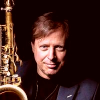
Virginia MacDonald Concerts

Become a Sustaining Member

Since 1995, All About Jazz has championed jazz as an art form and supported the musicians who create it. Over three decades, it has grown into one of the world's leading jazz resources, serving hundreds of thousands of readers, musicians, presenters and industry professionals each month.
Help Build the Future of All About Jazz
Your support helps us continue building All About Jazz for the next generation—expanding our editorial coverage, preserving jazz history, developing new community features and creating better ways to discover the music and the people behind it.
Become a sustaining member for as little as $20 per year and you'll immediately enjoy an ad-free experience along with access to subscriber features and future articles for a full year.
Together, we're not simply sustaining All About Jazz—we're building its future. Thank you for being part of the journey.