Home » Jazz Articles » Interview » Sunna Gunnlaugs: A Merry Old Time
Sunna Gunnlaugs: A Merry Old Time
I think that the small venues that offer intimacy are important not only to the artists but also because they provide a space where people connect and get a feeling of belonging and being a part of something.
—Sunna Gunnlaugs
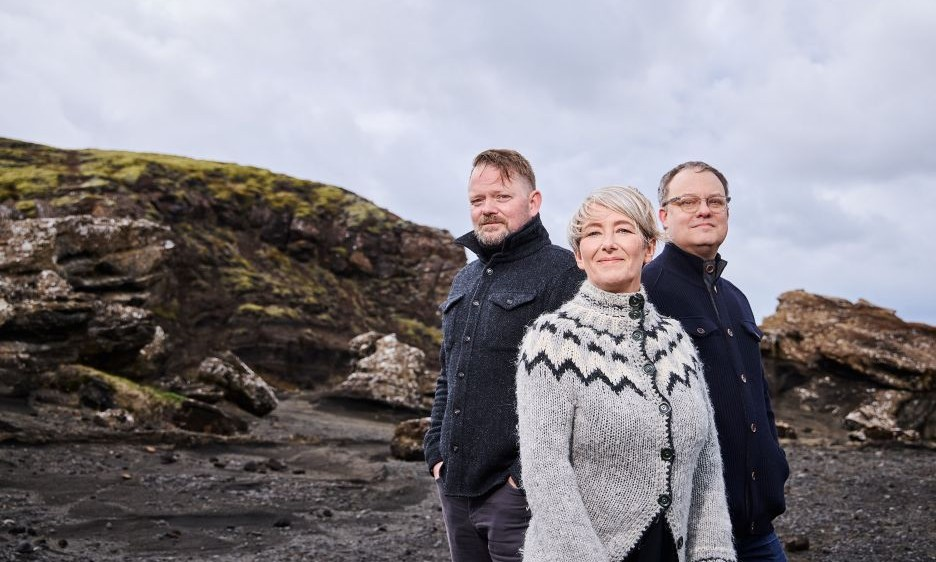
Gunnlaugs returned to her native Reykjavik in 2005, since when she has raised a family—not without McLemore's help—and released a string of acclaimed albums. Sunna Gunnlaugs: Go Round Merry (Sunny Sky, 2025), is the sixth release with her longstanding trio of McLemore and double bassist Þorgrímur Jónsson. Lyrical, melodious and uplifting, the music is a positive affirmation not just of the creative spirit, but of life itself.
Via Whatsapp, Gunnlaugs told All About Jazz about some of the inspiration behind this music, her influences and her approach to making music.
In a wide-ranging interview Gunnlaugs reflects on the excitement and challenges of living as a jazz musician in New York, sheds light on the ups and downs of the Icelandic jazz scene and explains why she is still pushing herself into personally uncharted musical territory. She also highlights the musical connections between pop mega-group Wham!, stadium rockers U2, experimental singer-songwriter Tom Waits, and her own music.
And in a world all bent out shape, she invites us to reflect upon the important examples set by Charles M. Schulz and by her dog, Penny.
All About Jazz: Congratulations on Go Round Merry, another fine album in your discography. Something that stands out straight away, even before listening, is that the writing credits are shared amongst you. You all contribute compositions. It is a very democratic trio, and the music sounds that way too—beautifully balanced and interactive. Was it like that from the very beginning? How has this trio evolved over the years?
Sunna Gunnlaugs: Yeah, it's always been like that. I think the only album where I'm the only composer is the one before this one, the album Becoming (Sunny Sky, 2023). That had a lot to do with COVID; we weren't playing so much together during the pandemic. But all the other albums, we all contribute some compositions.
AAJ: As the leader, does that take a lot of weight off you, knowing that the other guys in the trio are contributing written material as well?
SG: Not really. I feel like it makes our sound maybe bigger, you know? More variety. And if they are also bringing tunes they're more invested in the trio instead of it just being my project, you know? Even if I'm basically handling everything else, like deciding when we're going to record and doing the bookings and all that stuff.
AAJ: You spent a dozen years In New York, where you met Scott, your husband of many years. I can't think of two places more different than New York and Reykjavik/Iceland. Does the physical environment have much influence on the music that you write and how you play?
SG: I think it does. I wasn't really aware of it when I was living in New York. But after I moved back to Iceland I noticed that I was leaving more space in my music. There was more calmness in it. Maybe that's just reflective of my environment here. Life is calmer. There's more space—all these mountains. I see the ocean... this set up wasn't really part of life in New York. It was just busy and crazy and a lot of fun and, you know, a lot of music. It was just music, music, music. Everybody around us in New York was writing music. We would do sessions all the time. Always being exposed to new stuff. It was great. But when I moved back here, life changed completely. I think my writing also changed and reflects that change in life.
AAJ: So in New York, by extension, was your music less spacious, more energized, more beboppish in intent?
SG: Yeah, though not necessarily beboppish. But yeah, busy melodies. I was playing with Tony Malaby and Drew Gress. So yeah, just a lot of drive. In New York you have this hunger. People are hungry to just dive into it and play music. But here it's just a different balance of work and life. And comfort, you know. There is more comfort in life here.
AAJ: New York drummers seem to have a particular energy, a special drive...
SG: Yeah, I think with creative people in general there's so much competition there and you have to really work at it just to hang on, just to be a part of it. And the hunger that I spoke of is contagious. You just want to be a part of this energy.
AAJ: I imagine the New York jazz environment can be both exhilarating and exhausting, no?
SG: Yeah, at some point I just figured like, this is as good as it gets. Living in Brooklyn with no health insurance and working all the time but still barely making enough money to survive. I just figured it's probably not going to get better for me so it's time to just move.
AAJ: Was it an easy decision in the end to return to Iceland, to Reykjavik?
SG: Maybe not easy, but yeah, we both felt that it was time for a change of scenery. We were thinking that maybe we would move somewhere else first and Iceland would become sort of the final stop, but then it just so happened that we ended up coming directly here.
AAJ: Thank you for sharing that. Turning to Go Round Merry, I see that it was recorded in Germany, which is a departure from your previous albums. What was the reason for this?
SG: Well, I recorded in New York of course when I was living there and then the trio recorded in Finland with Verneri Pohjola.
AAJ: A fantastic trumpet player! And composer. That was Ancestry (Sunny Sky, 2018), of course.
SG: The reason we did this one in Germany was just that we were on tour there and we had some free days in the middle of the week. I had both weekends booked and I figured like, you know, what are we going to do with all these free days? I thought well, why not use those days to record? And so we went into the Fattoria Musica studio in Osnabrück.
AAJ: Is a recording studio in Reykjavik the same as one in Helsinki, Germany or New York? Are they much of a muchness or do they vary greatly?
SG: I think they vary, especially for me, because I'm always playing a different piano. The piano is really a big deal for me so I always try to pick places that have good pianos. That's my main focus. Of course, when I'm going to record abroad I can't go and try the piano out before I make the decision, unless I would, like, fly there specifically to do that, so I just ) ask around and get feedback from people. There's just a different energy around each place and a different setup for us so that also affects how we play, how we hear each other and just the mood.
AAJ: What pianos are you attracted to most to record with and to for concerts? Do you have a short list of two or three pianos that you always hope to get, or that you require?
SG: Normally I really like Bösendorfer more than Steinways. I just like the warm, round tone in the Bösendorfer and I think the Steinway is a little bit brighter piano but still of course great pianos. And then when we played in Finland many venues have Faziolis—they are great pianos. If there's a venue that has both the Bösendorfer and Steinway I always pick the Bösendorfer.
AAJ: It was a Bösendorfer Imperial that Keith Jarrett requested for his famous The Köln Concert (ECM, 1975), though he got a badly wonky baby grand instead.
SG: I think he normally has two Steinways at home—a Hamburg Steinway and a New York or a US-made Steinway. Even then every Steinway is different.
AAJ: Have you seen Ido Fluk's Köln 75 (2026), the fictionalized film about Jarre's concert?
SG: No, I missed it when it was in the theatre here. I was so disappointed.
AAJ: It's worth watching. It should be of interest to musicians, particularly someone like yourself who's travelling around the world playing different pianos. But I think that for jazz fans it's interesting to see the amount of work that goes into staging and promoting concerts, as well as the multiple dynamics involved in performing. It works on a number of different levels, and it's a fun film.
SG: I would love to see it.
AAJ: You can probably stream it somewhere. Returning to your own music, you spoke before about finding more space in your music when you returned to Reykjavik from New York. I think that space is one of the hallmarks of your playing, and certainly the music on Go Round Merry really breathes. There is a less-is-more dynamic at play that puts me in mind of early Ahmad Jamal, or Jan Johansson. I'm curious which pianists you are drawn to for their use of dynamics.
SG: Yeah, I love some of those Ahmad Jamal recordings like At The Pershing (Argo/Chess, 1958) and At The Blackhawk (Argo, 1962)—those were some favorite albums. But my favorite pianists, or my favorite trios are Bobo Stenson, Bill Evans and Keith Jarrett. With all three, there's a lot of interaction between the players, especially with Bobo Stenson's trio with Anders Jormin on bass. I just love how he interacts in the trio, kind of like Scott LaFaro with Bill Evans—that kind of continuous conversation.
AAJ: And the song "Bobo's Boogie"—is that a nod to Bobo Stenson?
SG: It is, yeah. It's funny, when that song came to me I was walking my dog and I'm listening to Bobo Stenson trio and Bobo plays something in one of the tunes that reminded me of Kool and the Gang. Do you remember Kool and the Gang?
AAJ: Sure, of course.
SG: That used to be my favorite band when I was a teenager, so it just sort of struck me. He plays this thing and I'm like, wow, it sounds like "Jungle Boogie." Then I just turned off what I was listening to, and I started hearing this piece in my head. When I came home I sat at the piano and figured out what it was, and then yeah, "Bobo's Boogie."
AAJ: It's a great tune. You open the album with U2's "I Still Haven't Found What I'm Looking For." This is a really interesting cover. I did a bit of research online and I really couldn't find any other jazz musicians who have covered this song. Maybe it's no surprise. It's a really dynamic, anthemic rock song and yet you turn it into a very intimate, almost a tender rendition. Why this song? Did you have a clear idea of what you were going to do with it when you started?
SG: No. I think I saw a video of U2 setting up in a subway station or something like that as a pop-up surprise. I can't remember, they might have been doing a different song. After, I was just thinking about how their songs are so melodic—just great melodies. And that tune, it's very simple the way they play it harmonically. What makes the song is the build-up—all the guitar and the drums. So, I sat down at the piano and started messing around with these three chords that they use, just trying to find ways to add something to it of mine—I sometimes do that with tunes. I just felt like something was happening, so I tried it out with the guys they were really surprised. They were like, "Are you serious? Are we doing a U2 cover? (laughs)
AAJ: You obviously convinced them because it turned out really well.
SG: I mean, it's like with any music—we play the head and then just open it up for some sort of pedal point there, you know, improv to go somewhere, to create a forward movement and tension before we get back into the head. It's just a fun tune to play and it's fun to play for people and to see their reaction because they recognize it but they don't maybe know where they know it from unless we tell them, you know.
AAJ: It works remarkably well. Apart from the occasional standard or maybe an Icelandic folk tune, I get the impression that you don't do too many covers. Most of your albums tend to be original compositions. But there are a couple of interesting exceptions to that, and one is Wham!'s "Wake Me Up Before You Go Go," which you recorded with Veneri Pohjola. Again, it really works amazingly well. On another album, you do a beautiful version of the Tom Waits song "Johnsburg Illinois"; what is the common denominator between U2, Wham! and Tom Waits?
SG: Great tunes. You know, it's great tunes. I mean, there's a lot of great music out there, but the fun thing also about "Wake Me Up Before You Go Go" is like, what can I do with this tune, because I'm not going to try to imitate Wham, you know? So, what can I do to make it mine?
AAJ: What kind of reaction do you get from audiences when you play that Wham tune?
SG: They're sort of surprised because it's so different. And again, they recognize it as something familiar but maybe they don't quite figure what it is. Then maybe after we play it I'll ask the audience, you know, anybody want to guess what tune that was? And some people from the audience will yell " Wake Me Up Before You Go Go."
AAJ: Sounds like fun. But it's also very serious. I mean, you do something really beautiful with all these tunes. It reminds me of Bill Frisell; on his live album East/West (Nonesuch Records, 2005) where he starts to play "People" and a woman laughs. He stops and asks, "You think I'm joking, or what?" For him, the melody and his interpretation of it is something precious—he' caressing a beautiful melody. There is no irony in his playing. Entertainment in a sense, of course, but it is a musician's calling. It is serious stuff, isn't it?
SG: Yeah it is, but I wanna move people and sometimes there has to be balance in the program. Like some things we play are meant to be heartwarming, beautiful, and then we play another thing that's more full of humor, more fun. We just try to tap into these different emotions and move people. I mean, I think if this woman was laughing in his concert maybe she's not thinking it's a joke, but when she realizes what tune it is that it sort of brings out laughter, you know?
AAJ: Yes, I see what you mean. I just thought Frisell's reaction was interesting. Coming back to Go Round Merry, who is "Be Like Charlie" about? What's the story behind this tune?
SG: During a tour in Finland I quoted the theme to Peanuts in my solo and the energy became so positive in that moment and then it happened again the following night, so when I returned home I thought it deserved its own composition. When looking for a title the first idea was "Sorry Charlie," because I stole Charlie Brown's melody, but then I decided to call it "Be Like Charlie." I was thinking of how the author, Charles Schulz, decided to introduce Franklin, a Black character in an all—White comic strip, because it was socially important and when his editor objected, Schulz supposedly said "either you print it or I quit."
We can all contribute quietly to making the world a better and more just place so this is my contribution, a wish to the universe for more people to Be Like Charlie.
AAJ:That's a great sentiment. Let's talk about touring; you have one or two kids, right?
SG:: That's right, I have two girls, 19 and 21.
AAJ: Okay, so young women both. Does this make it easier for you to tour for longer periods these days?
SG: It's easier to do things with short notice and easier to go away because we don't have to find somebody to watch over them, yeah. But at the same time, I feel like it's gotten more difficult to tour and more difficult to book longer tours. We can book the weekends but then the days in between like Monday, Tuesday and Wednesday—it is difficult to book those. And if you don't have anything on those days I still have to pay for the hotel, because we're not gonna fly home between gigs. So yeah, it's a challenge.
AAJ: What has changed? Hasn't it always been more difficult to book gigs during the week?
SG: No, I think it's changed. I mean, I remember when I was still living in Brooklyn, actually the first tour of Europe we did 20 gigs in 21 days, and I've never done that again.
AAJ: Why has it become more difficult?
SG: I think venues have closed, perhaps due to lack of funding, and maybe some of the people that were really passionate about presenting live jazz are not with us anymore. I think that's probably the main reason. Also, I think after COVID that the smaller venues are still struggling, while the big stadium events and stadium tours have become the popular thing to do. People spend a lot of money on these huge events but don't go out as much to the smaller venues. Yet I think that the small venues that offer intimacy are important not only to the artists but also because they provide a space where people connect and get a feeling of belonging and being a part of something. I think the connections are different when you are a part of a humongous group. Both are equally good but just in different ways.
AAJ Yes, the money that big pop and rock bands are asking for tickets these days is simply bonkers.
SG: Yeah, it's crazy.
AAJ: How challenging is it to do a tour with your trio in Iceland, or to play regular gigs in Reykjavik?
SG: Yeah it's a challenge, we don't get to play that often. With my trio, particularly in the past, we played much more abroad than we did in Iceland. Iceland is a very expensive country, and we have a lot of tourism, so if we go out of town and we need to pay for a hotel or something like that, it just gets to be incredibly expensive.
But we have a sort of decent grant system, and we can apply for grants to support our local tours. Just now Scott, my husband, is out with his band The Multiverse. I booked him a five-concert tour, so he's driving to the north and eastern part, but when you're playing some of the smaller towns you get maybe 20 people out. And that's good you know, because some of these towns are very small and don't have a lot of people in them. That's just how it is, but at least they get to play every night.
That's also important, I think, for the music to develop, that the band gets to play every night. Just for our souls. For the musicians it's a nourishment to get to play, but yeah it's difficult. I think also a part of why it's changed so much is probably because of social media, because I feel like when you were doing things before, you would get a write-up in the paper or in a magazine, but nobody's reading the papers anymore, so it is more difficult to reach people.
AAJ: I think social media has a lot to answer for.
SG: Yeah, it's changed our lives a lot, and not necessarily for the better.
AAJ: Even with such small audiences it must be nice traveling around Iceland and reaching people with your music who may never hear it otherwise. I imagine it is a satisfying feeling to touch people in that way.
SG: Yeah, totally. It's so nice to drive around Iceland. The landscape is just incredible. It's just amazing and also the people.
AAJ: Tell me a little bit about the Reykjavik Jazz Festival, because that's been going for really quite a long time now, I think 2026 will be the 36th or 37th edition, it's a really well-established festival. What's your involvement with the festival these days?
SG: Oh, I'm just not involved at all.
AAJ: But you were heavily involved for years, weren't you?
SG: Yeah, I did direct it for about five years. Then I stepped aside. I do play it occasionally, but I'm not involved in organizing it anymore. I'm just a regular person. (laughs)
AAJ: Is it primarily a festival to promote Icelandic jazz?
SG: I feel like it's always had this—the purpose of supporting and celebrating what's happening on the Icelandic jazz scene, but also to make international collaborations possible. because that also helps us to play abroad more. And the festival normally brings in a handful of foreign groups, which is also important for everybody here to get a taste of what's happening in other countries.
AAJ: So, there are several dimensions to it. Certainly, the depth of the Icelandic jazz scene is impressive given the size of the population. I was checking out the website icelandjazz.is, which apart from listing venues, festivals, a gig guide and funding opportunities, also catalogues all Icelandic jazz releases. I was struck by just how many jazz albums are released each year—almost 30 in 2025, for example. It seems to be a healthy, thriving jazz scene. Is that how you see it?
SG: Yeah, you're right. There are surprisingly many people that are playing jazz, but we always feel like we need more venues. We don't really have proper venues to play, where it's nice for people to come. Because that's also important that when you're playing a concert, that it's the right setting—a venue where people want to come and hang and it feels like a nice vibe and all that. So, we need more venues in town, and not just for jazz—for live music in general.
AAJ: Reykjavik Jazz Fest joined the European Jazz Network in, I think, 2014. Could you tell me in what ways that has benefited the jazz scene in Iceland?
SG: We got some showcases for Icelandic jazz, at festivals like the London Jazz Festival and then the Münsterland Jazz Festival featured Icelandic jazz one year. We also started to invite both programmers and journalists to come and know and write about the festival. So, I think that's been good, getting more exposure outside of Iceland.
Like with anything, you just have to be present, you have to be at it all the time. So, for the relationship to give anything back, somebody has to be at it. Like we have to have an export office or a festival or somebody that's always trying to make things happen and trying to make some kind of connections. You know, it doesn't happen on its own. But the Europe Jazz Network is a very good platform to connect with other organizations.
AAJ: It certainly is. Do you have any touring plans to promote Go Round Merry?
SG: We have some gigs in Germany in May next year and then I will try to book something more around that. But I sort of stepped back a little bit from booking because I decided to go for my master's in composition. I've been really busy this winter with school, being a good student.
AAJ: How long does the master's last for? A year, two years?
SG: Yeah, it's two years, but it was so much work that I figured I'd better spread it over three so that I can attempt to keep all these balls in the air.
AAJ: Are you enjoying the master's?
SG: I am, yeah, and because it's not jazz. It's basically contemporary classical music. It's something really new to me—foreign, really. It's very progressive, a lot of extended techniques and progressive classical or avant-garde classical music. But I enjoy it because it brings in new ideas. I was seeing the possibilities of writing for a string quartet I did write for a string quartet last semester, and then I saw Kris Davis, the pianist, released an album with a string quartet and that kind of struck me. I thought, wow, what a coincidence. That's the kind of stuff I was diving deep into. It's a great album (see review). Kris is a friend of mine from New York, and when I moved out of New York she took over the grand piano that I had.
AAJ: The life of a grand piano—moving through one set of hands to another. Sunna, you've written music based around Icelandic folk songs, you've written music to poetry, and you've written a film soundtrack; it seems to me that you're naturally open to these different possibilities of exploring music. I think it makes sense that you could maybe go down a completely different route again.
SG: Yeah, I just really enjoy writing music. When you're doing it for a film, you have restrictions, you know, I can't do what I would do for my trio. And so, I enjoy having to meet these different expectations, you know, like writing for classical instrumentation. Just last weekend I performed a new piece for a classical vocalist and piano. It was about 40 minutes long, treading a fine line between jazz, classical, experimental and theatrical performance.
AAJ Do tell more!
SG: It was all about midsummer night, basically. It's like a mystical day in Iceland, the longest day of the year. I was taking into account that the vocalist, Heiða Árnadóttir, is a classically trained singer, but she likes to improvise, so how can I take her strengths and have them meet me, you know, with my melodies, harmonies and jazz roots. It was a lot of fun. Yeah, I like doing different stuff.
AAJ: Finally, Sunna, I maybe I should have asked this at the top of the interview; why Go Round Merry; what's behind this title of your album?
SG: I wanted it to be uplifting. And I'm looking for my dog now. I want to show you my dog, because I think we should all be like her. When she wakes up in the morning and realizes we're awake she's just so happy. It's like, yeah, it's a new day and let's just be happy all day because we're gonna get to walk and eat and all that. I think that with all that's going on in the world, we need something to sort of lift our souls a little bit.
 FOLLOW Ian Patterson
and get notified whenever a new article published.
FOLLOW Ian Patterson
and get notified whenever a new article published.
Ian is dedicated to the promotion of jazz and all creative music all over the world, and to catching just a little piece of it for himself.
About Sunna Gunnlaugs

Tags
PREVIOUS / NEXT


Become a Sustaining Member

Since 1995, All About Jazz has championed jazz as an art form and supported the musicians who create it. Over three decades, it has grown into one of the world's leading jazz resources, serving hundreds of thousands of readers, musicians, presenters and industry professionals each month.
Help Build the Future of All About Jazz
Your support helps us continue building All About Jazz for the next generation—expanding our editorial coverage, preserving jazz history, developing new community features and creating better ways to discover the music and the people behind it.
Become a sustaining member for as little as $20 per year and you'll immediately enjoy an ad-free experience along with access to subscriber features and future articles for a full year.
Together, we're not simply sustaining All About Jazz—we're building its future. Thank you for being part of the journey.