Home » Jazz Articles » Album Review » Keith Jarrett: The Köln Concert
Keith Jarrett: The Köln Concert

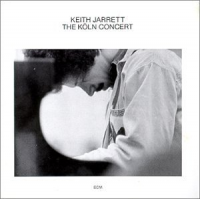
When Keith Jarrett arrived at the Cologne Opera House, he was confronted with a crisis. Instead of the requested Bosendorfer concert grand, he was presented with a substandard, undersized rehearsal piano. The specific instrument, a baby grand, suffered from fatal flaws: many keys stuck, the black keys jammed, and the pedals—specifically the sustain pedal—malfunctioned. The instrument was poorly tuned, possessing a shrill, tinny treble and a dull, weak bass..
Manfred Eicher, the producer for ECM, and Vera Brandes, the 18-year-old promoter, eventually convinced a furious and exhausted Jarrett to play, but the broken instrument critically shaped the performance.
Rather than fighting the piano, Jarrett was forced to adapt, and those very restrictions defined the iconic sound of the concert. Because the bass was weak and the high end was harsh, Jarrett largely avoided the extremes of the keyboard. He stayed mostly in the middle registers, abandoning deep, complex jazz chords for simpler, more open harmonies. To compensate for the lack of sustain and volume, he utilized: repetitive ostinatos, steady, rolling rhythmic patterns to create momentum and sustain energy without relying on the piano's tonal power.
Jarrett overcame the lack of acoustic volume by playing with immense physical force. On the recording, one can hear him moaning, writhing, and pounding the keys—the audible agony of his effort to wring sound from a dead instrument.
The improvisation drew on gospel, blues, and folk influences. The concert opens with a five-note motif inspired by the Opera House chimes and traverses a landscape ranging from hymn-like reflection to dense, Rachmaninoff-like attacks.
As far as ECM is concerned, the album was ridiculously successful, selling nearly 4 million copies and becoming the best-selling solo jazz album of all time. Critics and the public regard it as a masterpiece, praising its accessibility, hypnotic flow, and emotional immediacy.
However, Jarrett's relationship with the album curdled as its popularity soared. He has often viewed the concert as a musical anomaly created under duress. To Jarrett, the "vamping" style was not an artistic choice, but a survival tactic to keep the music going while the piano fought him.
He has famously denigrated the album's success, suggesting that its popularity might mean the product was suspect. He dismissed it as background music rather than serious art—and expressed disdain that listeners used it for yoga, relaxation, or driving rather than active listening. He felt this commercial shadow obscured his more complex and "serious" works, such as Sun Bear Concerts (ECM, 1978)
The narrative of the Köln Concert ends on a poignant note regarding Vera Brandes, the young promoter who made the historic night possible. Decades later, she revealed the personal cost of the event's logistical failures (listen to her account of the event, in conversation with Leo Sidran, here). Manfred Eicher of ECM "declared me an enemy because I did not get the piano on stage that he had told me he wanted. In his scheme of values, this was an unforgivable, lifelong mistake. And Jarrett, up until today, thinks that if he would have had the Imperial Grand that he was expecting to have, it would have been a much better concert. And I robbed him of that chance, so he doesn't talk to me."
Ultimately, the "bad" piano restricted Jarrett, but it was those very restrictions that stripped away his complexity and forced a vulnerability, and simplicity, that resonated with millions.
Track Listing
Part I; Part II a; Part II b; Part II c;
Personnel

Keith Jarrett
pianoAlbum information
Title: The Köln Concert | Year Released: 1975 | Record Label: ECM Records
About Keith Jarrett
Tags
PREVIOUS / NEXT

Become a Sustaining Member

Since 1995, All About Jazz has championed jazz as an art form and supported the musicians who create it. Over three decades, it has grown into one of the world's leading jazz resources, serving hundreds of thousands of readers, musicians, presenters and industry professionals each month.
Help Build the Future of All About Jazz
Your support helps us continue building All About Jazz for the next generation—expanding our editorial coverage, preserving jazz history, developing new community features and creating better ways to discover the music and the people behind it.
Become a sustaining member for as little as $20 per year and you'll immediately enjoy an ad-free experience along with access to subscriber features and future articles for a full year.
Together, we're not simply sustaining All About Jazz—we're building its future. Thank you for being part of the journey.