Home » Jazz Articles » Album Review » Michael Eaton: Stygian Gates
Michael Eaton: Stygian Gates

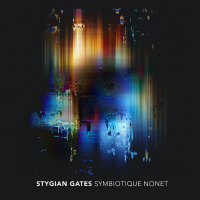
Eaton and Davis formed Symbiotique in 2017 as a vehicle for duo improvisation and have released several albums under the moniker since forming. In fact, the project's first offering, 2020's Symbiotique also served as the inaugural release for Mother Brain Records, which was formed by Eaton and Davis to showcase the likeminded work of various friends and collaborators from the Kansas City improvised and experimental music scenes. When the group is occasionally augmented, a veritable combination of KC and NYC musicians take part ,and while this personnel shifts due to availability and logistics, many of the performers on Stygian Gates have participated in Symbiotique-related projects prior to this album. Joining Eaton and Davis are flautist Cheryl Pyle, bassist Adam Minkoff, pianist Enrique Haneine, alto saxophonist Lathan hardy, trumpeter Kyle Quass, bassoonist Claire de Brunner, and drummer Kevin Cheli.
The structures utilized for each movement of Stygian Gates are spare and somewhat gestural such that the group's realization of the various themes and dense, chaotic textures feels familial and actualized through beautifully messy consensus rather than unanimous decision. From the opening salvo of "Thumos," one gets the impression that the musicians are observing multiple stops on their descent through an ancient hell. It is arguable whether or not the players as characters in the story are directly experiencing their settings or merely commenting on it in the manner of Mussorgsky's museum visitors in Pictures At An Exhibition. Leaning toward the latter approach, each movement feel based around omniscient impressions of subjects in a contained, detached sense. If the players are actually condemned to some eternally damned fate on the journey, the sound of Stygian Gates could be summed as the terrific clash of nine individuals suffering subjectively as a collective evoking a multifarious creature with many heads, laughing and screaming like crazed choir. The proper compositions are broken up by solo passages from each player which, while improvised, serve their particular places between and within specific movements in ways which move the concept along without feeling like unwelcome detours.
Eaton based the title of the piece on John Adams's Phrygian Gates and the performance aesthetic on John Coltrane's Meditations (Challenge Jazz, 1966). Taken either literally or figuratively, the music possesses an undeniable pathos and narrative slant which feels uncannily human. What could it mean to swing on your way down to hell? Is the underworld more like Las Vegas than Hades would lead you to believe? "Thumos" acts like an overture in toying with all of these qualities in a concentrated microcosm which contains fragments of jazz, group and solo free improvisation, and atonal rising-and-falling unisons, which can feel simultaneously overwhelming and ecstatic. Elsewhere, "Charon" is based around several iterations of a vaguely sentimental fugue, interspersed with extended lyrical solo passages from de Brunner, Pyle, Eaton, and Quass. "Lethe" weaves an ominous, wandering melody from Haneine around dense vertical punctuations and swells from the rest of the ensemble before giving way to tumbling group cadenza led by Eaton that felt like it was be played while falling through some sort of dark well. Despite the heightened melodrama the journey is not completely mired in dread. The suite concludes with "Nyx" and "The Sunrise" which taken together felt like some sort of optimistic reprieve where the group manages to finally find the light at the end of the tunnel.
Crossing the cellular, process-driven nature of Adams' music with Coltrane's unbridled intensity, Webern-esque atonality and the glorious abandon of Charles Mingus' large ensembles, Eaton and company display a nuance and thematic depth that is personal and sincere without ever taking itself too seriously. Inventive, original, unmistakable and exhilarating to listen through, Stygian Gates is clever and deep, sure to inspire listeners and performers alike.
Track Listing
Thumos; Liminal Zone; The Descent; Adam Minkoff solo; Nekyia; Lathan Hardy solo; River of Acheron; Seth Davis solo; Charon; Claire de Brunner solo; Lethe; Enrique Haneine solo; Persephone; Michael Eaton solo; Lake of Ice; Kevin Cheli; Lumen Naturae; Cheryl Pyle solo; Nyx; Kyle Quass solo; The Sunrise.
Personnel

Michael Eaton
saxophone, tenor
Seth Andrew Davis
guitar, electric
Cheryl Pyle
fluteKyle Quass
trumpetLathan hardy
saxophone, alto
Claire de Brunner
bassoonEnrique Haneine
drumsAdam Minkoff
bassKevin Cheli
drumsAlbum information
Title: Stygian Gates | Year Released: 2025 | Record Label: Mother Brain Records
About Michael Eaton
Tags
PREVIOUS / NEXT


Become a Sustaining Member

Since 1995, All About Jazz has championed jazz as an art form and supported the musicians who create it. Over three decades, it has grown into one of the world's leading jazz resources, serving hundreds of thousands of readers, musicians, presenters and industry professionals each month.
Help Build the Future of All About Jazz
Your support helps us continue building All About Jazz for the next generation—expanding our editorial coverage, preserving jazz history, developing new community features and creating better ways to discover the music and the people behind it.
Become a sustaining member for as little as $20 per year and you'll immediately enjoy an ad-free experience along with access to subscriber features and future articles for a full year.
Together, we're not simply sustaining All About Jazz—we're building its future. Thank you for being part of the journey.