Home » Jazz Articles » Album Review » Either/Orchestra: Nalbandian The Ethiopian
Either/Orchestra: Nalbandian The Ethiopian
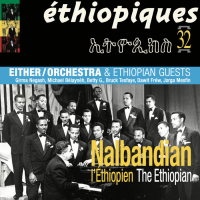
Russ Gershon remains at the helm of the Either/Orchestra, and not only is this recording finally being issued, but the group is also in the midst of 40th anniversary touring schedule with shows later this spring of 2026 scheduled for Knoxville and Cleveland.
For a band that has always had clever wordplay in its album titles—Half-Life of Desire (1990), Mood Music for Time Travellers (2011), The Calculus of Pleasure (1992), all on Accurate Records. The trend continues with Nalbandian the Ethiopian, 'Nalbandian' being an ethnically Armenian surname, yet clearly assigned to an Ethiopian.
As it turns out (in background notes on the album's Bandcamp page), much of post-World War II Ethiopian music was composed and performed by a community of Armenian ex-pats who had fled the ethnic cleansing being carried out by the Turks in their ancestral lands.
So this album is not only a new Either/Orchestra release, but it is also part of the ongoing Ethiopiques series—Vol 32 to be precise. While most of that series focuses on recordings by Ethiopian musicians, this is actually the second entry featuring the Either/Orchestra performing Ethiopian music—following Vol. 20, Live in Addis (Buda Musique) from 2005.
And the E/O connection to Ethiopian music is deeper even than that. The 2000 release, More Beautiful Than Death (Accurate Records, 2000), contained a three-part Ethiopian Suite, composed by three different Ethiopian composers. And then in 2002, Afro- Cubism (Accurate Records) contained a song written by Teshome Meteku.
Nalbandian the Ethiopian was largely recorded in the National Theater of Ethiopia in Addis Ababa in a live concert setting with a lineup augmented by Ethiopian vocalists and local players. Other tracks were recorded later in Troy, N.Y., and Calgary.
While not a dance band in the style of Count Basie or Glenn Miller, neither is the Either / Orchestra the kind of "serious concert" outfit that the postwar Stan Kenton or Woody Herman bands represented.
If not in sound, then perhaps in philosophical approach, the E/O is most akin to Basie's outfit starting in the mid-1950s: A concert band that swings like crazy. There has always been a sense of fun that permeates E/O recordings, and that certainly holds true here, even as they play period pieces in as respectful a manner as possible.
The tracks featuring a singer (in the national Ethiopian language of Amharic) are the ones that have the most distinctive Ethiopian sound. On "Yèné Hassab," the sinuous melody played on clarinet behind the vocals of Girma Negash, both backed by minor harmonies, sets it apart from the Western canon.
Elsewhere, some of the instrumental takes on Ethiopian tracks—"Hulèt wèdo ayhonem," for instance—are pretty firmly in the jazz canon, with more nods to Western electronica than the cultural roots of the composition.
And "Mambo No. 1" is an intriguing mash-up of Cuban, Ethiopian and jazz—swirling, swinging, joyous, perhaps a song that only the Either/Orchestra could play.
 FOLLOW Jim Trageser
and get notified whenever a new article published.
FOLLOW Jim Trageser
and get notified whenever a new article published.
I am a San Diego-based music journalist, mostly covering jazz and blues.
Track Listing
Amhara Rumba; Mot Ièhulum Ekul Nèw; Yèné Hassab; Mambo No. 1; Yètezeta Roro; Adèrètch Arada; Ambassel; Lebé men atèfa; Enegènagnalèn; Eyéyé; Hulèt wèdo ayhonem; Qèlèméwa; Tebèb nèw tèqami; Afriqa.
Personnel

Either/Orchestra
band / ensemble / orchestraDan Rosenthal
trumpetDawit Frew
clarinet
Tom Halter
trumpetJoel Yennior
trombone, bass
Hailey Niswanger
saxophone, alto
Russ Gershon
multi-instrumentalist
Charlie Kohlhase
saxophone, baritone
Rick McLaughlin
bass, acoustic
Pablo Bencid
drumsVicente Lebron
congasJorga Mesfin
saxophoneGirma Negash
vocalsMichael Belaynèh
vocals
Leo Blanco
piano
Mark Zaleski
saxophone, altoOscar Suchanek
drums
Gilson Schachnik
pianoBruck Tesfaye
vocalsAdditional Instrumentation
- National Theater Of Ethiopia, Addis Ababa, May 16, 2011 - Tom Halter, Dan Rosenthal: trumpets; Joel Yennior: trombone; Hailey Niswanger: saxophone (alto), clarinet (solo on: “Amhara Rumba”, left channel on “Yèné Hassab”); Russ Gershon: saxophone (tenor, soprano); Charlie Kohlhase: saxophone (baritone); Josh Rosen: keyboards; Rick Mclaughlin: bass; Pablo Bencid: drums; Vicente Lebron: percussion. With Dawit Frew: clarinet (right channel on “Yèné Hassab”; solo on “Adèrètch Arada”); Jorga Mesfin: saxophone (solo on “Tebèb Nèw Tèqami”); Girma Negash: vocals (“Yèné Hassab”); Betty G: vocals (“Qèlèméwa”, “Yètezeta Roro”); Michael Belaynèh: vocals (“Adèrètch Arada”, “Tebèb Nèw”, “Tèqami”); Bruck Tesfaye: vocals (“Enegènagnalèn”) - The Sanctuary for Creative Media, Troy, NY, November 20, 2011 - Same personnel except Gilson Schachnik: keyboards (in place of Josh Rosen). - Knox United Church, Calgary, Alberta, Canada, Nov. 17, 2012 - Same personnel except Leo Blanco (in for Gilson Schachnik): piano; Mark Zaleski (In for Hailey Niswanger): saxophone (alto); Oscar Suchanek (in for Pablo Bencid): drums. - Dimension Sound, Boston, Massachusetts, April 19, 2015 - Same Personnel with Mark Zaleski: clarinet, sax (alto); Gilson Schachnik: piano, organ; Oscar Suchanek: drums.
Album information
Title: Nalbandian The Ethiopian | Year Released: 2025 | Record Label: Buda Musique
About Either/Orchestra
Tags
PREVIOUS / NEXT
Become a Sustaining Member

Since 1995, All About Jazz has championed jazz as an art form and supported the musicians who create it. Over three decades, it has grown into one of the world's leading jazz resources, serving hundreds of thousands of readers, musicians, presenters and industry professionals each month.
Help Build the Future of All About Jazz
Your support helps us continue building All About Jazz for the next generation—expanding our editorial coverage, preserving jazz history, developing new community features and creating better ways to discover the music and the people behind it.
Become a sustaining member for as little as $20 per year and you'll immediately enjoy an ad-free experience along with access to subscriber features and future articles for a full year.
Together, we're not simply sustaining All About Jazz—we're building its future. Thank you for being part of the journey.