Home » Jazz Articles » Building a Jazz Library » Why Everybody Digs Bill Evans
Why Everybody Digs Bill Evans

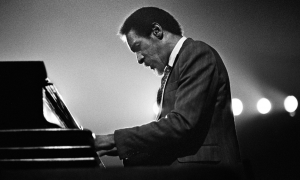
Evans started playing piano at age six. Studies on violin, flute and piccolo may have helped shape the strong lyricism for which he is known. He began forming and playing with jazz bands while still in high school.
He graduated from Southeastern Louisiana College in 1950, served in the Army from 1951 to 1954, and shortly afterward began playing with local dance bands and as a sideman with small jazz groups. Performances with players such clarinetist Tony Scott and guitarist Mundell Lowe brought him to the attention of the emerging independent Riverside Records.
His debut trio album New Jazz Conceptions sold only 800 copies its first year. He continued working his way up in stature, with Davis recruiting him in 1958. But stress from the stage life and discrimination from Davis' fans took a heavy toll on Evans. Surrounded by addicted players, he developed a full-blown heroin habit that eventually led to his death.
Evans formed his most acclaimed trio in 1959 with bassist Scott LaFaro and drummer Paul Motian. His career peaked with a performance at the Village Vanguard on June 25, 1961, that resulted in two landmark albums, Sunday At The Village Vanguard and Waltz For Debby. But a crushing blow followed almost immediately, as LaFaro was killed in a car accident a few weeks later. Evans retreated into seclusion for months, and when he reemerged his life and playing became more erratic.
He made numerous recordings during the next few years, working beyond the trio format with such performers as Charles Mingus, Tony Bennett, Stan Getz, Toots Thielemans and Jim Hall. A resurgence during the early 1970s was sparked after bassist Eddie Gomez joined the trio in 1966. Gomez' inventive fast-paced playing was more forceful than previous sidemen, and this presence and influence on Evans' playing grew throughout their 11-year association.
Evans formed his final trio in 1978 with bassist Marc Johnson and drummer Joe La Barbera, capturing much of the spirit of the pianist's original trio. His final triumph is captured on The Last Waltz, an eight-disc set from nine days of concerts at the Village Vanguard a week before his death. Evans knew the end was near and performed what many considered his most moving work in years. He died on Sept. 15, 1980.
 New Jazz Conceptions
Riverside
1956
Evans' debut is a largely mainstream bop effort in the Powell tradition without much of a distinctive voice. His first recording of "Waltz For Debby" and his treatments of "Displacement," where few notes fall on the beat, and "Five," featuring a frenetic quintuplet-based beat in 4/4 time, hint at future developments.
 Everybody Digs Bill Evans
Riverside
1958
A clear step toward the more relaxed and meditative style for which Evans is famous, featuring the moving ballad "Young and Foolish" and the famous melodic improvisational experiment "Peace Piece."
 Portrait In Jazz
Riverside
1959
Evans' peak period begins with the first album to feature his famed trio with LaFaro and Motian Their fast-paced interplay on "Someday My Prince Will Come" and interpretations on two versions of "Blue In Green" sparkle among many highlights.
 Explorations
Riverside
1961
In the elite category, but with some tension between players during the session. LaFaro had to play a replacement bass since his regular one was being repaired, so his playing is a bit restrained.
 Sunday At The Village Vanguard / Waltz For Debby (Riverside, 1961)
Riverside
1961
The pianist's definitive albums are masterpieces of phrasing in melody and solos, and a revelation of how members of a trio can interact with and shape a song. LaFaro in particular captivates with his basslines on the Sunday album, making his death ten days later all the more tragic.
 Conversations With Myself
Verve
1963
Evans predictably got widely varying reviews for this album where he triple-tracks himself on piano, but won his first Grammy for the results. Similar to his double-tracked Further Conversations With Myself (1967), which some say is more disciplined and harmonically focused.
 At The Montreux Jazz Festival
Verve
1968
Evans won his second Grammy for this trio album, as Gomez and drumming legend Jack DeJohnette play with an energy that lures Evans into playing freer than usual.
 Alone
AloneVerve
1969
Evans' first solo album won a Grammy, but also received heavy criticism from some who called it a rambling effort needing the discipline of sidemen.
 Intuition
Fantasy
1974
Those wanting to hear Evans on electric keyboard might find this their best bet—or at least a safe one—as he alternates between electric and acoustic on this duo collaboration with Gomez. The interaction is superb and most of the songs are new compositions.
 The Tony Bennett / Bill Evans album
Fantasy
1975
An unlikely but successful collaboration, with Evans largely playing a supportive role as Bennett delivers emotionally sincere efforts on songs like "The Days Of Wine And Roses," "Young And Foolish" and "Waltz For Debby."
 You Must Believe In Spring
Warner Bros.
1977
Evans' debut for Warner Brothers does a better job than many 1970s albums of capturing his brooding and melodic strengths, with a surprisingly diverse feeling for an album of ballads.
 Marian McPartland's Piano Jazz
Concord Records
1978
One of the best in McPartland's long-running radio series. Features a number of solo and duet pieces plus Evans discussing and demonstrating his technique in-depth.
 The Complete Riverside Recordings
Riverside
1991
This 12-disc boxed set covers Evans' development and peak career period from 1956 to 1963, including his landmark Village Vanguard dates.
About Bill Evans

Tags
PREVIOUS / NEXT


Become a Sustaining Member

Since 1995, All About Jazz has championed jazz as an art form and supported the musicians who create it. Over three decades, it has grown into one of the world's leading jazz resources, serving hundreds of thousands of readers, musicians, presenters and industry professionals each month.
Help Build the Future of All About Jazz
Your support helps us continue building All About Jazz for the next generation—expanding our editorial coverage, preserving jazz history, developing new community features and creating better ways to discover the music and the people behind it.
Become a sustaining member for as little as $20 per year and you'll immediately enjoy an ad-free experience along with access to subscriber features and future articles for a full year.
Together, we're not simply sustaining All About Jazz—we're building its future. Thank you for being part of the journey.