Home » Jazz Articles » Live Review » The Kind of Blue Band at 92NY
The Kind of Blue Band at 92NY
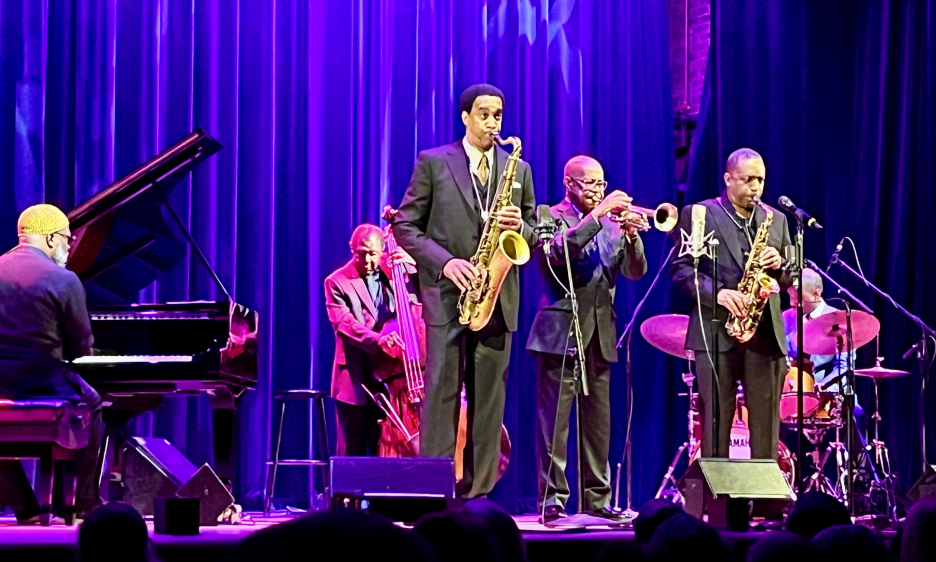
Courtesy Paul Reynolds
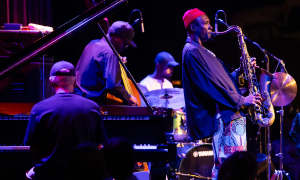
Charged with honoring one of jazz’s most revered works, a skilled ensemble of players performed Miles Davis's Kind of Blue in a way that closely – though not slavishly – hewed to the 1959 recording.
92NY
A Tribute Weekend to Miles Davis
New York, NY
October 16, 2026
On one level, paying tribute to the best-selling jazz album of all time—and arguably the most critically revered—is a plum musical assignment. It promises playing a masterwork to a crowd that's deeply familiar with it and likely to be thrilled to hear it all performed live for the first time.
Yet deciding just how to perform a full rendition of Kind Of Blue (Columbia, 1959) by Miles Davis is a fraught decision, thanks to the recording's legendary aura. Jazz thrives on improvisation—no two performances being the same and all that—but it's unclear how much a "Blue" tribute should depart from the original, revered album. The recording is burned into the brains of aficionados, right down to solos as familiar to some listeners as are the lyrics to, say, Beatles songs. As a musician, do you opt for comfortable verisimilitude or exert your artistic imperative to freshly re-interpret the work?
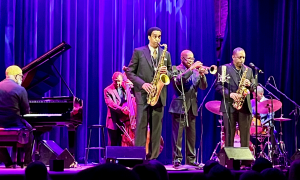
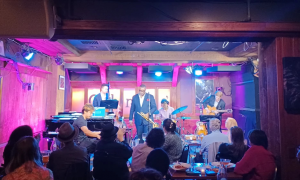
Last Friday at 92nd NY, a skilled ensemble of veteran players performed Kind of Blue in a way that closely—though not slavishly—opted for reverence to the 1959 recording. That began with assembling a band that not only duplicated the album's instrumentation but featured players who were stylistically sympatico with those in the quintet that assembled in Columbia's 30th Street Studio for two days in the spring of 1959.
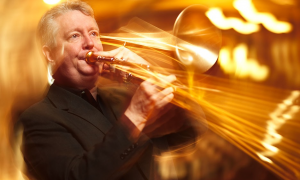
In the key role—obviously—of the trumpeter was Eddie Henderson. While the veteran musician, now 85, never played with Davis, he maintained a long-time friendship with his fellow trumpeter, who often stayed in the Henderson family home in San Francisco during visits to the city in the 1950s.
How Henderson would approach the trumpet parts on Kind of Blue became evident only a few minutes into the concert, as Henderson began the opening solo of the album's opening composition, "So What."
Davis's recorded version, among the most iconic and acclaimed solos in jazz history, is a masterpiece of modal understatement. It begins with a simple and restrained melodic figure, which it then sustains, with subtle variations in phrasing and harmonics before beginning explorations that are also relaxed, spacious, and mostly in the trumpet's middle register.
Henderson's solo at 92NY, by contrast, was musically "hotter" right off the bat, with faster sequences of notes—some in the trumpet's higher register. The result never derailed the spirit of the original, but did impart a less serene air than on the recording—an impression that was reinforced by the slightly faster tempo of the piece compared with the recording.
The same pattern repeated almost throughout the concert, with Henderson respecting the recording while imprinting his own, and frequently more fiery, stamp on the playing. Yet neither he or the others overplayed. That's a worthy achievement with material, based on modes, with as much musical freedom to play out as the Kind Of Blue compositions.
Henderson, and the evening's other musicians, were assembled by Vince Wilburn Jr., Davis's nephew, who oversaw this "acoustic" tribute and a matching Miles Electric Band, which played 92NY the night after the Kind of Blue Band. Each of Friday's players was well chosen, beginning with the saxophonists who rounded out the tribute's front line.
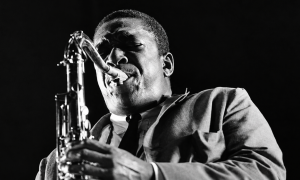
Javon Jackson and Donald Harrison bear a significant stylistic debt to John Coltrane and Cannonball Adderley, respectively. That's not unusual, given the hefty influence of those masters over subsequent generations of saxophonists. But the stamp is particularly strong for the two younger musicians, including in their channeling of the special soulfulness Coltrane and Adderley possessed.
Jackson's playing on Friday not only expertly exuded the abstraction of Coltrane, and hinted at his sonorous tone, but was imbued with some of the tenorist's late-career spirituality. Donald Harrison —an unfailingly impressive player, in any context—soloed with some of Adderley's fluidity and lyricism as well as the older player's blues inflections—a natural fit given Harrison's immersion in the gumbo of funk, blues, and other roots music in his hometown of New Orleans.
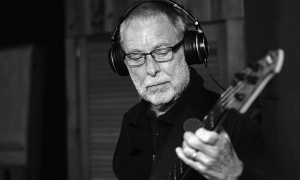
Bassist Buster Williams had pride of place onstage, as the sole musician on stage who actually played with Miles—albeit only for five weeks in 1967, while subbing for Ron Carter on a West Coast tour by what is known as the Second Great Miles Davis Quintet. Compared with Paul Chambers, who played on Kind of Blue, Williams is a more assertive player, but his approach melded beautifully into the 92NY quintet. Indeed, the warm underpinning of his bass (and his presence, at a dignified 84 years old) formed the emotional heart of the performance.
Williams has a special history with Henderson, both having served in Herbie Hancock's electro-acoustic "Mwandishi" band in the early 1970s. That bond came across especially strongly during the show's only selection not from Kind of Blue, which was the set closer—the title of which was not announced. During a spare opening to the piece, Henderson soloed over busy, pulsing support from Williams with occasional chords from pianist Orrin Evans. A lovely highlight.
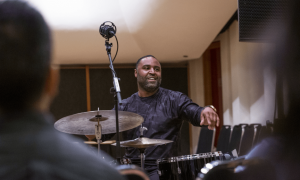
As that closing piece revealed, Evans adapted beautifully to this material, despite a customary style that leans less on the feathery impressionism of Bill Evans, the pianist on Kind of Blue, than the muscularity of McCoy Tyner and the spiky eccentricity of Thelonious Monk. Similarly, drummer Willie Jones III scaled back his sometime penchant for swaggering aggression to play with something approaching the minimalist swing employed on Kind of Blue by drummer Jimmy Cobb —who died in 2020, as the last surviving musician from the recording.
The evening began tentatively, with the air of a rehearsal rather than a focused performance, with some confusion about the order of soloing and a fluffed return to one of the recurring ensemble themes in "So What." The lack of remarks to the audience, or of introductions of the band members, until the end of the set—a nod, perhaps, to the same absence in Davis's performances after 1955—was also a little disorienting, if not disconcerting.
Yet the show soon found its feet. And if it never quite achieved the creative tranquility of the original recording—an impossible task, perhaps, for any ensemble—it offered a worthy, respectful take on a classic work. It was perhaps as good a tribute to Kind of Blue as we could hope for more than 65 years after the album was recorded.
 FOLLOW Paul Reynolds
and get notified whenever a new article published.
Journalist and programmer in jazz, folk, country and other musics
About Eddie Henderson

Tags
PREVIOUS / NEXT
Eddie Henderson Concerts
Become a Sustaining Member

Since 1995, All About Jazz has championed jazz as an art form and supported the musicians who create it. Over three decades, it has grown into one of the world's leading jazz resources, serving hundreds of thousands of readers, musicians, presenters and industry professionals each month.
Help Build the Future of All About Jazz
Your support helps us continue building All About Jazz for the next generation—expanding our editorial coverage, preserving jazz history, developing new community features and creating better ways to discover the music and the people behind it.
Become a sustaining member for as little as $20 per year and you'll immediately enjoy an ad-free experience along with access to subscriber features and future articles for a full year.
Together, we're not simply sustaining All About Jazz—we're building its future. Thank you for being part of the journey.