Home » Jazz Articles » Groove Orbit » How John Coltrane Changed Rock Music: The Grateful Dead
How John Coltrane Changed Rock Music: The Grateful Dead
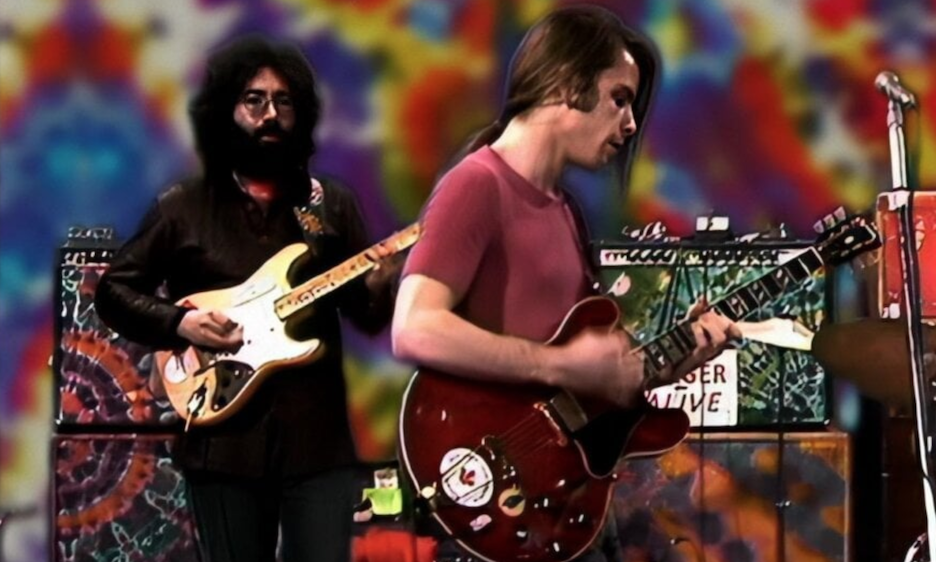
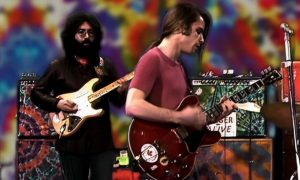
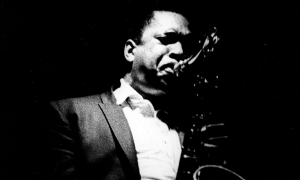
Courtesy Far Out Magazine

No other rock band in that era or after would take the lessons of John Coltrane more to the soul of their playing than The Grateful Dead.
—Dennis McNally
The Dead's broad musical foundation, although something of a defining characteristic, was actually not what set them apart. As the band, along with numerous fans, would admit, recordings could not adequately capture the group's sound. To really get the full Grateful Dead experience, you needed to hear them perform live, and every show was different. As Jerry Garcia once explained in an interview, the band had "an inability to do the same thing twice." They were totally in the moment, and they never relied on set lists or arrangements prepared in advance.
As a result, The Grateful Dead concentrated on improvisation. And while improvisation had been a part of rock 'n' roll since its inception, The Dead approached it differently than most acts. For them, it was more than just something incorporated into a performance; it became the performance itself. And John Coltrane probably shaped their improvisational approach more than anyone else, even though the band never covered Coltrane's music and Coltrane probably never even heard the Grateful Dead in his lifetime. Without Coltrane, though, the Dead might never have developed the style of improvisation that ultimately defined them.
Coltrane added new dimensions to jazz improvisation. By the 1950s, much of jazz improvisation centered on a soloist-accompanist framework, in which one musician would improvise over the steady foundation provided by the other players. Coltrane broke away from this tradition, but his approach was more a rediscovery than a new concept of improvisation. To better understand Coltrane's concepts, it may be helpful to consider how improvisation was used in the early days of jazz, when each member of the group would improvise simultaneously. In his book on early jazz music, Fumi Tomita discusses how this practice "stemmed in great part from brass bands in New Orleans that featured wind instruments participating in a rhythmic call and response, where there is an ongoing musical conversation taking place during the performance. This style of performance is called collective improvisation."
You can hear examples of this in recordings by artists such as King Oliver and Sidney Bechet, who both regularly incorporated collective improvisation into their music, and, as Gunther Schuller points out, the origins of this practice extend well beyond New Orleans. The "improvisation of many lines at the same time is a typically African concept, and it is perpetuated in most forms of early jazz, a music marked above all by collective improvisation." By the 1930s, collective improvisation fell out of fashion when jazz orchestras grew in size and song arrangements became more complex. Group improvisation works best in a small-group setting with less complicated song structures. As a result, "the multi-linearity of early jazz was abandoned until the late 1950s," as Schuller explains.
Collective improvisation, however, never entirely disappeared from jazz. In fact, it came back in full force in the late fifties with Ornette Coleman's work. Eric Niesenson describes Coleman's album Free Jazz: A Collective Improvisation (Atlantic 1961) and his use of ensemble improvisation as a throwback to New Orleans jazz. He also suggests that John Coltrane "must have listened long and hard to this record," and although Coltrane's music around the time of Free Jazz was not fully avant-garde, "a few years later, he would take Coleman's ideas a step even further."
However, it is important to distinguish between avant-garde jazz and collective improvisation in the case of The Grateful Dead. Although Coleman was an influence on The Dead to a certain extent, and Garcia would even later record with him on Virgin Beauty (Portrait, 1988), the band rarely ventured into total avant-garde territory. Collective improvisation, however, was a different story, and this is an example of what Dead guitarist Bob Weir described as "playing rock music with jazz syntax."
Coltrane's improvisational approach helped The Grateful Dead discover new possibilities. This influence seems evident when considering Coltrane compositions such as "Chasin' the Trane," which J.C. Thomas describes in his book Chasin' The Trane (Hachette Books, 1976) as "fifteen minutes and fifty-five seconds of energetic expressive changes and counterchanges, interpolations and improvisations on a continuous stream-of- consciousness creation." Without the context, this description could easily apply to any number of Grateful Dead performances as well.
Collective improvisation, when done effectively, elevates improvisation to a more holistic level, as Thomas's quote suggests. Rather than simply playing a song, the musicians can reinterpret the song by creating their own lines and passages. Also, as Thomas suggests, the audience is involved in the process. For The Dead, this would become one of the central components in their performances.
Improvisation, however, was not the only jazz syntax The Dead picked up from Coltrane. Much of their music also featured modal playing, which was an essential component of many Coltrane recordings. It is also one of the most important jazz styles that emerged during the post-bebop era. The modal approach develops from a simple chord foundation, opening up possibilities for extended improvisation. You can hear this clearly on live versions of Grateful Dead songs such as "Dark Star" or "Eyes of the World," where the band spends a good deal of time playing over two-chord patterns.
For The Dead, though, Coltrane's influence extended beyond the recordings he made as a leader. Much of his training came from his work with Miles Davis, who pioneered modal jazz. Kind of Blue (Columbia, 1959) provides a textbook example of this approach. This album resonated with The Dead, and Garcia would later record his own versions of "So What" and "All Blues." Ashley Kahn describes the musicianship of this album as "a creative pressure cooker, where there was a special connection between Cannonball Adderley and John Coltrane." The two players approached the saxophone differently. Adderley had a blues-based sound, while Coltrane took a more harmonic, chordal approach. Adderley once mentioned that it was sometimes difficult to tell when one instrument stopped and the other started. This interaction could just as easily describe Jerry Garcia and Bob Weir on stage.
Coltrane learned from his experience with Davis and saw modal jazz as the most significant change he had discovered. However, he had also long been fascinated with Ornette Coleman's more experimental music, which ultimately led him to explore free jazz in his own fashion. Coltrane's approach, however, further combined the modal approach with free jazz. As Sean Murphy notes on the Pulitzer Prize website, free jazz, characterized by its lack of chord changes and tempo, is "a return to the collective improvisation of traditional jazz." Initially, Coltrane was reluctant to dive into the free-jazz deep end. Still, almost immediately after his award-winning masterpiece A Love Supreme (Impulse! 1965), he did so. With Ascension (Impulse! 1966), he fully embraced avant-garde music.
Although Ascension lacks the widespread appeal of Coltrane's earlier works, it is influential for several reasons. First of all, this is collective improvisation taken to the next level. Ascension exemplifies what Niesenson referred to as "a group of New Orleans jazz musicians under the influence of a strong hallucinogen." This statement could easily apply to The Grateful Dead, but while plenty of rock bands were tripping, The Grateful Dead's music was different. The band always put the music first, and as McNally points out, no other rock band "in that era or after would take the lessons of John Coltrane more to the soul of their playing" than The Grateful Dead.
So how did The Dead discover Coltrane in the first place? The person responsible was bassist Phil Lesh, who encouraged the band to study Coltrane's music. "It was Lesh," James Tuedio suggests, "who best understood the essence of experimental group improvisation approaches favored by artists such as Coltrane." Lesh was intrigued with recordings such as "My Favorite Things," where "the band would take fairly simple structures" and build complex group arrangements, "with fantastical variations, frequently based on one chord." This foundation would later become a hallmark of The Dead's sound.
When Lesh introduced Coltrane to drummer Bill Kreutzmann, though, it was an eye-opening experience. Kreutzmann described his reaction in his biography. "Lesh played me Coltrane, and I got drenched in the sound. I let it wash over me: 'Yes!' I wasn't listening for structure, and I wasn't looking for theory." What impressed Kreutzmann was how "the music was about being free and being in the moment," and he especially loved Elvin Jones's drum work on the recordings. "I remember when I listened to Elvin for the first time, I thought, 'This is legal?' You can do that?"
While listening to Coltrane clearly impressed Kreutzmann, Garcia's initial experience was different. As Kreutzmann explains, "Garcia wasn't into it at first. He once told me that he didn't get Coltrane. That blew my mind." Eventually, Coltrane would greatly influence Jerry, but it took some time. But it is possible that a musical "gateway drug" helped him embrace Coltrane's music.
In 1965, Garcia became fascinated with the song "Cleo's Back" by Junior Walker & the All Stars. Garcia studied it, and what piqued his interest was the group's use of collective improvisation. As music historian Andrew Hickey points out, this song "has each of the musicians doing his own thing, rather than playing in tight lockstep. They're all paying attention to the groove, but they're riffing on it, coming in and out when they have something to say, playing off each other as if they all think they're the star soloist but still somehow working as an ensemble."
Not only is this a perfect example of collective improvisation, but it also exemplifies the tight group dynamics that would later make The Grateful Dead such an appealing live act. As Garcia said about "Cleo's Back," "It was the conversational approach, the way the band worked, that really influenced us." This collective interaction would also be a similar concept Garcia would later find in Coltrane's music.
Despite his initial reluctance, Coltrane ultimately became the true mentor for both Garcia and The Dead. Along with the collective aspect, Coltrane's approach to modal jazz would also serve as an inspiration. Garcia, for example, admired how Coltrane could improvise over long passages, what Hickey describes as "thinking musically in paragraphs, rather than sentences." Garcia's guitar style, possibly more so than that of most rock players, was strongly rooted in jazz. He wasn't playing jazz, but he used modes and played through changes. He effectively used jazz approaches in a rock context.
However, adding jazz elements to rock was not as simple as it might seem. In an interview with Ralph Gleason, guitarist Jorma Kaukonen explained how most "rock rhythm sections are usually so sloppy in terms of laying down a solid foundation for a solo on." In his book Get Shown the Light: Improvisation and Transcendence in the Music of The Grateful Dead, Michael Kaler elaborates on Kaukonen's point by describing how "such technical incompetence may have limited creativity for some bands, but this was not the case for the Grateful Dead, who were all competent or better players, especially by standards of their time and context." Each of the band members had the liberty to improvise to a much greater degree than the average rock group, and they "approached their material in a way that can be compared to a jazz band rather than a typical pop band."
As Kaler explains, The Dead's approach to improvisation "was developed in the first half of 1966 and reached its full expression in 1967." Around this time, they essentially developed a method to make rock music more improvisational than before. According to Kaler, the practice "was influenced by the study of the radically new improvisational strategies of free jazz pioneers." He also notes a "striking parallel in the John Coltrane Quartet's A Love Supreme album" (Impulse! 1965).
The Dead applied Coltrane's approach effectively in their music, and his collective improvisation worked well for what they were doing. Whereas many groups relied on a front man or a soloist, the Dead always emphasized the group context. There were obviously egos, but the group dynamics came before personal interests. This downplaying of ego is especially true of Garcia, who was an exceptional musician but never wanted to be the star of the show. With The Dead, everyone took center stage. As a result, the group's dynamics made them a popular live act to catch.
The group put out a studio album and a corresponding single, but neither fared well on the charts. They continued to draw crowds for their live performances despite the disappointing album sales. They wanted to put more effort into their next album to make it as good as possible. Their next album, Anthem of the Sun (Warner Bros. 1968), would prove to be an adventurous undertaking. They spent long hours in the studio, and upon its release, Anthem gave the group a sense of accomplishment. Lesh describes their "ambitious program of polyrhythmic development that led to the creation of their most innovative album in his opinion, which led to the birth of experimental improvisation in rock 'n' roll."
Unfortunately, as McNally explains, "what should have been a triumph was effectively a disaster." Album sales were insufficient to recoup production costs, and the group began racking up debt. Their albums were not selling, and having a hit single also seemed out of the realm of possibility. The song "Dark Star" proved to be a perfect example of this. Released shortly before Anthem came out, the "Dark Star" single sold only 500 copies and failed to get any substantial airplay on the radio.
The band was becoming increasingly frustrated, and they needed to make some changes. In August 1968, they held a group meeting and decided to fire two of their founding members, Bob Weir and Ron "Pigpen" McKernan. The Dead needed to intensify their on-stage performances. Weir and Pigpen were good, but they were also the weakest links, so letting them go seemed like a logical move. Both of them, though, kept showing up for gigs and rehearsals, and Garcia was too kind-hearted to make them leave. Pigpen was the heart and soul of the group, despite his musical limitations. But Weir was persistent and determined to become a stronger rhythm player. Up to this point, he had been listening to rock-and-roll rhythm guitarists, but he needed something more to play alongside Garcia. As a result, Weir turned to McCoy Tyner for inspiration. He paid close attention to how Tyner's playing supported Coltrane's soloing. Not only did this approach secure his place in the band, but it also established his position as one of the most important rhythm guitarists in rock.
As a result, the band was developing musically, but their financial situation was getting worse. By 1969, they needed to do something that would pay off financially, so they had to re-examine their strategies. They knew they were popular playing in front of live audiences, so they decided it might be a good move to release a live album, and that's exactly what they did. Ultimately, this turned out to be the most effective career move they could make.
Live/Dead (Warner Bros. 1969) accomplished two things. First, it sold very well, and since they were already in the habit of recording their live performances, this meant they could cut down on costly studio time. Second, it presented the band in their element. They were a live band by nature, and it was almost impossible to adequately capture their sound without an audience in the mix. They understood that what they were playing was more than just songs. They were having a musical collaboration with the live audience, and Live/Dead captured this effectively.
The music on Live/Dead showed the group at their best, and throughout the performances, the influence of Coltrane's collective- improvisation style comes across loud and clear. Bob Weir applied McCoy Tyner's chordal approach to great effect. He played melodic inversions that supported Garcia during his solos, and Garcia's solos worked much the same way as Coltrane's extended lines. Phil Lesh's bass playing was a departure from the standard role bass players generally followed. Rather than relying on tonic notes and chord tones, he improvised basslines that moved in both upper and lower registers. Plus, each player was paying close attention to what the other musicians were doing, creating a conversational aspect to the music. Their music seemed to draw from the collective improvisational spirit of Ascension while remaining closer to the modal approach of pieces like "Impressions." But in typical Dead fashion, they put their own spin on the music by incorporating elements without imitation. This approach is similar to their songwriting, which shows the influence of traditional Americana filtered into their own sound.
Live/Dead was also a departure from the norm for live recordings. Many artists who released live albums would put a popular single or an attention-getting rocker as their opening track. But The Dead did something radically different, more in line with something you would expect from an artist like John Coltrane. The entire first side of the album features a 23-minute version of "Dark Star."
Although "Dark Star" failed miserably as a single, it became one of the Dead's most defining tracks in their live performances. "Dark Star" was also one of the best examples of incorporating jazz elements into a rock context. "Dark Star" is by no means a jazz song, but it's constructed in the style of many modal jazz pieces, drawing on Coltrane's modal approach while also embracing collective improvisation. Like Coltrane's "Impressions," "Dark Star" does not follow the chord structure found in many songs. Both songs essentially focus on two chords, and neither resolves. They seem to be in a continual state of development, which leaves room for exploration in improvisation.
"Dark Star" also serves as something of a metaphor for the Grateful Dead. It was a single that went nowhere, but it became a staple of the band's live performances. Just like the song, the band turned the tables on convention. They knew they were not destined to be popular on the radio, but they could capitalize on what they did well. During their time together, they continued to draw larger crowds without much success on the charts.
Garcia said in an interview that all their music "is really a process," adding that "'Dark Star' is a good example. It's not a work, it's an ongoing procedure." That description fits a song whose chord structure never fully resolves. Members of the band have often described "Dark Star" as if it were constantly playing. Whenever you perform the song, you enter into an ongoing conversation.
The Grateful Dead changed the dynamics of live music in many ways, and John Coltrane helped shape their sound. According to Kreutzmann, The Dead "get credited for starting the jam band scene, and maybe that is true," but there's more to the picture. "John Coltrane jammed way before The Grateful Dead."
About Grateful Dead

Tags
PREVIOUS / NEXT

Become a Sustaining Member

Since 1995, All About Jazz has championed jazz as an art form and supported the musicians who create it. Over three decades, it has grown into one of the world's leading jazz resources, serving hundreds of thousands of readers, musicians, presenters and industry professionals each month.
Help Build the Future of All About Jazz
Your support helps us continue building All About Jazz for the next generation—expanding our editorial coverage, preserving jazz history, developing new community features and creating better ways to discover the music and the people behind it.
Become a sustaining member for as little as $20 per year and you'll immediately enjoy an ad-free experience along with access to subscriber features and future articles for a full year.
Together, we're not simply sustaining All About Jazz—we're building its future. Thank you for being part of the journey.