Home » Jazz Articles » Groove Orbit » How John Coltrane Changed Rock Music: Santana
How John Coltrane Changed Rock Music: Santana
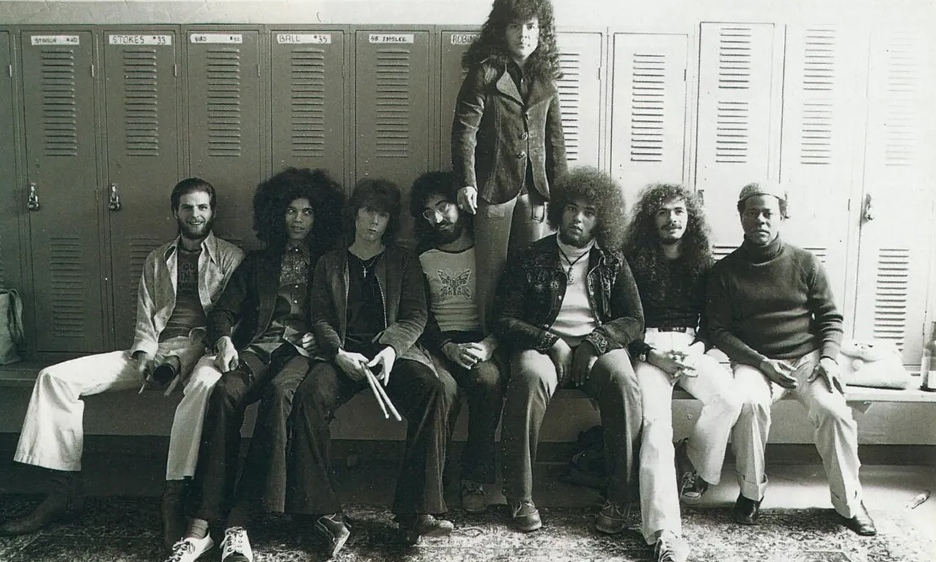

I want to use my guitar and my music to invite people to recognize the divinity and light that is in their DNA.
—Carlos Santana
Of course, many people familiar with Santana's work know that he has a strong affinity for John Coltrane's music. This in itself is not surprising, considering that Coltrane's music has influenced several rock musicians. But Santana is slightly different, and this leads to an important question. Why does Coltrane resonate differently with Santana than many other rock musicians?
A simple answer to this question is that Coltrane connects to Santana not only musically, but spiritually as well. While many musicians listened to Coltrane's music for inspiration, Santana has continuously tried to achieve something on a higher level. For Coltrane, his outstanding spiritual achievement was A Love Supreme (Impulse!, 1965). Although Santana has always had strong spiritual leanings, one of his most powerful spiritual statements came with his album Lotus (CBS/Sony 1974).
As with Coltrane, Santana was a follower of spiritual awareness rather than any specific doctrine. As Santana mentioned in his autobiography, "there's a big difference between religion and spirituality. I know now that you can only believe in both if you are willing to take personal responsibility. If you see yourself not as a drop of water but as a part of an entire ocean, a part of everyone and everything." This concept is very much in line with Coltrane's philosophy, and neither artist was interested in promoting a specific religion. Both emphasized many paths to enlightenment, and both artists strongly believed that music provides a connection to the divine, and this relationship is deeply personal.
Before considering either Coltrane's or Santana's music or spirituality, however, it might help to think about the ongoing relationship between the secular and spiritual worlds that has been a part of jazz since its inception.
During the early years of the twentieth century, when jazz first gained popularity, many associated it with a certain level of moral decline. As a result, it quickly became labeled as the devil's music. A similar paranoia arose with the advent of rock music years later. However, many of the people who made such claims never actually bothered to pay any attention to the music itself, let alone listen to it.
When you move beyond the surface-level hype, it becomes apparent that there is much more to jazz and rock music than the seemingly apparent decadence. Since its earliest days, jazz has had a spiritual connection to counterbalance any secular aspects. Buddy Bolden, one of the earliest jazz pioneers, supposedly attended church meetings frequently for inspiration. Although far from leading a devout life, the gospel music he grew up with profoundly influenced his music, according to jazz historian Daniel Hardie. In the years since, numerous jazz greats have drawn inspiration from spirituality in one form or another.
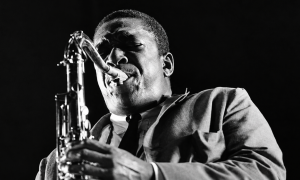
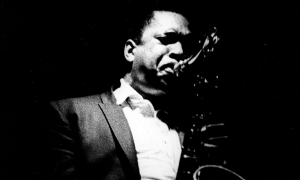
Perhaps no jazz musician, though, has tapped into the spiritual side of jazz music more than John Coltrane, and perhaps no other album in his catalog exemplifies his spirituality more than A Love Supreme. Although his intention, much like that of Bolden, was not to present any particular dogma, he did believe that "the purpose of music transcends that of mere entertainment, and can actually socially transform its listeners," as Eric Niesenson observed in a discussion on Coltrane's music. He continues by describing how Coltrane was not promoting any specific religion "but rather all of them, or more precisely, a personal synthesis of those ideas basic to all religion."
Of course, A Love Supreme needs no description. It became a classic almost immediately after its release. The album remains one of Coltrane's best-selling albums, and it is widely regarded as one of the greatest albums ever made. In his book on the album, Ashley Khan noted how it "became a best-seller in jazz circles, and was heard in college dorms and ghetto apartments, on Harlem and Haight-Ashbury street corners." Guitarist Carlos Santana was one of those San Francisco residents, and the album altered his musical outlook.
However, the influence of A Love Supreme extended beyond music itself. The album's spiritual message also resonated with many listeners. Franzo and Marina King, for example, celebrated their first wedding anniversary in 1965 by attending a John Coltrane concert and experienced a spiritual awakening as a result. Following Coltrane's death, the couple eventually founded the Saint John Coltrane African Orthodox Church in San Francisco, where Coltrane is venerated as a saint and his music continues to play an integral role in worship. (Incidentally, Alice Coltrane sued the church because she felt they had deified Coltrane. Sainthood was one thing, but she took issue with elevating him to godlike status.)
Santana's response to A Love Supreme was also deeply personal, but he was far from the only listener who heard something sacred in Coltrane's music. "The first time I heard A Love Supreme, it really was an assault. It could've been from Mars as far as I was concerned, or another galaxy." Santana embraced A Love Supreme, allowing Coltrane's influence to guide him, and his spiritual enlightenment is probably best captured on his album Lotus.
To understand Santana's mindset, however, it pays to take a closer look at Coltrane's vision first.
Around the time he started working with Miles Davis on the landmark album Kind of Blue (Columbia, 1959), Coltrane experienced a religious conversion. As Gary Giddins notes in his book Visions of Jazz, Coltrane renounced drugs and alcohol, and "with surprising assurance, he finally took up the reins as bandleader." His work during the early sixties produced some of the most important jazz recordings to date. His original compositions such as "Giant Steps," "Naima," and "Impressions" have since become jazz standards. He also redefined the Rogers and Hammerstein classic, "My Favorite Things," bringing it to a new level of appreciation in the jazz world.
Coltrane's album A Love Supreme, however, tapped into something powerful. Rather than preaching, Coltrane focused on the quest for understanding something transcendent. As he described in an interview, "I think the majority of musicians are interested in the truth, you know—they've got to be because a musical thing is the truth."
In his autobiography, Santana describes an epiphany that echoes Coltrane's own spiritual awakening. Despite his success, Santana continued to wrestle with anger and self-doubt. However, he realized he could use his talent to connect with something larger than himself. "When I could understand that, I was like a snake shedding its skin. The old skin was guilt, shame, judgment, condemnation, fear. The new skin is beauty, elegance, grace, dignity."
This realization transformed him both personally and musically. "I want to use my guitar and my music to invite people to recognize the divinity and light that is in their DNA." Once he recognized this purpose, he turned to Coltrane's A Love Supreme as a guiding force.
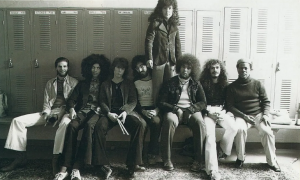
Santana describes some of the events that led to this discovery in his autobiography. By the early seventies, Santana, the group, had everything a rock band could want. Each of the first three albums produced hit singles, and they established themselves as a commanding live act. However, problems developed, creating friction within the group. Some of the players were becoming increasingly dependent on hard drugs, and their reliability both professionally and musically was suffering as a result.
Also, two of the core musicians, Gregg Rolie and Neal Schon, were becoming increasingly interested in playing more straight-ahead rock music. Up to this point, the band was a very egalitarian unit, despite being named after Santana. When problems arose in the group, though, Santana saw the need to take more control. "It took me around a year to go from being part of the band to being at the point where I was feeling that the name of the band wasn't just a cool-sounding name: it was my name." Santana (the musician) took control and wanted to change the band from the laissez-faire hippie band to a professional outfit. But the changes did not take place immediately.
For starters, the band did not take kindly to the demands Santana was suggesting, and gave him an ultimatum. The musicians were certain that they could be successful without him, so Santana's group gave him a "my way or the highway" choice. He chose the latter, and the band went on tour without him, which proved to be a poor decision.
After a few performances, band members were calling him to join them. The audiences were upset that Santana was absent from the shows, and the band members knew it was essential to get him back to survive, which also meant they would ultimately have to follow his direction. As he described it, "I could tell that there was a hurtful rub when I was in the room with certain people, and I'm sure it was the same for them, but what happened had to happen. When something is over, it's over."
During this time, Santana was developing spiritually, but he was still a long way from perfection. As he described it, he could be insensitive among the people around him. "By contrast, I could tell from listening to the interviews John Coltrane did that he was very considerate of other people's spiritual unfolding, or their lack thereof, whenever he spoke. That was what I needed to aspire to—not just his music. There was a lot of learning going on in 1973."
During this time, everything changed for the band. Some of the band members had to leave due to drug use. Meanwhile, Rolie and Schon left to form their own band, Journey. Santana was becoming more professional, but their sound also transformed.
At this point, Santana was totally immersed in the music of John Coltrane, and he also found a musical and spiritual soulmate in John McLaughlin. Along with a shared interest in Coltrane, they were both followers of the Indian spiritual leader, Sri Chinmoy. The two guitarists collaborated on a tribute album to John Coltrane, Love, Devotion, Surrender (Columbia, 1973). Santana also recorded the album Illuminations (Columbia, 1974) with Coltrane's widow, Alice Coltrane.
It was also around this time that Santana's sound as a group shifted into a new direction. Beginning with Caravanserai (Columbia, 1972), the band started becoming more jazz-influenced. "We were looking for our new identity beyond Santana. You could say we were looking for Weather Report and for Miles Davis." The changes probably seemed like a mistake on the surface. After Santana III (Columbia, 1971), it would be a few years before Santana would have another top-40 hit. "I think what we were all doing was looking for our identity in the same places—rock and jazz—with a spirit of exploration and the courage to try something new, even if it didn't make sense or we weren't supposed to do it. Caravanserai was the album we weren't supposed to do."
Santana's jazz phase lasted through the next two studio albums, Welcome (Columbia, 1973) and Borboletta (Columbia, 1974). But the album that probably best encapsulates this period of Santana's work is Lotus, which was recorded in Japan during the Caravanserai tour. Although Lotus was not released in the United States due to its elaborate packaging, European pressings released in 1975 became the bestselling import album in the United States at the time.
The album's design encapsulates Santana's religious philosophy, which was not dissimilar to Coltrane's. The images on the album all relate to spirituality in different ways. The lotus is important in Buddhism and Hinduism as a symbol of purity, rebirth, and spiritual awakening. The 22-panel gatefold includes religious artwork from Eastern and Western religions, including a "divine triptych," featuring Krishna, Buddha, and Jesus Christ.
The album's cover sets the stage for the music, which is different from anything Santana had produced up to this point. Anyone expecting a live presentation of Santana's Greatest Hits is in for a disappointment. Lotus is improvisational rock at its finest. All of the musicians are in top form. Almost every song is lengthy and most segue into the next song, creating what Santana calls "shaman music," which he describes as "music that casts a spell and transports the listener to a place beyond time and gravity, beyond problems."
Santana's approach here mirrors Coltrane's philosophy regarding music. Coltrane described his music as "the spiritual expression of what I am," which embodies faith, knowledge, and being. "When you begin to see the possibilities of music, you desire to do something really good for people, to help humanity free itself from its hangups." Coltrane envisioned something greater, and Santana was fully in tune with this mindset on Lotus. As Coltrane put it, "I want to speak to their souls."
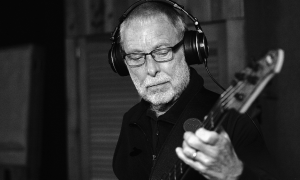
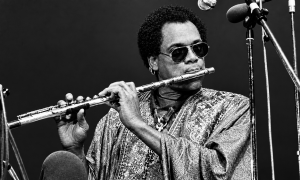
Listening to Lotus is more like an event than a straightforward listening session. Santana shows his mastery of the guitar here, and he is joined by an exceptional group of musicians, including Tom Coster and Richard Kermode on keyboards, Doug Rauch on bass, Michael Shrieve on drums, Armando Peraza, Jose 'Chepito' Areas and Leon Thomas on percussion. The album begins in silence and slowly builds in intensity as the music progresses. While many of the selections feature jazz-inspired improvisational grooves like "A-1 Funk," Santana also includes popular favorites such as "Black Magic Woman," Oye Como Va," and "Samba Pa Ti." During the improvisational passages, Santana manages to include allusions to Coltrane, Jimi Hendrix, Gabor Szabo, The Beatles, and others. This is the type of album you want to set aside a couple of hours just to sit back and soak it all in, and the more you listen, the more you discover.
Encountering Lotus is unlike listening to an ordinary live album. It seems as if Santana took his lessons from Coltrane and put them to practice in a rock context. Lotus invites active listening rather than passive entertainment, allowing listeners to be temporarily elevated above the daily grind.
Perhaps Santana provides the best description of his musical objective in his autobiography. He describes a dream he had where he is hanging out with John McLaughlin, and John Coltrane shows up riding a bicycle. Coltrane wants to play music but stops when he discovers that a group of kids stole his bike. He runs off to find it and Santana tags along to help. They find the bike, but it has been stripped. The wheels and seat are gone.
When Santana woke up, he phoned Alice Coltrane because he was confused and had no idea what the dream meant. It seemed obvious to her, and she gave her interpretation. The kids represented the younger musicians who listen to Coltrane but find it challenging, so the stripped bicycle relates to their inability to carry the music to the people who need to hear it. They essentially have no vehicle after it has been dismantled. Santana describes how he has "been trying to put the wheels back on that bike since 1972."
Lotus was possibly Santana's first great attempt to put those wheels back on the bicycle, but it did not come about by recreating A Love Supreme. Instead, Santana discovered new possibilities for his music by expanding on Coltrane's belief that music could become a vehicle for deeper understanding. Lotus allowed Santana to expand on Coltrane's approach and bring it into a rock context, carrying forward one of John Coltrane's deepest artistic convictions.
About Santana

Tags
PREVIOUS / NEXT


Become a Sustaining Member

Since 1995, All About Jazz has championed jazz as an art form and supported the musicians who create it. Over three decades, it has grown into one of the world's leading jazz resources, serving hundreds of thousands of readers, musicians, presenters and industry professionals each month.
Help Build the Future of All About Jazz
Your support helps us continue building All About Jazz for the next generation—expanding our editorial coverage, preserving jazz history, developing new community features and creating better ways to discover the music and the people behind it.
Become a sustaining member for as little as $20 per year and you'll immediately enjoy an ad-free experience along with access to subscriber features and future articles for a full year.
Together, we're not simply sustaining All About Jazz—we're building its future. Thank you for being part of the journey.