Home » Jazz Articles » The Jazz Life » James Rivers: A Retrospective
James Rivers: A Retrospective
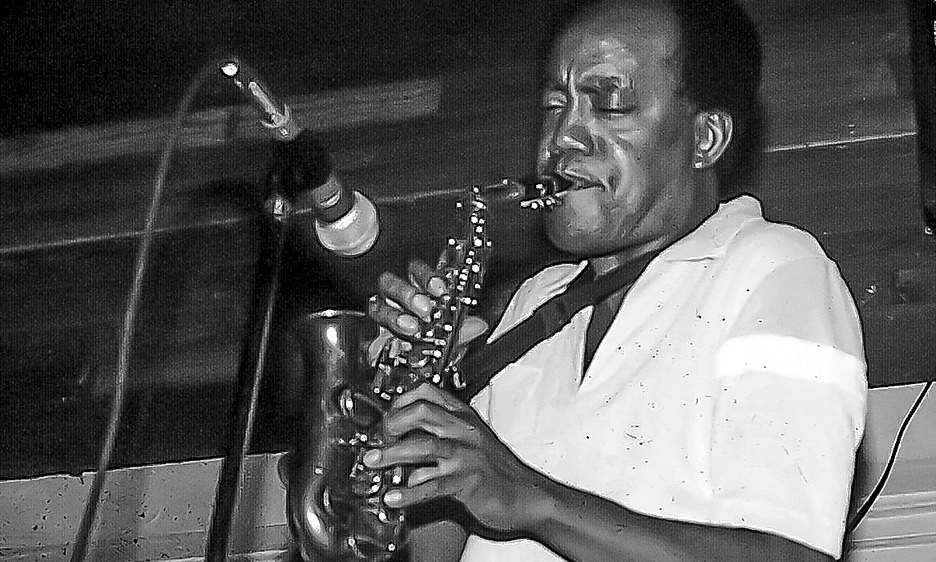
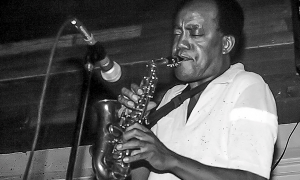
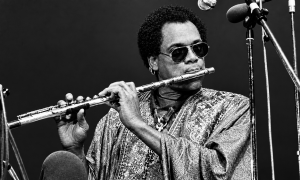
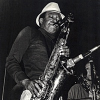
Courtesy Fred Laredo
...it can’t just sound good but should FEEL good too. This is how I thought when I was younger growing up and it is how I still am today too!
I went to Craig Grammar School, right in the heart of Tremé, where they had a great school band at that time in the late '40s. I always wanted to play in that school band as I often saw them marching down Claiborne before the overpass was constructed, when it was a beautiful street and literally the center of black entertainment and culture between Canal St. and St. Bernard.
Everybody wanted to see that school band rather than those of the other schools and the girls throughout the neighborhood would marvel at those marching bands. They would say, "Look, here comes Craig's band" or "Here comes the Booker T. Washington band." And get all excited. I was down there, watching it all and remember thinking to myself, I've got to start playing music! That was way back in the game, but from that time is when I first knew I wanted to play music.
Of course, I grew up with the church traditions, and that was what I first heard, and it is fair to say it influenced me to this day, playing with a real feeling. With all the people in the Black Baptist churches, you'd hear people shoutin' and someone passing by outside might think there's people in there fighting or something—all very different than the other church music I've heard.
This was all going on during the time of segregation and racial tensions, and my parents were not encouraging me to get out onto the streets with a marching band, but it was something I wanted to do. It was my idea. During that time of segregation, our high school band had to parade in back and follow the other white schools on the parade route.
I played with the Craig Elementary School band in 1949-1950, and my first teacher was Clyde Kerr. Many of the kids went to him to learn whatever. He was a trumpet player and a pretty good musician too and it was with him that I first learned clarinet! He also taught at Xavier Prep, along with math and English too. It was so long ago; that's going way back in time now. After that, I wanted to go to Booker T Washington High School, as they had the best Black high school marching band—actually the best band, period. By far the very best, of all the schools in my opinion with the likes of Art Neville, Allen Toussaint and James Black enrolled around the same time. I'd sometimes see them in the music room or with the marching band, but we never went out on our own to play anything together.
I graduated from high school in 1955, still playing clarinet, and received a scholarship to attend Southern University. But I turned down that scholarship and went straight onto the road instead. That's when I started to play saxophone. I was not ready (in my mind) to play Dixieland or traditional jazz; I wanted to play the "other stuff," meaning rhythm and blues, so I started with the saxophone and have not really played clarinet since leaving high school. If I had continued with it, I would have had to go play traditional jazz down on Bourbon St., and I was simply not ready for that; it was a scene for older Blacks playing in the French Quarter. I was tired of the marching band scene, did not want to do the trad jazz scene on Bourbon St., preferring instead to get on the road and play nightclubs. I was always the youngest guy in those bands but my momma had no problem with any of that even though I was playing with some older guys. No one from those days turned out to be famous, but they were good. I liked hanging with them, and learned a lot during that period of time.
I was interested in playing for a younger audience with the excitement of nightclubs; I wanted to play that "hop stuff,: like the blues. I hooked on with Earl King who was one of the nicest guys I ever worked with—way back well before I had my own band. In those days, the Dew Drop was a happening scene and he used to hang out upstairs there, aside from using the local K&B Drug Store or Tastee Donuts as his office. During those earlier years when I first started playing saxophone, it was one of the top clubs in town. I'd hang out there during the daytime just to network with some of the other local guys who were doing what I was doing—hanging out looking for different opportunities.
I actually met and played with Robert Parker then, the band leader for Huey 'Piano' Smith & the Clowns, long before "Barefootin'" was recorded and released. Jesse Hill was the drummer with that band and Raymond Lewis played the bass. We were playing the tenor sax, me and Robert Parker, doing it together for about two or three years. He is one guy I respected as I was coming up, but I think some players were jealous of him. We never played like enemies, competing for solos or anything like that, but with a mutual respect for each other, and easily shared the limelight with solos and stuff like that. He listened to what I was playing and I listened closely to him too; that's how you learn in this business. I have nothing but good things to say about him!
We were all so young, rippin' and runnin' all over the country by car. It was an eye-opener. It was hard work, but I enjoyed it and was pretty successful too; we were busy! I wasn't married then, and we had some fun times for sure.
When I was out on the road travelling, I also met Jimmy Reed and it was from him I learned how to play harmonica. He'd performed with that harmonica harness around his neck, playing guitar at the same time, and I thought to myself, How can you play it like that? He certainly taught me some tricks I would have never learned elsewhere.
I did a few gigs with Professor Longhair too; that goes way back there again, when I had just come out of school. I appeared on a couple early recordings with him, including "Going to the Mardi Gras!" He was one of the better guys to hang out with, and I had a lot of respect for him. At that time, he used to keep a little bottle of liquor close by, but gave it up later.
I met up with Sam Cooke when I was working with Percy Stovall, a music agent, who had arranged for him to come down south. Stovall handled a lot of bands at the time; he was one of the very active managers, and some of the older musicians probably remember him. Sam was singing with The Soul Stirrers then, way before he became a star. They used to come down to New Orleans, performing gospel music in the churches; he was the lead singer, another one who came out of the gospel tradition. The Soul Stirrers were quite popular at that time, along with the Mighty Clouds of Joy. These gospel groups would compete among themselves at that time with all the church people going to see them including my momma.
I know somewhere it's written that I helped with the musical arrangement for "You Send Me," Sam Cooke's first hit, but that's wrong. I'd like to take credit for that, but no, it never happened! I wish I had, but ... the only thing I did was play some behind him, and that's it. He was one of the nicest guys I've ever played with, an exceptional man. But there were other guys I've worked with who were not so nice, guys whose names I would never mention in the same breath as his! [laughs]
I also did a couple sessions at Allen Toussaint's recording studio—Sea Saint. We go back a long way, as I remember him from Booker T. Washington High School with the school marching band; I was a year older than him. Working with me, Toussaint arranged the song, "Closer Walk" (Instant Record label); my grandmother wanted to kill me for playing music like that! We were all young at that time, and Baptists too. She would tell me not to play that blues music! I'd be practicing at home, and she'd come in and say, "There you go, playin' that 'devil's music' again!"
Some musicians were probably jealous of Allen's position, but he was always good with me. He was a perfectionist, but I never had any problems with him. It was easy—I would simply play what he had written down on the paper, it was not complicated. If you screwed up, he would get on your case and let you know, but if you played what you were told, what he had written on the paper, there was never a problem.
I worked a bit in Cosimo Matassa's studio too. He had nothing to do with hiring musicians; he just owned the studio. It had everything, and was the best studio in town with the best equipment. Located on the edge of the Quarter on Rampart, so many of the big hits from this town were recorded there.
One single I put together was called "Bird Brain" where I'm playing flute. I named that song after my brother because my mother would call him that when he was acting up. When we were young, it was a family thing—an inside joke, and I ended up naming that song after him.
I played a bit with Dr. John too, someone I considered a friend. Whenever we played together, we were both just backing someone else up. Its not like we were hanging out all the time, but we saw each other periodically over the years when we were in the same place working with the same musician. I liked him and can't say anything bad about him at all.
My career on the road with Huey Smith ended horribly. We were supposed to be playing an evening gig that same day in St. Petersburg, Florida, and left the Dew Drop at around 12:30 pm. There were no interstates at that time, just two-lane roads, and back in those days, you just didn't do that—racing to a gig way too fast. We had a blow out, the car flipped over. I suffered a head injury and had to be hospitalized. Thankfully, luckily, I survived, returned to New Orleans to recuperate, and left the band at that time; I just did not want to go out on the road any more and decided I was done with that lifestyle.
In 1960 I joined Deacon John Moore, and played with him for about 10 years. He was not into travelling to gigs and played mostly here in town or close around, which suited me just fine. I played with his band while backing up Irma Thomas on occasion too, again that's way back in my game, so long ago!
Deacon eventually wanted to play a hard rock style which was not for me. So I left that band around 1970 and formed my own group at that time—the James Rivers Trio, and soon afterwards added a fourth member and the Trio became the James Rivers Movement.
One of the highlights of my career locally was playing morning sets, a jazz set, at Sylvia's on Freret Street, starting at 3 a.m. and ending at around 7 a.m., long hours. And those sets followed playing at Mel's Lounge on St. Claude earlier the same night!
Johnny Vidacovich appeared at Sylvia's too on occasion and sometimes played with me occasionally but never really worked for me; he sat in for some gigs, and the same goes for James Singleton. We did some gigs as well as some studio stuff together, but that was it. I can't remember everything that we did; there were some recordings, but it is too long ago to recall much about them.
When I started off with the Trio, Sammy Berfect, an organ player with Deac, came with me when I left that band. After a year or two, he formed his own group. He was a great organ player, really great!
In the late 1970s, I started to play at Tyler's Beer Garden on Magazine St. on Wednesday nights. In the mid '80s (1984), Hollywood was shooting a movie in town, Tightrope with Clint Eastwood. As it turned out, one night he showed up at the club, heard me playing and asked for my number. I gave it to him with no expectations of ever hearing from him again. In those days, I met a lot of actors and movie people who liked my music and asked for my number but too often never heard another thing.
But about a month afterwards, I received a call with someone saying, "Mr. James Rivers? Mr. Clint Eastwood wants to speak with you. Can you hold for a minute?" I thought it was someone around here playing a joke on me. I did not take it seriously at all! But when he came to the phone and heard that voice, I knew it was actually him! I had been a big fan of his for years.
He continued, "'m bringing some people down to hear you play. Are you still at that same club?" I assured him I was. He told me he'd be coming on a certain day, but I kept it to myself. If I had told people he was coming down special to hear me at Tyler's, everyone in the city would have been there to see him—lined up from there to Slidell. [laughs] I'm being a bit facetious, of course, but he was that popular.
He had returned to California telling his movie executive friends and more about the music he had heard in town, and about me too. They all had to come check it out. Anyway, I told the club owner to keep it quiet too, and we set up a big table to comfortably seat the eight people he was bringing with him. As people were arriving for the gig, no one could understand why they could not sit down at that one table. When the limousines pulled up with Clint Eastwood leading the way in to the club, it was apparent to everyone what was going on. As it turns out, we appeared in the background of a scene in that movie.
The next thing he did after Tightrope involved going to New York to play at Carnegie Hall. You know, people would say, " How do you get to play at Carnegie Hall?" Ask anyone and the answer is, "Practice, practice, practice."
But "James Rivers, how did you get to play at Carnegie Hall?"—and my answer was without a doubt, "Clint, Clint, Clint!" It was a great honor as I was featured and all the greats—including James Moody, Joshua Redman, Roy Hargrove—all the top jazz people were on hand to celebrate Clint in an event called "Eastwood After Hours."
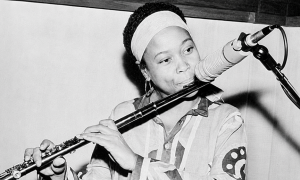
As I said earlier, it all began with clarinet as a kid but after leaving high school, I dropped it, never played it again and continued on to soprano saxophone, the tenor sax, alto sax. These days though, you will see me play the tenor sax, the flute, and harmonica. I also play the bagpipes, one of the most difficult of all the instruments I've ever played, believe me!. And I also sing.
Later, when Clint found out I played bagpipes, he flew me out to California just to show him. I ended up playing Amazing Grace in another film, A Perfect World. After that, I also appeared in Bridges of Madison County when he comes into a nightclub with Meryl Streep and he's telling her that a friend of his is playing in this club. It's me playing sax in that group! He was really into what I was doing, my music, how I played.
I have not done anything with him since that last movie in 1995; it's a long time ago now. But a couple years ago, he called just to say hello. He likes to call periodically, just to see what going on down here: "What are you doing? When are you coming up this way," things like that. Mostly he called just to see how I was doing. He's a good guy.
I stay busy enough, and still play around town and enjoy doing what I do. Occasionally Jon Cleary calls to ask me to play if I'm not busy with my own band. My group has been together for a long time now too, with the keyboard player (Peter Cho ), Millard Green on bass—he's been with me for about 10 years or so—and Mayumi Shara on drums.
And of course I still perform at Jazz Fest something I've been doing since 1970. I first met Quint Davis as a student at Tulane, when he was part of the fraternity scene at school. At that time in 1970, I was still with Deacon John's band and first performed at Jazz Fest with my own band in 1972. I've always enjoyed the opportunity that festival provides, playing for a lot of people, not only our local New Orleans crowd.
If asked for advice by a young musician who wants to be in this business, I'd tell them they have to be ready to pay their dues— you have to practice to be good, and it's work!
You can't have a big head and think too much of yourself either. Just because you can blow a note or two doesn't mean you can play better than someone else. I always listened to people and respect them too, especially those who are older than me. Sometimes, I want to know something about the instrument, and would ask. You have to ask as those older guys never had a problem explaining things to me because I was listening. A lot of the guys who I came up under and learned from, they're mostly all gone now.
Recording was always good, I prefer it when everyone is being recorded at the same time, a live take, but I've done recordings with tracking too. That's when the money comes in, because I'm not going to say I want to record it live in a single take rather than work the other way. There's some musicians who will play whatever you want, as long as you're paying them enough to do it, so I had no problem with click-track recording sessions. It was fine with me.
What did I learn from my folks when I was young? To be aware of the crowd you're running with, as it's best not to hang out with the wrong crowd. There were some people way back when I was young who were always getting into trouble, using dope and stuff like that. In one of the bands I was in as a young man, all the guys were smoking weed. I left them behind pretty quick, as I didn't want anything to do with that scene. My grandmother used to go to church all the time; her mind stayed with the church, and that influenced me for sure. There were several people in the past who gave me good advice about having a good work ethic and practicing a lot.
The music scene in this town has always been like it is today. Younger musicians come up doing new things, and playing a bit of what the older musicians are doing as well. I have no problem with musicians trying out a new thing. But I do come from the old school, and others might not see it quite like I do. A lot of people do not bother to explain things to the younger guys, as some of them have a negative attitude about what's been played in the past. You obviously can't do anything about that; there's always been guys like that, so it is really no different today than it once was.
These days I don't listen to as much music at home as before. I still like to listen to music, but it's gotta be good! It's not like I would put on only jazz or the blues, or whatever. If it sounds good to my ear, I'll listen to it. If it does not sound good, I don't care what kind of music it is! And it can't just sound good but should good too. This is how I thought when I was younger growing up, and it is how I still am today too!
 FOLLOW Thomas Cole
and get notified whenever a new article published.
FOLLOW Thomas Cole
and get notified whenever a new article published.
A world traveller in the past, and now... an obsessive writer and observer of life.
About James Rivers
Tags
PREVIOUS / NEXT


Become a Sustaining Member

Since 1995, All About Jazz has championed jazz as an art form and supported the musicians who create it. Over three decades, it has grown into one of the world's leading jazz resources, serving hundreds of thousands of readers, musicians, presenters and industry professionals each month.
Help Build the Future of All About Jazz
Your support helps us continue building All About Jazz for the next generation—expanding our editorial coverage, preserving jazz history, developing new community features and creating better ways to discover the music and the people behind it.
Become a sustaining member for as little as $20 per year and you'll immediately enjoy an ad-free experience along with access to subscriber features and future articles for a full year.
Together, we're not simply sustaining All About Jazz—we're building its future. Thank you for being part of the journey.