Home » Jazz Articles » The Jazz Life » 15 Minutes with MacKenzie Scott
15 Minutes with MacKenzie Scott
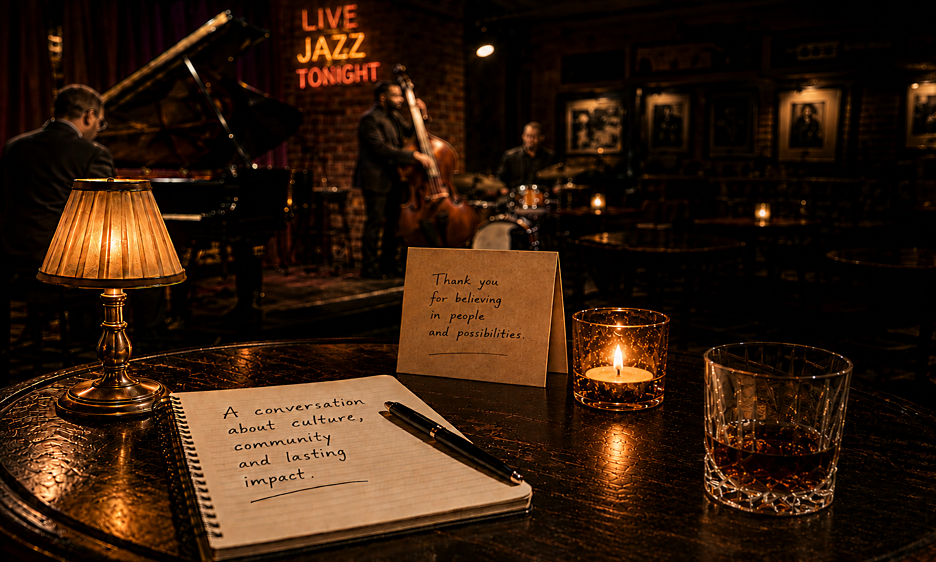
The arts do not need another campaign reminding us that they matter. They need durable structures that allow the people who create them to build sustainable lives, support one another and pass their knowledge forward.
We are living through a difficult and contradictory moment for the arts. Music, photography, film, literature and visual art have never been more accessible. Creative work surrounds us constantly. We encounter more art than at any previous point in history, yet many of the people creating it remain remarkably underserved and unsupported.
Streaming platforms can distribute music around the world almost instantaneously and generate enormous revenue, but that global reach has not translated into sustainable economic lives for many of the musicians whose work makes those platforms possible. Spotify did not create the music industry's economic inequities, but it has become one of it's clearest expressions. The deeper problem is not simply how much revenue the industry generates, but how that revenue moves, where it accumulates and how little ultimately reaches the artists and communities whose work makes the entire system possible.
Artificial intelligence has made that imbalance more obvious. Almost all intellectual properties and creative works can now be used to train systems capable of producing commercial material at a scale no individual artist could possibly match. The legal and ethical issues are evolving rapidly, questions of permission, compensation, copyright and competition with human creators are changing faster than most humans can keep up with and the changing landscape is becoming more fragile and perilous.
My concern is not with technology itself. I have spent my career at the intersection of music and technology, working through the transition from analog tape and large-format consoles to digital workstations, networked production and global distribution as a musician, producer, mixer, sound designer, educator, creative technologist and advocate. Those developments lowered costs, removed barriers and placed extraordinary tools in the hands of independent creators. Taken together, they make clear that technological progress alone does not determine who ultimately benefits from it.
Technology democratized creation while corporate infrastructure consolidated wealth.
After living through several generations of technological change, I have become convinced that the strongest alternative is not another form of competition. Individual artists and independent arts organizations cannot outspend, outscale or out-algorithm the largest technology companies. What we can do is collaborate. We can build networks in which knowledge, audiences, opportunities and economic value are deliberately shared rather than extracted.
That begins with understanding the full arc of an artist's life.
An artist does not suddenly appear with a finished album, a concert tour and a promotional photograph. The process begins much earlier, with curiosity, education, access to an instrument and, frequently, the arrival of a mentor who recognizes something before the young artist fully recognizes those same qualities in themselves.
As that artist develops, their needs change—from access and encouragement to collaborators, professional guidance, visibility and the freedom to explore and make mistakes. A working artist needs opportunity, economic stability and a community capable of sustaining a career through changes in fashion, technology, health, family responsibilities and public attention.
Later, that same artist may possess decades of experience but discover that the professional system has little idea what to do with someone who is no longer young, new or easily marketable. Too often, artists simply age out of visibility, even though they may have more knowledge, perspective and practical wisdom to offer than at any earlier point in their careers.
These are not separate problems. They are stages of the same life.
Artists need different forms of support at different points in that life: access, education and mentorship when they are young; collaborators, visibility and opportunity as they develop; economic stability and community as they build careers; and meaningful, compensated roles as teachers, mentors and cultural leaders as they grow older.
That final stage matters even more in the age of artificial intelligence. Technology can analyze patterns, reproduce styles and provide almost unlimited information, but it cannot build trust, recognize potential within the context of a life or pass on the judgment earned through decades of success, failure, collaboration and sacrifice.
A database can preserve information. A mentor can help another person understand what to do with it. Mentorship is not a sentimental attachment to an earlier era. It is one of the most sophisticated forms of cultural preservation available to us. It keeps knowledge alive, adaptable and human while giving older artists a continuing purpose within the communities they helped create.
If we genuinely believe in supporting the full life of an artist, that commitment cannot end when the commercial system decides an artist is no longer economically valuable. The later stage of the cycle should not be treated as the unfortunate conclusion of a creative career. It should be understood as a period in which accumulated experience becomes an essential community resource.
Turning that vision into a functioning system requires an established platform capable of connecting artists, audiences, educators, institutions and resources across generations.
Since 1995, All About Jazz has built far more than a media platform. Under Michael Ricci's leadership, it has become a trusted international advocate for jazz and the people who create it, with more than three decades of relationships, credibility and service to the community.
That credibility is supported by substantial existing infrastructure. All About Jazz operates a global platform combining daily journalism, interviews, reviews, extensive musician resources and live-performance discovery through Jazz Near You. All About Jazz Media is not an idea being sketched on a whiteboard. It is an effort to extend and connect systems, relationships and communities that are already in place. All About Jazz has also developed relationships with thousands of musicians, venues, festivals, educators, writers and arts organizations across the world. All About Jazz currently reports approximately 325,000 monthly readers, has topped 236,000 members and is quickly approaching 94,000 subscribers.
Within All About Jazz Media, interviews, documentaries, performances, educational programming and artist-produced work are not the final objective.
All About Jazz Media provides a practical place to begin because it can document the work, preserve knowledge, connect communities, expand access and support artists across the full arc of their lives. It can introduce a young artist to a mentor, bring an established musician to a new audience, capture the experience of an elder artist and create material that remains available for education and discovery long after a performance has ended.
The longer-term goal of All About Jazz Media is a circular economy that supports artists throughout the full arc of their lives. The value created through performances, media, education and community should continue to circulate among the people who create and sustain the culture rather than being extracted from it. Economic sustainability is the mechanism, not the mission.
One possible future extension of that vision could take physical form in communities combining stable, affordable housing for aging artists with rehearsal rooms, performance spaces, recording facilities, classrooms and shared creative environments. The objective would not be retirement housing with occasional arts programming. It would be to create living cultural centers in which older artists continue to mentor, teach, perform, record and collaborate. These communities would complete the circular model by allowing the people who received access and mentorship at the beginning of their careers to become the teachers, mentors and cultural leaders supporting the generations that follow. That is not charity in the diminishing sense of the word. It is continuity.
That collaborative, circular vision grows from a deceptively simple question: Why is improvisation important?
The answer reaches far beyond music. Improvisation teaches us how to listen, respond, adapt, collaborate and create something larger than any one person could make alone. It requires individuals to contribute their own voices while remaining aware of what everyone else is doing. It depends upon trust, shared responsibility and the understanding that the strength of the whole does not require the disappearance of the individual.
Those same principles can guide the development of a healthier artistic community. With the right support, All About Jazz Media can put them into practice. The goal is to create viable communities in which artistic knowledge, creativity, opportunity and economic value continue to move from one generation to the next.
Which brings me to MacKenzie Scott.
Ms. Scott has undertaken one of the most ambitious philanthropic efforts of our time. Through Yield Giving, her network has distributed more than $26 billion through more than 2,700 gifts. The scale is extraordinary, but so is the method: nonprofit organizations receive support to use as they see fit, reflecting a belief that the people closest to the work are often best equipped to determine how resources can have the greatest impact.
That approach is directly connected to what Michael and I are trying to develop through All About Jazz Media. We are not looking for someone to rescue an arts organization or finance another temporary collection of projects. The opportunity is to connect All About Jazz's existing reach and infrastructure to a larger artist-centered mission.
I believe in six degrees of separation and in the possibility that an article can occasionally find its way to exactly the right person. Admittedly, publishing someone's name in a headline is not the customary route to a conversation of this kind. The customary route presumably involves several intermediaries, a formal proposal, a committee, a strategic review and, eventually, a catered lunch.
I am trying something more direct. Rather than waiting for the right chain of introductions to form, I am using this article to ask MacKenzie Scott for fifteen minutes of conversation—not simply to request funding, but to explore whether the philanthropic principles she has already demonstrated might align with what All About Jazz has spent more than three decades building: a trusted international platform capable of helping create a sustainable ecosystem that supports artists throughout their lives.
Fifteen minutes would not begin to cover everything All About Jazz Media could become, but it would be enough to discuss what is already in place and what the right partnership could enable.
That invitation extends to philanthropic and creative partners who understand both the urgency of this work and its long-term possibilities. MacKenzie Scott remains an especially compelling person with whom to begin because her approach suggests the kind of serious, trust-based partnership this vision requires.
A child discovering music needs access to information and opportunity; a developing artist needs mentorship and a safe space to explore and make mistakes; a working artist needs visibility, community and a sustainable economic life; and an older artist needs dignity, purpose and a continuing place within the culture they helped create.
The arts do not need another campaign reminding us that they matter. They need durable structures that allow the people who create them to build sustainable lives, support one another and pass their knowledge forward.
A lifetime in music has taught me that meaningful possibilities often begin in an unexpected moment: someone listens, someone responds, and an idea starts moving in a direction no one could have planned. This essay is my attempt to create that moment.
If it finds its way to MacKenzie Scott—or to another person who recognizes what might be possible—15 minutes would be a meaningful place to begin.
The catered lunch can come later.
 FOLLOW John March
and get notified whenever a new article published.
FOLLOW John March
and get notified whenever a new article published.
John March is the owner of JM Media Services LLC, Producer, Sound Mixer, Sound Designer, Social and environmental activist and the new Creative Director and Head of Production for the new division All About Jazz Media.
Tags
PREVIOUS / NEXT

Become a Sustaining Member

Since 1995, All About Jazz has championed jazz as an art form and supported the musicians who create it. Over three decades, it has grown into one of the world's leading jazz resources, serving hundreds of thousands of readers, musicians, presenters and industry professionals each month.
Help Build the Future of All About Jazz
Your support helps us continue building All About Jazz for the next generation—expanding our editorial coverage, preserving jazz history, developing new community features and creating better ways to discover the music and the people behind it.
Become a sustaining member for as little as $20 per year and you'll immediately enjoy an ad-free experience along with access to subscriber features and future articles for a full year.
Together, we're not simply sustaining All About Jazz—we're building its future. Thank you for being part of the journey.