Home » Jazz Articles » Multiple Reviews » Voo Voo Runs the Voodoo Down
Voo Voo Runs the Voodoo Down
Courtesy Jacek Poremba
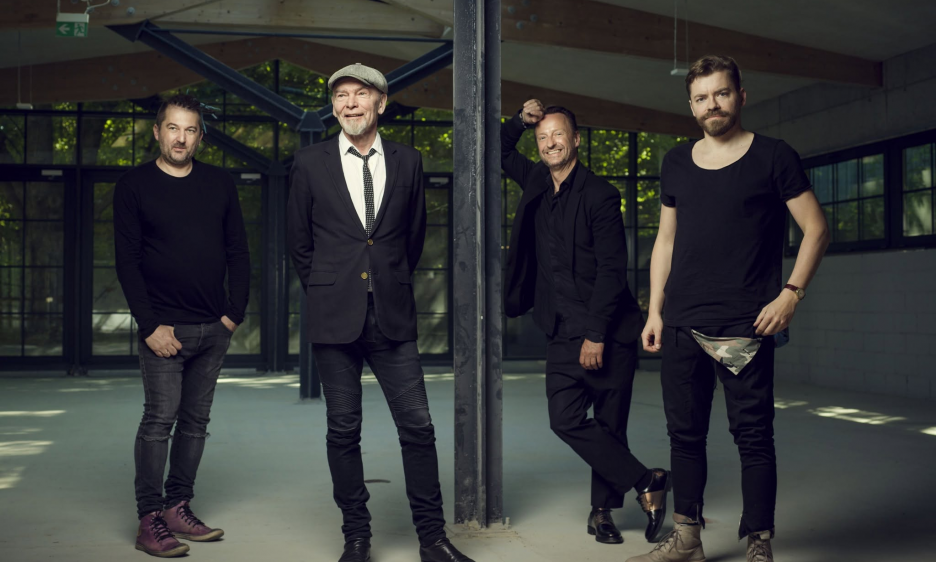
Voo Voo is a state of mind. But so is jazz--an approach; not a trick for cutting corners but a fascinating detour that gets the listener to the emotional core. Voo Voo does not simply flirt with jazz. Improvisation, odd meters, and freedom in interpreting the material live are a staple of their philosophy.
The story of the band begins amidst the ruins of Waglewski's previous project, I Ching (Savitor, 1984) by Morawski Waglewski Nowicki Hołdys. Their second and final record, Świnie (pigs) (Polton, 1985), was almost strangled at birth by censorship that rejected several compositions, forcing the musicians to put out a stripped-down version of the LP. Angry, claustrophobic music on the album lashes out at the totalitarian system with all the might raw no wave music and cryptic lyrics could muster. With the departure of Zbigniew Hołdys, the band essentially dissolved into the bare bones of Waglewski's solo project, aptly renamed Voo Voo. The touring unit behind their debut release in 1986 saw a complete change of lineup, at this point including brothers Jan (bass) and Mateusz Pospieszalski (saxophones, trumpet), leaning on Andrzej Ryszka on the drum kit (replaced in 1991 by Piotr Żyżelewicz). From then on, any musician's departure resulted in a tectonic shift in sound. With Martusewicz replacing Pospieszalski in 1998 on (double) bass and Michał Bryndal stepping in for Żyżelewicz after his sudden death in 2011, the ensemble began to experience a stronger pull towards jazz.
Mind their own ethnos!
Long before the inception of Google, the band would be wildly inventive in coming up with search-proof titles for their albums. Za niebawem (Agora SA, 2019) stands for 'incoming soon.' Płyta (Sony Music, 2002) simply means 'record,' whereas Łobi Jabi, since its release, has become a common phrase in Pospieszalski's secular glossolalia—the invented language upon which Voo Voo's genre-bending music-making operates. Genre labeling does not apply either. In fact, with the persistence matching perhaps only Alan Lomax's or Ocora label's ethnomusicological mission, Waglewski's band strives for a complementary and non-local description of music that reaches across labels and continents alike. The range of international collaborations that supported them in this endeavor is equally challenging to the conceptual purity of a mother tongue.If rock serves as the compositional sketchpad, jazz best describes their approach to arrangements and live performances. Its particular brew comes from roots music rediscovered by American musicians in the 1960s, especially Don Cherry's Organic Music Theatre and LPs like Brown Rice (EMI, 1975) are on top of the references list. Waglewski's own roots in Nowy Sącz, with its rich culture of Lachy Sądeckie, paired with his own insatiable curiosity, oriented him early on towards folklore from all around the globe. In the 1970s, he toured Europe with Osjan—a collective of musicians performing music loosely inspired by Indian and African folk, augmenting these with free improvisation on an extended array of instruments: sitar, gongs, tabla, bongos, and ligawa (traditional Polish aerophone).
Ethno jazz—endorsed by Cherry, John Coltrane's late works, and Pharoah Sanders—remained probably the only immovable part in the band's evolution. This element, Waglewski explains, is the guiding principle, aiming at a liberation of the musician from learned templates, habits, and other shortcuts to fall back on, such as the twelve-bar blues chord progression for first-time improvisers. Transgressing the dichotomy of experimentalism and tradition can only be achieved by discarding both. And then, there is only so much emptiness to furnish during the performance, as the improviser's flow allows for.
As its trademark, the band often borrows harmonic structures from non-European musical traditions, discovering unlikely siblings across time and space, e.g. pairing Indian raga with trance and trip hop on Oov Oov (Music Corner Records, 1998), introducing Jimi Hendrix's guitar pyrotechnics to Ali Farka Toure's blues on Zapłacono (Polton, 1994), and attaining a hushed, slow take on minimalism akin to Toby Driver's sludge balladry on 7 (Art2 Music, 2017). Notably, raga—as a musical structure—is incredibly important here because of this form's provenance as a technical exercise—contrary to the spontaneous free flow it is often mistaken for.
Ex-stasis: a live beast
In their playing, Voo Voo developed a distinct philosophy; not much of a rule book, much more a self-organizing system. Waglewski comes up with the concept, which is subsequently worked out in the studio, and then given another life on the tour. It is an in-built feature, as the material metamorphoses in front of the audience, making each performance unique. However, there is an important constraint to live improvisations that prevents them from slipping into smug doodling. Miles Davis was notorious for his on-stage tyranny. As conductor, he disciplined his band, unflinchingly cutting short lengthy solos—irrelevant how passionate they were about to be. Similarly, there is a ban on endless soloing. The collective play locks in on the moment, a groove, a texture, a dense rhythmic pattern. As Waglewski admits in Piotr Metz's book-length interview, Voo Voo. Dzień dobry wieczór (Agora, 2016): "[i]nstead of building up tension, ramping it up—we just hit stop and that's it; we play it on a loop." This loop neither crescendos nor deescalates, creating a sense of intense, dynamic stasis—a state of play that says almost nothing of the overwhelming sense of presence fans continue to enjoy at the gigs.In unison, each of the ensemble's members agrees that Voo Voo is a state of mind. But so is jazz—an approach; not a trick for cutting corners, but a fascinating detour that gets the listener to the emotional core. Voo Voo does not simply flirt with jazz. Improvisation, odd meters, and freedom in interpreting the material live are a staple of their philosophy. And what a treat it is to see them live, at different stages of the tour, promoting Dobry wieczór (good evening) (ART2 Music, 2014) or 7, each played in its entirety; witnessing how the material expands, mutates, and evolves in surprising directions. The debut performance of their highly acclaimed 7, recorded for the Polish Radio Program Three at the Agnieszka Osiecka Studio in Warsaw, consisted of the entire record played back-to-back as an open rehearsal, with group improvisations augmenting the album by twenty minutes. Towards the end of that tour, the material changed so much, releasing a live album would have been justified, if only as an update on the original release.
Another good example of the post-minimalist persistence on phrase repetition comes with the ever-shifting arrangements of their flagship "Flota Zjednoczonych Sił" (the fleet of the United Forces). Already a live favorite as of 1985, when it was performed in its embryonic form as "Styks," in the 1993 incarnation from Łobi Jabi (Tonpress, 1993), along with further variants, it interchanges between a slow-burning ballad growing into a tribal chant carried by a propulsive rave-up, full-on guitar, and saxophone solos. Now, the song incorporates an extended outro, where the album's title is riffed upon, encouraging vocal contributions from the audience. Especially that segment of the track has consecutively been cross-dressed as a ska punk rant, a rockabilly trot, and an Afro-Cuban fiesta. One particularly enchanting version was performed at the 2014 Solidarity of Arts festival in Gdańsk, where Waglewski's quartet joined forces with Esperanza Spalding. In all of these, the song is imagined anew on stage, retaining its lyrics and verse-chorus shuffle, and little else; the rest is an assemblage of moving parts, rearranged on the go.
The shape of things to pass
Is this how jazz, according to Voo Voo sounds? It is trippier, trance-infused, funky, and heavy on electronics, samples, and breakneck rhythms. It is not the kind of jazz Wynton Marsalis and Ken Burns would have approved of, while Jaga Jazzist and Shabaka Hutchings could not have resisted putting on repeat. Voo Voo was never particularly interested in "jazz-rock," but a unique kind of 'music of the sources' with a trance-like backdrop, a rock rhythm, emotion, and room for improvisation"—Waglewski confesses to Metz in the further part of the interview. And there is a distinct flavor to their blend, which grows out of Waglewski's beginnings in Osjan, enchantment with Cherry, Sanders, and the 1970s electric Miles, let alone the propensity to drift all over the (stylistic) map. Modern jazz fascinations properly took hold at a crucial period for the band. Having concluded the much beloved 'world music' period—when Voo Voo immersed themselves in the folk traditions of Senegal, Mali, Guinea, Congo, Nepal, India, among many others, through the use of specific instrumentation and vocal styles (tabla, kora, Mongolian throat singing, shehnai, Podhale bagpipes [koza/goat])—Waglewski ventured boldly into hip hop, electronica, advancing onto the IDM scene, mixing it up with ambient backdrops, dub, while still leaving considerable room for improvisation. When added up, these ingredients make up Nu Jazz. In Waglewski's case, though, any pursuit of newness can only be read in a tongue-in-cheek manner. As a novice, he might have been enamored by this label separating avant-gardism from tradition. Years pass. Idols fade. Consequently, Voo Voo dabbles in both, rediscovering futurism in antiquity, and—which is much more common—spotting classical solutions in contemporary 'cutting edge' productions. Innovation seems to be just another buzzword, useful only as far as it allows reaching far-off destinations. But how far exactly do they need to travel to attain revelation? Voo Voo's passport is already filled with stamps to the brim.For this globetrotting reason, one should be selective as the quartet could easily boast over thirty studio releases: in their name; collaborations with artists such as the highlander multi-generational band Trebunie-Tutki (themselves combining Podhale's folk with dub in their collaborations with the Twinkle Brothers), Haydamaky (a cult Ukrainian folk—rock band), the Senegalese musician Mamadou Diouf; and records released under Waglewski's or other artists' names: Muzyka od środka (music from the inside) (Polstar Records, 1997), Tylko Dylan (nothing but Dylan) (Sony, 2005) by Martyna Jakubowicz, Takie Moje Wędrowanie (such wanderings of mine) (Pomaton, 1993) by Antonina Krzysztoń, or the soundtrack for Tytus, Romek i A'Tomek wśród złodziei marzeń (Tytus, Romek and A'Tomek among the dream thieves) (Sony, 2002)—in all of which Voo Voo supports the artist as the backing band). When one picks a common denominator, there are always plenty of equally legible categories to choose from. The following selection, therefore, focuses on those records that more explicitly converse with the contemporary jazz scene, represented by Nils Petter Molvaer, Leszek Mozdzer, Bonobo, alongside Joe Zawinul, Cherry, Tomasz Stańko, Herbie Hancock, and Pharoah Sanders. These are gurus, kindred spirits, and past friends whose own sound would regularly bend rules for the sheer joy of a Complete Communion (Nonesuch, 1966) with their audience.
 Voo Voo
Oov Oov
Music Corner Records
1998
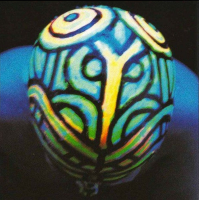
Voo Voo's electric Miles-meets-Massive Attack record is considered by many a reinvention, almost a manifesto, distancing the band from the African plateau of Zapłacono. This is the LP that dives head-first into drum'n'bass, trip hop, turntable scratches, and jazztronica territory, associated with the likes of Molvaer, Supersilent, Stephan Thelen, and Jaga Jazzist. Released in the same year, Molvaer's Khmer (ECM Records, 1998) came out; it is as much a false friend as a next of kin to that release—a Norse Apollo 440 to the Polish Goldie. Also, Oov Oov marks the closure of a chapter written with the longtime bassist, Jan Pospieszalski, at which point Voo Voo essentially became a trio. Pieces on the album are spacious, trance-y affairs. The opening "Dwa w jednym/Umpa umpa" (two in one/idem) sets the mood with a messy ride cymbal nearly drowning out the airy chords, when, all of a sudden, at 3'30," delayed dub phrases and lone saxophone wails appear out of nowhere, shredding up the piece further with scratches, gasping loops, and Mamadou Diouf's soft vocals, which walk the listener tremblingly to the second piece. Around the third minute of "Nuty dźwięki" (notes sounds), a throbbing bass line kicks in and is rapidly chased down by frenzied crosspicking, eventually bursting into a distorted funk. Electronica neither masks nor ornaments the piece—it joins in the frenetic dance that would not feel out of place on Radiohead's Amnesiac (Capitol Records, 2001) or Jon Hassell's & Bluescreen's Dressing For Pleasure (Shanachie, 1994). In Poland, the sub-genre that took the world by a (silent) storm was the farthest thing from a passing fad, even though it properly established itself a few years after Oov Oov, with acts like Skalpel, Niechec, and Jazzpospolita. Still, acknowledging its own oddness by spelling the band's name backwards, that particular record remains a milestone.
 Voo Voo
Płyta
Sony Music
2002
Coming after the album named after an all-time sales pitch, Płyta z muzyką (a record containing music), comes Płyta. What captivates the listener's attention from the very first sound is how well this long play is produced. Put to tape in a granary converted into a recording studio, the mix is warm and selective, keeping drums slightly hushed and electronic disruptions relegated to the background. The rhythms on the album sidestep modern pop sensibility, taking great pleasure in the full bright guitar sound and relaxed compositions ("Złotousty" [silver-tongued], "Lęk wysokości" [fear of heights]), which feel emergent from what Dave Douglas circa High Risk (Greenleaf Music, 2015) referred to as 'electro-acoustic' jams. "Złotousty" is almost a New York downtown scene ballad imported to Janowiec (where the granary was built). Urban nerve comes through most prominently in the slanted rhythms driving the 7-minute "Piony, poziomy" (verticals, horizontals) with its downtempo prose. A mutant funk on the drums emerges on compositions most tinged with weirdness: the dissonant vibrato electronics of "Po prostu" (simply); "Wiertło" (drill), where figures of 7 on the bass prance in-between echoing chords on the steel guitar; and the Eastern dub of "Listopaździernik" (Noctober). Four tracks include the Brazilian percussionist, Luis Ribeiro, whose performance expands the rhythmic wallpaper. Unlike Oov Oov, Płyta moves away from the extrovert jungle scene towards a sophisticated twenty-first-century jazz club. Steering away from abrasive tactics, this subtle fusion intrigues with traditional instruments and stylistic amalgams, be it the sound of shehnai on "Listopaździernik," swift genre-hopping like the neo swing of "Mam głęboko" (don't give two) and "Zejdź ze mnie" (let me off the hook) and acid jazz of "Szybko omijasz" (skipping it swiftly), or the dying candle of the closing "Skaranie boskie" (good-for-nothing)—carried by the arpeggiating guitar and tense percussion, eventually drowning in a sea of electronic chirps; not unlike Ikue Mori's. For a covertly experimental record, it is a surprising and delightful listen.
 Voo Voo
 z kobietami
Sony Music
2003
Contrary to what could be assumed from the band+ format, Voo Voo's collaborations are genuine encounters with different aesthetics—quite unlike default regeneration projects. For the latter, artists rewrite their catalog through a remixed, then acoustic, and finally an orchestral interpretation of their classics. Even with a national orchestra, "De Do Do Do, De Da Da Da" has a slim chance of sounding as grand as Dmitri Shostakovich. From (Voo Voo) Z kobietami (Voo Voo with women), one should not expect their classics simply rearranged for divas. This is all-new material, which, at times, echoes the acid jazz swiftness hinted at on Płyta. Simultaneously, it aligns with electro swing, not to draw the spotlight away from the record's prime feature—duets with female jazz singers. Z kobietami softens Waglewski's ragged timbre with two jazz professionals representing different generations. Urszula Dudziak pioneered vocal modulators in the 1970s and joined Vocal Summit in 1981, collaborating with Bobby McFerrin, after an already prominent career alongside Michal Urbaniak, Stańko, and Walk Away. Anna Maria Jopek—immediately recognizable by her soothing velvet voice—could boast platinum-winning collaborations with Pat Metheny on the album Upojenie (Warner Music Poland, 2002) (elation) and Makoto Ozone on Haiku (Universal Music / AMJ, 2011). Two versions of "Czas pomyka" (time flies) bookend the album, with Jopek taking center stage on the concluding take. Dudziak's ethereal vocals resonate in "Kimkolwiek" (whoever)—very much in line with her 1970s solo albums or collaborations with Urbaniak. In this company, her breezy bossa nova of "Co ona ma" (what has she got) is almost disorienting, painting the band at their most radio-friendly. "Ćma" (moth) is hypnotic due to its steady beat and would not feel out of place on Oov Oov. The nearly eight-minute "Klucz" (the key) serves as the album's pivot—a feisty tune with a restless, muffled, trashy beat that makes the music run. A captivating Jewish motif turned "Turczyński" into a live favorite. One side effect of the LP is that tracks like "Poza mną" (beside me), although solid catalog entries in their own right, feel partial when sung by Waglewski only.
Teaming up with two distinct female voices in Polish jazz was a refreshing move. Not much of an unprecedented decision, though. Pospieszalski wrote compositions for Jopek's debut, Ale jestem (yet I am) (Mercury, 1997), while Waglewski supported another female vocalist, Krystyna Prońko, back in 1980, as a session player. Neither would it be the sole time the band relinquishes male vocal hegemony—Anna, Natalia Przybysz, and Paulina Przybysz provide vocal support on several tracks on Za niebawem, whereas Joanna Wydorska elevates "Sobota" (Saturday) from 7 with her soprano vocals onto a haunting yet cerebral plane. More recent duets include Hania Rani on Premiera (premiere) (Agora SA, 2022) and Samitra Suwannarit, whose stunning performance graces the last track on the band's Dźwięczność (sonoritude) (e-Muzyka, 2026). This is a truly gentlemanly move from a band careful not to overshadow their collaborators; conversely, letting them chart the course.
 Voo Voo
Za niebawem
Agora SA
2019
Decelerating even further, Za niebawem creates space for soothing, dreamy saxophone solos, piano passages, and percussive extravaganzas. Being lost in thoughts can be more energizing than one might think. Slipping into the record through "Niespiesznie 1&2" (leisurely) plays like an encore from 7—an album-length exploration of meditative stillness. The 2019 double LP is as much measured and stretched out as it is heavy on percussion—not crude drumming, but a pantheon of percussive instruments, styles, and traditions, setting electronic pads against syncopated rhythms—with percussion sequencers confronting 'Brazilian' batteristas of the Polish group Ritmo Bloco. As with many other Voo Voo records, there are tracks that undermine the general mood/concept. Here, they inject a rougher edge in "Przybysze" (visitors—although it is also a play on words, referencing the guest singers, the Przybysz sisters), with its Mali blues part taking over the song's latter half; The Clash-influenced "Nocą" (at night), or the reluctantly psychedelic "Dzie ci kwiaty 1" (flow 'er children), whose sequel develops into an elegiac march. "Się poruszam 1" (am I moving) works as a simple guitar funk in 4/4 that grows into a carnival in "Się poruszam 2." The cocky yet soulful "Takie tam 1" (such stuff), thanks to its gospel choir, has its psalmic counterpart in the closing "Z ostatniej chwili" (breaking news).
Looking back from the perspective of Za niebawem on the most recent incarnation of the band, with Michał Bryndal on the drum kit, Voo Voo naturally gravitates towards a regular jazz quartet. Bryndal's background as a member of Wojtek Mazolewski Quintet and Michal Zaborski Quartet (among other free jazz funk projects, like AuAuA, NUDA.), together with Martusewicz's degree in double bass jazz at the University of Music and Performing Arts Graz, gives some idea about the virtuoso malleability of Voo Voo's rhythmic section. Keep in mind that Pospieszalski's saxophone—among a panoply of reed instruments he plays, and the multicultural sources of his vocal improvisations—has been imbuing the body of Waglewski's compositions with pneuma ever since their second LP, Sno-powiązałka (sheaf-weaverie) (Pronit, 1987), steering Voo Voo's gliding (bath)tub—referring to the live favorite, "Wannolot," which lent its name to the group's official fan club—onto the waters charted by Jan Garbarek and Pharoah Sanders.
Tracks and Personnel
Oov OovTracks: Dwa w jednym/Umpa umpa; Nuty dźwięki; Wzgórze; Dołek; Cudnie; Pusz się; Będę żył.
Personnel: Wojciech Waglewski: guitars, bass, vocals; Mateusz Pospieszalski: saxophones; Piotr Żyżelewicz: drums and percussion; DJ M.A.D.: turntables.
Płyta
Tracks: Puknij się w łeb; Szybko omijasz; Złotousty; Zejdź ze mnie; Wiertło; Piony, poziomy; Be; Lęk wysokości; Listopaździernik; Po prostu; Mam głęboko; Nawet gin; Skaranie boskie.
Personnel: Wojciech Waglewski: guitars, bass, vocals; Mateusz Pospieszalski: saxophones; Karim Martusewicz: basses; Piotr Żyżelewicz: drums and percussion; Luis Ribeiro: percussion (5, 8, 9, 12).
Voo Voo z kobietami
Tracks: Czas pomyka I; Bo Bóg dokopie; W jamkach; Co ona ma; Poza mną; Moja broń; Ćma; Kimkolwiek; Klucz; Urosłem; Turczyński; Dziadu; Czas pomyka II.
Personnel: Wojciech Waglewski: guitars, bass, vocals; Mateusz Pospieszalski: saxophones; Karim Martusewicz: basses; Piotr Żyżelewicz: drums and percussion; Urszula Dudziak: vocals (4, 8); Anna Maria Jopek: vocals (6, 13).
Za niebawem
Tracks: Niespiesznie 1,2; Takie tam 1; Takie tam 2; Przybysze; Się poruszam 1; Się poruszam 2; Nocą; Nieud; Dzie ci kwiaty 1; Dzie ci kwiaty 2; Z ostatniej chwili.
Personnel: Wojciech Waglewski: guitars, bass, vocals; Mateusz Pospieszalski: saxophones; Michał Bryndal: drums and percussion.
 FOLLOW Maciej Stasiowski
and get notified whenever a new article published.
A jazzophile, although open to all sort of cross-pollinations with rock, ambient, new classical.
About Voo Voo

Tags
PREVIOUS / NEXT

Become a Sustaining Member

Since 1995, All About Jazz has championed jazz as an art form and supported the musicians who create it. Over three decades, it has grown into one of the world's leading jazz resources, serving hundreds of thousands of readers, musicians, presenters and industry professionals each month.
Help Build the Future of All About Jazz
Your support helps us continue building All About Jazz for the next generation—expanding our editorial coverage, preserving jazz history, developing new community features and creating better ways to discover the music and the people behind it.
Become a sustaining member for as little as $20 per year and you'll immediately enjoy an ad-free experience along with access to subscriber features and future articles for a full year.
Together, we're not simply sustaining All About Jazz—we're building its future. Thank you for being part of the journey.