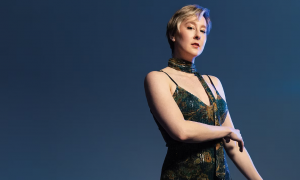
Home » Jazz Articles » Interview » Jazz Journeys: A Conversation with Violinist May Yu
Jazz Journeys: A Conversation with Violinist May Yu
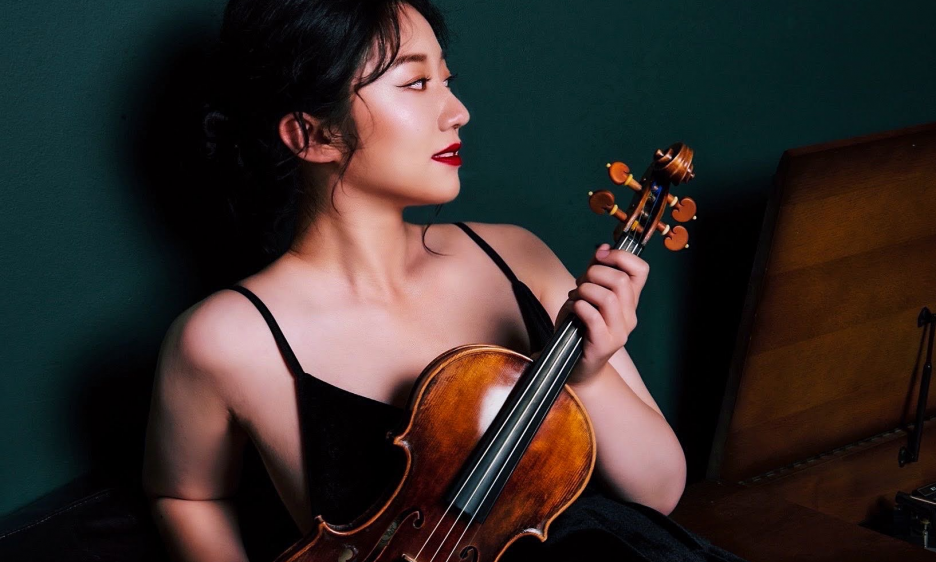

There is a bridge between the mind, the heart, and the gut – and when all three are aligned, something overflows into sound.
All About Jazz: Hi May, thanks so much for taking the time to speak with me today. I really appreciate it.
May Yu: It's a pleasure to speak with you. Thank you for inviting me.
AAJ: I really enjoyed listening to your music. You move seamlessly between the classical and jazz worlds in a way that feels completely natural—like hearing Schumann one moment and then Errol Garner the next. It's rare to encounter an artist with such a broad and authentic command of both traditions, but demonstrates command in both traditions, technical depth in the classical world and a fluent, personal improvisational language in jazz.
MY: Thank you so much. That really means a lot to me. I've spent a lot of time trying to find a natural bridge between those two worlds, so I'm really glad that came through in the music.
AAJ: Since we're both Canadians with a similar family history—my family also fled the communists in World War II and came to Canada —I thought we could start there. Tell me a bit about your journey both personally and as an artist.
MY: Yeah. So I was born in China, in Harbin. It's a city very close to Russia, and it has this really interesting mix of Chinese, Russian, European, and Korean cultural influences. Growing up around that blend of music, food, architecture, and different ways of life made me very curious from a young age. Harbin is also where I started playing the violin when I was four, so in many ways, it is where my musical life began. Even though I did not fully understand it at the time, music became one of the first ways I learned to express myself.
We first settled in Calgary with my uncle's help as a sponsor. It was a difficult adjustment at first—I was the only Asian student in my school, my English was limited, and I faced a lot of challenges. But music became my anchor. I practiced relentlessly, explored beyond the classical repertoire, and, later, discovered the flute in middle school, which deepened my passion for music. By grade eleven, with my parents' unwavering support, I knew music was my path. I was accepted into the University of Toronto, where I switched to the performance major. That training gave me a strong technical and artistic foundation that I still draw from today.
AAJ: Was it difficult to leave China? It seems like leaving the country at that time was not very easy.
MY: I didn't fully understand at the time. My parents framed it as a trip, but it became a permanent move. Leaving Harbin was hard, but those early struggles in Canada pushed me to develop resilience and a deeper commitment to my artistry.
AAJ: What about teachers? Did you have some important teachers and mentors in Calgary and Toronto?
MY: Yes, absolutely. In Calgary, my Hungarian teacher, Aranka Nagy at Mount Royal Conservatory, helped me acquire a high-quality instrument and shaped my early development. In Toronto, I studied with Annalee Patipatanakoon and later Erika Raum, whose intuitive approach opened up new levels of freedom and expression. The rich jazz program at the University of Toronto also exposed me to a new world. Hearing Brad Mehldau's music live at The Rex was transformative—it opened my ears to improvisation, and I remember being struck by the freedom, passion, and immediacy of spontaneous creation.
AAJ: How did your classical training help prepare you for your jazz work?
MY: My classical training gave me exceptional discipline, sound production, intonation, and a deep sense of musical architecture. It taught me how to shape long lines, listen with sensitivity, and communicate emotion with intention. That foundation has been essential. Jazz then challenged me to use those tools in a freer, more spontaneous way—relearning vibrato, bow technique, rhythmic feel, and real-time decision making. Rather than replacing my classical background, jazz gave it a new, liberated voice.
AAJ: That path eventually brought you from Harbin to Calgary, then Toronto, and finally to New York.
MY: Before graduating, I knew I had to come to New York. Regina Carter was teaching at Manhattan School of Music, so that was a big draw for me. I reached out to Ingrid Jensen, who was also incredibly supportive. Then I received an opportunity to perform as a soloist with Darcy James Argue's orchestra at Dizzy's Club Coca-Cola—a thirty-minute open improvisation piece. That was my first major jazz show in New York. It was terrifying but transformative. Since then, I've continued to build my presence through performances, collaborations, and projects that blend my classical and jazz identities.
AAJ: That's incredible—most young players who come to NYC are doing pickup work for many years before landing a high-profile gig with a major artist like Argue! What does your schedule look like these days?
MY: I'm graduating in two weeks. I also spent two years studying music business to better understand the industry as a working artist. I've been performing with pianist Misha Piatigorsky in a unique project combining string quartet and jazz trio. I regularly participate in jam sessions and sit-ins around the city, and I continue to develop my voice through both structured performances and free improvisation. New York offers constant inspiration and opportunities to grow as an artist.
AAJ: Stylistically, how are you working to establish your own distinctive voice as an artist?
MY: I've been deeply influenced by my teachers, especially Regina Carter's idea that playing is a form of speaking—it comes from within. I transcribe solos, absorb recordings across genres, and spend time in free improvisation. Over time, I've learned to trust my ear and my instincts more fully. There are no wrong notes when the intention and follow-through feel authentic. I'm trying to create a sound that honors both my classical precision and jazz spontaneity.
AAJ: It's interesting that you mentioned vocalizing while playing—that's very much part of the jazz tradition.
MY: Yes. I believe there shouldn't be a separation between classical and jazz—they are all part of the same musical language. Artists like Yehudi Menuhin inspire me because of their openness across cultures. In this era of AI and rapid change, I think audiences are craving genuine human expression, and I want my work to reflect that authenticity.
Beyond the physical connection of translating the language into the fingers, I think there is something deeper happening. There is a bridge between the mind, the heart, and the gut—and when all three are aligned, something overflows into sound. For me, the voice is the most direct expression of that overflow. The vocal chord is where music first becomes human, and I think of the violin as an extension of that. The instrument becomes a continuation of the body's own voice—traveling through the arm, and finally into the bow. The bow is what actually speaks.
AAJ: Do you compose as well?
MY: I've done some composition through free improvisation, though I haven't yet focused on writing pieces down. Albums like Brad Mehldau's Finding Gabriel (Nonesuch, 2019), Brian Blade's Brian Blade Fellowship (Blue Note, 1998), and works by Miles Davis, Bill Evans, Aaron Parks, and {{Stephane Grappelli} have been hugely influential. I'm still in the process of deepening my understanding of jazz history while developing my own artistic perspective.
AAJ: One strength I hear in your playing is the nuanced intonation and expressive freedom that comes from the violin being a fretless instrument.
MY: Yes, the violin allows such a direct, human connection between ear, fingers, and emotion. In both classical and jazz contexts, I'm constantly adjusting pitch for color and expression. It's one of the things that makes the instrument feel like an extension of the voice.
AAJ: Where do you see your artistic journey heading in the coming years?
MY: I recently accepted a full-time position at an international auction house specializing in fine string instruments, where my background as a violinist is directly connected to the work. Being around rare violins, bows, musicians, collectors, and instrument history allows me to stay deeply connected to the classical tradition while continuing to perform and create as a jazz and cross-genre artist. On the artistic side, I plan to keep developing my own voice through performances, collaborations, and new projects that bridge classical music, jazz, improvisation, and contemporary music culture. Ultimately, I want to contribute meaningfully as an artist—creating work that moves people and opens doors for others.
AAJ: How can people find you and your music?
MY: People can find me on YouTube and they can find a lot of information on my website which is found on my artist profile page here at AllAboutJazz. [See YouTube video at the end of this interview.]
AAJ: Thank you for telling us your story—it's so great to see a young artist finding their way in the jazz world.
MY: Thank you so much.
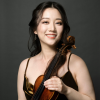
About May Yu
Tags
PREVIOUS / NEXT

Become a Sustaining Member

Since 1995, All About Jazz has championed jazz as an art form and supported the musicians who create it. Over three decades, it has grown into one of the world's leading jazz resources, serving hundreds of thousands of readers, musicians, presenters and industry professionals each month.
Help Build the Future of All About Jazz
Your support helps us continue building All About Jazz for the next generation—expanding our editorial coverage, preserving jazz history, developing new community features and creating better ways to discover the music and the people behind it.
Become a sustaining member for as little as $20 per year and you'll immediately enjoy an ad-free experience along with access to subscriber features and future articles for a full year.
Together, we're not simply sustaining All About Jazz—we're building its future. Thank you for being part of the journey.