Home » Jazz Articles » Take Five With... » Take Five with Pianist Lenore Raphael
Take Five with Pianist Lenore Raphael
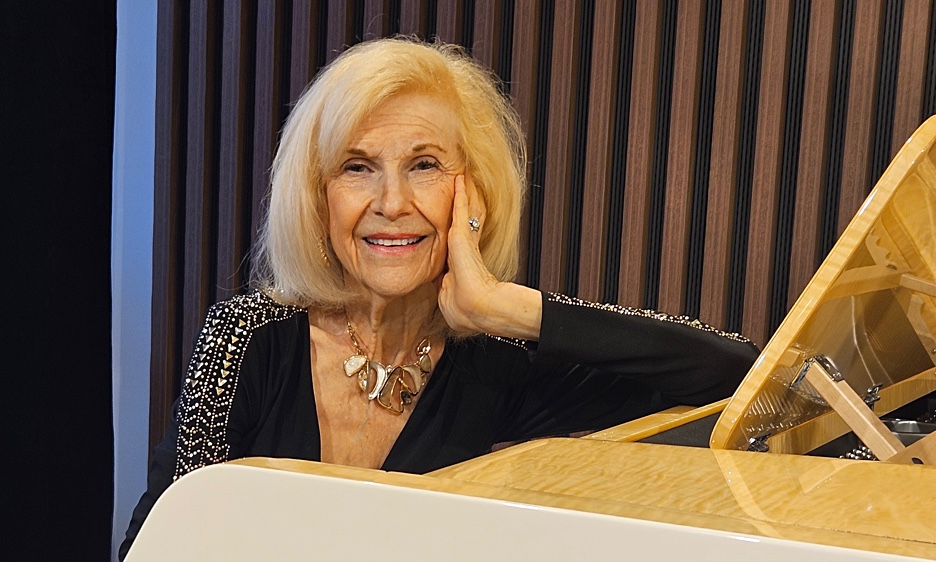
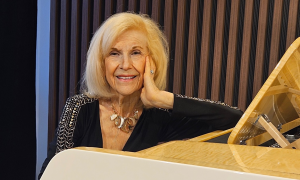
Music has been part of my life since I was three years old—maybe even earlier! I began with classical studies before discovering jazz at age 12. Since then, I've enjoyed a full career performing at major clubs and festivals, including Dizzy's at Jazz at Lincoln Center, the Blue Note, Ronnie Scott's in London, the Ottawa International Jazz Festival, the Joy of Jazz Festival in South Africa, and jazz festivals in London, the Twin Cities, and North Carolina, among others. I've also performed on the Jazz Cruise three times, an experience I absolutely loved.
Teaching is another passion of mine. I've conducted jazz master classes at universities, conservatories, and schools of the arts, and served as an outreach artist for the International Association for Jazz Education. I've also devoted considerable time to creating and running jazz concert series—one in New Jersey for eight years and another in North Carolina for the past 14 years.
I've recorded 11 albums on my own label, Swingin' Fox Music, and enjoyed considerable radio airplay. Along the way, I've had the privilege of working with so many wonderful musicians, including Clark Terry, Jon Hendricks, Howard Alden, and Rodney Jones, to name just a few.
And the most important thing? I'm still going strong!
All About Jazz: What instruments do you play?
Lenore Raphael: Piano.
AAJ: Who are your teachers, mentors and influences?
LR: My first classical teacher, Beulah Eisenstadt, was an accomplished concert pianist so very strict about proper fingering, etc. Actually Clifford Brown was my first introduction to Jazz because my brother played trumpet and brought home all his albums. That led me to Bud Powell, then Oscar Peterson, then Bill Evans. I loved Bud's technique, Oscar's swing and Bill Evans' sense of harmony (and ... beauty). I started playing in NYC at a little club called Gregory's with no theory... just ear and listening and realized I better get some lessons, so I started with Barry Harris' Jazz Interactions (where Barry really encouraged me and I owe him my career). Then I studied voicings and more theory with the great Mike Longo. When Mike offered me a gig to sub for him, I knew I was on the right track.
AAJ: When did you know you wanted to be a musician?
LR: I sat down at the piano at age four and played everything my brother played, just by ear. I LOVE good music of any kind, and I think I always knew, despite the detours (teaching elementary school in NYC, marriage, etc.), that I wanted to be a musician.
AAJ: How would you describe your sound and your approach to making music?
LR: I guess my approach to music is simply that good music is what I want to play. I'm tough on myself and keep trying to perfect what I'm playing. If I need to do something new or different with a piece, I'll work on it over and over until it's where I want it... and then I'll work on it some more. Hopefully my sound is my own and I keep trying to make it beautiful where it needs to be.
AAJ: If you teach, what is your approach or philosophy?
LR: My philosophy about teaching is that you must FIRST understand the student. What motivates them to play? How deeply do they want to pursue music? What's going on in their life? Then it's my responsibility to use that knowledge and approach each student differently. What do they need to focus on—technique, theory, or simply overcoming their fears about performing? I don't judge them, and it's important that they know that.
AAJ: If you could assemble your dream band, who would be in it?
LR: I honestly think my current band is probably the closest I've come to my ideal band. I've always loved playing with piano/guitar trios and quartets, so I guess that's where it is right now. When I heard Oscar play with Martin Drew on drums, I said one day I want to work with Martin... and there ya go... i toured in England with him!!
AAJ: What's your best or worst road story?
LR: OK, I was playing in New Jersey during Oktoberfest, and the agent had promised the owner we'd play polka music. Well. We didn't know much polka music, so we'd interject some jazz. The owner of the club kept running out saying, "I want only polka music," so we'd revert back to the couple of tunes we knew and then throw in some jazz... again, "I WANT ONLY POLKA MUSIC!" When the gig was over, I went into his office to get paid, but he said he wouldn't pay us. My bassist got defiant and said, "You'd better pay us," at which point the owner came out with a gun! Boy, we left there pretty quickly... with no money!
AAJ: What is your favorite venue and why?
LR: This is a tough question... Dizzy's, The Blue Note, etc. Dizzy's because from the piano I could see Central Park... the audience was wonderful, the piano was a great Steinway, and the acoustics were great.
AAJ: What are some of your favorite jazz recordings and why?
LR: One of my absolute favorites is still Oscar Peterson's West Side Story album. It was innovative, well-arranged, and really swung. I also love the Johnny Hartman/ Coltrane album because Hartman's voice was like melting chocolate... the tunes were beautifully done.
AAJ: What was the first jazz album you bought?
LR: Oscar Peterson's West Side Story.
AAJ: What do you hope listeners take away from your music?
LR: Maybe my contribution musically is that I'm keeping the great American standards alive for the new generation of musicians. My philosophy is MELODY first. Do what you want with it after that, but state the melody.
AAJ: What's something people might be surprised to learn about you?
LR: I'm an avid reader... mostly books about music and musicians. I've read Paderewski's memoirs three times and never get tired of it.
AAJ: What music are you listening to now?
LR: Ruby Braff / Ellis Larkins Pocket Full of Dreams (Vanguard, 1955).
AAJ: What are your desert island picks?
LR: Oscar Peterson Night Train (Verve, 1963).
AAJ: How would you describe the state of jazz today?
LR: Jazz is changing and becoming more diversified in terms of what's being categorized as "jazz." Obviously, it's also incorporated more rhythms and vocal traditions from different cultures.
AAJ: What would you like to see more of in today's jazz world?
LR: Students need to hear and understand what jazz IS! How did it evolve and change? More older adults should also try to understand what today's jazz is all about.
AAJ: What's next for you?
LR: A new recording with my current trio this year. Scheduling another tour in England to help promote the recording I did with British trumpet player Chris Hodgkins.
AAJ: What is your greatest fear when you perform?
LR: Ha... that I won't be invited back!!!
AAJ: What song would you like played at your funeral?
LR: I'm not going to touch this question.
AAJ: What is your favorite song to whistle or sing in the shower?
LR: I don't really have one.
AAJ: If you weren't a jazz musician, what would you be?
LR: Commercial writer for an advertising company. I was actually offered that job just before I entered college, but my mother insisted I go to college to become a teacher.
AAJ: If you could have dinner with anyone from history, who would it be and why?
LR: Paderewski, because what a remarkable career he had! He was told he would never be a great pianist. His determination and hard work were inspiring.
 FOLLOW AAJ Staff
and get notified whenever a new article published.
Various staff members.
About Lenore Raphael

Tags
PREVIOUS / NEXT
Become a Sustaining Member

Since 1995, All About Jazz has championed jazz as an art form and supported the musicians who create it. Over three decades, it has grown into one of the world's leading jazz resources, serving hundreds of thousands of readers, musicians, presenters and industry professionals each month.
Help Build the Future of All About Jazz
Your support helps us continue building All About Jazz for the next generation—expanding our editorial coverage, preserving jazz history, developing new community features and creating better ways to discover the music and the people behind it.
Become a sustaining member for as little as $20 per year and you'll immediately enjoy an ad-free experience along with access to subscriber features and future articles for a full year.
Together, we're not simply sustaining All About Jazz—we're building its future. Thank you for being part of the journey.