Home » Jazz Articles » Interview » Sullivan Fortner: Nothing's Ever Finished
Sullivan Fortner: Nothing's Ever Finished

Courtesy Youri Lenquette
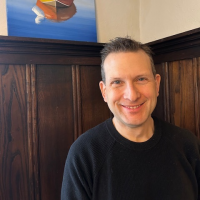
(In New Orleans,) there's so much versatility and richness in not just the music, but in the culture that surrounds it. And it’s definitely a nurturing place. You’re around a lot of people who know a lot and have been around and have traveled and toured all over the world and decided to move back. So you're getting stuff from people with experience, but it's not in a way that's competitive.
—Sullivan Fortner
Pianist Sullivan Fortner hails from New Orleans, and if anyone is up to the task, it's him. Throughout his career, Fortner has successfully integrated the traditional sounds of New Orleans jazz into a deeply modern canvas, honoring the past without sounding stodgy or archaic. Indeed, Fortner has established himself as one of the brightest stars in 21st century contemporary jazz.
Having first risen to prominence as a mainstay of trumpeter Roy Hargrove's band during the 2010's, Fortner went on to accompany some of the finest modern jazz vocalists, such as Samara Joy, Jazzmeia Horn, and, perhaps most notably, Cecile McLorin Salvant. The ascent to stardom of both Salvant and Fortner can be tracked together rather closely, both in terms of their increased stature within the music community, but also their development as artists.
Fortner's leader career has followed a similar trajectory. In 2015 he released his fairly straight-ahead debut, Aria on Impulse! Records, but really demonstrated sophistication and sonic diversity with his solo album Solo Game (Artwork Records, 2023), on which, in addition to acoustic piano, he played the Moog synthesizer, organ, and vocoder, among other instruments. 2025 was, by any standard, spectacular for Fortner. He released two well-received collaborative albums—Wildflowers Vol. 1 (Edition Records, 2024) with vocalist Kurt Elling and Play (ACT Music, 2025) with trumpeter Theo Croker. But Fortner hit the bullseye with Southern Nights (Artwork Records, 2025), a trio album with Peter Washington (bass) and Marcus Gilmore (drums). Southern Nights seemed to fulfill his destiny as the torchbearer of New Orleans jazz, receiving rapturous reviews and garnering the 2026 Grammy for Best Instrumental Jazz Album.
Fortner will release Leave That In There (Artwork Records, 2026), in August 2026. The record is Fortner's first with his longtime trio of Tyrone Allen II (bass) and Kayvon Gordon (drums). Produced by Derrick Hodge, the album is as rooted in Fortner's New Orleans heritage as Southern Nights, but represents a sonic departure. On Leave That In There, Fortner adds the studio effects and experimentation he first employed on Solo Game, and the result is a delightful mish-mash of the old and the new, as one would expect from one of New Orleans jazz's modern ambassadors.
All About Jazz poke with Fortner about the upcoming album and his thoughts about his New Orleans heritage.
The New Sound and the Recording Process
All About Jazz: So I detect a departure in sound with Leave That In There from sort of the more straight-ahead sound of Southern Nights. Assuming that's true, can you talk about your mindset with the new album, and your ambition with the change?Sullivan Fortner: The album was recorded over maybe a year and a half period. The beginnings of the album actually happened six months after I recorded Southern Nights. We're talking December 2023. As we were recording, there was an organ on the side, so I was thinking to use the organ that was there. Maybe the album could be acoustic with organ. But I'd been playing a lot of Sun Ra's music at the time, and I had also recorded a solo album entitled Solo Game. I wanted to take elements from Solo Game, where I'm playing all of these acoustic and electric instruments, and I'm overdubbing myself.
And I decided, well, why not do the same concept, but with a trio this time, as opposed to just me. I'll try to combine elements of Southern Nights and Solo Game, and then create Leave That in There.
AAJ: That's cool. Do you see yourself as having a pre-planned artistic trajectory? Or are the creative decisions you make more spontaneous?
SF: It's a mixture of both. In my mind, what I would like to do moving forward is not necessarily create albums of more or less the same thing, but rather to create a catalog of things. Different types of styles, more variety. I'm into variety.
But at the same time, a lot of the decisions that were made in the studio, given the instrumentation, and given the abilities of the people whom I was working with, and the people that I played with—and that's not just including the instruments, but that also the producer, how we edited and spliced the record—all of those things were kind of done on this record at the spur of the moment.
The Album's Trio
AAJ: With the people involved in the recording, while you've been playing with Tyrone and Kayvon now for a while, this is your first album together as a trio. What was it like recording together and your process with them? What were their specific contributions?SF: For the acoustic part, we recorded all in the same room with no isolation, so no one could correct anything. What you're hearing, at least from the acoustic side, is just very, very raw playing. And then from there, maybe six to seven months later, we got together, and I asked Kayvon to bring all of his bells and whistles. By that time, he had been studying a lot of music from the Bàtá tradition. So I asked him to bring in some of those instruments, and then a loop of rhythm, and we'll clap and do all kinds of chants and all kinds of crazy stuff. We left the chanting part out (laughs).
And then we went into Electric Garden Studios, and we overdubbed the drums. I also had Tyrone improvise something, and then overdub himself. In the studio there were all types of synths, and that's where I did a lot of the keyboard overdubs.
We kind of put limits on each other. My whole objective was I wanted to just max out everything. Let's just go completely overboard. Let's just put all kind of crazy instruments on each of the tracks! And Tyrone and Kayvon would say, "Nah, I think that track is done!" (laughs)
They put shackles on me, to stop me from going too crazy!
AAJ: How has your relationship with Tyrone and Kayvon developed over time, leading up to the recording of the new album?
SF: We were just coming out of the pandemic, and the trio had only been playing together a year prior to that. So, with this album, it's the real genesis of this organism. Now, since then, we've toured. We've done a lot of playing together since then. So it's kind of cringy to go back and listen to it because it's so fresh. What we would do now would be completely different. The album was definitely the beginning of the band playing. We were just starting to get to know each other, musically.
AAJ: Your trio's live show is so loose and spontaneous. And this album is, frankly, not that, given its reliance on studio effects and electronics. How do you plan on incorporating this album into your live performances?
SF: Interestingly enough, we've been playing this music for the past two or three years. So it's definitely taking shape. I think it's kind of unrecognizable playing it live because I'm translating all of it to just the acoustic piano. So I think when we actually tour the album, I'm going to bring an organ, and we're going to add synths, and we're going to do all use all kinds of crazy bells and whistles. We're going to maximize the trio setting as best as we can when we tour the album.
The Composition Process
AAJ: With this album, you were clearly the leader, but you've worked on other albums, you know, that were sort of more collaborative in nature. Can you discuss your approach with records where you acted as leader, versus when you had equal billing with other musicians?SF: Comparing the two, when you're a leader, all the decisions are left open to you. You can take suggestions, but at the end, you have to render the final verdict. And you have to trust your instincts.
Being a leader, particularly since the release of Solo Game, has taught me to be confident in my own judgment, not paying as much attention as to whether people would like the music or not. I mean, I've been told that some records I probably shouldn't have put out because the audience wasn't ready for it, or people saying things like, "Who the hell do you think you are getting Marcus Gilmore or Peter Washington to play with you?" You know, stuff like that. And I just said, you know what? I'm going to trust my judgment. I'm going to trust my own instincts and just put it out there. At the end of the day, all of this stuff is just arts and crafts anyway.
AAJ: Leave That in There consists of mostly originals. Can you just talk about the composition process?
SF: Well, some of the songs are actually old songs that were reimagined. For example, "Aerobatics" started from maybe the first two or three bars of "Yardbird Suite." I was messing with "Yardbird Suite," and I took those three bars, and I re-harmed it, and like ten minutes later, that tune came out. The tune "Sorcerer's Stick" is a combination of "The Sorcerer" by Herbie Hancock and "The Early Bird Gets the Short End of the Stick" by Donald Brown. I took one section of each of those songs that I liked, and I put them together and created a brand new melody on top of it.
"A Hymn for Linda" was something that literally I wrote in a few minutes. I picked a key, and set an egg timer, and in five minutes, that's what it was.
AAJ: Wow, I love the spirituality of that song. To think that it came to you so spontaneously, is just fascinating.
SF: Yeah, it just kind of happened. Now the arrangement of the song, with the vocals—that was just spur of the moment in the studio. I wanted to see what would have happened if I sang on top of myself.
I didn't spend a whole lot of time writing these things. These were just cells, ideas that kind of developed over time. For example, "A Poignant Time," which has really been a theme for our trio, kind of our signature—that one came out of a five-minute improvisation. If it takes longer than 15 minutes to write, I've lost interest.
AAJ: The finished product is so sophisticated, yet what actually appears on the record comes out of such spontaneity.
SF: When I write, I really just construct the bones.
AAJ: So in your mind, when is a song done?
SF: I don't think anything's ever done. One of my mentors, John Clayton, told me that a good tune is never written. A good tune is always rewritten. For example, the tune "Aria" was taken from my first album. I recorded it in 2014. Since then, it's taken on a brand new life. I've trimmed it down, I edited it, and came up with what I recorded on this last album.
So tunes are never finished. They're always revisited, and re-looked at, and re-imagined, and you take elements from old pieces, and then you put it in with something else, and it becomes a brand new piece.
That's how I've always looked at composition. Nothing's ever finished.
The City of New Orleans
AAJ: Let's talk about New Orleans. This album, as with a lot of your music, has a strong connection to the city. Can you talk about your upbringing and continued relationship with the city, and how it informed the music on the record?SF: I wasn't thinking about the City of New Orleans itself as much as I was thinking about the people and the culture that I come from, which is New Orleans and the Bayou Area outskirts. I thought a lot about my grandmother, and when I was messing with things as a kid. There would be moments where we would be in the kitchen, and I would try to take ladle out the soup pot while she's making gumbo, and she would yell, "Aaah! Leave that in there!" (laughs) Or if, after I learned to cook, I would be making soup or gumbo, I would add salt, and then I would add a bay leaf, and then quickly take it out, and my father would say, "No, no, no, leave that bay leaf in there. Leave that in there. Put all that in there!"
There was a moment with the trio, where we were in Oakland, California. We were playing a gig at Piedmont Piano. and we decided to leave our luggage in the car, as opposed to putting it in the hotel. And we got robbed. So you get that good and bad effect of leaving things alone, leaving things in whatever situation they are in, if that makes sense. Sometimes it's good, sometimes it's bad, it is what it is. I've always been a maximalist, and I've always believed in everything working together, somehow, some way.
AAJ: Can you talk briefly about your upbringing in New Orleans?
SF: The first time I ever touched a piano, I was about four years old. I picked out the Jeopardy! theme song from a television commercial on a little Fisher-Price piano. From there, I just kind of honed the skills, basically, in a little Baptist church in New Orleans. I'm a church kid. I still play in church; even in New York while I'm here, whenever I have time off, I'll play at a church in Brooklyn.
Jazz came to me at age 12 or 13. I auditioned at the New Orleans Center for Creative Arts when I was freshman in high school and got in. The jazz bug really bit me sophomore year when I heard Erroll Garner play the album The Complete Concert By The Sea (Sony Music, 2015). And I've been chasing the music ever since, and I was blessed to be in a situation where I had a culture of people who were really supportive and taught me. You know, people like Clyde Kerr Jr, Kent Jordan, Michael Pellera, and Peter Martin, who were living in New Orleans at that time.
Also my peers—Trombone Shorty, Jon Batiste, Christian Scott aTunde Adjuah, Khris Royal , Calvin Turner, Calvin Johnson. So many young musicians who went on to do really, really good things, and we all kind of came through the ropes together. We taught each other. And then after much contemplation and fighting with my parents, I decided to go into jazz as a career. I went to Oberlin, got my Bachelor's Degree, then moved to New York and got my Master's. I've been in New York ever since.
AAJ: New Orleans obviously has a rich history with jazz, but maybe has been overtaken in contemporary relevance by New York, and maybe Los Angeles or Tokyo. Can you talk about what New Orleans means to modern jazz?
SF: I think New Orleans is a little bit broader than just jazz. When you think of New Orleans, you just think of music. There's a lot of music that has its genesis in New Orleans, not just jazz.
There is definitely a young crop of musicians that are coming out now of the city who are hungry. They are hungry for the music.
The beautiful thing about New Orleans is that it is so versatile. In one night, you can play a funk gig. And then maybe two hours later, go play at a jazz club. And then the next day, play at Church, or at a bar mitzvah, and then maybe play some classical music somewhere.
There's so much versatility and richness in not just the music, but in the culture that surrounds it. And it's definitely a nurturing place. You're around a lot of people who know a lot and have been around and have traveled and toured all over the world and decided to move back. So you're getting stuff from people with experience, but it's not in a way that's competitive. Because New Orleans is still a relatively small scene. It's a little bit more nurturing than a cutthroat environment like New York.
About Sullivan Fortner

Tags
PREVIOUS / NEXT

Sullivan Fortner Concerts

Become a Sustaining Member

Since 1995, All About Jazz has championed jazz as an art form and supported the musicians who create it. Over three decades, it has grown into one of the world's leading jazz resources, serving hundreds of thousands of readers, musicians, presenters and industry professionals each month.
Help Build the Future of All About Jazz
Your support helps us continue building All About Jazz for the next generation—expanding our editorial coverage, preserving jazz history, developing new community features and creating better ways to discover the music and the people behind it.
Become a sustaining member for as little as $20 per year and you'll immediately enjoy an ad-free experience along with access to subscriber features and future articles for a full year.
Together, we're not simply sustaining All About Jazz—we're building its future. Thank you for being part of the journey.