Home » Jazz Articles » Opinion » Flamenco And Jazz Continue Along Different Paths Toward ...
Flamenco And Jazz Continue Along Different Paths Toward Institutional Recognition
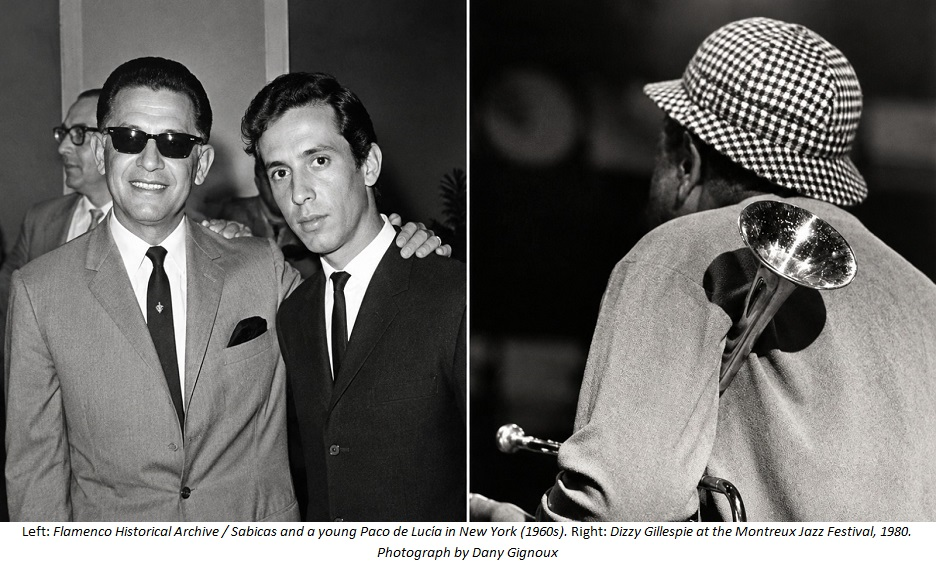
Cities with a significant jazz heritage can... make the recognition and preservation of jazz history more meaningful and impactful.
Without a doubt, Lorca's stay in New York between 1929 and 1930 offers one of the clearest illustrations of the connection between jazz and flamenco. In his celebrated poem "The King of Harlem," he captured the analogies between African American rhythms and cante jondo, the deep and often tragic form of flamenco singing associated with the Roma tradition. Blues and duende are kindred spirits, symbolizing a similar experience of marginalization, exploitation and oppression suffered by Roma people in Spain and African Americans in Harlem.
Lorca's influence on American culture ran so deep that North American writers could hardly escape the fascination of his work. One example was the African American writer Langston Hughes (Missouri, 1902—New York, 1967), a leading literary figure of the Harlem Renaissance and a pioneer of jazz poetry. In 1937, Hughes would travel the route opposite to Lorca, from New York to Spain. There, as a war correspondent, he discovered that flamenco singing could likewise be compared to the primitive blues of Black people in the Deep South. Although Lorca and Hughes were contemporaries and moved within overlapping circles of friends, they never actually met.
If we compare these two forms of musical expression, both of which originated in oral traditions and were born out of pain and social marginalization, other similarities become apparent. Rhythmically, flamenco and jazz are both deeply rooted in improvisation and emotional expression. Yet they also have significant differences, particularly in the distinct legal protection afforded to their Intangible Cultural Heritage. It is striking that two musical traditions so close in their origins have received such different levels of institutional protection.
UNESCO declared flamenco Intangible Cultural Heritage of Humanity on November 16, 2010. By contrast, it is striking that the organization has made no comparable designation for jazz, although in November 2011 it proclaimed April 30 as International Jazz Day, emphasizing jazz's universal dimension, its capacity for intercultural dialogue, and its contribution to the fight against discrimination.
If we focus on the institutional protection of flamenco in Spain, the first major milestone is the Spanish Historical Heritage Law of 1985. Its protection as intangible cultural heritage is also reflected at the regional level, particularly in Andalusia, where the Andalusian Flamenco Law of 2023 deserves special mention. The law protects the elements that form part of the heritage of flamenco, a process that will culminate in the ambitious and multifunctional Museum of Flamenco of Andalusia. The project also includes the development of certain open spaces and adjoining public streets, and on August 31, 2026, the City of Jerez approved the license to complete the works. Municipal governments likewise have powers to implement this protection through specific strategies, including the protection of physical spaces associated with flamenco.
These combined institutional efforts have helped establish flamenco as one of the defining symbols of Spanish culture around the world. This system differs substantially from the model of cultural protection in the United States, where cultural heritage is managed through a framework in which the private sector, philanthropy, and non-governmental institutional and community initiatives play a greater role.
Flamenco has also received recognition and homage from other arts, including painting and literature. The concept of duende was immortalized by universal creators such as Pablo Picasso, who devoted numerous prints and paintings to guitarists and dancers, and Joaquín Sorolla, whose monumental Vision of Spain series was commissioned by the Hispanic Society of America in New York. And, of course, by Lorca himself, flamenco's greatest literary advocate, in his collection Poema del cante jondo (1931).
Yet serious and troubling questions remain about the legal and institutional protection of jazz in the United States, particularly in New York, the birthplace of modern jazz, from bebop on 52nd Street to avant-garde jazz. For a city that witnessed the emergence of the sounds of Charlie Parker, Dizzy Gillespie, Miles Davis and Thelonious Monk, how deeply has it become involved in preserving this heritage?
To be sure, most American cities recognize and honor their great jazz figures through monuments, commemorative statues, museums and legendary clubs. The Jazz Preservation Act of 1987 and the National Endowment for the Arts have also contributed significantly to this recognition. Yet institutional recognition of jazz in the United States has not necessarily translated into comparable protection of its urban heritage or of the specific places and public spaces where its history unfolded.
If we look closely at New York, the balance is, at the very least, uneven. The great exception is Jazz at Lincoln Center, the city's foremost institutional representation of jazz, with its own history of exclusions and the Jazz Wars. To a much lesser degree in terms of budget and scale, the National Jazz Museum in Harlem offers exhibitions and events that celebrate the full breadth and spirit of jazz.
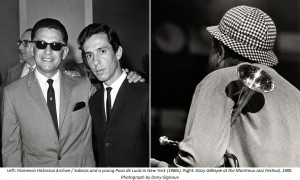
There are several reasons for this disparity. First, there is an absence of collective recognition of jazz as such, beyond tributes to individual musicians. There appear to be no major monuments allegorically dedicated to jazz as a whole. This contrasts with flamenco, for example, which has monuments such as the Monument to Flamenco Art in Triana, Seville, as well as individual tributes such as the monument to Sabicas (Pamplona, 1912—New York, 1990). The Spanish flamenco guitarist, who lived in exile in New York, is honored in his hometown both as an individual artist and, collectively, as a representative of the Roma people.
Second, there are museums that are scarcely representative, such as the National Jazz Museum in Harlem—a minimalist museum in the negative sense of the word, reduced to its bare minimum. It occupies a street-level space of barely 175 square meters, where visitors may be left genuinely stunned by the realization that one of the greatest cultural legacies the United States has given the world is represented with such apparent indifference.
Third—and perhaps most striking—is the limited recognition and interpretation of the urban spaces themselves. The iconic photograph A Great Day in Harlem, taken in 1958 in front of 17 East 126th Street, brought together 57 jazz musicians on the steps of a Harlem brownstone. The block has since been officially co-named Art Kane: Harlem 1958 Place, and a commemorative banner also refers to the celebrated photograph. While these initiatives acknowledge the historical event, they stop short of explicitly recognizing the site as a landmark of jazz heritage. The place deserves a more visible and meaningful tribute to the musicians themselves and to the music whose history was made there. The last surviving musician in the photograph, the great tenor saxophonist Sonny Rollins, died in New York on May 25, 2026.
This should be a sacred place of jazz heritage: East 126th Street: the Paseo del Prado of Jazz. It could become a pedestrian street, with references to jazz throughout, bronze plaques and specially engraved paving stones bearing the names and footprints of the legends who shaped the music, and it could house the National Jazz Museum at number 17. There is an intriguing historical coincidence: on the same block, at 20 East 127th Street, stands the historic home of Langston Hughes, now operated as a cultural center and museum—the very writer who traveled the route opposite to Lorca, from New York to Madrid.
The issue, therefore, is not simply whether New York can preserve individual jazz venues or commemorate its great musicians. It is whether the city can recognize the streets and public spaces where jazz history was actually made as part of its cultural heritage.
Jazz has given New York a cultural legacy recognized around the world. The question is whether the city will do more to preserve the places where that legacy was created—not merely as reminders of the past, but as living landmarks for future generations.
 FOLLOW Francisco Julio Arenas Cabello
and get notified whenever a new article published.
Spanish lawyer, technical architect and Associate Professor of Administrative Law at UNED, writing about jazz, cultural heritage, cities and public policy
About Federico García Lorca
Tags
PREVIOUS / NEXT
Become a Sustaining Member

Since 1995, All About Jazz has championed jazz as an art form and supported the musicians who create it. Over three decades, it has grown into one of the world's leading jazz resources, serving hundreds of thousands of readers, musicians, presenters and industry professionals each month.
Help Build the Future of All About Jazz
Your support helps us continue building All About Jazz for the next generation—expanding our editorial coverage, preserving jazz history, developing new community features and creating better ways to discover the music and the people behind it.
Become a sustaining member for as little as $20 per year and you'll immediately enjoy an ad-free experience along with access to subscriber features and future articles for a full year.
Together, we're not simply sustaining All About Jazz—we're building its future. Thank you for being part of the journey.