Home » Jazz Articles » Interview » David Ambrosio Honors The Spirit of the '60s With Civil ...
David Ambrosio Honors The Spirit of the '60s With Civil Disobedience
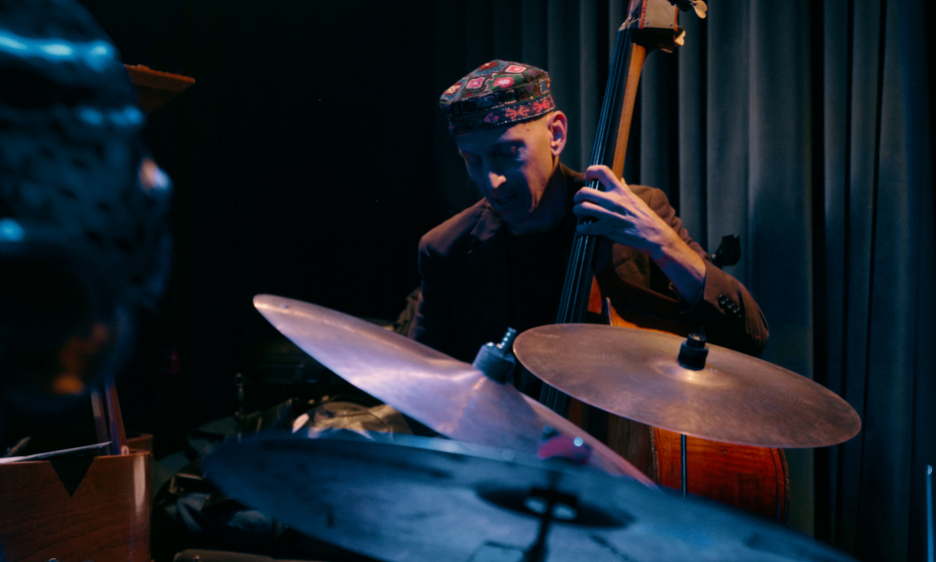
For the first time in my life, I realized, wow, actually I can blend my music, my musical life, and my activist life, and this is the way that I want it.
—David Ambrosio
Bassist David Ambrosio became interested in this music and formed a band that is dedicated to surfacing lesser-known music from the Blue Note catalog. That band Civil Disobedience, also keeps the flame of the '60s alive, not just rhetorically, but musically as well. The May 2026 release of the band's eponymously titled recording, subtitled Blue Note In The Progressive Sixties, on Blue Frog Records, is the latest chapter in Ambrosio's dual careers in music and social activism.
All About Jazz spoke with Ambrosio in advance of Civil Disobedience's appearance at Cleveland's Bop Stop.
All About Jazz: The title of your recording is interesting on a number of levels. The turmoil that has engulfed civil society in the last several years would seem to call for a response from improvising musicians, similar to the resistance music that arose in the '60s from some of the conditions that also prevail today. That response can be found here and there, but it seems fair to ask, where's our Archie Shepp? Who is our Albert Ayler? Where are the people who are speaking out, the Max Roaches and Abbey Lincolns of the 2020s? The answer is probably that they are in hip hop, but your band has provided a response from inside the community of improvised music in the Black American tradition. What was the inspiration for this project, and how does it connect with activism and resistance today?
David Ambrosio: Yeah, it's a bit of a story. I had no intention of doing this kind of project at all. I was just a jazz musician who was performing. To some degree, I always felt like we're all activists in our everyday lives based on what we actually do with our lives.
On top of that, I had a life as an activist as well, in specific areas perhaps, like animal rescue in my early days in New York City, to almost becoming an employee at an organization called Food & Water Watch, which is a watchdog organization for safe and clean food and water, and agricultural policies and stuff like that. I've had my own path. I've literally been out there and done some political activism where I have asked our local politicians, out with a bunch of people, for certain things that, you know, help protect us and keep us safe and what we deserve.
So I always had these two lives: life as an activist for the time that I did that, and a life as a musician. I saw the intersection of them, but I never tried to marry them in any way. Now, I'm fully aware that there's a long history of that in this music, but one day someone introduced me to these Blue Note recordings that I had never heard before, and the music itself just really drew me in. I started transcribing them, and then I started playing them with people and had my students play them in my ensemble classes. It became a whole thing, and everyone was shocked at how even avid listeners who have tons of recordings were like, "Wow, what is this music? How come I don't know it?" and even more so, "How come Idon't know it?" And it's so great, so unique and modern for the time that it was written, which was all in the '60s. I later found out the answer to that question, which was that all these recordings were archival. Due to some things that were happening at Blue Note, the recordings were archived for 10, 20, or even 30 years, some of them.
Then the other connection that I noticed among all these recordings was that there were a number of songs that had themes that related to what was going on politically at that time. It was in 2017 when I started doing this, and in 2018, I thought, Wow, here we are 50 years after most of this stuff was written, in 1968, a turbulent time when society was dealing with civil rights and anti-war movements and economic justice and all kinds of stuff, and I was looking at my world around me and going, man, We're dealing with the same thing right now and it's 50 years later.
So the suggestion of one of my students to form a band playing this material all of a sudden had a lot more meaning to me. He had suggested that a year earlier, and I was like, "It's not my music. What am I going to do with that? What do I have to say through other people's music? I can just share [these recordings] with people," which is valid too of course. But then I thought, you know what? I think there is more value than just sharing recordings with people. It's time to start a band.
I had a friend who was booking at The Jazz Standard, and I'd never played there as a leader before. I asked him, "What do you think? Do you think we could do that?" And he said, "Well, yeah, let's put together a great band, and I think I love the idea of the project. Let's do it." In December of 2018, I did it. And it's interesting because I was born in 1968, on April 1, which is three days before Martin Luther King Jr. was assassinated. So, I feel like I have some connection to that time because I came into the world at that time, like there's some energetic thing there. The whole thing felt very timely and profound to me. So I decided I'm gonna do this band.
We did the concert, and it was incredibly well received, and of course, people could really connect to what the music was about. For the first time in my life, I realized, wow, actually I can blend my music, my musical life, and my activist life, and this is the way that I want it. I've decided that I want to do it, and that's my feeling about it
AAJ: You mentioned that there were certain Blue Note recordings of which you hadn't been aware that probably launched this whole project. Can you say what those recordings were?
DA: Yeah, so a record that eventually was released as a twofer called Medina (Blue Note Records, 1980), which also included songs from Spiral (Blue Note Records, 1980). I mostly investigated the music of Bobby Hutcherson records because it seemed to be the most interesting to me in terms of modern music, yet still somehow very connected to the swinging hard bop era that had just come before it or during it.
It's so interesting in the use of odd meters and mixed meters and also odd phrasings and forms. This is something we see all the time now, but I don't see that a lot in the history. There's the one movement of swing and bebop, and where that all went, and then there's this much freer element, maybe with some messing with metric modulations and all that stuff. But it just really was more like, Wow man, these guys are really dealing with some stuff that jazz musicians today have been exploring a lot for the past 20 years—especially here in a place like Brooklyn or in New York, mixed-meter, odd form things.
So yeah, mostly the Bobby Hutcherson record. There were tons of records from different artists that were not released at that time and released later, but most of what I focused on was the Bobby records. Those also included Patterns (Blue Note Records, 1980) and another Bobby record called The Kicker (Blue Note Records, 1999), which is not the same as the Joe Henderson record, The Kicker (Milestone Records, 1968), even though Joe Henderson is on the Bobby record. That one is the latest to be released of them all. It was recorded in 1965 and released in 1999. So yeah, more than 30 years later. Then there were two Jackie McLean records, but mostly I drew from one called Consequence (Blue Note Records, 1999), and maybe one other.
AAJ: Those '90s-era reissues were gold, but some of the credits seemed to be incorrect on them.
DA: I had to literally go back to the liner notes from the first issue of those records, which are not easy to find, and then, just suss it all out based on what people said about which tune was which tune. And so finally I realized that we were playing "Irena" as "A Time To Go" for years because it was miscredited on the reissue. So when we actually did the true "A Time To Go," first of all, I had to transcribe it before the gig and the recording session that we did that weekend. So the gig and then the session were the first two times that we'd ever played it. I had no idea, and I said, "Hey, why don't we play it in time on the gig?" But then I said, "You know what? I'm not feeling it." I just felt like I couldn't represent the mood that they created on the recording. So I said, "Why don't we just play it rubato one time through the head and see what happens?" And it came out great.
There's the tune called "Ankara" that's on there. If you search for "Nocturnal," you're going to see two different YouTubes that are titled "Nocturnal," and one of them is actually "Ankara" and the other is the real "Nocturnal," which is Joe Chambers' tune. But anyway, there's a lot of mislabeling on that stuff.
AAJ: I noticed that. I've had those Blue Note records for years, but listening to Civil Disobedience, I was struck by the brilliance of the compositions and wondered why I wasn't more familiar with them because this is great music, and everybody's playing like this now.
DA: That's exactly my experience with every single person. Everyone says, "Why don't I know this stuff? When things are released that much later, there's this interesting, weird thing that happens where the music gets less attention. It's almost as though people think it's not relevant to the moment, and somehow the recordings become unjustly ignored.
I've transcribed maybe 20 of those tunes—not all of them from that era, 1965 to '68 for the most part—and not all of them are records that were released later. We don't perform those, but I have those. Mostly what I've tried to do is focus on the narrative of the project. We have these recordings that were released later, much later, and so the music wasn't heard at the time. So I want to introduce people to the music in general, but also the fact that what these composers were doing was very connected to what they were dealing with politically and socially at that time.
Now, not all of the songs are politically themed. There's one called "For Duke P," for Duke Pearson. That's an important piece because he was really important in creating the situation for these modern recordings at Blue Note at that time. He was an A&R guy and artist relations person who created a setting where the musicians had a certain amount of time and money to rehearse the music and then record. From what I've read, the management at Blue Note knew they weren't going to release it right away because it was something maybe modern, and they had to choose between releasing it or something more mainstream. So they knew that they were going to record it now for later and then that's why the sessions kind of disappeared. Then the label got bought out, and so that stuff got shelved until Michael Cuscuna came around and started releasing these sessions. So Blue Note was really committed to recording modern music of that day and was really interested in what the composers were doing, not just recording standards or groove tunes or whatever in the late '60s.
So, it's an interesting thing to realize that, wow, there's this really important music that relates to everything that was going on within the political scope of what these composers were trying to honor, and be activists themselves through their music. That's what I feel like I'm representing, too: a certain amount of their activism. I feel like—I should say we because it's a group effort—we're giving light to their activism that the composers never got the chance to do at the time that music was recorded.
AAJ: You brought up the word we, which brings up the question of how you put this band together, because it's just a great, great band. The players are so well-matched and yet not a lineup one might have expected. How did you get these real heavyweights to come together to do this project?
DA: Yeah, you know, it's interesting. There was some, I would say, pressure in a way that maybe was more self-imposed than anything else. Since I was going to do this performance in 2018, I wanted it to be special because it felt special to me, and also wasn't my music. So I felt like it needed to have something more to it than what I could represent myself. I just felt like I needed a great band. I mean, you always feel like you want a great band, but, how it came to those particular musicians was that basically, I have a long relationship with Donny McCaslin and Ingrid Jensen through a band that I used to play with all the time in '90s. It was led by drummer George Schuller.
As I stated already, most of the music came from Bobby Hutcherson records, and the ensembles were also unique on those records, mostly piano, vibes, tenor, bass, and drums. I decided that I wanted to do it more like a classic jazz quintet with a two-horn front line. I always wanted to do that kind of band. So I felt like this was my vehicle to do that with, and I had to rearrange the music for that instrumentation. And then I realized, wow, what I love about those bands is a great front line. Donny and Ingrid came to my mind because they were always a great front line, but I'd never heard them together it in the context of this kind of music. George's thing was very free and open, late-period Miles-influenced and everything. I wondered what these guys would sound like on this music. I knew they would sound great, and they did.
Bruce Barth I had had a relationship with, but not a long one, before this band. We had played a few gigs, and I was always so impressed at how he can make everything feel and sound so good and so swinging. I thought, man, this is the pianist for this band.
Victor Lewis was another musician who came up right away. I saw his quintet so many times at Sweet Basil's back in the late '90s and early 2000s. I would go every year and spend at least a few nights a week there listening to him. I never met him at that time, but listened to his band, and I was always inspired to have a band like that someday. I thought, man, Victor's still around, so let me ask him if he wants to do it. Everyone graciously said yes, and they were into it. Unfortunately, Ingrid couldn't make the first gig that we did at the Jazz Standard. Duane Eubanks did that, which was great too. But Ingrid was always the person that I had in mind for it.
AAJ: Yeah, her sound is so warm. She gives this kind of amber glow to everything she plays, and her solo style is so patient, really burnished and lovely.
DA: You know, unfortunately, Victor has announced his retirement. I think we're all praying that that changes because that was based on physical issues that he was having with his health. But he's decided not to play anymore. He's on the record. We recorded in February. And that's a unique story in and of itself if you want to get into that.
AAJ: Of course.
DA: Victor didn't play for 15 months after a gig that we had done here in Brooklyn at a place called Bar Bayeux. It was in late October, 2022, and it was a great gig. It was the full band with Ingrid and David Kikoski was subbing for Bruce. So, up to that point, I didn't have the full band, but it was still a great gig, and Victor and David have such a serious connection together. That was a really beautiful gig, and Victor was doing great, playing great.
He was having some back surgery, and unfortunately, things didn't go well with that, and he had some issues where he was out for 15 months completely, couldn't play at all. He didn't have the use of his legs to play. I didn't really have anything going on during that time. Then in early 2024, I had a two-week tour for the band. I got a grant from South Arts, which was amazing, and we did a two-week tour of the United States. I got with Victor, and I said, "Man, how you doing? "He's said, "Well, I don't know. I'm thinking about playing again." I asked if he wanted to go on the road, and he said, "I got a walker and all this, you know?" I told him, "I don't care. Let's go. Let's do it," and he's like, "Man, I don't know if I should do that."
We did it, and it wasn't easy for anyone—for him, for sure. But I felt so blessed that he was willing to take that chance. He wasn't able to play with his feet at all at that time. So he reinvented the drum set for himself: two different snare drums, two different floor toms, one on each side, tom in the middle, and maybe five cymbals. And that's how we played. Well, it took him a few gigs to get used to that, but that's how he ended up playing the whole tour. And so, man, it was amazing how he inspired musicians everywhere, especially drummers, because man, there was nothing missing. It was just Victor Lewis, right there, but with two hands, no feet, you know? And by the time we got to the recording, he was able to use his left foot to play the hi-hat. And so there's some hi-hat on this recording, but there's still no bass drum, and I think that colors the recording quite a bit. We—he and I—had to learn how to find a way to play that's somewhat unconventional, and we did. It's a very unique sound in that there's a lot of space in the low end that's usually not there, which is not a bad thing for a bassist 's record. That's for sure. I feel like it's very unique and special.
AAJ: To wrap up, you talked a lot about your life in activism. So in a sense, you've probably already answered this question, but maybe you can approach it again from the aspect of degree and not kind: With the extraordinary circumstances of the world right now, do you feel a greater responsibility to speak to those circumstances through music? And what do you think is the artist's responsibility to address things like that and not just create art as art?
DA: Yeah, these are really good questions. For sure, as far as I am concerned, I felt a certain amount of responsibility coming from within. To be honest, I had no intention to record this band after we did the first gig that we did. Even years later, I loved it because it was fun, and the music was really special, and the musicians really connected to it. But I didn't see any point in re-recording this music. Then last year, I decided, No, there's definitely a point: It's needed right now.
It's a way that I can voice how I feel about it, too. The musicians in the band get to do that, too, and I think it's really important. I very much believe in protest, and I definitely believe that, like I said before, everyone is an activist. Still, I think we all have to find our way of how to do it, because if you're not connected to it, and if it's not coming from a place of connection and love, and something that feels centered, then I don't think that any activism is very effective. That's why I called the band Civil Disobedience because that was Martin Luther King's approach, which was a love-and nonviolent-centered form of activism, but very powerful at the same time. That's an energy that we all have to work from when we become activists. Like I said, I believe everyone's an activist in everything they do every day. But it has to come from that place; otherwise, I just don't think it's effective.
For me, during COVID, I felt like being on the streets, I wasn't connected to that at that moment anymore. And so this project came in at that time for me to find another way to be an activist again, and to marry the musical part to it, which I told you before. That's really important to me, and I think that jazz music speaks to those ideals, the Martin Luther King ideals of the beloved community, and the love and peace and justice ideals. I think jazz is very, very connected to that. And the music feels like that. A great way to share hope and joy and love is through this music and the messages of this music, no matter how you do it. This is my version of it.
So I'm not going to say that I think it's an artist's responsibility to be an activist or to do that through their art. I think that everyone has to connect to their art in a way that it seems meaningful, and then it has the most effect in the end. And like I said, everything we do is a form of activism. These composers certainly felt that. When Harold Land wrote "Poor People's March," it's very clear, and when James Spaulding wrote "A Time to Go" for MLK, it was a very clear message. Those messages didn't get heard, and that's where I felt like, all of a sudden, I had a responsibility. There are messages that are so important today and so relevant today. So it just seemed like a no-brainer.
 FOLLOW John Chacona
and get notified whenever a new article published.
FOLLOW John Chacona
and get notified whenever a new article published.
John Chacona is a freelance journalist, content writer and producer in Cleveland.
About David Ambrosio

Tags
PREVIOUS / NEXT

Become a Sustaining Member

Since 1995, All About Jazz has championed jazz as an art form and supported the musicians who create it. Over three decades, it has grown into one of the world's leading jazz resources, serving hundreds of thousands of readers, musicians, presenters and industry professionals each month.
Help Build the Future of All About Jazz
Your support helps us continue building All About Jazz for the next generation—expanding our editorial coverage, preserving jazz history, developing new community features and creating better ways to discover the music and the people behind it.
Become a sustaining member for as little as $20 per year and you'll immediately enjoy an ad-free experience along with access to subscriber features and future articles for a full year.
Together, we're not simply sustaining All About Jazz—we're building its future. Thank you for being part of the journey.