Home » Jazz Articles » Interview » Michael Mordecai: The Man Who Keeps Austin Jazz Moving
Michael Mordecai: The Man Who Keeps Austin Jazz Moving
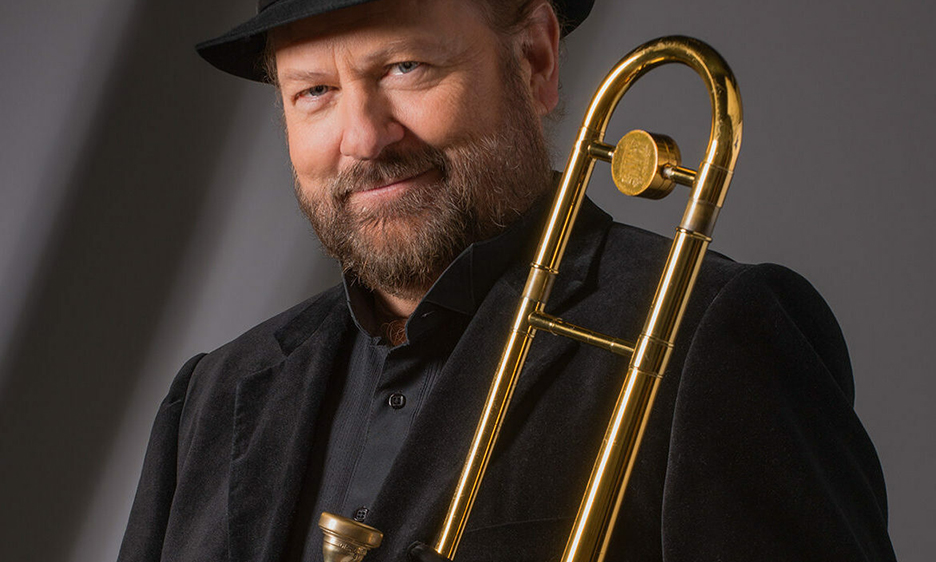
Courtesy Brenda Ladd
If I were advising civic leaders what Austin jazz needs most right now? Parking.
—Mike Mordecai
That kind of work can be difficult to see from the audience side of the room. A listener hears the band, the groove, the soloist and the room. Behind it are musicians being called, contracts being negotiated, venues being cultivated, arts organizations trying to survive, students moving into professional life and older players trying to keep the flame from going out. Mordecai has lived inside that network since the late 1960s, when Austin was still a college town and jazz was spread across hotel lounges, Eastside rooms, union jobs, dance bands and a small but growing university scene.
In 2026, Mordecai was recognized by the Jazz Journalists Association as an Austin Jazz Hero, an honor that points not only to a performing career but to a lifetime of service. His story is also a history of Austin's changing musical ecology: from Eastside jazz and the Victory Grill to Armadillo World Headquarters, from Sixth Street clubs and hotel rooms to the Elephant Room, Parker Jazz Club, Monks Jazz and NICA on 4th.
The following interview traces Mordecai's view of Austin jazz across more than half a century: the venues, musicians, economics, education, humor and practical realities that keep a scene alive.
All About Jazz: How did you first become part of the Austin jazz scene?
Michael Mordecai: I grew up in Denton, Texas and had the good fortune to play with the The North Texas State University Lab Band while still in high school. When I graduated high school, I came to the University of Texas in Austin with a music scholarship, but I was shocked to find that the jazz program was only in its infancy stages. I gave back the scholarship and changed my major to business.
It was at the University of Texas, and through meeting the inspirational jazz band director Dick Goodwin, that I was truly introduced to the full meaning of jazz. At North Texas, there was a spirit of competition. At UT, the magic in the music came alive.
I became an assistant of sorts to Goodwin, helping release the first UT Jazz Ensemble record, helping start the all-city high school jazz band and assisting in professional engagements outside school-related functions.
In 1968, Austin was a college town with a population of approximately 150,000, with the university making up a large portion of the city.
AAJ: What was Austin's jazz community like when you arrived?
MM: There was jazz on the Eastside going back to 1945, when the Victory Grill opened playing jazz and blues. Legends like Kenny Dorham, Teddy Wilson, Eddie Durham, Gene Ramey, Gil Askey and Martin Banks had all left the area to find their fame elsewhere. James Polk was the keeper of the flame of jazz on the Eastside, and he was responsible for bringing jazz across that invisible line of separation.
When I arrived in Austin, the jazz bands were the popular dance bands, with rock and roll just beginning to infringe on the paying gigs. Most working musicians were members of the musicians union, and the few clubs all paid scale. Liquor laws required clubs to close at midnight, or 1 a.m. on Saturdays, so most gigs were 8 p.m. to midnight.
The Sheraton Crest Hotel featured a jazz trio with Geneva and the Gentlemen. The Villa Capri Motor Hotel had a cool basement supper club, Club Caravan, that featured a jazz trio with Jimmy Grove and later got into some touring lounge acts and a little country music.
AAJ: How did the 1970s change the city's musical landscape?
MM: Rock and roll came on strong in the 1970s, but the big parties still had big swing bands and the smaller events had the pop-jazz combos. "Real" jazz was hard to find and was often intertwined with blues at places on the Eastside, like Charlie's Playhouse.
Armadillo World Headquarters opened in 1970 and became a melting pot of music ranging from country to rock, Freddie King-style blues and fusion jazz. Weather Report, Chick Corea, Flora Purim, Phil Woods, Anthony Braxton, Carla Bley, Frank Zappa and Ray Charles all came through, and local jazz bands had the opportunity to open for those acts.
The other popular Austin clubs followed in the footsteps of Armadillo, booking a wide variety of music, with jazz usually presented on slower nights like Sundays or Tuesdays. Original jazz-fusion bands such as 47 X Its Own Weight, Electromagnets, Steam Heat, Starcrost, Jazzmanian Devil and others were part of that period.
There is a whole lot more history.
AAJ: Were there particular club moments that helped move Austin jazz forward?
MM: In 1980 there were places like Piggy's, Chez Fred and Sixth Street clubs. In 1991, The Elephant Room opened, and that was a huge step forward.
Today, the places that have been especially important to keeping jazz visible include The Elephant Room, Parker Jazz Club, Monks Jazz and Nica.
AAJ: Austin has grown dramatically. How has that growth affected musicians, venues and the economics of live performance?
MM: Austin went from a sleepy college town where students "ruled" and the mayor led the city council doing the limbo at Liberty Lunch every Thursday when they took a break from their meeting, to the major city it has become today.
The creative environment with low rent, which provided a nourishing haven for creativity, grew up into the high-rise, high-tech big city it has become. Most singer- songwriters struggled with gigs not paying a guarantee. The jazz community kept the guarantee, but the $50 gig was standard from 1980 through 2000. Jazz gigs now pay about $100 to $150 per man, except for the big bands.
AAJ: You have worked as a trombonist, bandleader, contractor, booking professional and advocate. How do those roles connect?
MM: As a trombone player, life in Austin has been great, providing a wide variety of opportunities from classical to country, with jazz mixed into it all. I have had the opportunity to play and record with Willie Nelson, Aretha Franklin, Ruthie Foster, Maynard Ferguson, the Austin Symphony Orchestra, and to make music with close friends like John Mills, Hank Hehmsoth, Robert "Beto" Skiles, Tomas Ramirez and way too many others to list.
The music has taken me from Japan to Brazil to Europe and presented many magical musical moments. Contracting highlights include working with Stevie Wonder, Andrea Bocelli and countless touring Broadway shows. I have done thousands of bookings ranging from a small act in the corner of a coffee shop to booking Prince for a fly-in.
The Austin Jazz Society advocates for jazz by curating the Jazz Hall of Fame, presenting more than 80 performances per year and sponsoring the AUSTIN YOUTH JAZZ ORCHESTRA program with Diego Rivera.
AAJ: What makes a healthy jazz scene?
MM: A healthy jazz scene includes all of it: venues, musicians, listeners, education, media coverage and civic support.
We have lost our media contacts; most aged out. But we hope to generate new support through the jazz society. The young musicians and the educational support with UT, Texas State and Huston-Tillotson are truly amazing. The civic support is there through grants, but the bureaucracy can create some hoops.
AAJ: When you assemble a band, what do you listen for beyond basic musicianship?
MM: Always expected would be a professional level of playing and reliability. Depending on the gig, reading ability, improvisational skills, behavior and being a positive hang on and off the bandstand.
When contracting strings, make sure stand partners like each other.
AAJ: What makes a good working musician in Austin beyond being able to play well?
MM: Reliability, appearance, positive attitude and the desire to make the gig click on all cylinders.
AAJ: Are there Austin musicians, presenters or behind-the-scenes people who deserve more recognition for keeping the scene alive?
MM: Denny Malloy and several board members of the jazz society come to mind as volunteers. BB with Alex Coke gets the press out well.
The obvious would be Collin Shook at Monks, Kris Kimura at Parker and Nica, and bar managers such as JP Vermaelen of The Elephant Room, who kept that place going through fire, flood, sinkhole and pandemic. He is a true behind-the—scenes jazz hero.
AAJ: What did the Jazz Journalists Association Austin Jazz Hero recognition mean to you?
MM: That was a true and unexpected honor. That famed award sits between my Grammy nominations.
AAJ: How do you see the relationship between traditional jazz, mainstream jazz, creative music, Latin jazz, big band music and newer hybrid forms in Austin?
MM: I see it like a rainbow. Jazz is a wide spectrum of music, from simple and pleasing to hard to play and/or difficult to listen to.
AAJ: What role do younger musicians and university programs play in the future of Austin jazz?
MM: The young cats coming out of the colleges around here are amazing. At my age, I feel great about where the Austin jazz scene is going.
AAJ: What do you wish more audiences understood about live jazz and the work it takes to keep it happening?
MM: I do not think too much about the audiences other than I want everyone to dig what they hear and have a positive experience with jazz.
AAJ: If you were advising civic leaders, funders or arts organizations, what would you tell them Austin jazz needs most right now?
MM: Parking.
AAJ: Looking ahead, what gives you hope about the future of jazz in Austin?
MM: The Austin Jazz Society is working hard to lay down the structure to keep the Austin jazz scene thriving. Our wine sponsor is on board with what we are doing. The sponsor is Austin Hope Wines.
Watch for the movie.
 FOLLOW Hank Hehmsoth
and get notified whenever a new article published.
FOLLOW Hank Hehmsoth
and get notified whenever a new article published.
Hank Hehmsoth is a jazz pianist, composer, educator, and visual artist whose work bridges jazz performance, composition, cultural exchange, and abstract visual art.
About Michael Mordecai

Tags
PREVIOUS / NEXT


Michael Mordecai Concerts
Become a Sustaining Member

Since 1995, All About Jazz has championed jazz as an art form and supported the musicians who create it. Over three decades, it has grown into one of the world's leading jazz resources, serving hundreds of thousands of readers, musicians, presenters and industry professionals each month.
Help Build the Future of All About Jazz
Your support helps us continue building All About Jazz for the next generation—expanding our editorial coverage, preserving jazz history, developing new community features and creating better ways to discover the music and the people behind it.
Become a sustaining member for as little as $20 per year and you'll immediately enjoy an ad-free experience along with access to subscriber features and future articles for a full year.
Together, we're not simply sustaining All About Jazz—we're building its future. Thank you for being part of the journey.