Home » Jazz Articles » Book Review » Mr. Moonlight: Brian Epstein and the Making of the Beatl...
Mr. Moonlight: Brian Epstein and the Making of the Beatles By Philip Norman
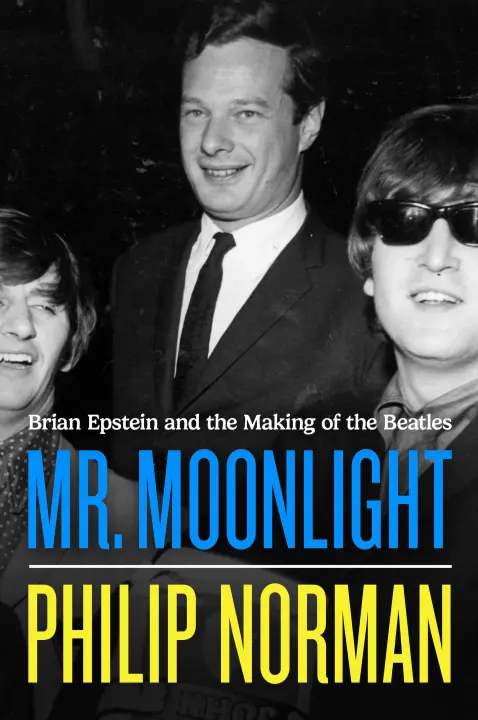 Mr. Moonlight: Brian Epstein and the Making of the Beatles
Philip Norman
368 Pages
ISBN: 9780306837234
Da Capo
2026
Logic would suggest Philip Norman is uniquely qualified to write the biography of the late manager of The Beatles, Brian Epstein. After all, the British-born author composed Shout!: The Beatles in Their Generation (MJF Books, 1981), a best-selling chronicle of the iconic band.
But the subsequent revisionism applied to the work, including Norman's own, would explain the errant emphasis the writer uses in Mr. Moonlight: Brian Epstein and the Making of the Beatles. His undue focus on his subject's sexual preferences and other personal foibles, not to mention his Jewish lineage, overshadows the man's achievements on behalf of the native Liverpudlian quartet.
His accomplishments in that realm turned out to be his life's work, so what is most revelatory here is eye-opening indeed. Epstein's lack of experience in his managerial role meant he would sidestep protocol to the benefit of 'the boys.' His negotiation for the quartet's 1964 appearances on 'The Ed Sullivan Show' is a case in point, as is his end run of Capitol Records hierarchy to garner radio play for "I Want To Hold Your Hand."
But, the very same lack of wisdom could result in Epstein's judgment failing him dramatically. Assigning a staff of business novices to handle Beatles merchandise sales was a major faux pas as was his lapse of communication on the fateful trip to the Philippines in 1966. The later misstep might be reasonably explained away, as the author suggests, if we take into account Epstein's preoccupation with the controversy arising around John Lennon's 'the Beatles are more popular than Jesus' comments. The author vividly, and seemingly effortlessly, paints detailed pictures of those circumstances.
At that time too, the manager of the Beatles was experiencing more than a little trepidation about the band's decision to stop touring and how that might affect their relationship. In his deliberate writing style, Philip Norman can let such facts speak for themselves and he might also have done so in regards to the dual stigma Epstein had to fight regarding his Jewish lineage and his homosexual orientation.
Unfortunately, over the course of these entire 350 some pages, he dwells on those themes to a fault—particularly the latter. From a purely objective point of view, Norman is performing a journalistic service of sorts, since in his subject's 1964 autobiography A Cellarful of Noise (Souvenir Press, 1964), the well-heeled son of a successful post-war British businessman obviates exploration of those intimately personal topics
Mr. Moonlight: Brian Epstein and the Making of the Beatles thus held the potential of being a great opportunity to bestow recognition upon the group's mentor he so rarely received while living (he was ignored at the MBE awards ceremony in 1965). And passing mentions of Brian's tawdry sexual encounters would not seem so salacious if not so often included in the otherwise lively narrative.
As it is, Epstein's appetite for alcohol and drugs, not to mention his homosexual peccadilloes, receives inordinate attention as it directly relates to both his personal and professional life. In that light, it is little wonder the book begins with a Prologue intimating the involvement of organized crime in the man's death from apparent suicide in 1967.
To be fair, Philip Norman does his most discerning investigative work on this subject. He rightfully compares the superficial investigations into the circumstances of Jimi Hendrix's demise to the similarly cursory attention paid to the passing of the Brian Epstein. Would that he had applied comparable logical attention to the connection between Epstein's lavish lifestyle indulgences and the tax liabilities arising from the Beatles' income.
The source of those compromised finances as the rationale behind the formation of the Apple business operations deserves more than tangential mention. As does the ameliorating effect the Beatles' business mentor might have had on the shambles that was the Magical Mystery Tour (Apple, 1967) film later in the year of his demise, not to mention the discordance of the next year's recording of 'The White Album,' AKA The Beatles (Apple, 1968).
Or more to the point, the arguable fiasco that was the Get Back / Let It Be (Apple, 1970) project that saw the emergence of Allen Klein in Epstein's stead. Indeed, based on the organizational skill and attention to detail the latter displayed when working for his father and gaining admission to the Royal Academy of Dramatic Arts, he would have guided the 'Fab Four' around those conflicting circumstances and Norman might have done well to say so—or at least hinted at it—to give Epstein his proper due, even if only hypothetically.
More curious still, however, is the absence of any photos whatsoever in Brian Epstein and the Making of the Beatles. Perhaps there were licensing issues Philip Norman could not overcome, but regardless, just a smattering of images—of the Beatles themselves if not this book's subject—would place more emphasis on just how much the entrepreneur had to be proud of during the course of the thirty-three years he lived.
For instance, merely one shot of Epstein at side stage during the band's first appearance at Shea Stadium would speak volumes. From that perspective, Mr. Moonlight would then read less like tabloid journalism and more like an empathetic tale of a conflicted yet nonetheless talented soul.
 FOLLOW Doug Collette
and get notified whenever a new article published.
FOLLOW Doug Collette
and get notified whenever a new article published.
DC writes regularly about jazz and blues plus rock and roll, composing reviews of CDs, DVDs, live performances, books and films.
About The Beatles

Tags
PREVIOUS / NEXT


Become a Sustaining Member

Since 1995, All About Jazz has championed jazz as an art form and supported the musicians who create it. Over three decades, it has grown into one of the world's leading jazz resources, serving hundreds of thousands of readers, musicians, presenters and industry professionals each month.
Help Build the Future of All About Jazz
Your support helps us continue building All About Jazz for the next generation—expanding our editorial coverage, preserving jazz history, developing new community features and creating better ways to discover the music and the people behind it.
Become a sustaining member for as little as $20 per year and you'll immediately enjoy an ad-free experience along with access to subscriber features and future articles for a full year.
Together, we're not simply sustaining All About Jazz—we're building its future. Thank you for being part of the journey.