Home » Jazz Articles » We Travel the Spaceways » Ivo Perelman, Matthew Shipp, and the Buddha walk in to a bar...
Ivo Perelman, Matthew Shipp, and the Buddha walk in to a bar...
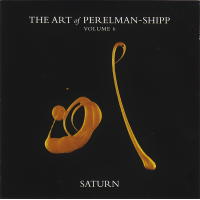 Ivo Perelman / Matthew Shipp
 The Art Of Perelman-Shipp
Leo Records
2017
If you are looking for reviews of the seven new discs Ivo Perelman and Matthew Shipp released on Leo Records, you won't find them here. You probably won't find a proper review of the music elsewhere either, but we'll get back to that later. The São Paulo-born, now Brooklyn-based saxophonist has, like pianist Shipp, moved into the rarefied air of the master musicians. Both Perelman and Shipp have developed their own individual technique and sound. Instantly recognizable, each artist employs a language developed under the umbrella of free jazz. The closest analog to their music might be psycholinguistics. Let's not dive into the relationship between their musical behavior and it's relation to the psychological process, or both you and I might find ourselves really in over our heads.
In 2016, Matthew Shipp announced that he was stepping away from studio recordings with the release of Piano Song (Thirsty Ear, 2017). What he didn't tell us is that there would be an avalanche of sessions coming out. This year you can also hear the pianist as solo performer, Invisible Touch At Taktlos Zürich (Hatology, 2017), in trio with Mat Walerian & William Parker, This Is Beautiful Because We Are Beautiful People (ESP, 2017), Magnetism(s) with Parker and Rob Brown, in quartet Not Bound (ForTune, 2017) with Michael Bisio, Whit Dickey, and Daniel Carter, Vessel In Orbit (AUM Fidelity) with Dickey and Mat Maneri, and in these seven discs with Perelman.
With Perelman, Shipp shares a fraternal relationship. The old brothers from different mothers saying applies here. Together, the pair have released (by my rough count) twenty-eight recordings. The first being Cama De Terra (Homestead, 1996) and sixteen since 2012 (that doesn't include the latest seven). Consuming all of this music is a mind boggling task. Just as there has never been an acceptable account of John Coltrane's later works like Ascension (Impulse!, 1965), any attempt to describe The Art Of Perelman-Shipp would ultimately be an exercise in failure. Sure, we can give the listener a lineup (see details below) with the guest drummers Andrew Cyrille, Whit Dickey, and Bobby Kapp, and bassists William Parker and Michael Bisio, but music is in one word, ineffable. Am I comparing these recording to those of John Coltrane? Yes. Like Coltrane's later works, the best approach is to be versed in his early recordings, like his work in Miles Davis' quintet, followed by Trane's progression with Thelonious Monk, his recording Giant Steps (Atlantic, 1959), Love Supreme (Impulse!, 1965), and on and on. The same goes for both Perelman and Shipp's discography. Both players, it can be argued, were freed by Coltrane's explorations, to develop their own language. Early recordings by the saxophonist like Soccer Land (Ibeji, 1994) highlight this debt to the music of Albert Ayler and Gato Barbieri. As his discography broadened, so did his vocabulary. The same can be said for Shipp, who only seemed to have been born a fully formed piano voice. Shipp's music has connections to that of Cecil Taylor, Thelonious Monk, Andrew Hill, and Horace Tapscott. Under the tutelage of Roscoe Mitchell, David S. Ware, and William Parker he has, like Monk, created his own language.
The progression of the careers of both Perelman and Shipp is the backstory here. Knowledge of those prior recordings, it can be argued, is necessary before listening to these seven discs. But I disagree. One certainly could have no connection to free jazz and still appreciate Albert Ayler's Spiritual Unity (ESP, 1964) or knowledge of abstract expressionism and dig a Jackson Pollack painting. Which leads us to Zen Buddhism. Well sort of.
My mentor and former editor at AllAboutJazz, Nils Jacobson, was convinced that a free improvisation performance was a one-and-done experiment. He believed it should never actually be preserved on disc. That's all well and good for a bodhisattva, but the rest of us certainly would miss out on many a performance. Okay then, the next level would be to listen to a recording just once. That method would require you to be fully present and engaged in the moment. For connoisseurs of The Art Of Perelman-Shipp music, that would be about 6 hours of listening. By factoring in Perelman's discs these last three years, and Shipp's output for the same period, we're now talking about nearly 40 hours of listening. That's a full-time work week.
Are you still wondering where the reviews of the seven discs are? Considering the sound of one hand clapping? Zen again, right? I'm talking koans here. Depending on where you are in your own listening evolution, these sessions will be a revelatory experience or a joyous return to the musical dialogue Perelman and Shipp have been having for the past 20 years.
The only question is, would you choose to step in the same river of these recordings more than once?
Tracks and Personnel
TitanTracks: Part 1; Part 2; Part 3; Part 4; Part 5; Part 6.
Personnel: Ivo Perelman: tenor saxophone; Matthew Shipp: piano; William Parker: bass.
Tarvos
Tracks: Part 1; Part 2; Part 3; Part 4; Part 5; Part 6; Part 7.
Personnel: Ivo Perelman: tenor saxophone; Matthew Shipp: piano; Bobby Kapp: drums.
Pandora
Tracks: Part 1; Part 2; Part 3; Part 4; Part 5; Part 6.
Personnel: Ivo Perelman: tenor saxophone; Matthew Shipp: piano; William Parker: bass; Whit Dickey: drums.
Hyperion
Tracks: Part 1; Part 2; Part 3; Part 4; Part 5; Part 6; Part 7; Part 8; Part 9; Part 10.
Personnel: Ivo Perelman: tenor saxophone; Matthew Shipp: piano; Michael Bisio: bass.
Rhea
Tracks: Part 1; Part 2; Part 3; Part 4; Part 5; Part 6; Part 7.
Personnel: Ivo Perelman: tenor saxophone; Matthew Shipp: piano; Michael Bisio: bass; Whit Dickey: drums.
Saturn
Tracks: Part 1; Part 2; Part 3; Part 4; Part 5; Part 6; Part 7; Part 8; Part 9; Part 10.
Personnel: Ivo Perelman: tenor saxophone; Matthew Shipp: piano.
Dione
Tracks: Part 1; Part 2; Part 3; Part 4; Part 5; Part 6; Part 7; Part 8.
Personnel: Ivo Perelman: tenor saxophone; Matthew Shipp: piano; Andrew Cyrille: drums.
 FOLLOW Mark Corroto
and get notified whenever a new article published.
FOLLOW Mark Corroto
and get notified whenever a new article published.
Mark misses his dogs Louie & Freddy, but endeavors daily to find and listen to new and interesting sounds.
Tags
PREVIOUS / NEXT


Become a Sustaining Member

Since 1995, All About Jazz has championed jazz as an art form and supported the musicians who create it. Over three decades, it has grown into one of the world's leading jazz resources, serving hundreds of thousands of readers, musicians, presenters and industry professionals each month.
Help Build the Future of All About Jazz
Your support helps us continue building All About Jazz for the next generation—expanding our editorial coverage, preserving jazz history, developing new community features and creating better ways to discover the music and the people behind it.
Become a sustaining member for as little as $20 per year and you'll immediately enjoy an ad-free experience along with access to subscriber features and future articles for a full year.
Together, we're not simply sustaining All About Jazz—we're building its future. Thank you for being part of the journey.