Home » Jazz Articles » Multiple Reviews » In the Land of Giants: OJCs from Thad Jones and Red Garland
In the Land of Giants: OJCs from Thad Jones and Red Garland
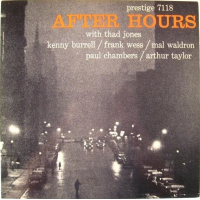 Prestige All Stars
After Hours
Craft Recordings
1957/2025
Under the banner of the Prestige Blues-Swingers, the label issued two jump-inflected outings—Outskirts of Town (Prestige, 1958) and Stasch (Swingville, 1961). Just prior to those releases, a loosely configured collective billed as The Prestige All Stars convened for four albums recorded in 1957: Earthy, All Day Long, All Night Long, and After Hours. The personnel shifted from date to date, but guitarist Kenny Burrell remained a constant presence, his burnished tone serving as connective tissue throughout the series.
Among these sessions, After Hours stands as the crown jewel. The frontline pairing of Jones and Wess is inspired. Both musicians possessed the rare elasticity to navigate swing's relaxed authority and bop's quicksilver modernism with equal conviction. Jones had already announced himself as a formidable leader on Blue Note Records before joining the Count Basie Orchestra and later co-founding the Thad Jones/Mel Lewis Orchestra. Wess, another Basie alumnus, largely remained rooted in swing, though his adaptability shines on his early-'60s Prestige dates.
Pianist Mal Waldron serves as both catalyst and composer for much of the material, his originals providing sturdy yet flexible frameworks for improvisation. The album opens with "Count One," propelled by the crisp, crackling drums of Art Taylor and an infectious unison riff from Jones and Wess. Wess's tenor solo is especially striking—breathy, warm, and steeped in the lineage of swing masters—before yielding to eloquent statements from Burrell and Jones. Wess then returns on flute, dancing lightly across the form with agility. The side concludes with "Empty Street," a relaxed amble highlighted by Jones's burnished muted trumpet and a mercurial arco passage from bassist Paul Chambers.
Side two opens with Waldron's "Blue Jelly," a straight-ahead blues that elicits bristling, authoritative solos across the board. Wess, back on tenor, phrases with poise and understated fire; Jones responds with incisive clarity; Burrell answers in earthy, blues-drenched tones. Waldron's own improvisation is particularly compelling, built around his penchant for "worrying" a phrase. The closing "Steamin'" lowers the temperature without sacrificing intensity, Jones muted and Wess on flute, the ensemble settling into an after-hours glow.
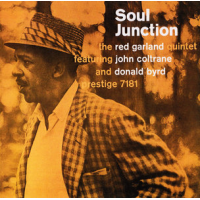 Red Garland
Soul Junction
Craft Recordings
1957/2026
Most famously employed by Miles Davis to fulfill his contractual obligations before departing Prestige for Columbia Records, producer Bob Weinstock had a penchant for marathon recording sessions designed to yield multiple LPs from a single date. Pianist Red Garland found himself part of this strategy when he entered Rudy Van Gelder's Hackensack studio in November 1957. The results were parceled out over three releases: All Mornin' Long (1957), Soul Junction (1960), and part of High Pressure (1961). Though the format adhered to Prestige's tried-and-true blowing-session template—extended takes, minimal rehearsal, maximum spontaneity—the personnel ensured anything but routine results. Garland, joined by bassist George Joyner and house drummer Art Taylor, provided a supple yet propulsive foundation for front-line firebrands Donald Byrd and John Coltrane, both then ascending rapidly.
The title track of Soul Junction settles into what drummer Kenny Washington has aptly dubbed "the adult tempo"—a relaxed but deeply grooving pace that demands maturity and patience. Coltrane begins with measured restraint, but the embers soon ignite into the sheets of sound that would define his later work. Byrd, by contrast, balances lyricism and bite, his phrasing nimble and assured. "Woody 'n You" shifts the mood entirely: an up-tempo burner that crackles with urgency. In its original mono presentation, the recording possesses remarkable immediacy—you can practically feel the air in Van Gelder's living room studio.
On Dizzy Gillespie's "Birks' Works," Garland raises the temperature with a rollicking opening statement, his touch both percussive and buoyant. As his solo builds, Coltrane and Byrd interject with deft background figures, framing Garland's signature block chords in full, ringing splendor. He brings a similar harmonic richness to the ballad "I've Got It Bad and That Ain't Good," caressing the melody with understated elegance. All restraint evaporates on the closing bebop warhorse "Hallelujah." Here, Coltrane hints unmistakably at the harmonic command that would erupt two years later on Giant Steps, attacking the changes with relentless momentum. Throughout, Taylor remains unflappable—driving the band at blistering tempos without ever sounding strained.
Taken together, these recordings exemplify Prestige's assembly-line ethos at its most inspired: economy of means, abundance of imagination, and a roomful of musicians who understood that even a contractual obligation could yield enduring art.
Tracks and Personnel
After HoursTracks: Count One; Empty Street; Blue Jelly; Steamin.'
Personnel: Thad Jones: trumpet; Frank Wess: tenor sax & flute; Kenny Burrell: guitar; Mal Waldron: piano; Paul Chambers: bass; Art Taylor: drums.
Soul Junction
Tracks: Soul Junction; Woody 'n You; Birks' Works; I've Got it Bad and That Ain't Good; Hallelujah.
Personnel: Red Garland: piano; John Coltrane: tenor sax; Donald Byrd: trumpet; George Joyner: bass; Art Taylor: drums.
 FOLLOW C. Andrew Hovan
and get notified whenever a new article published.
FOLLOW C. Andrew Hovan
and get notified whenever a new article published.
An avid audiophile and music collector, Chris Hovan is a Cleveland-based writer / photographer / musician.
About Red Garland

Tags
PREVIOUS / NEXT

Become a Sustaining Member

Since 1995, All About Jazz has championed jazz as an art form and supported the musicians who create it. Over three decades, it has grown into one of the world's leading jazz resources, serving hundreds of thousands of readers, musicians, presenters and industry professionals each month.
Help Build the Future of All About Jazz
Your support helps us continue building All About Jazz for the next generation—expanding our editorial coverage, preserving jazz history, developing new community features and creating better ways to discover the music and the people behind it.
Become a sustaining member for as little as $20 per year and you'll immediately enjoy an ad-free experience along with access to subscriber features and future articles for a full year.
Together, we're not simply sustaining All About Jazz—we're building its future. Thank you for being part of the journey.