Home » Jazz Articles » Interview » Rachel Spencer: Trumpeter Making Artistic Statements
Rachel Spencer: Trumpeter Making Artistic Statements
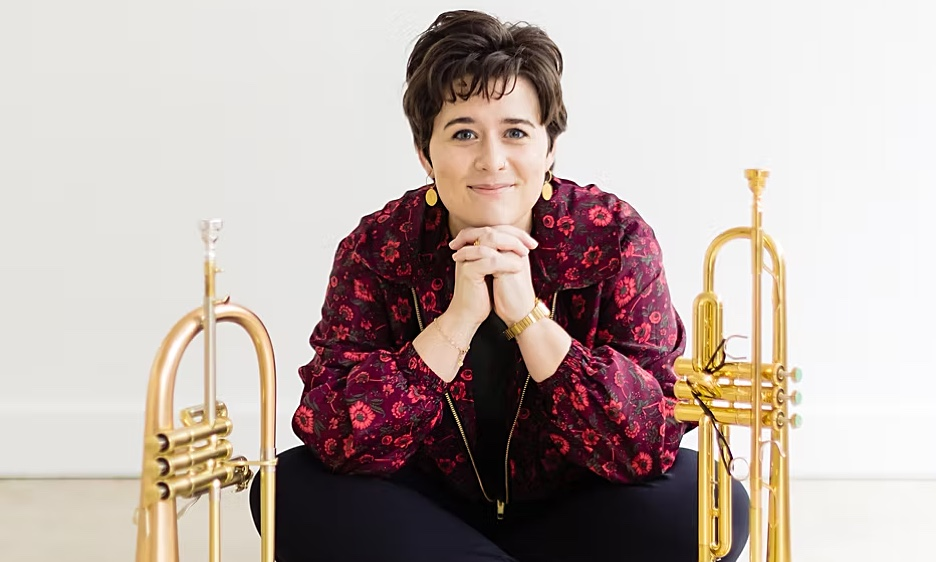
What steered me toward really loving jazz music was the freedom to really be anything...and how collaborative it is.
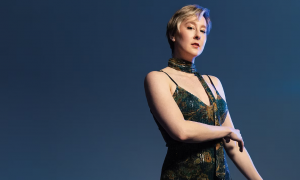
For Rachel Spencer, a trumpeter, composer and educator living in Austin, Texas, it started with classical music. She grew up in a small town near Cincinnati, Ohio, and her career continues in Texas, where she teaches and plays in various setting, including fronting an an outstanding small combo.
She's at the beginning of a promising career and if her first recording, The Next Right Thing (available at Bandcamp), is any indication, good things lie ahead. It is rife with very strong original compositions performed wonderfully by her band, augmented by Michael Dease, a guest on trombone. The band cooks. They play as a group, not as a collective of people put together to make a recording. Solos are outstanding. Spencer's trumpet work is stellar throughout.
"I came from a really small town. It's a different infrastructure than where I'm at now," she says. "In Texas a lot of kids grow up with lessons. I had no exposure to professional musicians growing up. I didn't have any idea what a career in music could look like. My teachers didn't either. They were encouraging all of us to get music education degrees after high school. When I was young I'd never really met a professional jazz musician. I'd never seen one. So I practiced what was available to me. I did lots of like really hard classical solos. My big dream was to be like Tine Thing Helseth (a renowned Norwegian classical trumpet soloist)."
In high school she aspired "to be an international soloist or something" and she played in the Cincinnati Youth Jazz Orchestra. There was no place to get jazz trumpet lessons and there were no notable jam sessions. As an undergraduate student at Capital University in Columbus, Ohio, she was a a music education major. A mentor, Dr. Lou Fischer, a jazz bassist, thought enough of her playing to suggest she explore jazz. "I had a realization somewhere in my middle of my freshman year, and I changed my major to jazz studies because I realized my heart was really set on performing, and I really preferred playing jazz."
Spencer adds, "I've reflected a lot on my trajectory. I was telling a friend of mine the other day that small town kids like us don't usually become professional jazz musicians. A lot of what I ended up doing was: I went into bigger cities and bigger places and got exposed to more things and more possibilities for my life."
Ultimately, "What steered me toward really loving jazz music was the freedom to really be anything and to make all sorts of different kinds of art and how collaborative it is. That's what really drew me to it. I love the life that comes with being a jazz musician. Sitting in an orchestra all day was not going to be for me. It just didn't appeal to me as much. I really wanted to improvise and compose."
Spencer started on piano as a young girl and switched to trumpet around age 11. In high school she was in the jazz band and a teacher recommended she listen to Miles Davis' Kind of Blue (Columbia, 1959). She also listened to Trombone Shorty and a brass band called Galactic. That led her to other big bands like Count Basie and Glen Miller.
It was jazz music that brought her to Texas after she earned a bachelor's degree in Ohio. She had connections in Texas and enrolled at the University of Texas at Austin where she earned a master's in music and human learning as well as a doctorate in jazz trumpet performance from that school. She did her doctoral dissertation on the career of Blue Mitchell, a big influence on her among other jazz heroes that included Roy Hargrove and Kenny Garrett.
Blue Mitchell is definitely my biggest influence for sure. What I love about his playing is how singable it is. Back in my undergrad, I first discovered his recordings with Horace Silver. I was just really drawn. I'm always really drawn to trumpet players that play beautifully and clearly, no matter what. I think some players are into displays of range or technique. But for me, I can't ever get excited about those things unless someone also has a beautiful sound. That's something that always struck me and inspired me about all of my trumpet influences—Blue Mitchell, Roy Hargrove, and Art Farmer.
Bobby Shew was also important to Spencer. "He and I hooked up when I was asking him to help me research about Blue Mitchell for my dissertation. They were best friends back in the day. They played in the Louie Bellson band together for nine years. He's obviously a huge influence as well, just from a technique standpoint, and also I'm so inspired by his legacy."
After getting a master's degree, Spencer became a middle school band director. She has more than 15 years as an educator and does clinics as well as giving private lessons for young trumpet players.
"I kind of found my way into it," she says. "I was like, 'Okay, I do love teaching. I'll do this for a few years while I'm still kind of figuring out what's going on here. I ended up being a middle school band director during the pandemic ... I love the kids. So fun. But it was a little bit of a stressful experience, and I had a moment of realization."
Spencer was in Dallas at a teaching conference and was returning to Austin. "I had a realization as I was driving back," she says, "that I was not being true to myself. A voice told me I wasn't optimizing the amount of good that I could do for the world, and that I really needed to prioritize being an artist. It's what my soul needed."
She was to become a performing artist. And her playing was good enough for it.
Among her activities, Spencer has served as the regional coordinator for UT's Essentially Ellington Festival and Longhorn Jazz Festival. She gets her jazz chops out at clubs around Austin, where she says the scene "is incredibly strong. I've lived in Austin for nine years, and I've I've watched the scene really change a lot ... The straight-ahead players are so good, and we've got a lot of really good clubs down here now. It's really starting to pop. Everybody knows everybody. The skill level is very high."
As for her first recording, "I've been working toward this thing for a long time, but somehow I don't think I ever really counted myself in the group of people that would make records. I have such a reverence for the tradition. I feel like I fell into this kind of composer/band leader thing," she says.
"This is what we've got to do to make the art go forward. This is what I need to be doing now. And I just kind of woke up one day and I'm like, 'Oh, I'm band leading a lot. Cool.' You know how we get when we're about to turn 30 and things get a little weird?" she said chuckling. "I told myself, 'I have this music. I've been sitting on some of it, and I have this great band. I want to make I make a record.'"
Spencer ended up winning a grant to cover the expenses.
Some of the compositions were written over a period of about five years, she says. "Everything else just kind of ended up reflecting on how I got here and what's my job? I used to be a very insecure person, very nervous player. I wanted to do right by the music ... I ended up writing tunes to kind of reflect on what it's been like stepping into my dream of being an artist, being a professional musician, and reflecting on what my job is now. What does it mean? And realizing it's not about me. It's not about how it reflects on me. It's not about if it makes me look good or be famous. It's like, you're an artist, and you need to tell your story while adding art into the world."
The title "is something one of my teachers said to me that stuck with me for a long time. It's like, 'All you have to do is the next right thing, the next thing that is good.' I composed that (title) tune based on how my life was going. The first opening groove is a little slow, it's repetitive, kind of reflecting on my time being a band director. In my opinion, not optimizing my potential or doing as much good as I could do in the world. And it starts to build, starts to build, starts to build. Then boom, we're swinging. All the solos on that tune are short on purpose, and it goes to each section quickly on purpose because you just got to keep going ... gotta do the next right thing, make it cool."
"Each tune on the album is about different feelings and things I've encountered and reflected on stepping into this life of being an artist, trying to be anyway," she says.
The band is Gene Centeno on alto sax, Andy Langham on piano, Liam O’Dell on bass and Adam Jackson on drums, with Dease playing some trombone.
"Michael Dease and I met for the first time when he came to Austin for a show, and we ended up connecting during that weekend as I ended up hosting him in my home. He came back the next year as a guest artist at UT, and I even got to arrange some of his tunes for the big band I was teaching. When I wrote the trombone parts for the record, I couldn't think of anyone who could do those tunes more justice than him. He brims with technique and speed but can play with more soul than anyone out there. I knew he'd bring my tunes to new heights. I couldn't be happier with his involvement in the project, and the same is true for the rest of the band as well."
Spencer is pleased with the results. "For our first work, I'm happy with it. I could sit all day and nitpick, but I think that if even just one tune makes people happy, makes them feel something, then I'm happy."
The music is outstanding. At age 31, there's a long, fruitful road ahead.
"I'm kind of in a transition, kind of in a liminal space, so to speak," she says. "I've had some irons in the fire with the academia thing, but I don't know if that's what's next. My dream would be to tour the music and to play a lot. There is a chance of moving to a different city, perhaps. We'll see what works out best. But right now, I'm just trying to focus on the music and see what invites me in."
"I'm pretty pleased with my schedule. I teach private lessons or clinics probably about three days a week. Then I spend the rest of my time during the day usually practicing or writing, or doing things around the house like everybody else does. But I'm practicing or trying to write, trying to get better at the piano ... As I've gotten older, I think it's important to protect your curiosity as a musician because there's so much to do all the time. So I've been trying to spend a lot of my time watching performances and asking questions to myself, and taking a minute to be curious about stuff and music."
 FOLLOW R.J. DeLuke
and get notified whenever a new article published.
FOLLOW R.J. DeLuke
and get notified whenever a new article published.
R.J. DeLuke is an indefatigable jazz fan and arbiter elegantiarum who aspires to ultimate hipness; also an upstate NY freelance writer for various media.
About Rachel Spencer

Tags
PREVIOUS / NEXT


Become a Sustaining Member

Since 1995, All About Jazz has championed jazz as an art form and supported the musicians who create it. Over three decades, it has grown into one of the world's leading jazz resources, serving hundreds of thousands of readers, musicians, presenters and industry professionals each month.
Help Build the Future of All About Jazz
Your support helps us continue building All About Jazz for the next generation—expanding our editorial coverage, preserving jazz history, developing new community features and creating better ways to discover the music and the people behind it.
Become a sustaining member for as little as $20 per year and you'll immediately enjoy an ad-free experience along with access to subscriber features and future articles for a full year.
Together, we're not simply sustaining All About Jazz—we're building its future. Thank you for being part of the journey.