Home » Jazz Articles » Book Review » Mujician: Keith Tippett – The Authorised Biography by Ma...
Mujician: Keith Tippett – The Authorised Biography by Martin Phillips
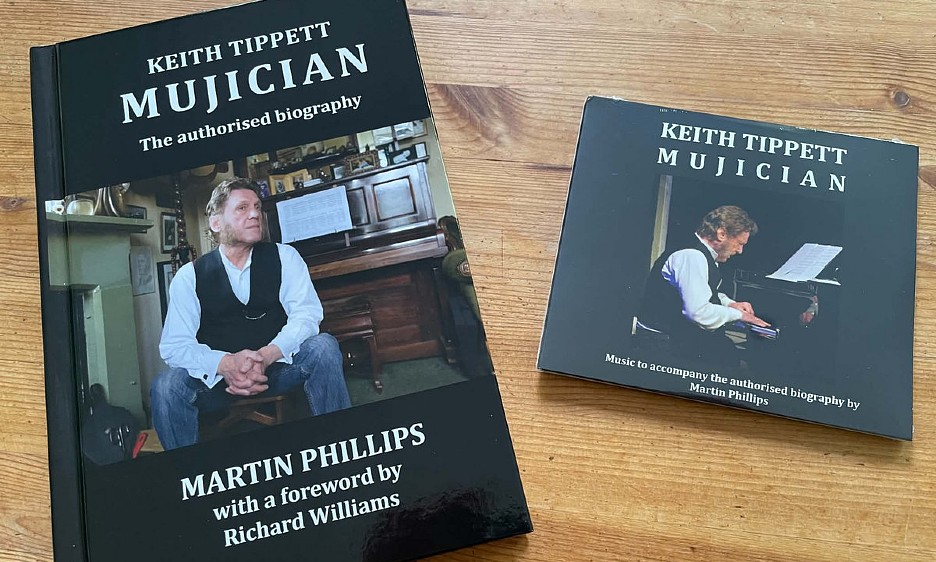
Courtesy Jazz In Britain
The reaction, whether to the joyful noise of Centipede or to the alternating filigree and thunder of a solo piano recital, was always the same. Only Keith, you'd tell yourself, could have done that.
—Richard Williams (from his Foreword)
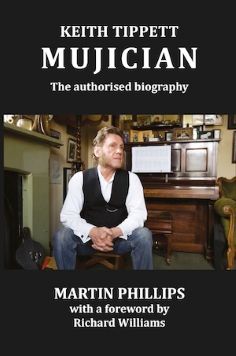 Mujician: Keith Tippett—The Authorised Biography Martin Phillips 325 Pages ISBN: 978 1916320697 Jazz In Britain 2026
 Pianist, composer, improviser, and educator Keith Tippett (1947—2020) was a truly original voice in jazz. Born in Bristol, England, to a policeman father and Irish mother, he remained closely connected to his roots in southwest England. He is best remembered for his free improvisation work—both solo and with his quartet Mujician alongside Paul Dunmall, Tony Levin and Paul Rogers. (The name came from his young daughter Inca, who told her schoolteacher her dad was a "mujician.")
Tippett also made history with his 50 piece Centipede orchestra in the early 1970s, which brought together rock and jazz musicians for the album Septober Energy (RCA, 1971). His international reputation grew, and he became a tireless educator, working with everyone from amateurs to orchestral professionals. His archive is now held at the Royal Welsh College Of Music And Drama in Cardiff.
Lifelong Tippett follower Martin Phillips draws on interviews, personal encounters, period sources, and Tippett's recorded output. What truly animates the book is the wealth of interviews with Tippett's friends, colleagues, and family. Many knew him for decades and offer grounded portraits of a man wholly committed to his musical philosophy: enlightenment through spontaneous composition—occasionally with a bit of structure. Even his scored works left wide spaces for improvisation, sometimes over chord changes, more often in open pursuit of whatever emerged.
The first part of the book follows a conventional chronology: Tippett's Bristol childhood; his first band, the K. T. Trad Lads; and his move to London, where he worked in a carpet warehouse, survived on baked beans on toast, and longed for companionship. That arrived in the form of vocalist Julie Driscoll, then a singing star with Brian Auger and the Trinity. They married, and Julie adopted the Keith's original surname Julie Tippetts (he had correctly thought that 'Keith Tippets's sextet' had one 's' too many). Tippett also met and was deeply influenced by the Blue Notes—South African exiles like Dudu Pukwana, Harry Miller, Mongezi Feza and Louis Moholo-Moholo.
After early recordings and Centipede's triumphant Royal Albert Hall appearance, the Tippetts returned to the southwest, renting a cottage where they would remain for the rest of his life. The 1980s were especially difficult; Tippett even picked potatoes to pay the bills. At this point, Phillips wisely shifts from chronology to a thematic structure, exploring Tippett's work in solo piano, piano duos (with Stan Tracey, Howard Riley, Matthew Bourne and others), duets (including Julie and Andy Sheppard), and ensembles with longtime collaborators Mark Charig, Larry Stabbins, Elton Dean, Nick Evans and the members of Mujician. Additional chapters cover his educational work—including the massive Seedbed workshop orchestra (1990—94), the Rare Music Club in Bristol, and his strong following in Europe, especially Italy.
The final chapter is inevitably the most difficult. After completing The Nine Dances Of Patrick O'Gonogon in 2016—one of his most structured works—Tippett was diagnosed with chronic obstructive pulmonary disease. His decline was slow and painful. Hospitalized in early 2020 as the COVID 19 pandemic spread, he could not receive family visits. The pages describing his death, drawn from family accounts, are heartbreaking.
This authorized biography is surely the definitive account of a musician who, in Robert Frost's words, "took the road less traveled." Tippett played with King Crimson in the early 1970s at Robert Fripp's invitation but ultimately chose his own path. His piano articulation was extraordinary, his delight in the extremes of the keyboard unmistakable, and his use of wooden blocks and tiny mechanical music boxes inside the piano became a signature—an "unprepared piano" of his own invention. His music is being kept alive through albums like You Are Here (Jazz Now, 2024) by Seedbed alumnus Kevin Figes.
Published by Jazz In Britain and available through Bandcamp (and Dusty Groove in the USA) rather than traditional booksellers, the volume includes a Foreword by journalist Richard Williams and two CDs of previously unreleased material: a 1984 solo piano radio recording and the 1976 London 100 Club debut of his group Keith Tippett's Ark, featuring Elton Dean, Chris Francis, Larry Stabbins, Brian Smith, Mark Charig, Dick Pearce, Nick Evans, Dave Amis, Harry Miller, Louis Moholo, and Tippett himself.
Allow me a personal note. I played soprano sax in the Seedbed workshop orchestra—one of two sopranos in a section otherwise large enough to form a soccer team of tenor saxophones alone. We rehearsed four hours most weeks for over four years. Afterward, we often went to the pub, where Keith drank cider and shared road stories (and the occasional complaint about rising prices). He encouraged us to write for the ensemble, which would attempt anything. I'm proud he entrusted me to direct the group for a few gigs he couldn't make, and even let me solo on an early wind synth in a duel with a baritone sax.
There were unforgettable moments. At the 1991 Bristol concert with Mujician and the Georgian ensemble—recorded by the BBC and later released—Seedbed members hid in the audience with our instruments. During the finale of "Septober Energy," we rose from our seats, played our way to the front and joined the music and singing.
Having spent hundreds of hours with Keith, I can say with confidence that the man in these pages is the man I knew. He never lost his belief that music could change the world for the better. It feels right to close with the final lines of "Septober Energy":
Unite for every nation Unite for all of the land Unite for liberation Unite for freedom of man
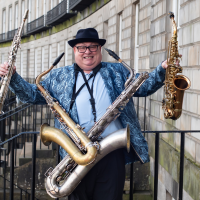 FOLLOW Mark McKergow
and get notified whenever a new article published.
FOLLOW Mark McKergow
and get notified whenever a new article published.
Saxophonist, clarinetist and writer living in Edinburgh, Scotland
About Keith Tippett

Tags
PREVIOUS / NEXT
Become a Sustaining Member

Since 1995, All About Jazz has championed jazz as an art form and supported the musicians who create it. Over three decades, it has grown into one of the world's leading jazz resources, serving hundreds of thousands of readers, musicians, presenters and industry professionals each month.
Help Build the Future of All About Jazz
Your support helps us continue building All About Jazz for the next generation—expanding our editorial coverage, preserving jazz history, developing new community features and creating better ways to discover the music and the people behind it.
Become a sustaining member for as little as $20 per year and you'll immediately enjoy an ad-free experience along with access to subscriber features and future articles for a full year.
Together, we're not simply sustaining All About Jazz—we're building its future. Thank you for being part of the journey.