Home » Jazz Articles » Album Review » Woody Shaw: Love Dance
Woody Shaw: Love Dance
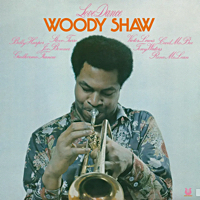
The Time Travelers series launched in October 2025 with three releases: drummer Roy Brooks's 1972 live album The Free Slave; pianist Kenny Barron's 1973 set Sunset to Dawn; and Cosmos Nucleus, a 1976 session by Panamanian tenor saxophonist Carlos Garnett featuring a 20 year old Kenny Kirkland on keyboards. Upcoming releases will feature João Donato, Clifford Jordan, and Joe Chambers. The Woody Shaw entry in the series includes Dan Morgenstern's original liner notes alongside new reflections by Bob Blumenthal.
Woody Shaw has long inspired a devoted following. Admirers are drawn to his outsider status, his technical brilliance, and his refusal to compromise when major labels sought a more commercial sound. They cite his seeming lack of luck and the persistent neglect of his artistry. His champions often quote praise from Miles Davis, Dizzy Gillespie, and producer Michael Cuscuna. Wynton Marsalis noted that Shaw expanded the trumpet's vocabulary, while Wallace Roney called him both "the keeper of the flame" and a true innovator. Saxophonist Dave Liebman went further, describing Shaw as "one of the greatest jazz musicians of all time."
Why Love Dance has drifted in and out of print for decades remains puzzling. It is music with clear orchestral weight that reveals Shaw's vision as both composer and player. His relative neglect may be explained by timing: his creative peak coincided with the dominance of fusion. Shaw, a brilliant improviser, lacked the self-promotional drive of some peers, yet technically he equaled any of them.
Shaw's Muse recordings document a crucial period when jazz was contending with fusion, rock, and disco. Despite commercial pressures, he remained devoted to a forward-looking, acoustic hard bop vocabulary—pushing the trumpet's expressive possibilities with harmonic daring and architectural logic. His command of tone, phrasing, and line earned him the description "the last of the statement trumpeters."
The septet heard on Love Dance (1976) is formidable, and none more so than trombonist Steve Turre, whose bass trombone anchored the ensemble with depth and invention. Tenor saxophonist Billy Harper, nearly as underrecognized as Shaw himself, brought his commanding Texas tone—familiar from Gil Evans's orchestras—to the front line. Altoist and flutist Rene McLean, inheriting his father's spirit, adds a fiery, assertive edge that cuts through the group textures.
On the opening track, pianist Joe Bonner reveals a touch that is both lyrical and percussive, perfectly suiting the open texture Shaw envisioned. Drummer Victor Lewis drives the group with polyrhythmic precision and imagination, locked in telepathic rapport with bassist Cecil McBee, whose deep, resonant sound provides a firm and ever-inventive foundation.
Released in 1976, Love Dancecaptures Shaw at a pivotal moment. Long undervalued, it remains one of his most harmonically adventurous sessions. While Shaw is rightly praised for his technical mastery and his "in-and-out" harmonic approach, Love Dance stands apart in its modal architecture. It is not a blowing session but a tightly conceived suite that carries post-bop forward without sacrificing acoustic integrity.
The album blends modal jazz, post-bop intensity, and AfroLatin rhythmic color. Compared to Shaw's smaller ensemble works, the four horn, percussion-rich instrumentation allows his trumpet voice to resonate within a broader, more orchestral soundworld—yet still firmly grounded in 1970s acoustic jazz.
Two structural decisions define Love Dance: Shaw's choice to balance four horns against a reinforced rhythm section, and his decision to build the program largely from works by associates—Joe Bonner, Larry Young, Peggy Stern, and Billy Harper. The result is a collaborative repertoire album in which Shaw emerges as designer-conductor, absorbing his peers' compositional vocabularies into his own distinctive trumpet syntax.
The title track,"Love Dance", opens with a rhythmic motif over which Shaw enters declamatorily, leaping across intervals emblematic of his style. The interaction between percussionists Guilherme Franco and Tony Waters and drummer Victor Lewis creates a dense rhythmic fabric beneath the soloists. Larry Young's "Obsequious" reflects his chromatic, organ-inspired harmony—ideal for Shaw's taste for polytonal superimposition and wide interval logic. Peggy Stern's "Sunbath", by contrast, offers a moment of repose: its gentler swing and open voicings allow Turre's bass trombone and Harper's tenor to frame Shaw's more lyrical improvising.
Shaw revisits his best known composition, "Zoltan"—first recorded with Larry Young on Unity (Blue Note 1976). It opens with the familiar marchlike motif derived from Kodály's Háry János Suite before bursting into swift swing. Shaw's solo unfolds with lucid, linear logic, contrasting vividly with Harper's emotionally charged intensity.
The closing piece, Harper's "Soulfully I Love You (Black Spiritual of Love"), moves the album into spiritual territory. Harper fuses African American church cadences with post-Coltrane harmony, setting the stage for Shaw's long, declamatory trumpet lines, echoed by bass trombone and tenor. Beneath them, McBee and Lewis maintain a rhythmic pulse that hovers gracefully between a march and a sermon.
 FOLLOW Jack Kenny
and get notified whenever a new article published.
FOLLOW Jack Kenny
and get notified whenever a new article published.
Jack was turned on to jazz by a mixture of Stan Getz, Lee Konitz and Earl Bostic.
Track Listing
Love Dance; Obsequious; Sunbath; Zoltan; Soulfully I Love You (Black Spiritual Of Love).
Personnel

Woody Shaw
trumpet
Billy Harper
saxophoneRene McLean
saxophone
Steve Turre
trombone
Joe Bonner
piano
Cecil McBee
bass
Victor Lewis
drumsGuilherme Franco
percussionTony Waters
congasAlbum information
Title: Love Dance | Year Released: 2026 | Record Label: Time Travelers
About Woody Shaw
Tags
PREVIOUS / NEXT


Become a Sustaining Member

Since 1995, All About Jazz has championed jazz as an art form and supported the musicians who create it. Over three decades, it has grown into one of the world's leading jazz resources, serving hundreds of thousands of readers, musicians, presenters and industry professionals each month.
Help Build the Future of All About Jazz
Your support helps us continue building All About Jazz for the next generation—expanding our editorial coverage, preserving jazz history, developing new community features and creating better ways to discover the music and the people behind it.
Become a sustaining member for as little as $20 per year and you'll immediately enjoy an ad-free experience along with access to subscriber features and future articles for a full year.
Together, we're not simply sustaining All About Jazz—we're building its future. Thank you for being part of the journey.