Home » Jazz Articles » Interview » John Patitucci: The Gentle Soul
John Patitucci: The Gentle Soul

JP: Chick was someone that believed in me. He was the one that really helped build my career. He took me all around the world. No one knew who I was really, yet, and when we started going on the road, in 1985, he provided an opportunity for me to play for people all around the world. And he got me my first record contract, too. He was very good to me, believed in me and was a very strong advocate for me with the record companies. He got me a deal.
AAJ: Playing with McCoy Tyner.
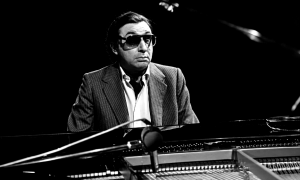
JP: That was a very emotional thing for me because I remember being in high school in the Bay Area and going to see McCoy Tyner at Keystone Corner and being completely blown away by him in the mid '70s. So for me to play with him and spend time with him-and obviously also because of his playing with John Coltrane, who was one of my biggest heroes of any musician-playing with McCoy is a great honor that meant and means a great deal to me. That was really huge, actually. Just being with him, hanging out with him and talking. He is so kind and really inspired me a lot.
AAJ: Working with composers such as Jerry Goldsmith or John Williams.
JP: Yeah, I did a lot of stuff in L.A. that actually helped me as a musician because I had to be thrust into situations in the recording industry where you had to just really understand and assimilate music very quickly, like those sessions where there is a hundred-piece orchestra like on the movie The Russia House. That score featured Branford Marsalis and myself. You know, the pressure is high; you have a hundred people in the room. There's a lot riding on it, and there is a lot at stake with the budget and everything. I was petrified on that movie, The Russia House, because there was a lot of exposed stuff for the bass. So you can imagine you're in the room with 100 people and three minutes into a piece of music, there are all these very exposed bass things where if you make a mistake everyone will know. And I was praying during that whole two or three days of recording, and everything went great, thank God. But it was a lot of pressure [laughs]. And I learned a lot from that. So I think it made me a better musician. When you work with great composers like that, I always learn something about orchestration, too because I was listening with my composer's hat on, trying to figure out how they got all of those beautiful sounds that they got by combining different instruments and doing the things they did.
AAJ: Do you think composing a music score for a movie is something you would tackle some day if asked to?
JP: Yes. Before I moved away from L.A. in '96, there was a period of time for about a year or two where I was entertaining that idea, and there was a music supervisor, who was very nice and who was working on a lot of big films, who liked my music, and she was trying to help me sort of become a film composer. They even sent me scripts for films, and I didn't accept them at the time because I just didn't feel it was the right time. I guess I was still interested in writing for the music I wanted, that I felt most strong about. And I was a little afraid to deal with the business of composing, where you have to deal with people that are telling you what to write, that don't really know so much about music. That was a little hard for me to stomach at that time. Now that I'm a little older, and if it was the right film, I would definitely do it. I'm open to it because I like the idea of storytelling.
AAJ: What is your definition of jazz?
JP: I don't know if I can define it, but the one thing that I always tell people, the significant thing that happened, I think, was that God took something that was very tragic and turned it into music that changed the world. People were taken from Africa against their will, and they were taken all through the Americas—South, Central, North America. They were taken everywhere. Everywhere, they changed the course of music history. And they made the music better, in my opinion. So, I think that is part of what jazz is-a huge part. And then you have the combination of how that music mixed with other cultures-European cultures, American cultures, and folk music. It's a rich history of jazz and how it has the ability to mix and fuse with different folk music from all over the world. I think the only way to experience it is when you hear it[laughs]. It's kind of hard for me to describe in words. I think one of the most significant things to me is the rhythm; that is what made it different.
AAJ: Any projects in the near future?
JP: There is talk about one. I think it's going to be very special. It's a way of doing a record that expresses some of the gospel and soulful music that is part of my faith. I am very excited about it, but I am not sure when it will even happen yet because we have to talk about logistics and all kinds of stuff. But I think you're going to like it because some of the people that are going to be on it are very special. It's going to be a very emotional record, for sure.
About John Patitucci

Tags
PREVIOUS / NEXT

John Patitucci Concerts
Become a Sustaining Member

Since 1995, All About Jazz has championed jazz as an art form and supported the musicians who create it. Over three decades, it has grown into one of the world's leading jazz resources, serving hundreds of thousands of readers, musicians, presenters and industry professionals each month.
Help Build the Future of All About Jazz
Your support helps us continue building All About Jazz for the next generation—expanding our editorial coverage, preserving jazz history, developing new community features and creating better ways to discover the music and the people behind it.
Become a sustaining member for as little as $20 per year and you'll immediately enjoy an ad-free experience along with access to subscriber features and future articles for a full year.
Together, we're not simply sustaining All About Jazz—we're building its future. Thank you for being part of the journey.