Home » Jazz Articles » Interview » Yazz Ahmed: Bridging Worlds Through Sound
Yazz Ahmed: Bridging Worlds Through Sound

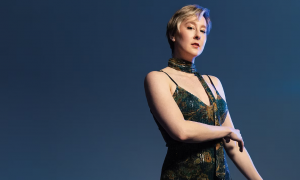
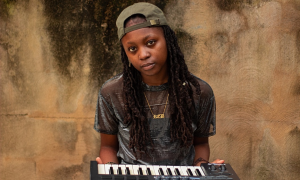
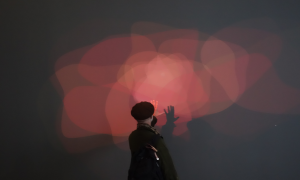
Courtesy Alex Bex
I want my music to move people, not impress them
—Yazz Ahmed
Rather than using music simply as a vehicle for performance, Ahmed approaches it as a means of building bridges between cultures and reshaping perceptions—through a musical language that privileges collective interplay, atmosphere and emotional depth over virtuosity for its own sake.
All About Jazz: You have often been described as the "priestess of psychedelic Arabic jazz," and electronics play a crucial role in your sound world. Could you talk about your relationship with effects such as the Kaoss Pad and Eventide H9? How do these tools expand the expressive possibilities of the trumpet and flugelhorn? Do you see them as a way of "Arabizing" the instrument's sound, or rather projecting it into a more futuristic dimension?
Yazz Ahmed: I first experienced having my trumpet sound manipulated through electronic devices when I was performing on a project for Arun Ghosh. Jason Singh had a feed from my trumpet microphone and was live sampling, looping and treating my sound with a variety of pedals and devices to make his contribution to the collective improvisations.
Two of the FX units were indeed the Kaoss Pad and the Eventide H9, and it was Jason's artistry that really inspired me and opened my ears and mind to the possibilities of extending the sonic palette available to me on my acoustic instruments.
Soon after, when touring with These New Puritans, I noticed that Thomas Gutheinz was also using a Kaoss Pad to manipulate the vocals of Jack Barnett. I arranged to meet with Tom for a lesson on how I might incorporate a Kaoss Pad into my live setup. The great thing about this unit is that, since you really only need one hand to play the trumpet, I'm free to control the Kaoss Pad with my left hand. It has a very intuitive interface where you can use gestures to "play" the sounds it captures. It's great fun and has really become part of my voice, a natural extension of the instrument.
I don't feel that the way I use the Kaoss Pad has any direct connection with Arabic music. However, on a more superficial level, the Eventide pedal does evoke certain timbres associated with Arabic popular music, particularly through its saturated reverbs, which can sometimes resemble the sound of string sections. It's also very common to hear large delays and reverbs on vocals throughout music from the region. My feeling is that electronics add a more futuristic layer to my sound, and I really think of the processed sound as an additional instrument within the ensemble.
AAJ: Albums such as La Saboteuse (Naim, 2017) and the recent A Paradise in the Hold (Night Time Stories, 2025) explore your dual British and Bahraini heritage from different perspectives. If the former dealt with themes such as self-sabotage and the "inner anti-muse," the latter focuses more on mythology and the strength of Arab women, from sirens to the goddess Siduri. How has your understanding of this dual identity evolved over time, and what kind of narrative about Arab women are you hoping to bring into jazz and contemporary music?
YA: My journey towards embracing my dual heritage has been one of self-discovery and validation, achieved through educating myself about the forgotten sounds and culture of my early childhood, viewed through the lens of my formal Western musical education. It's really personal to me, and I'm not certain that I'm trying to send a particular message to the wider world, except that in sharing my development, I hope to inspire others to follow their creative urges, to express themselves artistically and to stand up, even in circles such as the jazz world, which are traditionally dominated by men.
AAJ: Your music is rich in emotional layers, complex rhythmic structures and detailed sound design. Could you describe your compositional process? Do pieces tend to emerge from a Bahraini rhythmic idea, a harmonic concept, an electronic texture—or somewhere else entirely? And how do you balance tightly structured passages with the freedom you leave your musicians for improvisation?
YA: This is a very good question, but the answer is not simple, because each time I compose, I like to let the music reveal itself to me, and this might involve a combination of the techniques you describe. One of my go-to starting points, though, is my trumpet. I often record myself improvising, maybe just using my phone at first, and then listen back to see if anything speaks to me. Other times, I might record sounds from nature or the urban environment and again listen back with a critical musician's ear to see if there are any magical moments. Once I've got the germ of an idea, that's when the hard work begins. I write and discard heaps of material that doesn't feel right, but sometimes you have to clear away the rubbish before the good stuff can emerge. It can be demanding work, but it still feels playful to me because creating something new is exciting.
I always leave plenty of space for my musicians, and I definitely compose with particular players in mind. The musicians in my bands have been with me for many years now, and they are a constant source of inspiration. People often say my music is heavily composed, but there is also a huge amount of improvisation balancing that out. Perhaps listeners are more struck by the irregular, organic forms my pieces sometimes follow. I very rarely use the standard jazz song form where you hear the melody followed by solos over the same chords before returning to the theme. I like music that finishes somewhere very different from where it began, with a few surprises along the way.
AAJ: Your album Polyhymnia (Ropeadope, 2019) is a suite dedicated to courageous and inspiring women, including Malala Yousafzai. The project was commissioned by Tomorrow's Warriors, the London-based artistic development organisation devoted to supporting young jazz talent, particularly musicians from underrepresented backgrounds. How challenging was it to translate the lives and determination of real figures into instrumental and orchestral music? And did working on the project affect the way you think about gender equality and the role of women brass players within jazz?
YA: First of all, yes, Polyhymnia was commissioned by Tomorrow's Warriors for a special concert at the WOW! festival, marking International Women's Day at London's Southbank Centre. I'm extremely grateful for their support and the faith they had in me as a fledgling composer. It was premiered by an all-female iteration of their Nu Civilisation Orchestra, many of whom also appear on the album.
The real challenge I faced was composing 60 minutes of music from scratch in just six weeks, which was the time between securing the funding and the first rehearsal. The first stage involved educating myself and researching the impact these women had through their lives and actions, then looking for the germ of an idea to expand upon musically. For example, the inspiration for "One Girl Among Many" came from the natural cadence and melodic shapes in Malala's speaking voice during her address to the United Nations. "Deeds Not Words" is built on the melody of the suffragette protest song "Shoulder To Shoulder," while "Ruby Bridges" draws from the sounds of Mardi Gras that she recalls from her childhood.
Simply being asked to compose this music made me more aware of gender equality in all aspects of life. As for female brass players, I'm happy to say things are changing—slowly, but positively. I was recently thinking how easy it would be today to programme a festival entirely dedicated to female jazz trumpet players, even just in the UK, and that certainly wasn't the case 20 years ago when I graduated from the Guildhall School of Music. Tomorrow's Warriors has played a huge role in transforming the landscape in this regard.
AAJ: Beyond jazz and Bahraini music, your work also reflects the influence of artists such as Radiohead—with whom you have collaborated—Jon Hassell, and even dub music. What non-musical influences—cinema, literature, poetry or visual art—shape the atmosphere and architecture of your music?
YA: The biggest non-musical influences that attentive listeners might detect in my work are the poetry of Rumi, the sounds and peace of the natural world—particularly the sea. My next release, by the way, is inspired by the Japanese practice of "forest bathing." Visual art is also very important to me, especially the work of Sophie Bass, who created the artwork for my last three albums and inspired me to write new music as part of a genuine two-way collaboration. I think my musical structures are quite organic, in the sense that each piece gradually finds the shape it wants to take rather than following a predetermined design.
AAJ: You have said that, through your music, you hope to "build bridges between cultures and change perceptions about women in jazz and people of Middle Eastern heritage." Looking ahead, what is the next bridge—musical or conceptual—you hope to cross? Are there instruments, traditions or sonic territories you still feel drawn to explore?
YA: Well, during my next visit to Bahrain, with the help of the British Ambassador and some local musicians, I'm planning to offer free trumpet lessons to local people who don't have access to music education. I see music as something rooted in community, and I believe it's a human right to experience the joy of making music together.
I'm continuing to compose primarily for my working quartet, but I also have other projects in the pipeline that will take my sound in new directions. I'm very interested in continuing to collaborate with musicians from different genres across the world, something I'm often able to do remotely from the comfort of my home studio.
AAJ: I recently attended your concert in Florence for Jazz Supreme, and one aspect that particularly struck me was your use of hand gestures almost as a rhythmic element, as if tracing percussive patterns linked to Arabic musical traditions. Combined with your preference for clear structures, restrained harmonies and a virtuosity always serving the collective sound rather than the individual ego, it seemed to foreground your role as composer and bandleader more than that of the virtuosic soloist. Is this a conscious artistic choice?
YA: Hmmm, this is a very interesting observation. It's always good to hear how my music comes across to audience members. Maybe I don't need to say this, but my quartet does not function like a trio accompanying a soloist, as might happen if I were a jazz singer, for example. We are all equal members of the collective, and hopefully that creates something greater than the sum of the individual parts. I want the music to move people rather than simply impress them.
I really like the quote attributed to Joe Zawinul when talking about the distinction between composed ensemble passages and improvised solos with Weather Report: "No one solos, everyone solos." Perhaps I share this band's philosophy of collective improvisation, where the whole is a flowing musical idea, a rich sonic landscape where nobody takes centre stage but at times becomes the focal point. I'm not trying to limit anybody's virtuosity in any way, but I want my music to move people, not impress them. I feel my composition is equally important as my playing, it's true, and I'm grateful to have found a group of musicians who are happy to bring my vision to life. I'm glad you enjoyed the Arabic clapping; next time, please do feel free to join in!
About Yazz Ahmed

Tags
PREVIOUS / NEXT


Become a Sustaining Member

Since 1995, All About Jazz has championed jazz as an art form and supported the musicians who create it. Over three decades, it has grown into one of the world's leading jazz resources, serving hundreds of thousands of readers, musicians, presenters and industry professionals each month.
Help Build the Future of All About Jazz
Your support helps us continue building All About Jazz for the next generation—expanding our editorial coverage, preserving jazz history, developing new community features and creating better ways to discover the music and the people behind it.
Become a sustaining member for as little as $20 per year and you'll immediately enjoy an ad-free experience along with access to subscriber features and future articles for a full year.
Together, we're not simply sustaining All About Jazz—we're building its future. Thank you for being part of the journey.