Home » Jazz Articles » Take Five With... » Take Five with Saxophonist Steve Treseler
Take Five with Saxophonist Steve Treseler
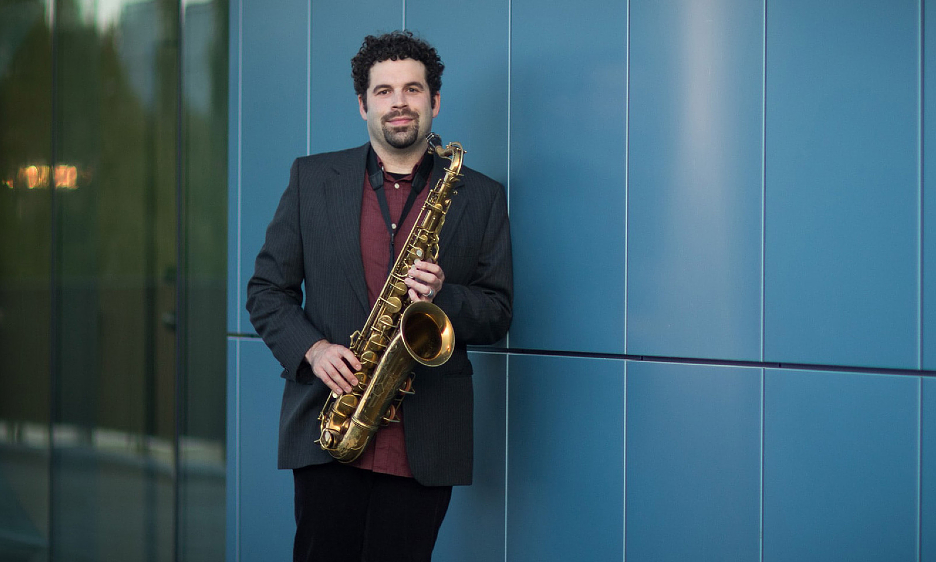

Meet Steve Treseler
Steve Treseler is an award-winning Seattle-based saxophonist, composer, and innovative leader in teaching improvised music. Hailed by Earshot as a "firebrand of the tenor saxophone," DownBeat calls his music "beautifully crafted... whether free, through-composed, or somewhere in between." Steve performs and leads improvisation workshops throughout North America and Europe, performing at Birdland, Blue Note Hawaii, and live on NPR's Jazz Night in America. Steve has performed or recorded with Bill Frisell, Bob Brookmeyer, Leroy Jones, Jeff Hamilton, Orrin Evans, Johnaye Kendrick, Christine Jensen Jazz Orchestra, Jamaaladeen Tacuma, and Geoffrey Keezer.Treseler's collaborations with lauded trumpeter Ingrid Jensen received four-star reviews in DownBeat magazine's, and their album Invisible Sounds: for Kenny Wheeler was praised by the New York Times as "lyrical and songlike, whether moving at a quick clip or drifting as slowly as cloud cover."
Treseler is a Conn Selmer performing artist.
Your sound and approach to music.
My roots are in jazz and improvisation, and my north star is to absorb myself in music that resonates, wherever that takes me. Technique, compositions, collaborations, and projects all follow as a consequence of resonance and connection. This has led me to an eclectic collection of influences, but they are all unified in a musical universe. Donald Harrison's new record label expresses this perfectly: Roots to Infinity.On saxophone, I seek to produce a sound that is warm, dark, and resonant. Drawing from the jazz lineage, I aim to tap into the present moment with musicians and listeners in the room. The result can be deeply lyrical or an abstract soundscape, depending on what the moment calls for.
Teachers and/or influences?
My most influential mentors were my teachers at New England Conservatory. Saxophone legend Jerry Bergonzi helped me develop a sound, dive headfirst into rhythm and time feel, and showed me how to use creative limitations to unlock creativity and a personal voice. He also helped me navigate existential crises of young adulthood with sage words of wisdom:"It's none of your business what anyone else thinks of your playing. It's none of your business what you think of your playing!"
"It would be boring if we could achieve full mastery overnight; it's all about the journey."
George Garzone, Allan Chase, Steve Lacy, and Bob Brookmeyer were also transformative mentors at NEC.
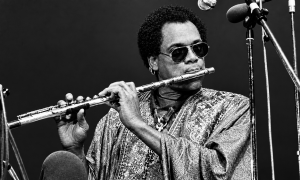
As a young adult, W.A. Mathieu's book Harmonic Experience became a musical bible, helping me experience and embody the acoustic foundation of melody and harmony. Today I am studying shakuhachi (Japanese bamboo flute) with Hanz Kodō Araki VI and Native American Flute with Jan Michael Looking Wolf and Robin Gentlewolf.
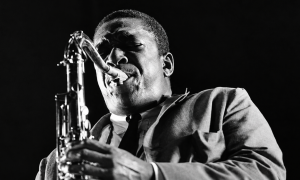
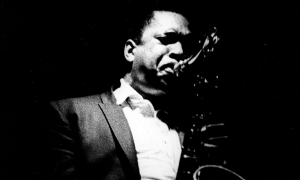
I have a wide range of musical influences—jazz, alternative rock, minimalism, chamber, experimental music, chant, indigenous flutes, and singer-songwriters. The jazz artists who have had the biggest influence on me are Lester Young, John Coltrane, Count Basie, Thelonious Monk, Ingrid Jensen, Bill Evans, Kenny Wheeler, Lennie Tristano, Rich Perry, Chet Baker, and Maria Schneider.
I knew I wanted to be a musician when...
I was immersed in music in high school, listening, practicing, taking lessons, and playing gigs. Music was the dream, but many adults discouraged me, suggesting I get a "real job" and play on the side. But I crossed paths with several successful freelance musicians in Seattle and knew it was possible to build a career around music, so I took the plunge. I transitioned to freelancing and entrepreneurship after graduation and have been working independently as a performer, recording artist, and teacher since 2003 (without a day job).Your teaching approach
Teaching is much deeper than sharing information; it's the process of guiding others through musical experience. I transmit a holistic music practice, one that is effective at building skills and engaging in the moment. I tailor programs to students' interests and learning styles, integrating ear-training, technique, creativity, repertoire, performance psychology, and deep listening.Studying music transmitted by Zen monks on the shakuhachi over the past year has revealed that there doesn't need to be a separation between "practice" and "the real thing," and I share this philosophy with students.
I have a passion for teaching group improvisation workshops and retreats, transforming improvisation into a community experience. We explore conducted improvisation, improv theater games, and soundscapes to explore spontaneous expression as a community, rather than taking turns playing solos. On the jazz side, we dive into learning riff-based jazz tunes entirely by ear, and improvise through rhythm, variations, and call-and-response phrasing (rather than a mountain of theory). You can learn more about my education projects at Infinite Improvisation
Your dream band
Ingrid Jensen—trumpetBill Frisell—guitar
Dave Holland—bass
Jack DeJohnette—drums (rest in peace)
Road story: Your best or worst experience
Best: In 2024, I had a residency teaching and performing in Bavaria, and we took a retreat out to the Austrian Alps. Improvising with new friends among the panoramic scenery was a peak experience.Worst: I played clarinet with a Mexican Banda in Seattle after moving back from Boston. During a set break at a sketchy nightclub, a stripper picked up my clarinet and started playing it.
Your favorite recording in your discography and why?
Invisible Sounds: For Kenny Wheeler on Whirlwind Recordings, a co-led project with the great trumpeter Ingrid Jensen. We are both deeply connected to Kenny and his music, and the project came together organically after Kenny passed in 2014. The record is also my most critically acclaimed project, featured in Down Beat, the New York Times, and on NPR's Jazz Night in America. The NPR show was filmed at The Royal Room in Seattle, and we had release shows at Birdland. The project was an exciting, challenging, and magical experience.An honorable mention is my EP Snow Line Suite that I recorded with pianist and composer Annie Booth and her trio from Denver. Of all my recordings, it's my favorite to listen to. It showcases my writing, the band really gelled, and I'm proud of how my saxophone sound was captured.
Favorite venue
The Royal Room, a musician-owned venue in Seattle that always feels like home on stage and in the audience. The Royal Room hosts an eclectic range of music, including jazz and creative music, has wonderful staff, and a great backline including a Steinway grand and B3 organ. I had the honor of playing the Royal Room's grand opening with Wayne Horvitz and Bill Frisell, and recording the live tracks for Invisible Sounds with Ingrid at the club.Did you know...
I love outdoor activities that I can enjoy solo or with others: skiing, biking, disc golf, hiking. I prioritize these activities for physical, mental, and creative well-being.My first jazz album was:
The first jazz I listened to was WWII big bands with my grandparents. When I started playing saxophone in jazz band, my dad bought home two CDs, recommended by a co-worker: Coltrane's Giant Steps and a Verve Jazz Tenor Sax compilation. Giant Steps was overwhelming, sounded like music from outer space (I would get obsessed later on). The opening cut on the Verve compilation was Lester Young's version of "All of Me" with Teddy Wilson. I was enchanted by it, and it was one of the first solos I transcribed. Lester and Coltrane remain two of my core influences to this day.Music you are listening to now:
Mary Lou Williams: Zodiac Suite (Asch)Takeo Izumi: Resonances of Infinity 'Shakuhachi Music'—Traditional Zen Music for Meditation and Enlightenment (insideout)
Sun Ra: Space is the Place (Blue Thumb)
Ray Wolff: Just Words (Live Tapes) (Self Produced)
Lester Young: Lester Young on Savoy (Savoy)
Desert Island picks:
Olivier Messiaen/Tashi Quartet:Quartet for the End of Time (RCA Victor)John Coltrane: A Love Supreme (Impulse)
Marcia Sloane: Cello Drones for Tuning and Improvisation (Navarro River Music)
Bill Evans: Everybody Digs Bill Evans (Riverside)
Sunny Day Real Estate: How it Feels to be Something On (Sub Pop)
What are some of the essential requirements to keep jazz alive and growing?
Connection and community! There is no shortage of music to listen to at a moment's notice, but we all long for authentic human connection. As jazz musicians we can offer this through building community locally, education, and inviting people along for the journey. Jazz is unlikely to be mainstream again, but that's OK. A niche community of devoted fans, musicians, and patrons can support a sustainable ecosystem for professional artists. This is more important than ever in an era of AI slop.I am particularly inspired by the Seattle Jazz Fellowship, founded by trumpeter Thomas Marriott in Seattle. A non-profit organization and venue in a historic downtown Seattle neighborhood, founded on community, mentorship, and presenting local artists of all generations. The weekly jam sessions caught the attention of 20-somethings online, and the events are usually packed.
What is in the near future?
I'm in the process of recording an unaccompanied solo album in the Fremont Abbey, a beautiful, reverberant space. The theme is creative source and lineage—I'm recording a jazz ballad suite, ancient melodies, improvisations, and pieces on Native American flute and shakuhachi. I'm working with J&B Recordings, a new mobile recording studio from singer-songwriters Damien Jurado and Lacey Brown.I had a blast performing in New Orleans for the JEN Conference last month, playing with my In Motion Quartet, Annie Booth Big Band, Christine Jensen Jazz Orchestra, and sitting in with Leroy Jones and Ashlin Parker in the clubs! Upcoming gigs I'm excited about: I'm traveling to Alaska for the first time to perform with Bria Skonberg Quintet in Anchorage. This spring, I'm headed to the Lionel Hampton Jazz Festival, Mount Hood Jazz Festival. I'm also returning to teach at the Pacific Music Institute in Honolulu this summer, and may play my first gigs in Japan with the wonderful guitarist Haru Takauchi!
What is your greatest fear when you perform?
That I will completely embarrass myself in front of world-class musicians and be ridiculed mercilessly at the gig and online. Sounds funny to say this out loud. I've confronted this and many other performance fears and realized that committing to the journey and focusing on connections with people outweighs the self-centered lizard-brain fears. The psychology of sharing art with the world is always a work in progress.What song would you like played at your funeral?
"Naked As We Came" by Iron and Wine. Then my closest friends and collaborators will host a jam session.If I weren't a jazz musician, I would be a:
Ranger at a state or national forest. I love spending time outdoors, and would love to help maintain the land and support visitors.If I could have dinner with anyone from history, who would it be and why?
Lester Young, who I see as a foundation of my musical lineage. I would love to chat and hear his perspective on life and music.If I could go back in time and relive an experience, what would it be?
My dad passed away a few years ago. He was an amateur guitarist, and always supported my musical journey. We also went skiing at Stevens Pass in the Cascades every winter, and I would love one more day on the mountain with him.What's the song or piece of music you wish you could hear again for the first time?
"Giant Steps." I listened to the record obsessively as a kid, and I'd love a fresh listen. It's like when you stare at the letters of a word for a long time, it starts to look strange and lose meaning.What advice can you give for young musicians who seek a career in music?
Seek out and immerse yourself in music that resonates with you deeply. One of my mentors Steve Lacy said, "Follow your appetite. When you are running toward something, you are running away from something else."Listen—to the environment around you right now, to your musical imagination, to great recordings, to live performances, to other people's needs and desires, to your bandmates, to your own sound in the moment
Online presence: One meaningful connection has a greater impact than thousands of small impressions online. The algorithms and platforms are always changing, but our need for human connection remains constant.
Instead of treating practice like homework, shift to a holistic practice—similar to practicing medicine or a religion. The practice is woven into our lives. A broad practice includes developing skills, but also listening, composing, teaching, performing, and sharing.
Instruments:
Tenor Saxophone: 1939 Conn 10M (Selmer S80 G mouthpiece)Alto Saxophone: 1940 Conn 6M (Selmer Soloist E* mouthpiece)
Soprano Saxophone: Yanagisawa S991 (Rubber Otto Link 8* mouthpiece)
Clarinet: Buffet R13 (D'Addario X5 mouthpiece)
Bass Clarinet: Backun Alpha Low C (Selmer Mouthpiece refaced by David McClune)
Native American flutes: High Spirits and Butch Hall
Shakuhachi: 1.8 Jinashi, unknown maker, restored by Perry Yung; 1.8 Jiari, unknown maker, chosen by Kodō; 2.4 and 2.8 (low A and G) Abedabun Flutes.
About Steve Treseler

Tags
PREVIOUS / NEXT

Become a Sustaining Member

Since 1995, All About Jazz has championed jazz as an art form and supported the musicians who create it. Over three decades, it has grown into one of the world's leading jazz resources, serving hundreds of thousands of readers, musicians, presenters and industry professionals each month.
Help Build the Future of All About Jazz
Your support helps us continue building All About Jazz for the next generation—expanding our editorial coverage, preserving jazz history, developing new community features and creating better ways to discover the music and the people behind it.
Become a sustaining member for as little as $20 per year and you'll immediately enjoy an ad-free experience along with access to subscriber features and future articles for a full year.
Together, we're not simply sustaining All About Jazz—we're building its future. Thank you for being part of the journey.