Home » Jazz Articles » Take Five With... » Take Five with Pianist Andrii Pokaz
Take Five with Pianist Andrii Pokaz
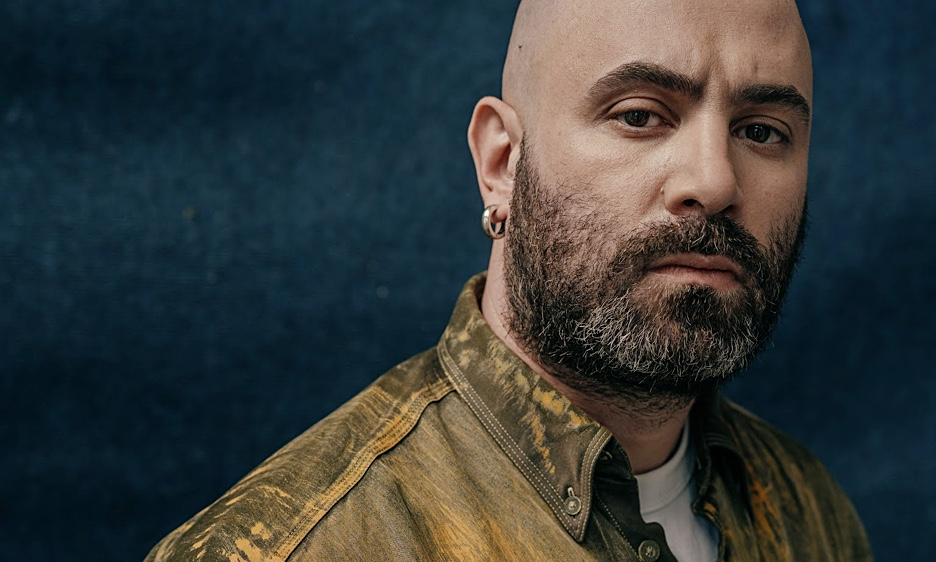

Meet Andrii Pokaz
Andrii Pokaz holds Bachelor's and PhD degrees from the Odesa National A.V. Nezhdanova Academy of Music, where he later returned as a professor, teaching and mentoring young Ukrainian musicians for over 16 years. A laureate of numerous international competitions, he is also frequently invited to serve on juries at prestigious music contests.In 2016, Andrii founded Pokaz Trio, which quickly became a distinct presence on the jazz scene. Their debut album Kintsugi (Losen Records, 2019) was featured in the Europe Jazz Media Chart. In 2024, the trio released their second album Voices (Bark at Your Owner, 2024) dedicated to themes of inner life, memory, and historical continuity. Both albums received high praise from European music critics.
Pokaz has collaborated with leading figures in soul, jazz, and classical music, including two-time Grammy winner Kurt Elling, German trumpeter-pianist Sebastian Studnitzky, world-renowned American clarinetist David Krakauer, British jazz vocalist Randolph Matthews, Karl Frierson (frontman of De Phazz), and many others.
In early 2025, Andrii began working with Promin Records, releasing his neoclassical solo album Will You Come with Me? and the jazz album Proteus under the label's wing.
He is currently working on a new jazz release.
Instrument:
Piano.Teachers and/or influences?
As for influences—first of all, Bach and Chopin. Two albums also come to mind: Strange Place for Snow by Esbjorn Svensson and Keith Jarrett's Paris Concert, which probably gave me the initial impulse to start writing my own music.I knew I wanted to be a musician when...
I felt I wanted to be a musician when I realized I couldn't really do anything else. Of course, there's a touch of irony in that. But seriously—I probably decided to take this path when I began composing my own music. That's when I discovered that music wasn't only about performing notes—it was also about creating entire worlds of your own.Your sound and approach to music.
I perceive music as a language—the most perfect language in the world. Because anyone who hears it can understand it in their own way, through their own experience, mood, and expectations. Through music, I can tell my stories—each listener interprets them differently.Your dream band
I would probably like to try myself in the role of Esbjörn Svensson on my favorite recording from the Jazz Baltica Festival—where he played together with Pat Metheny, Nils Landgren, Michael Brecker, Lars Danielsson, and Wolfgang Haffner.Road story: Your best or worst experience
There are many stories, but I'd like to recall traveling with my trio to Lithuania in August 2022, during the full-scale Russian invasion of Ukraine. Since flights were canceled and the airspace was closed, it took us an incredibly long time to get there. The first concert was in Trakai, the second in Šiauliai—the whole trip took three days: 45 hours to get there, and another 45 to return. Several trains, a bus, a car—and sometimes we had to travel standing up. It was a true test of patience and endurance.Favorite venue
My choices may sound obvious, but I truly mean them. First place—definitely Casa da Música in Porto. Even from afar, as you approach the building, you already feel butterflies in your stomach. Then—the Berlin Philharmonie: a grand hall, incredible acoustics, and that unforgettable ringing silence in the audience. And third—the Odessa Opera House, because it's simply beautiful.Your favorite recording in your discography and why?
For me, that would be Pokaz Trio—Kintsugi, because it's the first recording of my own music that I'm truly satisfied with. It was quite a magical process. We recorded it in a fairytale-like studio near Kyiv. The album didn't come easy, but it was a fascinating journey.What do you think is the most important thing you are contributing musically?
I've heard people call me the founder of a new wave of Ukrainian jazz—jazz with European roots. Jazz that leans toward the Scandinavian tradition, but into which I've added my own southern, Odesa temperament, resulting in an interesting symbiosis.I also believe I manage to tell engaging stories through music. And it matters to me that through art, I can help people discover the beauty of my country—Ukraine.
Did you know...
Did you know that I've never had a single lesson in improvisation or jazz harmony? I never studied those things—and I think it can be heard. But I try to hide it.The first jazz album I bought was:
The first jazz recording I ever owned was a CD-R someone gave me with Keith Jarrett's Paris Concert. That album is still number one for me—both in Jarrett's discography (despite the fame of the The Köln Concert) and in solo jazz piano in general. I adore that record.Music you are listening to now:
It can be very different. In everyday life I don't always listen to whole albums—sometimes just individual tracks by Nik Bärtsch's Ronin or The Kilimanjaro Darkjazz Ensemble. Sometimes it's music from Jun Takahashi's Spotify playlists. My listening is usually quite eclectic. Just now, for example, I had on Hidden Orchestra, and before that—Tord Gustavsen Trio.Desert Island picks:
Keith Jarrett: Paris Concert (ECM Records, 1990)E.S.T.: Live in Hamburg (ACT, 2007)
Erik Truffaz, Marcello Giuliani, Marc Erbetta, Patrick Muller: Arkhangelsk (Blue Note, 2007)
Marilyn Mazur, Jan Garbarek: Elixir (ECM Records, 2008)
Glenn Gould: Bach: The Goldberg Variations (CBS Masterworks Digital, 1982)
How would you describe the state of jazz today?
In my opinion, jazz today has reached its highest level of freedom. Any music that involves improvisation is now considered jazz. And since improvisation was the very first form of music in the universe, the circle has closed. From here on—only complete creative freedom and unbounded exploration of new ideas. I wish everyone good luck with that.What are some of the essential requirements to keep jazz alive and growing?
I believe jazz will be fine—it will keep living and evolving in many directions. Especially since jazz has practically taken a monopoly on improvisation—the brightest symbol of freedom in music. So, I think jazz now holds a very strong position; it's just that its expansion isn't always visible, precisely because it's become so diverse. Jazz today has so many faces that we don't always recognize it immediately.What is your greatest fear when you perform?
My biggest fear on stage is finding myself in the wrong place at the wrong time—and therefore having to be someone other than myself.What song would you like played at your funeral?
For such a serious and meaningful occasion, Stevie Wonder's "They Won't Go When I Go" would be perfect.What is your favorite song to whistle or sing in the shower?
Songs sung in the shower are part of one's intimate life—and that part should remain private.By Day:
I have no job other than music—my hands just aren't built for anything else.If I weren't a jazz musician, I would be a:
An astronaut, of course.If I could have dinner with anyone from history, who would it be and why?
Let's just say I wouldn't settle for anything less than the Last Supper.If I could go back in time and relive an experience, what would it be?
Experience is called "experience" precisely because it happens only once. The second time, it would make no sense.What's the song or piece of music you wish you could hear again for the first time?
Frédéric Chopin—Nocturne in C-sharp minor, Op. posthumous.About Andrii Pokaz

Tags
PREVIOUS / NEXT


Become a Sustaining Member

Since 1995, All About Jazz has championed jazz as an art form and supported the musicians who create it. Over three decades, it has grown into one of the world's leading jazz resources, serving hundreds of thousands of readers, musicians, presenters and industry professionals each month.
Help Build the Future of All About Jazz
Your support helps us continue building All About Jazz for the next generation—expanding our editorial coverage, preserving jazz history, developing new community features and creating better ways to discover the music and the people behind it.
Become a sustaining member for as little as $20 per year and you'll immediately enjoy an ad-free experience along with access to subscriber features and future articles for a full year.
Together, we're not simply sustaining All About Jazz—we're building its future. Thank you for being part of the journey.