Home » Jazz Articles » Profile » Sequoia Snyder: Growing in the Light of the Masters
Sequoia Snyder: Growing in the Light of the Masters
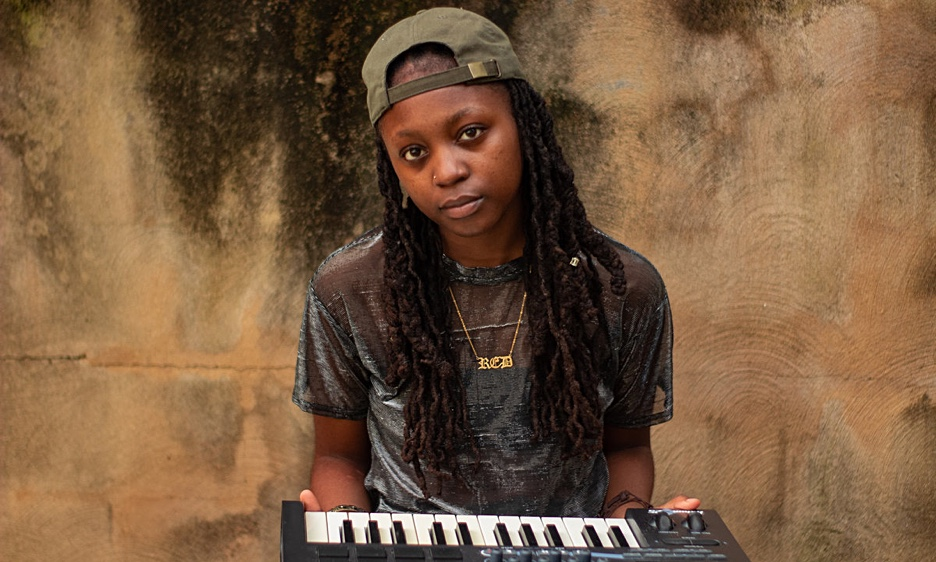
Courtesy Takehiko Tokiwa
There was just a feeling like this is where I need to be.
—Sequoia Snyder
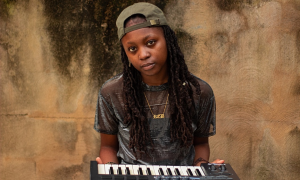
In the pianist's young career, the 75-minute set at this, one of the jazz world's most significant events, was certainly a highlight, and an amazing opportunity. Snyder took advantage of it. Leading her new band Inner Knowing, she moved from brilliant piano trio playing, to facing the audience on electric keyboard and using her resurgent vocal skills. Of note, was a formidable rendition of the seldom heard Tony Williams composition, "There Comes a Time," (Lawra), with her young band in full support. Snyder's vocal style could be described as neo-soul, yet the band never lost sight of its jazz inclinations, playing everything out fully. To anyone in the audience who regularly attends the festival, and has been aware of the pianist's talents, the set was a revelation and a confirmation that Snyder had shed the burdens of academia and come full circle as a professional with unlimited possibilities before her.
Most had first seen her as a member of Rodney Whitaker's Bebop Spartans, the premier jazz big band at Michigan State University, where Snyder would go on to earn first her Bachelor's and then her Master's degree. It was in East Lansing where she would ultimately find her musical voice, taking with her what she had learned in her DC upbringing, and building on it in Whitaker's program based on the principles he himself had acquired while receiving the same from the two pillars of Detroit mentorship—Barry Harris and Marcus Belgrave. It was based on caring, on being family, on taking responsibility and in receiving no-nonsense guidance from mentors that cared, but were unwilling to patronize. Snyder eschewed offers from more conventional institutions of higher learning in favor of this particular style of study that had produced some of the most important voices in jazz.
"With Rodney Whitaker and all the professors, I could tell they actually cared about me," recalls Snyder. "They were investing in me, and they were even telling me in the audition, 'Listen, if you come here, we're going to take care of you. We're gonna make sure you're good. You're going to be able to work. You're going to be home here. This is a family here.' I didn't get that kind of personal touch from any other school or audition and then scholarships. There was just a feeling like this is where I need to be."
Snyder's initial impulse when first engaging music was the vocal arts. She saw herself in the image of her hero, Stevie Wonder. There had been a bit of a piano tradition in her family she would learn, perhaps explaining her pull in that direction. When the opportunity did come to study the instrument, she took full advantage. Yet that vocal fascination that first coaxed her into performing, and would be re-imagined onstage this summer in Detroit, would come first and foremost.
"I was a huge Stevie Wonder fan at that time in my life, so I think even just that idea of being like him -I was really into that," she reminisces, a flash of a smile appearing in the memory. "I was just having a conversation with my grandmother recently, and I knew my uncle played piano, but she was telling me how her siblings all played piano, and she always had a piano in her house, and I think even her father played piano. So maybe it's genetic, you know what I mean? When I got to high school and I was a vocal major, we had a piano elective. So that was kind of my first time actually getting some type of training on the piano, and I loved it, and I fell in love with it, and I was spending so much time playing it, more than singing, and I was getting pretty good, like pretty fast."
The opportunities afforded her in her time spent in Detroit were numerous. One that truly stands out is her inclusion in a large ensemble founded by Geri Allen and led by Whitaker called The Gathering. For those familiar with Snyder's playing, the influence of Allen is somehow evident, largely in her genius understanding of harmony and ability to implement that knowledge rhythmically, in step with her musical partners. Her inclusion in The Gathering was unfortunately, after the great pianist and daughter of Detroit had passed. She was able to briefly benefit from Allen's profound knowledge beforehand however, at the age of 16.
"That was after she passed, but that was a great experience. I actually had the opportunity to learn from her when I was 16. The first jazz program I ever went to was her all-female residency in New Jersey. I think it was after my junior year, and she was there, and I was young and dumb. I didn't really know who she was. I mean, I knew she had this camp. I did get to work with her for a week, but The Gathering was great also. Through that I was able to meet a lot of people who I still have relationships with today, like Terri Lyne Carrington, Patrice Rushen and Jazzmeia Horn." she says.
Snyder's connection with Carrington led to her being chosen for the Next Jazz Legacy program of which she is artistic director. The program aims to elevate underrepresented jazz improvisers and promote gender equity in the genre. Somehow, the pianist continued to be noticed and receive the benefit of mentorship from significant figures on the international jazz scene, many of whom were strong, female musicians who saw and heard something special in the DC musician who quickly was becoming a part of the great jazz tradition in her newly chosen city of Detroit.
Snyder is an admirer of the jazz piano greats Ahmad Jamal, Herbie Hancock, Allen and Jason Moran. Her ability to study as a young musician with Allen prompted that love for her playing, a thrilling outcome of mentorship. Her current association with Moran has enabled her to be the beneficiary of his recommendations, at times handing over prospective gigs to her that he is unable to fulfill. "Yeah, yeah, yeah. He hooks me up with a lot of cool gigs," she says, in such a way that denotes gratitude and deep appreciation.
In 2021, Snyder was to appear at the Detroit Jazz Festival in an all-female big band as part of Bridgewater's Woodshed Network. The festival was set to return to its outdoor digs at Hart Plaza after a year away due to the Covid-19 pandemic. A week prior to the beginning of the event, the Delta variant interrupted those plans, with the nation and the world thrown back into pandemic isolation. Still, the musicians, technical people and a small handful of media representatives converged on the Detroit Marriott, for a live-streaming presentation of the full festival. Hotel ballrooms were converted to soundstages while artists, technical staff and press all lodged within the confines of the Renaissance Center of which the Marriott is part. Bridgewater's band was centered on the rhythm section of Snyder, bassist Amina Scott and drummer Shirazette Tinnin. The band was dotted with significant talent that would move on to become part of the new wave of jazz brilliance arriving on the global scene in the 2020s. Saxophonists Nicole Glover and Sarah Hanahan are examples. Snyder, for her part, contributed compositions as well, including the tune "Red Blues." Inclusion in the band for the then 22 year-old pianist was born in her prior experience with Bridgewater as a high school student at the Betty Carter Jazz Ahead Residency at the Kennedy Center in 2018. Snyder would learn first hand that Bridgewater was a mentor of great significance in modern jazz, and was in fact, a sister of Detroit, being born and raised in Flint, Michigan.
"I met Dee Dee for the first time in high school," she recalls. "She came to visit, and I met her there. But I really formed a relationship with her at the Betty Carter Jazz Ahead Residency at the Kennedy Center in 2018, she kind of mentored all of the women there. That year, it was the most women they'd ever had in the program. She really took us under her wing—she took us out several times and we just had conversations. She really challenged me to not shrink back, not shrink myself back, and really be myself and play boldly—be me boldly. I think sometimes, especially as women, our inclination can be to shrink back and try to take up less space. Dee Dee and Jason (Moran) were like, 'Stop doing that! You can play and you're playing scared. And they would really hold me to the fire on that."
What aspect of her obvious talents will take hold and stand as the central focus of her music is a story to be told. At this point, what really stands out is her abilities as a jazz pianist, a skill set one could compare to the top flight of talent on the scene today. Her ability to use the piano as a percussion instrument is a factor, especially when it comes to comping. Yet she is remarkably adept at using chord forms when soloing to the extent that determining a degree of separation between her approach as a soloist and as a rhythm and harmony provider when comping, is small. She makes her fellow musicians on stage sound better, and provides an orchestral context upon which spontaneous composition can take place.
"I really like the comping. I almost like comping more than I like soloing. I just love the interaction. I think it kind of comes naturally to me to just do interplay off of what other people are doing. That's why I like to have drummers who are not overplaying but busy. You know what I mean? I just love the interplay. I love to fill up space and just create moments through comping," she exclaims.
There is a uniting presence to her musical personality, a magnetism that is evident in her persona in conversation off the bandstand. While many young, modern players who graduate from high-end jazz programs at revered institutions of higher learning tend to sound trained and institutional despite their formidable talents, Snyder's piano playing sounds like it was propagated on the bandstand, within the tough love world of serious mentorship. This learning may have taken place within a college program, yet Whitaker's approach has disallowed that cloistered vibe possessed by many. Snyder has had the wisdom, and has sought out the wisdom of others, to understand that jazz is Black music that is surrounded by community, in and out of school. It more takes place in neighborhoods, in small clubs and well curated festivals than in concert halls and educational institutions that tend to foster a more methodical sound. Her sound is free, open, welcoming and embracing. It doesn't become noticeable and rises above the ordinary by resorting to anything instigated by ego or by showing off her formidable chops and musical understanding. Accepting and fully embracing her sound is more a matter of the soul, of the heart. It rises from an understanding that having great instrumental skills is only part of the equation. Snyder has allowed herself to be open not only to opportunity, but to the wisdom of the masters, those that would take her in close and create a world of trust. A community.
Perhaps trust is the most important factor in her meteoric rise on the national scene. Pianist Orrin Evans, with whom one could easily draw parallels stylistically with Snyder, has stated that when directing his Captain Black Big Band, the most important factor in making the music whole is trust. In the August 2026 edition of Earshot Jazz Magazine, Evans stated, "I think for everyone, it's about trust," describing the most important factor for a group of musicians to come together. This is certainly applicable to accepting criticism and advice from mentors that required great change and hard work. Evans has a well earned respect in the music as a mentor and an inspirational voice as an advocate of community. It's within those principles that Snyder found a home in Detroit, a place to learn and grow. She applied that principle of trust in allowing figures like Whitaker, Bridgewater, Allen and Xavier Davis to guide her, but still allow her, to encourage her, to simply be Sequoia.
Snyder has an EP out, titled Inner Knowing (Self-Produced, 2026), that documents her current band and music. In many ways, it can seem a departure from what fans have witnessed over the past six years on stage in Detroit, a wider scope of who she is as a complete artist. She will be performing as a member of trumpeter Trunino Lowe's quartet, as she has since they met in Detroit at the beginning of her tenure at Michigan State. The jazz world is slowly but surely getting to know this child of Washington DC, and sister of Detroit. She follows a piano legacy from the Motor City that includes Allen, Terry Pollard, Tommy Flanagan, Barry Harris, Hank Jones and Sir Roland Hanna. It is certainly a legacy that traces a path not easily followed. Yet the talented, focused Snyder has gained the humility, humanity, knowledge and experience to have success. Most importantly she has learned to trust in who she is, and who she can become, by simply being herself, guided by the wisdom of the masters.
 FOLLOW Paul Rauch
and get notified whenever a new article published.
FOLLOW Paul Rauch
and get notified whenever a new article published.
I am a writer, producer and coordinator in the jazz community, living in Seattle.
About Sequoia Snyder

Tags
PREVIOUS / NEXT


Become a Sustaining Member

Since 1995, All About Jazz has championed jazz as an art form and supported the musicians who create it. Over three decades, it has grown into one of the world's leading jazz resources, serving hundreds of thousands of readers, musicians, presenters and industry professionals each month.
Help Build the Future of All About Jazz
Your support helps us continue building All About Jazz for the next generation—expanding our editorial coverage, preserving jazz history, developing new community features and creating better ways to discover the music and the people behind it.
Become a sustaining member for as little as $20 per year and you'll immediately enjoy an ad-free experience along with access to subscriber features and future articles for a full year.
Together, we're not simply sustaining All About Jazz—we're building its future. Thank you for being part of the journey.