Home » Jazz Articles » Profile » Under the Radar » The Dancing Conductor: Will H. Dixon
From Under the Radar, a Profile series...The Dancing Conductor: Will H. Dixon
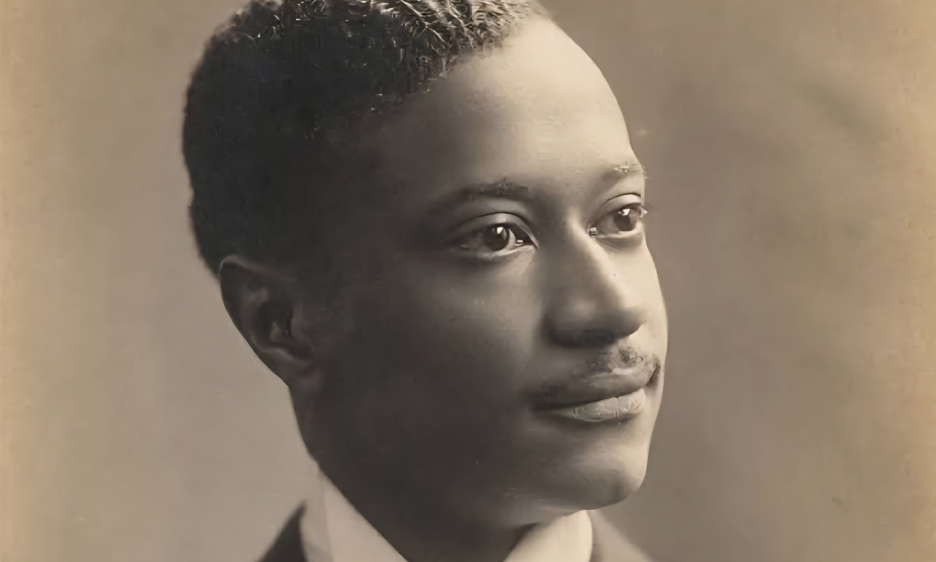
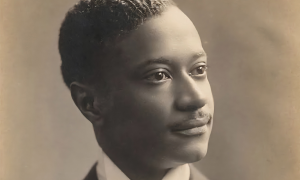
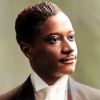
Courtesy Lawrence Levens
During the 1890s, the dance became a national craze. White performers and audiences adopted a style that had originated in African American communities, and the cakewalk eventually reached Europe. Its influence extended beyond popular entertainment. In 1908, Claude Debussy included Golliwog's Cakewalk in his piano suite Children's Corner, bringing the dance into the European classical repertoire.
The Cakewalk: From Cultural Expression to Popular Entertainment
The cakewalk's influence extended beyond the dance floor. During the 1890s, composers began adapting its syncopated rhythms and characteristic accompaniment into longer, more structured piano compositions. Scott Joplin's Maple Leaf Rag demonstrated the possibilities of this emerging musical form. Early ragtime retained many of the cakewalk's musical characteristics, but composers increasingly organized these elements into a distinct musical language. The cakewalk began losing its popularity after about 1903 as more complex ragtime compositions gained favor. Its musical influence, however, remained. The march-derived bass, steady accompaniment, and offbeat melodic patterns became central features of ragtime, which in turn contributed to the rhythmic vocabulary from which early jazz developed. The cakewalk was not simply ragtime in an earlier form, but it helped establish the musical environment from which ragtime emerged.It was within this changing musical environment that Will H. Dixon began his career. Born in 1879 in Wheeling, West Virginia, he came of age as the cakewalk was moving from Black social gatherings into theaters and commercial entertainment. Dixon became both a promoter of the dance and a composer during ragtime's commercial expansion, eventually developing interests that extended beyond popular songwriting and theatrical music. Known as "The Original Dancing Conductor," he would eventually disappear from music history, leaving behind a body of work that remained largely unexplored for nearly a century. His career offers a perspective on the changing opportunities and ambitions of African American performers and composers in the early twentieth century. To understand Dixon, however, it helps to begin with the dance that shaped his early career.
From Wheeling to the Musical Marketplace (1879-1904)
Dixon's father, who played alto saxophone in one of Wheeling's early African American brass bands, moved the family to Chicago's South Side, where African American performers had greater opportunities than in many other cities. Racial discrimination, however, continued to restrict their employment and professional prospects. Dixon's first reported engagement was with Phil R. Miller's Hottest Coon in Dixie Company. The name reflects the racial conventions of minstrelsy, which continued to employ Black performers while assigning them stereotyped roles. For musicians of Dixon's generation, the stage provided one of the few available routes into professional entertainment. It also offered practical experience in performance and popular music that would become important to his later work as a composer and theatrical director.In 1901, Dixon moved to New York with the Chicago lyricist T. Alfred Anderson and the two began writing popular songs, comic numbers, and material for vaudeville and musical comedy. One of their early compositions, Mirabella, subtitled Mexican Serenade, was published in 1901. Clarke's Band of Providence later recorded the piece for Victor. The recording is significant because it suggests that Dixon was considering music independent of his theatrical performances. By 1902, Dixon was working as a singer, actor, composer, lyricist, and theatrical writer. His music attracted the attention of major labels such as Columbia, Edison, and Victor. In 1904, M. Witmark & Sons published five of Dixon's songs. Dixon could now market his compositions through the commercial music industry, reaching performers and audiences beyond the immediate theatrical circuit. The songs relied on accessible melodies, familiar rhythms, and lyrics suited to the comic and sentimental traditions of vaudeville. While his songwriting was establishing him in the commercial music world, Dixon was also developing a theatrical presence that would soon become his most recognizable professional characteristic.
The Memphis Students: A Conductor Takes the Stage (1905-1906)
The Memphis Students, an ensemble under Dixon's direction, appeared at major New York venues, including Hammerstein's Victoria Theatre, Paradise Roof Garden, and Proctor's Twenty-Third Street Theatre. The company reportedly gave more than one hundred performances during the summer and fall of 1905, and Dixon's conducting style became one of the company's distinguishing features. Rather than remaining behind a podium, he moved in front of the ensemble, using steps and gestures to communicate the rhythm and character of the music. James Weldon Johnson, a central figure of the Harlem Renaissance, branded Dixon "The Original Dancing Conductor." Dixon's movements connected the musicians, the music, and the audience, turning conducting into part of the performance itself; a showmanship style that later reportedly influenced bandleaders like Cab Calloway. Johnson described the Memphis Students as the first modern jazz band heard on a New York stage.In November 1905, the company sailed for Europe on a tour that included Paris, London, Berlin, and Brussels, with the engagement at the Folies-Bergère attracting particular attention. Moving away from traditional minstrelsy, the large ensemble combined stringed instruments with brass and woodwinds while singing in four-part harmony. Dixon's programs drew on the rhythms and accessibility of popular music while exploring more formal approaches to composition. The European tour established Dixon as more than a performer of popular entertainment. He had demonstrated an ability to organize and direct a substantial ensemble while presenting music in a theatrical setting. Upon returning to the United States in 1906, he brought that experience to Chicago's Pekin Theatre, where his responsibilities would increasingly involve the integration of music and dramatic performance.
The Pekin Theatre and a New Musical Direction (1906-1910)
Dixon returned to Chicago in 1906 and joined the Pekin Theatre Stock Company. The Pekin was a theatrical institution that provided opportunities for Black actors, musicians, composers, and producers. Dixon was now contributing to productions in which music had to function as part of a whole. This would become increasingly important as his compositional interests expanded. He relocated to New York in 1907 and established the Will H. Dixon Music Publishing Company, giving him greater control over publishing and distributing his work. His songs were performed by some of the most popular singers of the early 20th century, including Sophie Tucker, billed as "the Last of the Red-Hot Mamas."By the early 1910s, Dixon had accumulated considerable experience as a performer, songwriter, theatrical director, and music publisher. His work was no longer confined to the demands of popular entertainment. The surviving compositions from approximately 1913 to 1914 suggest a composer increasingly interested in instrumental writing, larger musical structures, and a more individual approach to composition. As opportunities for African American musicians expanded in New York, he became involved in organizations that sought to establish a more secure professional environment for Black performers and composers. In 1910, Dixon became a founding member of the Clef Club, an organization established by James Reese Europe. The Clef Club functioned as a professional association, booking agency, and center for employment and performance opportunities for African American musicians. Dixon participated in its musical and theatrical activities and served as stage director for its 1910 exhibition concert.
Beyond Popular Song: The Developing Composer (1913-1916)
In 1916, Dixon began showing symptoms that colleagues described as "mental trouble" but would later be diagnosed as advanced syphilis. The years immediately preceding his illness were important to his development as a composer. His work increasingly moved beyond popular songs and theatrical numbers toward instrumental compositions that drew on dance forms and elements of European classical music. His major pieces from approximately 1913 to 1914 suggest a composer seeking to develop a personal approach to organizing musical ideas, shaped phrases, and contrasting temperaments. In his most popular later compositions, Dixon creates more open music, drawing on his wide range of experiences. In 1914, the Chicago Defender described Dixon as a composer whose reputation bridged the Atlantic.The Opera and an Interrupted Career (1915-1917)
Dixon's interest in larger musical forms eventually led him to compose a three-act opera, The Maid of Chatteaulogne. The opera does not appear to have ever been performed. Dixon died in 1917, at age 37. Like much of his later work, the opera (one of two) and scores of dances, marches, tangos, and musical comedies would go unexplored for almost one hundred years.A Century Later: The Rediscovery of Will H. Dixon
Dixon's death in 1917 effectively ended his public presence, but it did not mark the end of his musical story. Much of his work survived in manuscripts, family papers, and unpublished scores, although the material became dispersed and largely inaccessible. Nearly a century later, the recovery of these documents would begin to restore a fuller picture of his career. In 2013, Dixon's documents and musical materials, which had belonged to his now-deceased daughter Francesca, a Howard University Professor, were recovered from a Brooklyn apartment and passed on to researcher Lawrence H. Levens. Levens is the custodian and guardian of the Barnes/Dixon/Myers Historical Harlem Papers. Recovering these materials will help restore a more complete picture of the Cakewalk era and Dixon's career. The collection includes unpublished orchestral works, popular songs, instrumental scores, unfinished compositions, letters, family papers, and the libretto and score of The Maid of Chatteaulogne.It is unclear how many Dixon compositions have been recorded, largely because his works were scattered for over a century until a major cache of lost manuscripts was discovered in Brooklyn Heights in 2020—2024. Rick Benjamin and the Paragon Ragtime Orchestra have recorded the earlier pieces Delicioso, Brazilian Dreams, and Breath of Autumn, each composed between 1913 and 1914. The Dixon pieces appear across Benjamin's Black Manhattan (New World Records, 2003) trilogy and the music is played using original orchestrations and authentic period instruments.
Dixon's absence from standard accounts of American music should not be mistaken for a lack of achievement during his lifetime. He was a transitional figure whose career connected the popular entertainment of the nineteenth century, including the cakewalk, with the expanding institutions and artistic ambitions of twentieth-century African American culture. He collaborated with established lyricists and composers, published his own music, wrote for prominent performers, directed theatrical productions, and participated in important musical organizations. His early death and the subsequent dispersal of his work help explain the obscurity that followed. The recovered manuscripts, the unperformed opera, and the growing number of recordings now offer an opportunity to reassess his contribution. The man remembered as the Original Dancing Conductor may yet find a more permanent place in the history of American music.
References
- A Life in Ragtime: The Biography of James Reese Europe by Reid Badger (Oxford University Press, 1995)
- From Cakewalk to Concert Halls by Thomas Morgan and William Barlow (Elliott & Clarke Publishing, 1992)
- Black Manhattan by James Weldon Johnson(Alfred A. Knopf, 1930)
- The Product of Our Souls: Ragtime, Race, and the Birth of the Manhattan Musical Marketplace by David Gilbert (The University of North Carolina Press, 2016)
- Modern Moves: Dancing Race during the Ragtime and Jazz Eras by Danielle Robinson (Oxford University Press, 2015)
- Rick Benjamin, Black Manhattan, Volume 2, Paragon Ragtime Orchestra liner notes.
- Smithsonian National Museum of American History, "Who Takes the Cake? The History of the Cakewalk."
- Erin Rothenbuehler, "The Original Dancing Conductor," Archiving Wheeling (2021).
 FOLLOW Karl Ackermann
and get notified whenever a new article published.
New York based contributor. Author of: "A Map of Jazz: Crossroads of Music and Human Rights" and keynote speaker/host of Pearson Jazz Foundation's International Jazz Day event (2018, 2019)
About Will H. Dixon

Get 'A Map of Jazz: Crossroads of Music and Human Rights'
A Map of Jazz, Karl Ackermann’s highly original analysis of the development of jazz that takes both music lover and novice on an unforgettable journey through a full, and accurate history in parallel with world events. A Map of Jazz is available on Amazon (paperback and Kindle) and most online booksellers.
Tags
PREVIOUS / NEXT
Become a Sustaining Member

Since 1995, All About Jazz has championed jazz as an art form and supported the musicians who create it. Over three decades, it has grown into one of the world's leading jazz resources, serving hundreds of thousands of readers, musicians, presenters and industry professionals each month.
Help Build the Future of All About Jazz
Your support helps us continue building All About Jazz for the next generation—expanding our editorial coverage, preserving jazz history, developing new community features and creating better ways to discover the music and the people behind it.
Become a sustaining member for as little as $20 per year and you'll immediately enjoy an ad-free experience along with access to subscriber features and future articles for a full year.
Together, we're not simply sustaining All About Jazz—we're building its future. Thank you for being part of the journey.