Home » Jazz Articles » Interview » Petr Studený: Listening as a Creative Act
Petr Studený: Listening as a Creative Act
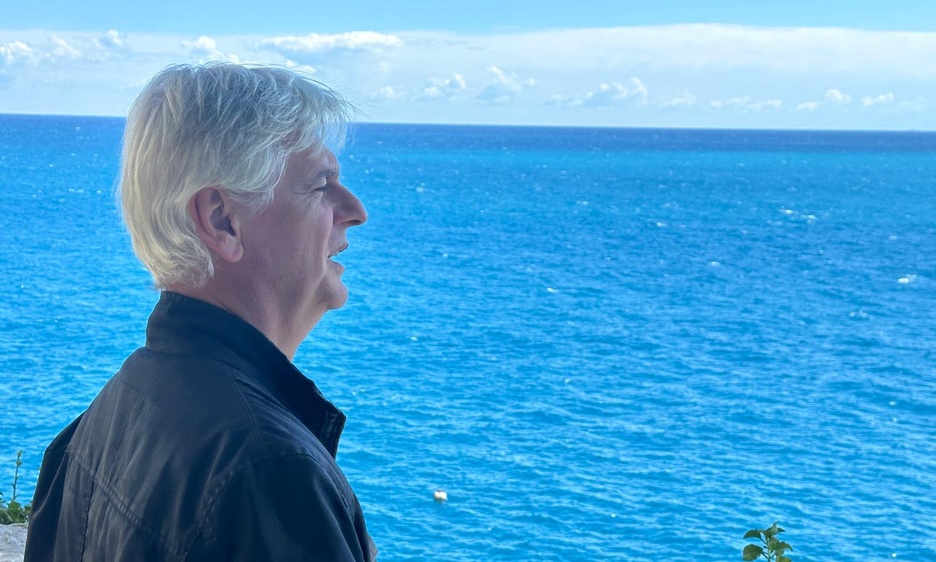
Courtesy Jana Studeny

Studený's trajectory is defined by a deep-seated curiosity about the lineage of sound. After nearly twenty years with the Opening Performance Orchestra (OPO)—a collective known for its uncompromising "fraction music"—he recently entered a more personal chapter. Now working solo as P.ST and as a member of the Ensemble of Futurist Noise Intoners (EFNI), he continues to explore how historical ideas can be repurposed for the modern era.
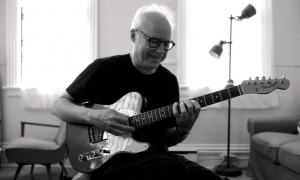
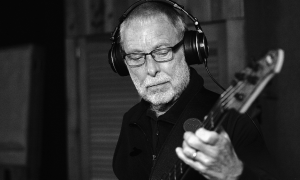
One of the most defining relationships in Studený's recent career is his work with the legendary bassist and producer Bill Laswell. The two found a natural synergy in weaving disparate global voices into a cohesive tapestry. Their collaboration began in earnest with the album The Acid Lands, a project that explored dark, immersive soundscapes and set the stage for their ambitious 2026 follow-up, Mount Analogue. Inspired by René Daumal's unfinished metaphysical novel, the album is a 50-minute continuous journey.
While Studený provided the conceptual "map"—using electronics and concrete sounds to mimic the stages of a mountain ascent—Laswell anchored the piece with his signature bass and production skills. The result is a global conversation featuring contributors like Nils Petter Molvaer, Henry Kaiser, and Henry Kaiser, all brought together by the shared language Studený and Laswell developed in the studio.
There is a distinct warmth in Studený's reverence for the "forgotten" or "damaged." This is most evident in his curation of the Pieces for Broken Piano project. He acquired a 1916 Gebrüder Stingl piano that had been left in a garden, exposed to the elements until it was virtually untuneable. Rather than seeing a ruined instrument, Studený saw a unique sound source.
While he utilized earlier works by minimalist legends such as Terry Riley and Philip Glass, Studený commissioned entirely new pieces specifically for this decaying piano from composers such as Elliott Sharp, Gordon Monahan, Milan Guštar, and Yoon-Ji Lee. The project captures what Studený calls the "damaged but charming" frequencies that a perfect instrument simply cannot produce. It's a recurring theme in his work: finding the hidden potential in noise and the inherent music in entropy.
Between launching his new label, ΑΩ Music, and revitalizing the 100-year-old noise machines of the Italian Futurists, Studený remains a restless curator of sound. Whether he is working in a high-end New York studio or a garden in Prague, his goal remains the same: to listen closely enough to find the transcendence buried within the noise.
I. Overture
All About Jazz: Your biography lists "active listener" since 1979, before anything else. What were you listening to in those early years, and when did it stop being just something you loved and start becoming something you were actively learning from?Petr StudenýMy first conscious experience from my very early childhood is a sound experience. This is probably where my passion for sounds, as such, their exploration, various forms, and their presence in music comes from. I started listening to music seriously when I was about 14 years old. I was interested in everything that was available on record—psychedelic rock, art rock, experimental music, free improvisation, rock in opposition, minimalism, industrial music, and later musique concrète and acousmatic music, contemporary music, electronic music, and noise. I always wanted to hear and find out where and how it continued, or what it came from, and what preceded it.
AAJ: You've been writing about music for HIS Voice, Czech Music Quarterly, and A2 since 2011. Does putting music into words change how you hear it—or how you make it?
PS: I have always been interested in the spoken and written word, and I devoted myself intensively to reading long before I listened to music. Writing about music came much later, and I only do it occasionally. However, it always leads me to a deeper understanding, which, although it does not affect my listening to music itself, does bring a closer look at music and its authors, often on a personal level.
AAJ: In 2024, you stepped away from the Opening Performance Orchestra (OPO) after nearly 20 years and moved into solo work as P.ST, while also joining EFNI. Was that a deliberate new chapter, or did it happen more gradually than it looks from the outside?
PS: The path we had been walking together for a long time split in two. However, the things I had been doing before remained. I had used the abbreviation P.ST before, but now it can be seen and heard more often. Change and resume are natural and important things, and if long-term continuity is added, it's a done deal.
II. Prague
AAJ: You're based in Prague, a city with a long history of underground activity. How much does that environment actually feed into the kind of music you make—is it something you think about, or is it just part of the air?PS: I have lived in Prague since I was born, so for sixty years now. It is a city located in the very heart of Europe, which has a unique atmosphere all of its own. As Egon Bondy says in his poem "Magické noci" [Magical Nights], performed by the Plastic People of the Universe: "We live in Prague—that's where—the spirit itself—will one day appear." It is impossible to remain unaffected by such an environment, even if the influence is rather hidden, difficult to grasp, and hard to describe.
AAJ: You've curated New Music in Atrium, organized concerts, and brought artists like Elliott Sharp and Richard Pinhas to the city. Is that work about building something for Prague, or is it really about creating the listening experiences you want to have yourself?
PS: One branch grows from the previous one and sometimes even multiplies beneficially. Some of the events I organized were requested—Nicolas Horvath and his noise project Dapnom, others resulted from long-standing friendships— Werner Durand and his duo FLOCKS with Ulrich Hohmann, or Radek Kopel and his noise project RDKPL (formerly Napalmed, later NPLMD), Others stemmed from previous musical collaborations—Richard Pinhas, Luciano Chessa, musicians playing the Fluxus compositions.
The New Music in the Atrium series was created in friendly cooperation with pianist Miroslav Beinhauer—solo and chamber concerts, an evening of Fluxus compositions, and an intonarumori concert were performed here. The Holy Fluxus concert series in Berlin, which I curated for Archivio Conz in 2024, was a reward for me and all musicians for our work on a two-part edition of recordings from the Fluxus movement (Stolen Symphony, Keep Together).
AAJ: You work internationally a lot—especially with people in New York. Do you come back to Prague hearing things differently after time away?
PS: I like big cities. When I find myself in a city for the first time, I explore not only what the city looks like and how it lives, but also how it sounds. Every city has its own specific sound; London sounds different from New York, which sounds different from Tokyo. When I return to Prague, it is always a return to an environment that I know in detail and love. It is a return to my home environment with old and new favourite sounds.
III. Mount Analogue
AAJ: Daumal's novel ends mid-sentence—he died before he could finish it. When you came to make this album, did you feel any pull toward completing that thought, or was the incompleteness itself the point?PS: "And what about you? What are you looking for?" This is the last sentence of the unfinished chapter of René Daumal's novel. The music album does not seek to resolve this question or the mountain of analogy itself, which is invisible to the ordinary human eye and can only be reached by fulfilling special personal requirements and general conditions. If the album evokes the atmosphere of the book or encourages you to read it, that will be perfectly fine. "There, at the centre of everything, dwells he who sees each thing from its beginning to its end."
AAJ: The first disc moves through six chapters—Introduction, Meeting, Supposition, Crossing, Arrival, Conclusion. How closely did you map those to the book, and how much did the music find its own shape?
PS:Mount Analogue is a fifty-minute music album that plays in one continuous piece. The titles are more like plot analogies than boundaries or divisions. The keyword is transcendence. All the musicians who participated in its creation were familiar with the literary source material and had a deep, positive relationship with it. All that was needed was to set the way and let them create.
Henry Kaiser's contribution is remarkable—nearly 50 minutes of solo guitar on Jodorowsky's Peradam alone, then four more interpretations after that. What does that Rashomon-like approach add to the album? Is he climbing the same mountain as everyone else, or something different?
Henry Kaiser and his fifty-minute guitar solo was created first and it forms the guiding line of the entire album. Only some parts of the solo were used in the final mix, which is why the complete solo is included on the second disc. It represents Henry's sensitive musical contribution to an adventurous journey in search of a metaphysical goal.
AAJ: The recordings came together across Europe, North America, and South America before being finished in New York. How do you hold a project like that together—what kept it feeling like one piece?
PS: It must be said that the album Mount Analogue could only have been created because we met and collaborated with Bill Laswell. After completing the album The Acid Lands, we met in Paris and agreed to continue working together. When I remembered René Daumal's novel and realized its connection to Alejandro Jodorowsky's film The Holy Mountain, it was clear that this was the right direction. Thanks to Bill, it was also possible to involve some musicians whom I did not know personally, but whose participation I desired. Bill added his bass parts and effects to the album and collaborated with James Dellatacoma from Orange Music on mixing and mastering to create a full and compact sound.
AAJ: You had Anna Clementi, Percy Howard, Nils Petter Molvaer, Graham Haynes, Hideo Yamaki, Dorian Cheah, and Peter Apfelbaum all contributing. With that many distinct voices, how do you know when to give direction and when to just get out of the way?
PS: My task was to come up with a theme, select text excerpts, create the musical structure of the album, propose the line-up, and contribute concrete and electronic sounds. Everything else was a matter of the sensitive approach of the musicians and the production skills of Bill Laswell.
IV. Ephemere
AAJ: Ten CDs, collaborators including Edward Ka-Spel, Richard Pinhas, Kim Cascone, Robert Rich, Werner Durand, and others. In a world of playlists and singles, why make something this big and physical? What does that scale allow you to do that a shorter format couldn't?PS: I first heard Luc Ferrari's compositions "Ephèmère I" and "Ephèmère II" twenty years ago. "The tape is the score," says Luc Ferrari in the accompanying text. Luc Ferrari also encourages the use of these compositions as a sound source for the creation of new works. The first part of "Ephemere" was created in collaboration with Henry Kaiser. I electronically generated many hours of sound material from the original "Ephèmère" and sent Henry a 70-minute track as a background. Henry sent the finished piece back with his guitar solo recorded live without overdubs.
I was so impressed with the result that I began to think about a multi-part cycle with different solos—trumpet, cornet, bass guitar, acousmatic music, piano, guitar again, electronics, and field recordings. All Ephemere tracks are seventy minutes long, and each of these ten recordings was created in a different way—in some cases, I received a complete finished composition, sometimes just the solo itself, and other times many different sound sources from which I assembled "Ephemere."
AAJ: How long has "Ephemere" been in the making, and what kept you going through a project that size?
PS: The series was created thanks to the conscientious work of all the soloists over a period of less than two years, with work on the individual pieces proceeding in parallel. The motivation was Luca Ferrari's 1974 suggestion that "The piece—which, as the title suggests, is based on sea-like effects—is conceived for both professional and amateur performers, as well as for musicians open to any kind of music," my response fifty years later, "Ephemere gives the opportunity to work with the mind and the speed of time while the sound/music flows," and the desire to hear Ephemere in harmony with solos and various instruments.
V. The Broken Aesthetic
AAJ: You founded the Broken Music Feedback fund and have worked closely with Milan Knížák for years. He's always been a provocateur—artist, former National Gallery director, someone who never really fit neatly anywhere. What keeps drawing you back to his world?PS: I discovered Milan Knížák and his artwork in the late 1980s. I didn't become familiar with his music until much later, as it was completely unavailable at the time. The first piece I heard was "Broken Music," a concept dating back to the early 1960s that Milan Knížák kept returning to. Although it was originally created as a musical work, it later became an example of the combination of radical music and visual art par excellence.
Noise music has accompanied me as a listener for more than 35 years, and Knížák's Broken Music is an integral part of it, moreover, a thoroughly thought-out part, which it was possible to spontaneously follow up with OPO in the digital age using new technical means. Later, I collaborated with Milan Knížák as a producer on recordings of his original compositions for strings, piano, and other instruments.
AAJ: Pieces for Broken Piano brings together Terry Riley, Philip Glass, Knížák, Elliott Sharp, and others. Did you give them any guidance on what to do with a broken instrument, or did you let each of them figure out what "broken" meant to them?
PS: Broken Piano (Gebrüder Stingl, 1916) was the focal point for the creation of a two-part edition of compositions from the Fluxus movement, on which I worked as curator/editor from 2020 to 2024. In addition to seventy-four new and old, previously unreleased compositions by thirty-three different authors, fifteen essays by various writers specializing in music and modern visual arts were also written.
Some of the texts and compositions were created specifically for Broken Piano. The damaged yet still charming sound of the broken piano led Miroslav Beinhauer and me to the idea of recording a special album exclusively for this instrument, featuring compositions by various authors. Of the nine compositions, three are older, from the early minimalist period, and the remaining six were written specifically for Broken Piano. The composers wrote and sent compositions for classical piano with the understanding that they would be performed on a broken instrument. We couldn't know in advance how this would work, or even if it would work at all. So it's fair to say that the result is a work of courage and a series of fortunate circumstances.
AAJ: You've worked with intonarumori for years—from The Noise of Art to your current work with EFNI. How do you stop instruments that are over a hundred years old from feeling like museum pieces? What keeps them alive?
PS: For a long time, I only knew about the noise instruments of the Italian Futurists from literature. Later, I learned about the activities of Luciano Chessa, who had sixteen intonarumori constructed and formed the Orchestra of Futurist Noise Intoners (OFNI).
In 2011, Jan Kolář constructed three intonarumori for OPO, and Luciano provided me with a wealth of valuable theoretical and practical knowledge. OPO used the instruments several times in concerts and to make recordings, and then this chapter was closed.
Four years ago, I lent the instruments to Anna Clementi in Berlin, who was enthusiastic about them. Anna, Werner Durand, and Luciano Chessa, later joined by Jan Kolář and Miroslav Beinhauer, allowed me to work on a new collection of compositions for intonarumori and to come up with a name for this ensemble—EFNI, or Ensemble of Futurist Noise Intoners. There are currently about twenty-five new compositions by authors from the academic and non-academic scenes, which are performed live in various venues and continuously recorded in the studio.
Intonarumori are the first instruments to deliberately introduce non-musical sounds and noises into music. As a noise music enthusiast, I couldn't help but be impressed. They offer a wide range of non-standard sounds and allow for diverse playing techniques, which, when combined with classical instruments (violin, piano), the human voice, or electronics, sound fresh and unexpected even after more than a hundred years.
AAJ: You've also composed for the sixth-tone harmonium. What draws you to these microtonal systems—what do they give you that a standard tuning can't?
PS: Thanks to computers, microtones are now easily accessible and ubiquitous. In the distant past, special instruments were needed for this; the best-known of which is the quarter-tone piano, but it also includes the sixth-tone harmonium, a forgotten instrument built for Alois Hába in the 1930s. I knew the sixth-tone harmonium as the only existing, rare, and untouchable exhibit from the Czech Museum of Music in Prague.
I was pleasantly surprised when pianist Miroslav Beinhauer mastered this unique instrument, which Hába used in his opera Nová země [The New Country] and wrote only one other composition for. Miroslav and I approached various contemporary composers with a request to write new compositions, which resulted in the 2CD Pieces for Sixth—Tone Harmonium. A new sixth-tone harmonium is currently being built in Prague, which will be presented to the public this fall at a large double concert of new solo and ensemble compositions. Petr Kotík and the Ostrava Center for New Music, which will organize this double concert under the title Essential Sixth-tones, deserve great credit for the creation of this new instrument, which will enable regular concert performances.
VI. AΩ Music
AAJ: You launched AΩ Music recently. What is the label actually for—what does it exist to do that wasn't being done?PS: The label AΩ Music was founded due to a lack of opportunities to release music that needs to be released. Writing a composition, recording it in a studio, and releasing it as a record is a relatively long and complicated process. However, the biggest problem today arises when a new recording has to reach listeners. That is why I finally agreed with Fred Walheer that the first recording of AΩ Music, featuring the composition "Many Many Women" by Petr Kotík, would be released in collaboration with Sub Rosa, a label that has been reliably releasing recordings for more than forty years.
VII. Looking Forward
AAJ:You move between Prague and New York, between Fluxus and contemporary sound art, between large conceptual works and intimate compositions. After all of it—what's still unresolved for you? What are you still trying to figure out?PS: This movement is more mental than physical. It is a great adventure to come up with an idea, join forces with other people, and then eagerly await the first result. The world of sound is very diverse, constantly changing, and evolving. We can leave everything that comes in the future open.
About Bill Laswell

Tags
PREVIOUS / NEXT


Become a Sustaining Member

Since 1995, All About Jazz has championed jazz as an art form and supported the musicians who create it. Over three decades, it has grown into one of the world's leading jazz resources, serving hundreds of thousands of readers, musicians, presenters and industry professionals each month.
Help Build the Future of All About Jazz
Your support helps us continue building All About Jazz for the next generation—expanding our editorial coverage, preserving jazz history, developing new community features and creating better ways to discover the music and the people behind it.
Become a sustaining member for as little as $20 per year and you'll immediately enjoy an ad-free experience along with access to subscriber features and future articles for a full year.
Together, we're not simply sustaining All About Jazz—we're building its future. Thank you for being part of the journey.