Home » Jazz Articles » Profile » Introducing Pianist Sungtaek Choo
Introducing Pianist Sungtaek Choo
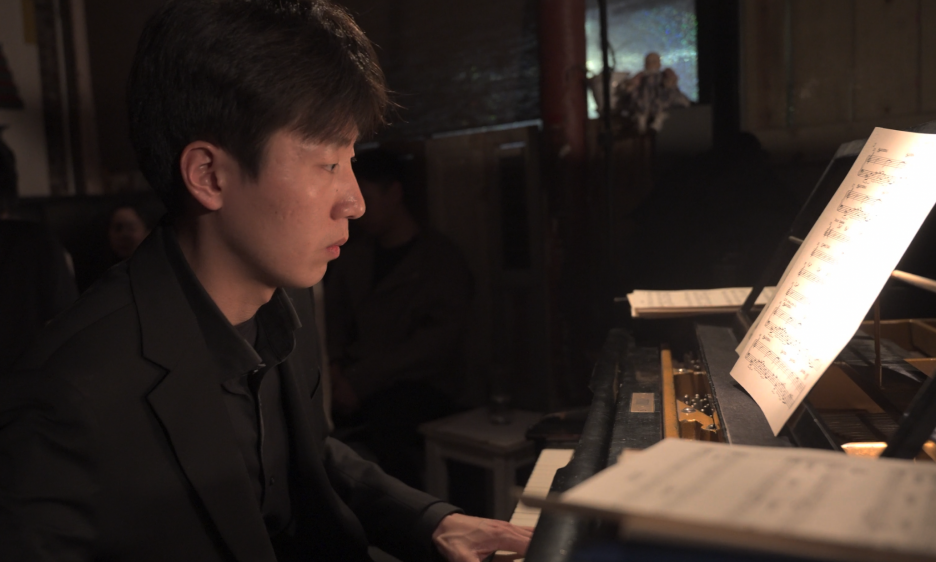
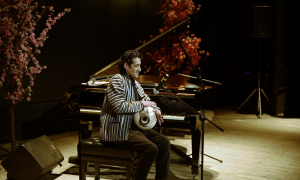
Courtesy Sungtaek Choo
…McCoy Tyner is a Holy man and is an absolute force of nature.
—Sungtaek Choo
Born in Daegu, South Korea on September 8, 1995, Choo started playing classical piano at the age of 5, and discovered jazz at 16, when he saw Chet Baker video on YouTube. "I got into jazz by coincidence. I knew nothing about this music, and no one in my family knew anything about jazz either," Choo recalls. "When I was growing up, classical music was much more popular than jazz in South Korea. But one day, I just randomly found Chet Baker's "Star Eyes" on YouTube, and I immediately fell in love with it. I was drawn to those jazzy chords to the rhythm called swing. And from that on, I started listening to players like Red Garland, Oscar Peterson... Basically, I learned jazz from YouTube."
Choo graduated from Daeryun High School in Daegu in 2014, earned his Bachelor of Music Degree in Jazz from the Conservatory of Amsterdam in 2023, studying with pianist Rob van Bavel, who won second place at The Thelonious Monk International Piano Competition in 1987, and was awarded his Master of Music Degree from The Manhattan School of Music in 2025, studying with pianists Jeremy Manasia and Marc Cary. Choo also studied privately with pianist David Kikoski.
Choo has performed with a number of jazz stars in New York, including tenor saxophonists Eric Wyatt, and Paul Austerlitz, alto saxophonist Aaron Johnson, trombonist Dave Gibson Quartet, and bassist Santi Debriano,. Another bassist, Mike Boone, who is based in Philadelphia, and regularly performs at Smalls Jazz Club in New York, first met Choo while on tour in Amsterdam, and was influential in establishing him in the New York jazz scene.
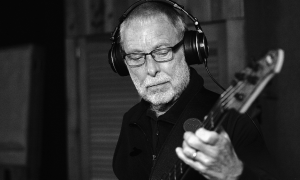
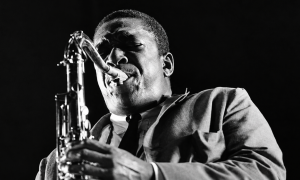
Boone is a major presence on Choo's 4-track debut EP, Philly Standards, which also feature Philadelphia drummer Anwar Marshall. "I've always been drawn to the Philly jazz sound, and my heroes included McCoy Tyner, Bobby Timmons, Benny Golson, Brecker Brothers, Justin Faulkner, and John Coltrane was based in Philly," Choo says. "I had always wanted to record with a Philly rhythm section. Because, like I said, there are so many great rhythm section players from Philly including Anwar Marshall and Mike Boone. I met both of them at Smalls Jazz club, and I got to sit in on one of Mike's gigs, and I played "Dolphin's Dance" by Herbie Hancock. And after hearing me play, he said, 'this guy's a problem [laughs],' and he started hiring me for gigs, and that's been a dream come true. He surely didn't need to hire some random guy from Korea, but he chose to help me become part of the New York jazz scene, and I'm forever grateful for that. Mike is very encouraging and kind to me."
Supported by Boone's bone-thick, swinging basslines and Marshall's in-the-pocket drumming, three of the four selections on Philly Standards feature compositions by Tyner, including the anthemic "Passion Dance" the Monkish mid-tempo "Blues on the Corner," both from Tyner's classic 1967 Blue Note album, The Real McCoy, and a boppish rendition of the standard "Just in Time," inspired by the Tyner's version of the song from his 1984 recording, Dimensions.
"I still remember the first time I heard McCoy Tyner," Choo fondly recalls. "It was 2014, and I was just practicing piano in a practice room, and again, I found McCoy Tyner on YouTube, and it was his album called Supertrios, and the first track was "Wave" by Antonio Carlos Jobim, and as soon as I heard it, I was completely blown away. It was intense yet very spiritual, soulful and powerful, and it was difficult for me to understand what he was playing, but I loved everything he was doing. I still can't forget the intro to "Wave" from Supertrios. That record means a lot to me, and it truly changed my life. And every time I listen to this record, I get the same feeling I had in 2014. McCoy Tyner is a Holy man and is an absolute force of nature."
The final track on Choo's EP is his reverent reading of pianist Kenny Kirkland's compelling and complex waltz, "Chance," illuminated by Choo's nimble harmonic navigation of the composition's maze-like melody. "Kenny Kirkland was a complete musician," Choo remembers. "I first heard him on Michael Brecker's, self-titled album, Michael Brecker. And when I heard him, I immediately thought, who's this guy? He reminded me of players like Chick Corea, McCoy Tyner and Herbie Hancock. But at the same time, he sounded completely fresh and original.
I later learned that Kenny was the premier pianist who played with Wynton Marsalis, Branford Marsalis, Kenny Garrett, and even a pop star like Sting. That tells you how versatile he was: He could play anything, any style, at the highest level. He was such an underrated beast. He played on [ many] recordings, but he released only one album under his own name, Kenny Kirkland in 1991 and "Chance" is my favorite track on the album. It really shows Kenny Kirkland as a composer. The melody is very simple and beautiful, but there are really complex harmonies underneath, and it shows that Kenny Kirkland was not only an incredible pianist, but also a great composer."
On all of the selections on Philly Standards, Choo's fleet-fingered pianism incorporates the myriad musical inventions and dimensions of the masters who came before him, and in doing so, ultimately sounds like himself. "It means more than a debut release," Choo emphatically states. "This album reflects a period of growth for me in New York, shaped by my mentors."
 FOLLOW Eugene Holley, Jr.
and get notified whenever a new article published.
FOLLOW Eugene Holley, Jr.
and get notified whenever a new article published.
Eugene Holley, Jr. is a freelance journalist and essayist.
About Sungtaek Choo

Tags
PREVIOUS / NEXT

Become a Sustaining Member

Since 1995, All About Jazz has championed jazz as an art form and supported the musicians who create it. Over three decades, it has grown into one of the world's leading jazz resources, serving hundreds of thousands of readers, musicians, presenters and industry professionals each month.
Help Build the Future of All About Jazz
Your support helps us continue building All About Jazz for the next generation—expanding our editorial coverage, preserving jazz history, developing new community features and creating better ways to discover the music and the people behind it.
Become a sustaining member for as little as $20 per year and you'll immediately enjoy an ad-free experience along with access to subscriber features and future articles for a full year.
Together, we're not simply sustaining All About Jazz—we're building its future. Thank you for being part of the journey.