Home » Jazz Articles » Profile » Old School with Wendel Brunious
Old School with Wendel Brunious
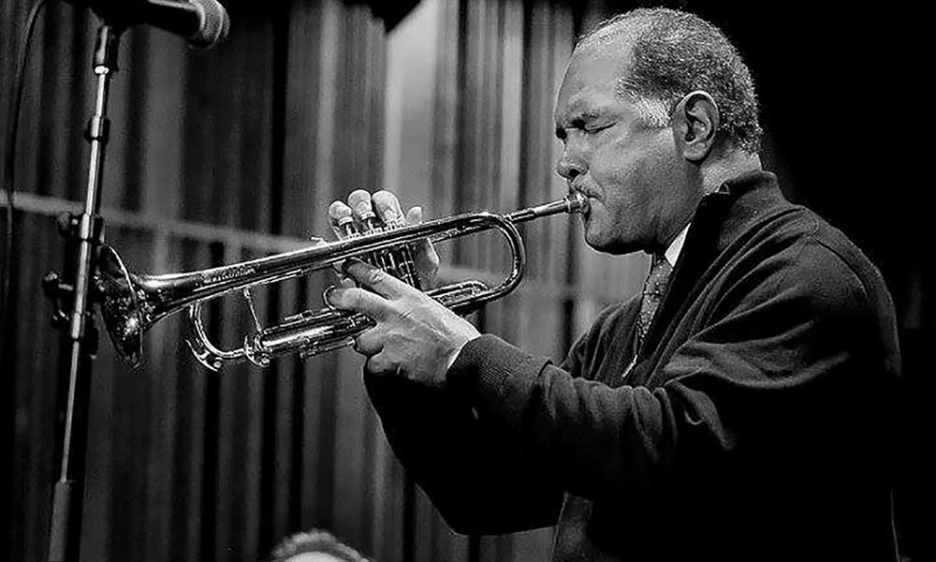
Courtesy US National Park Service
If you’re a young person today with dreams of being a household name, the only advice I could ever give would be stay true to your art.
Early on, I'd be trying to play some Ray Charles stuff on the piano, not necessarily with much success, which is one reason I play the trumpet these days! Naturally, in the beginning, it did not come that easily, and there were moments of doubt about playing trumpet, about playing music. You get humbled by the art form, or you should be, anyway! My father was such a powerful trumpet player, and hearing how well he played was somewhat intimidating. At times, my mother noticed what was going on, often offering words of encouragement: "Look, 'pumpkin,' just keep practicing and you'll get there." [laughs] She grew up in a family of killer musicians and knew what I was going through and understood what it was about, even though women in those days really did not have much to do with the musical end of things. But she was around it, heard it, kept her eyes open too, and knew exactly when to offer encouragement and moral support.
But the first real live music band I ever saw was the Tuxedo Brass Band; they actually came to our house, walking up and down our driveway and into our backyard, where they recorded a double album called "Jazz Begins." If you open it up, there's a picture of my sister and me, taken by that famous photographer, Lee Friedlander. All sorts of musicians were there in that band, including Paul Barbarin and Wilbert Tillman on tuba, with Ernie Knox on bass drum. Dick Allen, an oral historian and trad jazz expert here in New Orleans, was there too, taking it all in. I still remember it like it was yesterday, sitting around in wooden chairs my father had built—he did carpentry work by day—witnessing history in the making! I did not realize how historic it all was at the time, though, as that was just life in New Orleans and in the Brunious household.
Of course, I'll never forget that first time I wandered into Preservation Hall, noticed an empty chair for the trumpet player—Kid Thomas was missing—and asked if I could fill in. They all sort of looked at me, wondering, "Who is this kid wandering in off the street who wants to sit in?" I didn't think they needed help or anything like that; I was just looking for an opportunity to play with these guys and thought I'd help them out and fill in.
Emmanuel Sales was on banjo, Raymond Burke was playing clarinet, Frank Fields was on bass—these were people I knew already, had seen play, as my daddy had taken me to hear music at Preservation Hall, as well as at The Dixieland Hall too. Alonzo Stewart was the drummer; he was the one who told me they don't just let people sit in. I told him, "I'm not sitting in. I just want to help out 'cause Kid Thomas isn't here and the trumpet chair is empty." I wasn't being cocky by any means, but...yes, I was confident I could fill that void and respectfully asked. They relented and let me play, and I think the first song we did was a Kid Thomas song, "Put On Your Old Gray Bonnet."
It's funny how that worked out, as a bit later, National Geographic came to town and took a photograph of me with Kid Thomas over at his home across the river. He was the oldest player in town—87 years old at the time—and I was about 22, the youngest trumpet player in New Orleans jazz. They actually asked us to play a song together. So we ended up playing one of his favorites, the same one I had played over at Preservation Hall in his absence.
I ended up playing the lead while he followed me as the second trumpet. I really don't know how much harmony he actually knew, but he played beautifully. It is not like he had ever studied music in the manner people do these days, but his ear led him into places I could not imagine going myself.
When I'm playing second trumpet, I'm thinking of chords, but I guess he was only focused on the sound. I learned an important lesson that day—that there's more than one way to skin a cat or go about playing a song. And he is the only trumpet player I've ever known not influenced by Louis Armstrong, as he came up before Louis Armstrong was playing. Maybe his style was more like Buddy Bolden's? I've no idea, but he would come out with these little splashes of sound, playing the trumpet in almost what I'd call a percussive style. Anyway, you cannot buy that kind of experience these days, as no one with his experiences is around anymore.
How many trumpet players do you think there have been in New Orleans jazz? There's Kid Howard, Bunk Johnson, Louis Armstrong, Percy Humphrey, Kid Sheik, Bunch Miller—all of these guys were different, but we all played New Orleans music. So when you try to put a pin on what New Orleans music is, that is a mistake as far as I'm concerned. 'Cause it's like, it's a whole concept, the sum total of a lot of people and different cultures that came to New Orleans. It's not one guy or one thing. We're all from New Orleans, man. Fats Domino was New Orleans music. Smiley Lewis, Dave Bartholomew, Allen Toussaint, Lil Wayne—they were all New Orleans music.
Whites, Creoles, Blacks, whether they're speaking Spanish, French, or whatever—it didn't make a difference where you came from. The music brought us all together. And, you know, all of the cultures of the world that came to New Orleans became a single culture, the culture of New Orleans itself. And certainly, no single person "invented" jazz, but Louis Armstrong's for sure the greatest trumpet player, and thank God he ever existed! And then there's Buddy Bolden, a legend of near-mythical proportions as time passes. Bunk Johnson said he and Buddy Bolden pretty much started jazz. But they say Bolden played the accordion for a while, so who can say he was the first jazz trumpet player?
And I'll say this—you see Shannon Powell over there—these days he's New Orleans music; he's a real New Orleans drummer! He grew up in the tradition, sitting behind Louis Barbarin and Freddie Coleman and people like that, and playing in street bands. We were in the street bands together with David Lastie and others like him, and there's not many like him around anymore. Johnny Vidacovich once said, "Our music is folk music, it is workers' music, the music of the common man, ethnic music, indigenous to this area." And that's about as well as I've ever heard anyone say it when talking about what New Orleans music is; he got it so right! Donna Washington had a saying: "Sing to the man in the street. Or pretty soon you are the man in the street!"
In today's music, we don't have the essence of the blues like we had all through history, and that's the main factor that's causing the foundation of our music to erode and quake a little bit too. We're shaking at the roots 'cause we have all these PhDs teaching music now, people who've never been out gigging but instead have been studying books in libraries. Did Charlie Parker have a PhD? I don't think he even had a high school degree. Did Louis Armstrong have one? And Miles Davis—his roots were sunk deep into traditional music long before he ever went to Juilliard. He was from a rather well-to-do family, but he used to wake up and he'd play Potato Head Blues! You might know what size Red Allen's shoe was, but have you ever heard him play Jungle Blues? That's what I'm talking about—you can't learn everything about our music from a book!
So few people ever ask about my grandfather—my father's dad, George Brunious, played too. And he married Juanita Hernandez from Mexico, so I truly come from a mixed family, a big stigma at the time. And, of course, on my mother's side are the Santiagos—an early jazz guitarist by the name of Wilfredo (or Willie) Santiago and my uncles, Burnell and Lester Santiago, who were prominent piano players. And my mom actually played piano too. So there were a number of different influences going on in the family from which our music developed. My grandfather, too, played, as did his first cousin, Abby. It has been a family tradition for a long time now!
As you may have figured out by now, our musical family extends throughout New Orleans, as it does for many musicians in this town. In the end, we're one big family, but still there are some who like labels that divide. I know, because I wasn't Black or White! Part of my family originally came from Mexico, and the Santiago part of the family is originally from the Philippines!
But back to my father—he graduated early from high school when he was only 15 years old, skipping from third to fifth grade as well as from seventh to ninth grade. Leaving high school early, he was invited to go on a boat trip from New Orleans to New York with our cousin, Harold Dejean. I think our Uncle Lester was playing piano too. In any case, they made it to New York, and my father decided he wanted to go to Juilliard, applied, and followed up on that application upon returning home, to no one's surprise. After all, when he was only seven years old, his first music teacher had been the great Willie Humphrey, and Harold contributed to his music education too, as he bought the book Johnny One Note for him. And he took off from there, learned all the songs in that book. So he was an extremely intelligent guy, learned a lot, and was prepared for that trip to New York and his two-and-a-half-year tenure at Juilliard too.
After he got out of there, Danny Barker got him the job as an arranger for Cab Calloway, and he worked with Jay McShann and finally with Billy Eckstine too. My uncle Willie Santiago had been a great influence on Danny; New Orleans is a small town, and every musical family knew one another, so that's how my father was introduced to all those people in New York. Barker was a man learned beyond his years.
And it was Danny Barker who gave me my first paying gig too, as I know he did for many others! It was with a parade band—the Congo Square Brass Band—with my daddy, my brother John, and Sammy Alcorn in that horn section. Talk about a hot band—it was smoking hot! You can't hear or see that kind of thing anymore; times have changed.
When I was much younger, I also played with Gregg Stafford in the Tuxedo Brass Band; he's great. When I had that contract to put together the soundtrack for the Buddy Bolden movie, I had Gregg playing that trumpet 'cause he owns that primitive style, playin' it from the heart. There aren't any recordings of Bolden to imitate, so it's not like he's copying someone else. Rather than imitating something he might have heard, he played like he's feelin' it—something you can't teach or ask someone to play; it just happens with those guys who have lived with a real feeling for it.
I've been fortunate to have great mentors and wonderful teachers too. I went to Southern University and majored in business but had a minor in music, and had the good fortune to study under the legendary Kid Jordan. He was a demanding teacher, rigorously working the students with hard lessons and even punishing us at times too, asking us to play the same, not very interesting music over and over again.
I first met him when I was 16 or 17, playing with the William Houston Stick Band for special occasions like Mardi Gras or debutante balls, and Kid Jordan was playing lead sax. We often opened up with Count Basie-style blues, and Kid would stand up there and play the living hell out of that sax; he was unreal. Then he'd turn back to me and wink, as if saying, "You think that's what they wanted to hear?" He loved to surprise people and play the unexpected and didn't really care how they reacted to what he was doing. It never disappointed or surprised him if people walked out...that's for sure. There's an old saying that when the truth equals the legend, forget the truth! There was no one like Kid Jordan, and I'll miss him; he was quite a guy.
These days, too many players are just one-trick ponies—they got their thing and they do it well enough, but not much else. Too many young players want to start at the third floor rather than build up a repertoire from a strong foundation. When you start out like that and bypass the hard work involved, gravity takes over, and that skyscraper you thought you were putting together isn't one at all!
I recall some years ago when I was 20 or 21, Papa French called my daddy, asking him to make a gig. My dad wanted to go but was sick and said he'd send his son over instead. Papa thought he was going to send my brother John, and when I showed up, he looked at me with my big hairdo, wearing my best Robert Hall suit, and asked, "Who are you?" I told him, and he shook his head, probably wondering why John wasn't there. My self-esteem was somewhat shattered, but then he told me this: "You're my bandleader tonight. Whatever you call, that's what we'll play."
I had some experience working with Harold Dejean but certainly did not have a full repertoire of songs at my fingertips. But I agreed, and we did it. Afterwards, Papa told me how well I'd done and ended up hiring me for a few more gigs! Thinking to myself, OK, but I need more tunes, I ran home and called up Harold for some help. He came by, brought along a couple of books—actually two volumes of tunes in a loose-leaf binder—and a pot of squirrel gumbo too! Now THAT'S New Orleans for you; things like that don't happen anywhere else. I'll never forget any of that, the unqualified support as well as the opportunities I've received from others.
I've actually been looking at, listening to, and helping out young players all my life; it's what we do in this town. I was actually a major influence on people like Nicholas Payton and helped out Jonathan Batiste and Trombone Shorty too. But it's not about me at all—what I'm saying is that is how it is in New Orleans; if you can offer something useful to someone else, you do it. There's no end to the number of people who have helped me, people like Jack Willis, of course my daddy and my brother, as well as Teddy Riley.
And how did I ever get to play in Lionel Hampton's band? One night he called Wallace Davenport, saying he needed an extra trumpet player for a gig during Jazz Fest week in 1979. Wallace called me up, saying he had a gig for me if I wanted it. I asked him whose gig it was, and he tells me it's the Hampton band, with a rehearsal at noon and the gig at nine that evening. At the rehearsal, they gave me the charts, but these guys weren't playing like what was written on that paper. These guys, including Wallace, Joe Newman, and Jimmy Maxwell, were killing it. The charts could not reflect the phrasing and tones these guys were playing—how could you actually write that stuff? But these guys understood that musical language.
A few months later, Wallace called me again to follow up on another Hampton gig in New York. This time, he led me through it all with one book with the lead for himself and a second book for me. He started the metronome; we played it through, grooming me for that performance. That was a wonderful experience.
I've never been one to be star-struck with celebrities or have ever worked in that frame of mind. I've met a lot of great players. I recall going to Jazz Fest with my daddy and meeting Duke Ellington. He told my father, "Get that boy a tuxedo, and I'll take him to New York with me!" I took him seriously and really thought I could do that, even looked forward to it. But my father laughed it off afterwards, warning me: "You don't know who them guys are!" Harry Carney was playing with Duke then, as well as Johnny Hodges—some of the greatest, greatest people ever—and still they showed this young kid, meaning me, some different techniques for blowing on that horn. That's the way it was with musicians—the older ones always helped the younger ones, offering encouragement and valuable tips too.
And that's what makes my position with Preservation Hall as the "musical director" that much more important—I'm not merely assessing talent or choosing players; it goes beyond that. I'm here to teach and show others how to follow a path, and pass on the traditions and culture we have in this city, and that's what people do for each other in New Orleans.
Time is no one's friend, and as you get older, you might lose a little something, maybe a little memory of how to do something, maybe something physical like endurance. But then you hear someone like Germaine Bazzle sing? Wow! Every time you'd play behind someone like her, you learn something. Recently, there was a celebration for Charlie Gabriel, and she came with us for that event. She's 90 years old, but she can still out-swing all those cute girls who have flowers in their hair, dressed in their foxy dresses with all those tattoos—they can't hold a candle to someone like her!
"That's My Home" from the album "The Spirit of Satch"—a fitting tribute to Louis Armstrong. I played flugelhorn on one cut, a horn that I bought at a local pawn shop as I was on my way to the recording session. For some reason, I stopped at this shop on Canal St., wandered in and saw that horn on the wall, bargained like hell to get the price down a bit by offering seven crisp one-hundred-dollar bills—but without sales tax! I got the guy to agree, but he tacked on an extra $60 for the case!
Anyway, I put it in the car and took off for the recording studio—that horn sounded good, and I played it for the first time on that recording! Mac was a great guy to work with, and we even toured together after that—me, along with Terence Blanchard, Nicholas Payton, Marcus Belgrave, Arturo Sandoval—five horns accompanying Dr. John on that recording, quite a scene, actually.
I still recall showing up for a recording session to do a traditional song that I thought we should all know. Then someone said they needed to see a chart, which I couldn't and still don't understand. I was silently stewing, wondering where that guy had been all this time. And sometimes those same players are teachers with their own students? And these days, there are some who don't think I'm "hip enough" to be teaching? I find it all rather astonishing sometimes.
On the other end of the spectrum, on occasion maybe someone comes to town, hires the prime-cut New Orleans musicians to play what is "our music," and they tell us we're not getting it right...it's too slow or it's too fast. I'll be thinking to myself, you came all the way to New Orleans to play a song we grew up with that is part of our culture, and we're not playing it right? But in the end, we're playing for money rather than for ourselves, so what the hell? But that's what goes on in the music business, or the business of music.
Live performances are different from a paid recording session, though. We all want to be the best we can be, but when it comes down to it, impress your audience, you know, and that's something I always tell younger players. Impress your audience, because they're the people who are coming to hear you play. You think maybe the legend or story about the show is going to last for only two or three years, but the truth is, it's going to be there forever.
And people will inevitably judge those performances or pass judgment on your art. Opinions of others too often determine who makes it and who doesn't. And if opinions matter so much, people like me must be careful about what we say 'cause people will take things out of context and run with it. There's a lot of luck involved with the business of music; a lot of it is about being in the right place at the right time. In many ways, I feel very, very lucky to have had the exposure and just the opportunity, the freedom, to be who I am.
And it's not totally based on merit or the time and work you've put into it all; there's been a lot of luck involved too. It's not like you wake up one day, find a clarinet in the woodshed, and all of a sudden somebody tells you that you're the next George Lewis - Clarinet. Guys like him, Bunk Johnson, Lawrence Marrero, and others—all of a sudden they became household names, but it was a combination of having real talent and opportunity. With guys like Lewis and others, the opportunities to become that household name, aside from working at it, came with a measure of good luck and knowing the right people. If you're a young person today with dreams of being a household name, the only advice I could ever give would be: stay true to your art.
And what am I working on these days, aside from being who I am and playing at Preservation Hall? I'm actually writing the script for a stage play. I really didn't know what it was going to be about when I started—I was just writing. But it's taken form now as a play about two girls in a Baptist choir in Savannah, Georgia, who come to New Orleans for a choir convention. It takes place in the 1970s, when there was all this great music on Bourbon St. and elsewhere in town. By now, I've probably written 60 original songs for it! Needless to say, it is so time-consuming, and sometimes I look up at the clock and it is already five in the morning; I've been going at it all night!
I am working hard to uphold the integrity of the music and coordinate it all into a single stage play with actors—it's no wonder it's like a full-time job putting it together—like Arthur Miller meets Jelly Roll Morton! I'm real excited about it but exhausted too. And, of course, I want to please myself and ultimately be satisfied with it all. And how can I do that? All you can do is do your very best and then let others voice their opinions and be the judge afterwards!
I know it is an ambitious project, but I've gotta believe in myself, leaving no stone unturned to get it all right, or it would never happen. And so many people want to claim that they know the New Orleans music scene and the music better than anyone—"I was there when this happened, etc., and he was there when that went down." And I say that a lot of people were probably there and did this or that, but New Orleans and the entire music scene are like a living organism, going through changes and inevitably evolving over time. No one person can claim they know it all, and that includes me too! I'm here doing the best I can, and that's all I can ask of myself. Or what anyone should ask of themselves—as I said earlier—just stay true to the art! —
Author's Note
Wendell Brunious is currently undergoing treatment for cancer. His friends and associates in New Orleans have organized a GoFundMe campaign to help with his expenses. Those wishing to support Wendell can visit the campaign page here. Every contribution is appreciated.
 FOLLOW Thomas Cole
and get notified whenever a new article published.
FOLLOW Thomas Cole
and get notified whenever a new article published.
A world traveller in the past, and now... an obsessive writer and observer of life.
About Wendell Brunious

Tags
PREVIOUS / NEXT


Become a Sustaining Member

Since 1995, All About Jazz has championed jazz as an art form and supported the musicians who create it. Over three decades, it has grown into one of the world's leading jazz resources, serving hundreds of thousands of readers, musicians, presenters and industry professionals each month.
Help Build the Future of All About Jazz
Your support helps us continue building All About Jazz for the next generation—expanding our editorial coverage, preserving jazz history, developing new community features and creating better ways to discover the music and the people behind it.
Become a sustaining member for as little as $20 per year and you'll immediately enjoy an ad-free experience along with access to subscriber features and future articles for a full year.
Together, we're not simply sustaining All About Jazz—we're building its future. Thank you for being part of the journey.