Home » Jazz Articles » Groove Orbit » How John Coltrane Changed Rock Music: Eight Miles High
How John Coltrane Changed Rock Music: Eight Miles High
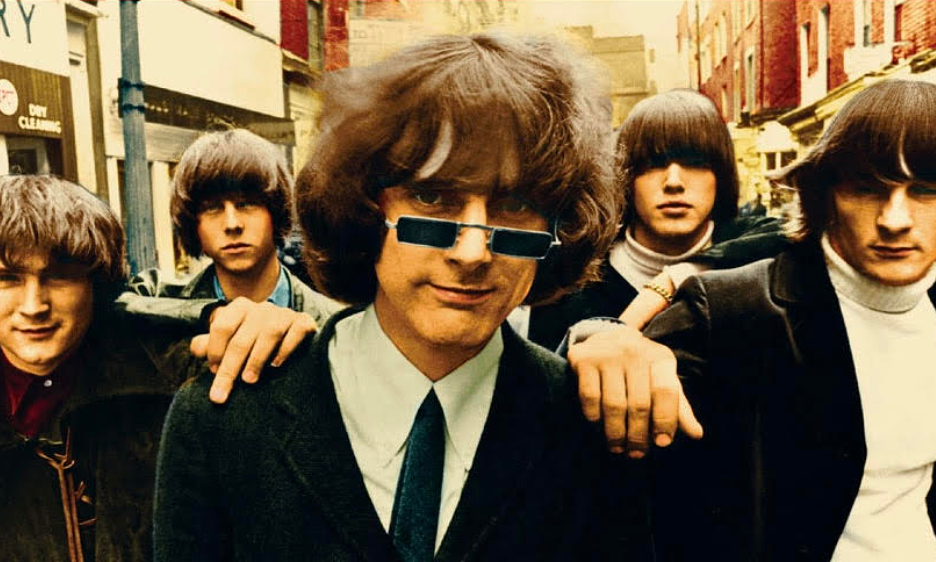

The Byrds weren’t attempting to sound jazzy. Instead, they wanted to incorporate some of Coltrane’s approaches into their music.
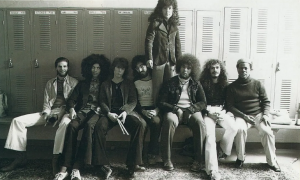
But there was another jazz-rock fusion that took place well before Miles ever went electric. And this jazz fusion originated with John Coltrane. This fusion, however, was less obvious than borrowing techniques. It went deeper, finding its roots in some of the more conceptual aspects of Coltrane's music. This was not an attempt to make rock sound like jazz, but rather an application of jazz concepts to a rock context. This trend started in the mid-sixties, with artists like The Byrds, Grateful Dead and Santana, and reached its peak during the psychedelic era.
Like any other genre of music, rock is constantly developing. In the decade between Elvis Presley's breakthrough and the rise of psychedelic rock, popular music underwent a dramatic transformation. From its early roots in blues and country to the later influences of soul, folk, and the British Invasion, rock and roll in 1965 was substantially different from its earliest stages. But in 1966, a new development emerged: psychedelic rock. On the surface, psychedelic music's origins seem obvious; this was music developed from the growing influence of drugs in popular culture. More specifically, hallucinogenic drugs, such as LSD, gave rise to psychedelic music. While this viewpoint might reflect popular opinion, psychedelic rock drew from a much deeper well.
Around 1965, something began to shift in rock music. Many rock musicians were listening more closely to jazz, especially the improvisational playing of artists like John Coltrane and Miles Davis. Their music suggested new possibilities, such as longer solos, modal harmony, and a more exploratory spirit. Improvisation was certainly nothing new for rock 'n' roll. Rave-ups, for example, started becoming fairly common features in the British rock scene by the mid-sixties, with groups like The Yardbirds and The Pretty Things venturing into improvisational sections during live performances.
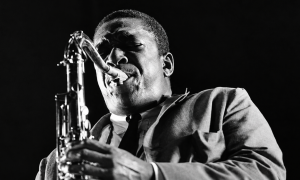
This is where zeitgeist comes into play. Events rarely happen in isolation; instead, they feed off one another. Clearly, rock music took on a different sound in the late 1960s, and while numerous factors contributed to its development, jazz may have shaped the music more than is evident on the surface. Arguably, jazz shaped the sound of psychedelic rock more profoundly than LSD. As with most transitional periods in music, no single event serves as the defining moment of transformation. But with psychedelic rock, the Byrds' 1966 song "Eight Miles High" provides one of the earliest examples of rock psychedelia, and its distinctive sound reflects the growing influence of John Coltrane. But The Byrds weren't attempting to sound jazzy. Instead, they wanted to incorporate some of Coltrane's approaches into their music. As Coltrane said in reference to other jazz musicians, "I don't think people are necessarily copying me. In any art, there may be certain things in the air at certain times."
Before considering "Eight Miles High," it might be important to consider the popularity of folk music during the early sixties. While interest in traditional music had been rising for many years, it peaked in the early 1960s. Before The Beatles ushered in the British Invasion in early 1964, folk music was huge. Independent folk performers appeared at coffee houses across America, more established performers took the stage at the Newport Folk Festival, and major acts appeared on the popular television program, Hootenany.
Roger McGuinn, Gene Clark, and David Crosby from The Byrds all cut their teeth on the folk scene. In the early sixties, McGuinn performed with The Chad Mitchell Trio; Clark was a member of The New Christy Minstrels; Chris Hillman was a member of The Hillmen; and David Crosby traveled around America playing coffeehouses. Their collective experiences in folk ultimately led to The Byrds' distinction as the originators of folk rock with songs such as "Mr. Tambourine Man" and "Turn, Turn, Turn."
But The Byrds were not the only artists tapping into folk and traditional music. Coltrane, for example, was also looking beyond jazz for inspiration. As Lewis Porter notes, "Coltrane was getting more and more interested in the larger pool of ideas to be found in folk music from Black America and other countries." Coltrane recorded traditional folk songs such as "Follow the Drinking Gourd" and "Greensleeves" rather than concentrating on the classical models of Third Stream Jazz, which were growing in popularity during the late fifties. As Eric Neisenson describes, "by emphasizing its European elements, jazz began to lose touch with its folk roots and alienate a good deal of its audience."
Coltrane also listened to music from India and Africa. This introduced a distinctive blending of non-Western folk roots and jazz. Coltrane was particularly interested in the music of Ravi Shankar, whom he began listening to in early 1961. Coltrane wanted to record with Shankar and admired his work so much that he even named his second son Ravi Coltrane.
Porter explains that "the impact of North Indian music is reflected in Coltrane's work over a single sustained drone, in his interest in exotic scales, and perhaps in the way he likes to repeat and develop short motifs in his improvisations which brings to mind the Indian style of sitar improvisation." Coltrane's incorporation of Indian musical ideas and methods into his recordings, as he described, "was more or less subconscious."
Coltrane noticed that Indian music, much like jazz, is based on improvisation, a trait that would later become a defining characteristic of psychedelic rock. Music historian Rob Chapman argues that "Coltrane was dipping into exactly the same folkloric influences that McGuinn, Jerry Garcia, and a host of other musicians would later exploit on their own folkways borrowings."
The Byrds were seemingly in a constant state of development, and listening to jazz helped change their sound more than drugs ever could. A good example of this comes from the song "Eight Miles High," which many consider the first psychedelic song. For example, music historian Robert Rodriguez considers it one of the most groundbreaking songs ever released. "No one had ever offered such an overtly experimental piece of work to a top forty audience before."
Of course, since the title includes the word "high," many people assume this is just a song about drugs, which is not entirely the case. Although members of the group had experimented with drugs at this point, the song's lyrics actually deal with The Byrds' 1965 tour of England, which was a somewhat dismal experience overall. Furthermore, the experimental aspect of the song's music has less to do with the effects of mind-altering substances than the influence of jazz. While it is true that "Eight Miles High" has a connection to psychedelics, its groundbreaking structure developed more from the group immersing themselves in the music of John Coltrane rather than dabbling in LSD.
The Coltrane connection actually begins with David Crosby, who made a tape with the music of two artists. One side had John Coltrane and the other side had Ravi Shankar. "Those were the two main things I was trying to pour into McGuinn's head. I don't know why I should be so presumptuous as to think I knew how to influence McGuinn, but I was, and I did." During this part of 1965, the band listened to this tape over and over again. Eventually, as Chapman describes, "McGuinn was on a mission to forge common ground between the Dorian modality of Indo Jazz and the unconventional scales found in many old folk tunes."
To understand what the Byrds were doing on "Eight Miles High," we first have to understand what Coltrane's approach was a few years earlier. In the late '50s, jazz underwent a change that was something of a departure from bebop. Artists like Miles Davis, Coltrane, and Bill Evans were using a modal approach to jazz. Modal jazz affected Coltrane greatly. Coltrane described the modal approach as freeing the musician to play "chordally (vertically) or melodically (horizontally)." This concept of horizontal as opposed to vertical playing comes from the composer George Russell, with whom Coltrane recorded in 1958.
In 1953, Russell wrote a book called The Lydian Chromatic Concept of Tonal Organization. This book laid the groundwork for what would later become modal jazz. This approach shifted the role of a song from a fixed sequence of chords to a more flexible framework for improvisation.
While bebop players like Charlie Parker built their music on intricate chord changes, modal jazz relied on far simpler harmonic foundations. The modal approach is probably most notable in Miles Davis's landmark 1959 album Kind of Blue, which featured Coltrane. The song, "So What," for example, only has two chords in the entire song. While this might seem like a limitation, it actually allows musicians the freedom to invent and explore improvisation much more than when playing over traditional changes.
This modal concept is also similar to patterns in traditional world music, where a drone provides a foundation note for the overall song, and musicians improvise over that tonal center. This approach is a common feature in Indian classical music. Coltrane was fascinated by the music of India, and he felt that incorporating elements of this and other world musics would help expand the possibilities of jazz performance and composition. Coltrane's interest in modal jazz and world music would later influence rock artists such as The Byrds.
The most obvious example of the Coltrane influence on The Byrds comes from "Eight Miles High," which is directly inspired by the composition "India." In a similar fashion to The Byrds listening to the Coltrane tape, Coltrane spent a good deal of time listening to an album released on the Folkways label, Religious Music of India. This album provided the inspiration for the composition "India" on his Impressions (Impulse!, 1963) album.
Essentially, Coltrane's modal approach to "India" is built on a raga structure. Even though the jazz instrumentation differs, the underlying raga structure remains clearly intact. At around 1:40 in the version on Impressions, the central melodic figure begins to emerge. The modal phrasing and contour of this passage would later reappear in transformed form in "Eight Miles High," where Chris Hillman's booming bass and Roger McGuinn's frantic Rickenbacker 12-string guitar transform Coltrane's ideas into something entirely new: a rock composition that carries the structure and spirit of the improvisational approach from "India."
Beyond the opening melodic resemblance to "India," "Eight Miles High" also reflects Coltrane's modal approach on a structural level. Rather than relying on traditional chord progressions and resolutions, the song hovers around a sustained tonal center, which alters the sense of conventional resolution and gives the song a floating, suspended quality that became central to psychedelic rock. Much of the song suggests a G Mixolydian framework, with the flattened seventh giving the music an open-ended, unresolved quality. Instead of moving through tightly organized harmonic changes as in earlier rock songs, the Byrds create space through repetition, suspended harmony, and improvisational momentum.
McGuinn's 12-string solo further separates the song from conventional mid-sixties rock guitar playing. Rather than emphasizing blues-based phrasing, the solo unfolds through scale patterns and repeated motifs that more closely resemble Coltrane's modal explorations than the vocabulary of traditional rock and roll. This technique is also evident in the song "Why," which was recorded during the same session and appeared as the B-side to "Eight Miles High." "Why" captures the overall raga feel, and McGuinn's guitar solo captures the essence of Indian scales in a Western context. The result was not simply a pair of rock songs influenced by jazz and raga, but rather compositions built around modal concepts that Coltrane had been exploring earlier in the decade.
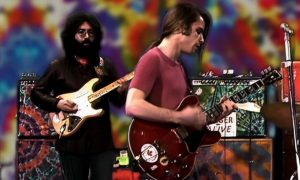
By the end of the sixties, The Byrds's sound developed even further. Although they eventually became pioneers of country rock, they never abandoned their psychedelic tendencies. After adding guitarist Clarence White to the band's lineup, they kept "Eight Miles High" in their set, generally stretching out into extended improvisations, similar to what groups like the Grateful Dead were doing at the time.
At first glance, "Eight Miles High" seems far removed from jazz, and listening to it now, it might not even seem overly psychedelic in light of the music that followed. While the overall sound is classic sixties rock, the song's structure and composition signaled a broader transformation within rock music. Obviously, there would still be plenty of traditional, mainstream pop songs, but "Eight Miles High" proved a harbinger of things to come. Whether direct or indirect, Coltrane's music would shape the emerging sound of psychedelic rock.
About The Byrds

Tags
PREVIOUS / NEXT


Become a Sustaining Member

Since 1995, All About Jazz has championed jazz as an art form and supported the musicians who create it. Over three decades, it has grown into one of the world's leading jazz resources, serving hundreds of thousands of readers, musicians, presenters and industry professionals each month.
Help Build the Future of All About Jazz
Your support helps us continue building All About Jazz for the next generation—expanding our editorial coverage, preserving jazz history, developing new community features and creating better ways to discover the music and the people behind it.
Become a sustaining member for as little as $20 per year and you'll immediately enjoy an ad-free experience along with access to subscriber features and future articles for a full year.
Together, we're not simply sustaining All About Jazz—we're building its future. Thank you for being part of the journey.