Home » Jazz Articles » Interview » Sun Chung of Red Hook Records: Listening at the Threshold
Sun Chung of Red Hook Records: Listening at the Threshold
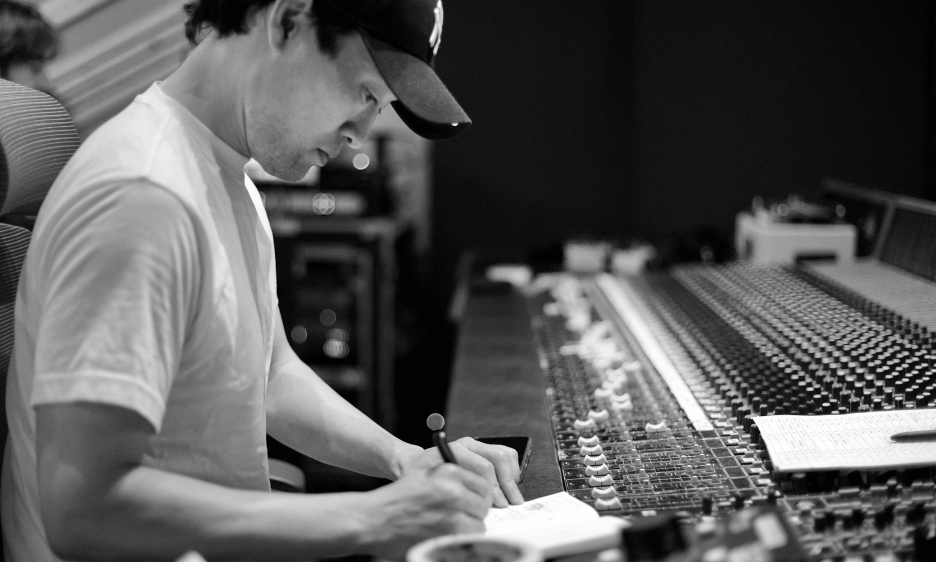
Courtesy IJ. Biermann
My goal isn’t to make everything sound like me, but to help create the conditions where the strongest and most honest version of the music can emerge.
—Sun Chung
Chung's background at ECM Records inevitably shadows any discussion of his work, but Red Hook should not be understood as a continuation of that institution so much as a personal answer to it. Where many labels define themselves by genre, Red Hook has defined itself by encounter. The catalog has brought together artists whose lineages might otherwise remain adjacent rather than intertwined. The point is not eclecticism for its own sake, but the creation of circumstances in which musicians can meet beyond the usual taxonomies.
That principle was present from the beginning. Red Hook's first release, Hanamichi : The Final Studio Recording (2021), presented the final studio recording of Masabumi Kikuchi, a pianist whose late work seemed to hover between utterance and disappearance. To inaugurate a label with such a document was both an artistic risk and a statement of values. It suggested that Red Hook was fundamentally concerned with honoring those fragile moments between a musician's lived history and the afterlife of sound on record.
Since then, the label's most striking releases have extended that threshold in multiple directions. Two Centuries placed Wadada Leo Smith, Andrew Cyrille, and Qasim Naqvi in a space where trumpet, drums, and modular synthesis could find confluence. Central Park's Mosaics of Reservoir, Lake, Paths and Gardens (2024) joined Smith with Amina Claudine Myers in a dialogue of memory, place, and spiritual authority. Refract (2023) and Shards (2026) revealed another facet of the label's identity through Amina Claudine Myers, BlankFor.ms, and Marcus Gilmore, whose collaborations blur acoustic inheritance and electronic intervention without flattening either. Albums such as Medna Roso (2023), Breaking the Shell (2024), and Solace of the Mind (2025) further demonstrate the breadth of Chung's curatorial imagination, which asks: What kind of record can help musicians hear themselves differently?
Red Hook's answer is still unfolding. Its albums frame acts of listening by insisting that sequence and production have meaning. To enter Chung's world is to be reminded that the future of the music will not be secured by category, but by the patient shaping of meetings in which something previously unheard can become possible. I recently caught up with Chung to unpack some of those possibilities in more detail.
All About Jazz: Let's start by talking about Red Hook. For those unfamiliar with its origins, can you talk about how the label began and your purpose for creating it?
Sun Chung: I had been producing exclusively for ECM Records for nearly ten years, and by 2019 to 2020 I began to feel that my work was moving in directions that called for a different framework. My time at ECM was invaluable, and I learned so much about the craft of production there. However, as my creativity continued to evolve, I felt an increasing need for a broader space in which that growth could unfold.
In considering how best to build that space, I saw two viable paths: working as a freelance producer or establishing a label of my own. After considerable soul searching, I ultimately chose the latter and founded Red Hook Records. It was the more challenging choice but ultimately the more rewarding one. One that would allow me to create a label, through a body of work, with a distinct sonic identity, a label guided by artistic conviction rather than trends, and committed to producing music with depth and integrity.
AAJ: What were some of the logistical challenges in setting up a label? What kinds of resources, contacts, and studio connections were required to make it a reality?
SC: The logistical challenges included finding the best manufacturers, distributors, and publicists. It's like putting a puzzle together; it just takes a lot of time and patience to find collaborators that reflect our standards and values. But having worked previously at a label for many years definitely helped speed things up. We are still refining all the time. For instance, making small adjustments in terms of vinyl lacquer cutting or sourcing a more efficient local distributor.
AAJ: Looking back, has the label grown in any ways that surprise you? Has its vision remained consistent over the past five years?
SC: What has surprised me most is how quickly the label's music has resonated with listeners far beyond what I initially imagined. Recently, for example, I was invited to give an interview for a radio station in South Africa—one of many reminders of how widely this music has traveled. We also receive artist submissions from every continent, which speaks to the remarkable community that has formed around the label.
To have cultivated such an international audience in just five years is deeply gratifying, and I believe it stems from our unwavering commitment to making music that reflects our artistic convictions. That commitment has remained constant from the beginning. The goal has always been to produce music that is profoundly honest, to capture a certain energy and shape it into a musical journey.
AAJ: How do you get yourself in a place, mentally and spiritually, to lock yourself into that commitment over such a wide range of creative talent? And to what extent do you think your presence shapes the music?
SC: I try to approach each project with the same level of commitment and openness. That also means constantly questioning myself and asking whether what we're creating feels truthful, whether the music has integrity and emotional honesty.
Mentally and spiritually, I try to stay receptive rather than impose too much of myself. I listen deeply and pay attention to the energy that comes through the music, whether it feels alive, whether it reaches something beyond technique or aesthetics, whether there's a transcendent element to it.
I work across a wide range of musical worlds that don't necessarily share a common style, but that search for a certain energy and transcendence is the thread that connects them all.
As for my presence shaping the music, I think influence is inevitable. But my goal isn't to make everything sound like me, but to help create the conditions where the strongest and most honest version of the music can emerge.
AAJ: Releasing Masabami Kikuchi's final recording was quite the opening gambit. How did that project come about, and what did it mean to share the studio with him in his latter days?
SC: I first met Masabumi while he was performing with Paul Motian at the Village Vanguard. I had worked with Paul before, so there was already common ground. We got along well right from the start, quickly became friends, and the idea of making a record together took shape quite naturally.
My vision was to combine his deeply improvisational approach with compositions. He was initially hesitant because, at that stage of his life, he was fully immersed in developing a purely improvisational language. Nevertheless, he approached the project with openness and generosity. After hearing the final edits and mix, he called me to tell me how pleased he was with the result. That conversation remains very meaningful to me.
The time I spent working with Masabumi in his final years is something I will always cherish. Few people I have met were as devoted to music as he was, and he remains a benchmark in that regard. Despite living with constant pain because of past illness, his dedication never wavered. He was always thinking about music, talking about music, learning about music, and refining his craft until the very end. Music was not simply what he did; it was what sustained him.
Originally, I produced the album with the expectation that it would be released on ECM, but because of scheduling circumstances, that never came to pass. In retrospect, it feels like a fortunate turn of events. Hanamichi ultimately became the inaugural release of Red Hook Records, while also standing as Masabumi's final studio recording. It occupies a unique place in my life because it connects several important threads at once: my years at ECM, my friendship and collaboration with Masabumi, and the emergence of Red Hook Records. Rather than belonging entirely to one period or another, it stands at the intersection of all three.
AAJ: What have been some of the defining moments for you as an independent producer so far?
SC: While it's always gratifying when a production receives awards and critical acclaim, the moments that stay with me most happen behind closed doors. Building lasting relationships within the musical community—with engineers, studios, and, of course, the musicians themselves—is what truly endures.
One memory that remains especially meaningful comes from my most recent session with Wadada Leo Smith, which I believe was our fourth session together. During a break in recording, he turned to me and said, "There are two people in my career who have captured my sound the best: Manfred and you." It was one of the best compliments I have received.
Another experience that comes to mind is my collaboration with Amina Claudine Myers. For various reasons, the production of her solo album proved exceptionally challenging. One session was disrupted by rattling heating pipes, another by an unsuitable piano, and another because the building lacked an elevator—the obstacles seemed endless. Each time, we had to adapt quickly and find a new solution. Over the course of two years, we worked in five different studios in pursuit of the sound we were after.
I'm glad we persevered, because the album turned out beautifully and remains one of Amina's favorites. For me, the experience reinforced an important principle: some projects are worth pursuing no matter how many obstacles arise, and great music is often the result of that commitment.
AAJ: Was this perseverance [in making Amina's album a reality] the result of your years of experience, or was there something about her soul that also spoke to you?
SC: I think it starts with how I approach every production. I try to give my 100% regardless of the circumstances and stay committed to achieving the strongest possible musical result. For me, a record shouldn't be released until it truly feels ready, even if that means pushing beyond deadlines or scheduling constraints.
At the same time, every artist brings something different. With Amina, there was definitely something in her musical and spiritual voice that resonated deeply and made the journey worth pursuing. It's rare to be able to work with an artist as compelling, with so much experience and depth as her.
AAJ: Are there any artists you haven't worked with whom you would love to record?
SC: Over the years, there have been several musicians with whom I discussed recording projects that, unfortunately, never came to fruition because they passed away. Nana Vasconcelos, Pharoah Sanders, and Jack DeJohnette are among those who come to mind.
My perspective has evolved over time, however. Today, I am less interested in working with a particular name than with a particular sensibility. What intrigues me most are musicians who possess an exceptional capacity for listening and responding to sound and energy. By that, I mean artists who are not confined by style or genre, but who follow where the music leads them and engage with it in a deep way. They have the ability to respond intuitively, to complement, and deepen what is already present in the music. In doing so, not only do they reveal new possibilities within it, but ultimately can create a transcendent musical journey.
AAJ: Do you see yourself as a collaborator in, as you put it, "listening and responding to sound and energy?" If so, in what ways do you help bring albums to a sense of cohesion, sequencing, etc.?
SC: My role is to recognize, capture, and shape the sound and the energy that emerges throughout the process. In practical terms, that means spending countless hours in pre-production, editing, mixing, sequencing, and thinking about how each part contributes to the whole. It's not unusual for me to spend over 50 hours editing a single album.
That may not always be obvious in the final result, especially because many of the releases involve a lot of improvisation, but in some ways, that invisibility is the point. The work is to make edits feel seamless, preserve the immediacy of the music, and create a sense of cohesion without diminishing the spontaneity and energy that made the music compelling in the first place. Sometimes that means making extremely detailed decisions, such as choosing between two notes; other times, the decisions could be more compositional, removing, replacing, or adding entire sections.
Ultimately, I see collaboration as listening and helping the record reveal its strongest and most coherent form while staying true to its original spirit.
AAJ: Can you tell us about the anniversary album and the concerts planned for Roulette in September, 2026?
SC: Roulette has generously offered to host concerts on September 18 and 19, to celebrate Red Hook's fifth year. The performances will feature artists who have recorded for the label, including Amina Claudine Myers, Moor Mother, Qasim Naqvi, Wadada Leo Smith, Andrew Cyrille, BlankFor.ms, Jason Moran, Marcus Gilmore, Moor Mother , and Moor Mother. It was moving to see how enthusiastically everyone agreed to participate. The willingness of these artists to come together and celebrate the label's journey means a great deal to me.
AAJ: If you could tell your younger self anything about producing records, what would it be?
SC: Seek out musicians with whom you share a genuine rapport and a spirit of openness. Artistic visions do not need to align perfectly, but there must be a willingness to engage honestly, to listen carefully, to look beyond one's own perspective, and to contribute to a collective creative process.
Producing a record requires an enormous investment of time, energy, and trust. When that spirit of collaboration is present, the work not only becomes more enjoyable, but often leads to stronger and more meaningful artistic outcomes.
AAJ: What is the most challenging thing about being a producer in the spaces you work in? By the same token, what is the most rewarding?
SC: One of the most challenging things is probably finding a great piano, whenever a pianist is involved. It sounds simple, but the instrument can completely shape the outcome of a recording. For example, a musician who feels more connected with a darker sound will struggle feeling inspired with a bright-sounding piano. Or if the action of an instrument is stiff, it might be a blessing for one but a significant challenge for another.
The most rewarding aspect is returning to studios where I've worked for many years. Those spaces become intertwined with countless memories and past projects, yet each visit offers the opportunity to create something entirely new. There is a special energy in those rooms, a sense of continuity and renewal at the same time.
AAJ: How do you know when an album is finished?
SC: I know an album is finished when there is enough material to create a strong beginning, middle, and end to the musical journey. It's less about reaching a predetermined length or checking technical boxes, and more about reaching a point where the record feels complete in its emotional arc.
At that stage, nothing feels missing, and nothing feels excessive. Each piece has a reason to exist, and the sequencing allows the listener to move through the album in a way that feels natural and coherent. That's usually when I feel the record is ready to be released.
 FOLLOW Tyran Grillo
and get notified whenever a new article published.
FOLLOW Tyran Grillo
and get notified whenever a new article published.
Music writer, singer, translator, scholar.
Tags
PREVIOUS / NEXT

Become a Sustaining Member

Since 1995, All About Jazz has championed jazz as an art form and supported the musicians who create it. Over three decades, it has grown into one of the world's leading jazz resources, serving hundreds of thousands of readers, musicians, presenters and industry professionals each month.
Help Build the Future of All About Jazz
Your support helps us continue building All About Jazz for the next generation—expanding our editorial coverage, preserving jazz history, developing new community features and creating better ways to discover the music and the people behind it.
Become a sustaining member for as little as $20 per year and you'll immediately enjoy an ad-free experience along with access to subscriber features and future articles for a full year.
Together, we're not simply sustaining All About Jazz—we're building its future. Thank you for being part of the journey.