Home » Jazz Articles » Jazz Fiction » Sketches Of Spain Or Somethin' Else
Sketches Of Spain Or Somethin' Else
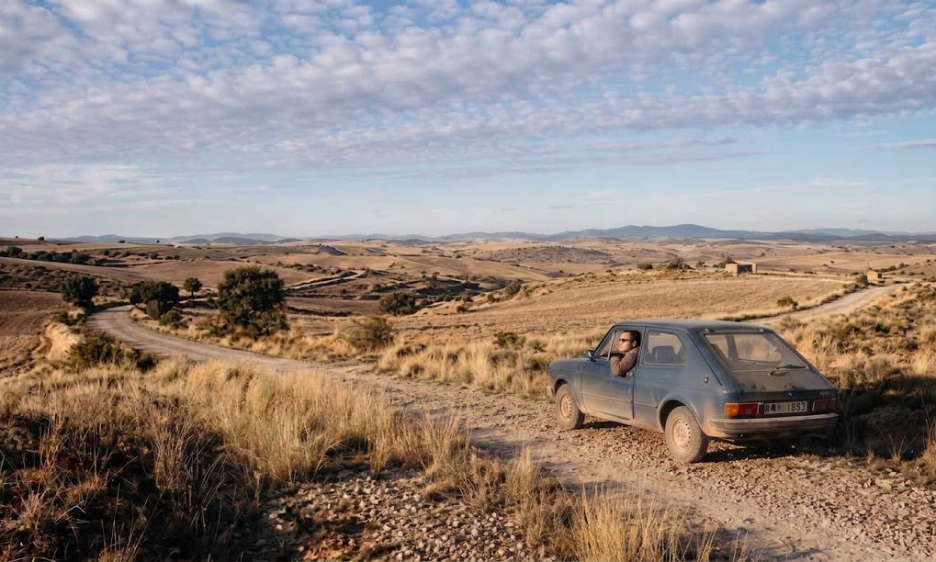
Courtesy AI Gemini
Late Night Jazz Leads To An Unusual Encounter On a Byway In Spain.
The Morning After
It's the 1970s, the days before satnav, cell phones and Google Maps. I'm an Englishman working in Spain. I'm a training supervisor for a major motor manufacturer, so I have to travel around a lot, visiting garages—I don't think we called them dealerships in those days—to talk to sales staff about dealing with people and technical staff about dealing with machines. Just occasionally, I reverse the advice for fun. It doesn't change much whichever way it goes. But it's work, and my northern European masters are pleased with what I am managing to achieve with a workforce that displays a Mediterranean attitude, believes firmly that tomorrow is quite soon enough and refuses to accept that workers can't take alcohol with their lunch. One of my Spanish colleagues, Felipe, always has a morning carajillo, a strong coffee with a shot of brandy, when we're driving from Madrid to a training session. Risky in England, the norm in Spain, so I join him. We are both a little quiet during our trip since we had quite a late night.The Night Before
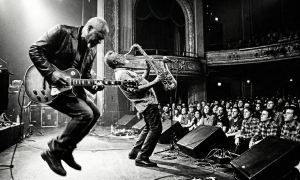
Felipe insisted we go after dinner to a cultural centre which had a young local jazz quartet playing. The leader was a pretty good saxophonist called Luis Patas, accompanied by a drummer, a bassist and a guitarist. Felipe was very excited, as jazz had been a very underground activity under the Franco regime, but now that he'd gone, it could come out into the open in the Zaragoza Cultural Centre. The gig was good, with Latin-tinged numbers and some bebop covers. To be honest, it wasn't quite up to the standards of jazz I listened to from the cassette player in my car, but it was an enjoyable, if unexpected, evening that went on too late and involved a little too much cerveza y vino.Una Noche Rural
Felipe abandoned me for today's session, which was a technical one showing mechanics how to fit the new catalytic converters that were now part of government regulations to reduce pollution. New vehicles would be fitted with them automatically, but these guys needed to be able to retrofit them to a whole range of vehicles that would otherwise risk being taken off the road. The session involved running two vehicles with emissions monitors attached and allowing the mechanics to first understand why they were needed before then getting the vehicle over the pit and showing how to add the converters to the exhaust system. We split the session into two parts: the comparison and background up until lunch at one-thirty and then the practical fitting session from four, when they all came back. The result was that I finished today's training around eight. This garage was in a small town not far from Zaragoza, and I thought I could get back to Madrid easily tonight. But what with the finish time, being obliged to dine with the management team and having a few glasses of wine, I decided to check into a local hotel. We're talking rural here and, while it's clean, this is not somewhere I'd like to do anything other than sleep and make an early start the next morning. No jazz gigs out here in the sticks either, so it's, by Spanish standards, an early night.On the Road
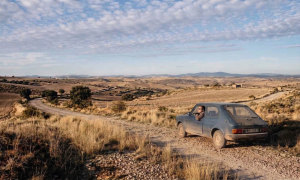
I'm out of my bed at five, soon on the road and around six, as Hemingway noted here, the sun also rises. My early morning is accompanied by adopted Brit cornet and trumpet player Kenny Wheeler's brilliant album Gnu High (ECM Records, 1975), where he had a fabulous rhythm section of exported Brit Dave Holland on bass and all-Americans Keith Jarrett on piano and Jack DeJohnette on drums. I'm driving along enjoying the early light and the brilliant 20-minute opening track—no chance of dozing off with this intense playing. There are a few lurches and bumps along the way. Roads in Spain at this point in time are not what I'm used to, often just compacted stone, not tarmac, and I'm now at a crossroads in the middle of nowhere in the high meseta—I think I might be in Guadalajara province or Soria perhaps—and I have stopped my car. I turn off the music to concentrate. I don't know where to go. There's no signpost. I assume I need to keep going straight on, but the crossroads has an element of dogleg to it, so the direction is not clear. I stupidly left without putting a map in the car, but I'm not sure that would have helped very much. I probably made a wrong, slightly hungover choice when leaving the hotel—I just headed away from where the sun would rise instead of hitting the centre and looking for signs. I just knew that Madrid was to the southwest. But what's life worth without a bit of adventure?An Apparition
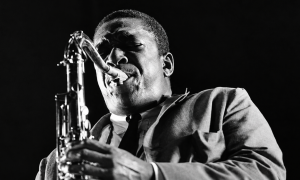
As I peer through the windscreen, looking for inspiration through the misty streams of light that are just forming over the mountains that surround me, I see a figure in the distance. Great, I'll be able to ask someone the way. I switch off the engine and wait for the person to approach. It could be a bit risky getting out of the vehicle in such a remote place, so I just wind down the window, so I'll be able to call out for route assistance. As the figure comes nearer, I see that it is a woman in a red dress and black mantilla dancing sensuously towards me in flamenco style, complete with clacking castanets. Now, was it a buleria, a farruca or a saeta? Too slow for a buleria, farruca is a male-only preserve and saeta seems the most likely. Why am I even thinking about music when I have an urgent need to know which way I need to drive? Segueing from my flamenco reverie, I hear the thrumming bass introduction from Reggie Workman to John Coltrane's Olé Coltrane (Challenge Jazz, 1989), followed by Trane's soprano sax soaring off into the stratosphere before yielding the air to Eric Dolphy on flute and then Freddie Hubbard's trumpet. I can hear this whole piece, including McCoy Tyner's delicate piano, all propelled by Elvin Jones at the drum kit and extended through the amazing effect of two bass players, with Art Davis bowing away as Reggie slams. How can I hear a close-to-20-minute track in 20 seconds? But that's how it seems. As this music plays in, and with, my head, the mystery dancer continues on her way but never quite reaches the crossroads. Having driven around a lot in this country, I've often seen pools of water across the tarmac on the major roads in a heat-induced mirage. But a whole, dancing person? With the final cymbal clash, this person stops her dance and stares at me from ten feet away. Slowly, she raises her arm and points to the right. In my early morning, mystical musical stupor, I read this as an instruction. I gesture to enquire whether she would like a lift, but she shakes her head, smiles, turns and dances away again, her arm still pointing my way, the opposite direction to her sinuous path.What Was That?
I sit for a while, unsure of what I've just seen. Did I inhale too many exhaust fumes yesterday? Did the catalytic converters not work? Was the wine stronger than usual? Should I have foregone the brandy nightcap? Twenty minutes have passed since I stopped, and the sun is growing stronger now. I turn the key and set off down the road the mantilla-ed mentor indicated. Why not? It's the only help I'm going to get out here. After a while, the road starts to descend steeply and enters a forest. It also deteriorates rapidly. It's an awful road, rutted, narrow, plunging through ever denser tall pine woods. This was something I hadn't expected up on the plain. It seems that there are suddenly quite extensive wooded areas containing ravines with steep slopes. There was a sign with the legend camino forestal, which I hadn't really encountered before during my days of driving around the major towns where most of my work took me. I think I may be lost but feel I should carry on, since making a three-point turn on a road like this would not be easy, as there are small boulders, the road edges have very steep stony runoffs and getting anyone to pull me from a ditch out here would be highly unlikely.From behind a tree on my right, I catch a glimpse of the dancer, her red dress gleaming through the dark forest. How can she have got here? Am I imagining things? She beckons me on and, enchanted—entranced probably—I continue.
A Tricky Descent
I have to drive very slowly to avoid grounding the car in the ruts or striking overhanging branches. I'm terrified every time a fusillade of rock chips peppers the underside of the car, and that's quite a frequent sound—at times a positive paradiddle. I have to say that I'm a guy who's up for most things, a natural risk-taker. I've been there, seen it, done it, got all the T-shirts, but this journey is scaring me. My knuckles are white as I clutch the wheel. The sun hasn't yet enough height to penetrate the forest fully, and I wonder why I took instructions from a strange dancer who might even be a figment of my imagination. The road seems endless, an impression worsened by the crawling speed at which I have to proceed. At last, I come to a small clearing and stop to draw breath—I'm not at all sure I have been breathing at all for the last half hour.I get out and walk around the car. With the light that's beginning to struggle through, I can spot no alternative but to carry on down this nightmare of a road. Trying to retrace my route uphill, even if there were room to turn the car, would be impossible. So, I pull myself together and get back in and continue down what feels like a narrow gorge. The thrumming and sawing basslines still play in my head and have taken on a rather ominous feel. The road goes on for what seems like forever, never getting any easier. Will I ever get out of here? Why did I follow a random gesture? Was there ever a woman in red?
Real Or Hallucination?
Eventually, the road emerges onto a stretch with compacted stones common in rural areas. The road flattens out here too and broadens for a few kilometres until it enters what seems to be a car park. I pull up, get out and walk with—and in need of—relief towards a building that backs onto the car park. I'm shaking with tension, exhausted from concentrating so hard and urgently need to find someone to tell me how to get the hell out of here and find a route back to Madrid. Luckily, there's an outbuilding with the sign ASEOS and, somewhat less tense, I walk round to the front and hear music from inside. It's crowded with people listening intently to a jazz trio playing bebop standards—piano, bass and drums—and they are quite good, but my watch tells me it's 7.15. I stagger in exhausted. The band are on a small, raised platform made from wooden shipping pallets, and there are perhaps twenty people dancing, feet-tapping and generally grooving to the jazz. I move over and manage to release one dancing lady from the throng and indicate that I'd like to talk. I have two questions for her, and I manoeuvre her to the doorway to hear better what she might reply. To my first query as to why a gig is going on at this hour, she replies, "You have to play when you have to play." Her eyes look familiar, but she's wearing jeans and a T-shirt. The sinuous movements are similar. Could it be? How could she have got here before me? In my confused state, I could imagine anything. To my second question about the route to Madrid, she simply says, "Follow the dream," and returns to her dancing. That right arm is extended again, but this time it gestures with an insistent summons for me to join her in the groove.So, I do. What choice do I have? Risk? Reward? Madrid can wait. Music matters. Jazz music matters most.
 FOLLOW Mike Raggett
and get notified whenever a new article published.
FOLLOW Mike Raggett
and get notified whenever a new article published.
Semi-retired writer, producer, director
About John Coltrane

Tags
PREVIOUS / NEXT

Become a Sustaining Member

Since 1995, All About Jazz has championed jazz as an art form and supported the musicians who create it. Over three decades, it has grown into one of the world's leading jazz resources, serving hundreds of thousands of readers, musicians, presenters and industry professionals each month.
Help Build the Future of All About Jazz
Your support helps us continue building All About Jazz for the next generation—expanding our editorial coverage, preserving jazz history, developing new community features and creating better ways to discover the music and the people behind it.
Become a sustaining member for as little as $20 per year and you'll immediately enjoy an ad-free experience along with access to subscriber features and future articles for a full year.
Together, we're not simply sustaining All About Jazz—we're building its future. Thank you for being part of the journey.