Home » Jazz Articles » Live Review » Sexmob at Joe Henderson Lab
Sexmob at Joe Henderson Lab
Courtesy Steve Roby

Joe Henderson Lab
San Francisco, California
July 16, 2026
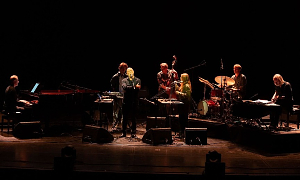
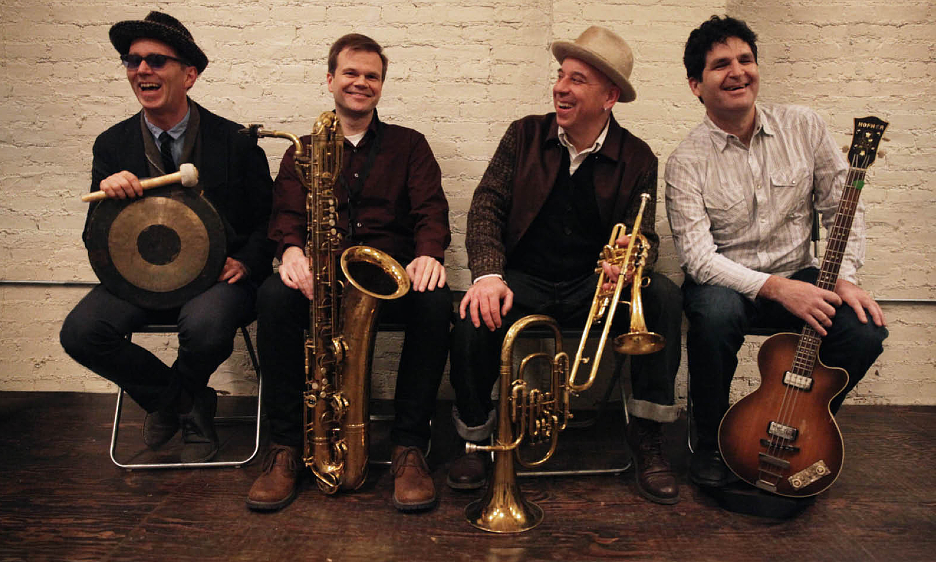
The opening night of a four-night, eight-show run can be an awkward proposition, especially when the band has just returned from an overseas tour. Before the first note at Thursday's performance in the Joe Henderson Lab, Steven Bernstein, Sexmob's founder and slide trumpeter, addressed the issue.
"We just got off a plane from Europe on Tuesday night," Bernstein told the audience. "We got to clean our clothes, pack, woke up early, and had an almost two-hour rehearsal, and you're going to hear the result of that tonight."
He wasn't kidding.
What SFJAZZ billed as "two nights devoted to the Bay Area's explosive psychedelic rock of the 1960s" spent its first half-hour feeling more like a workshop than a celebration. The groove arrived eventually, but it took some wandering to get there.
The early crowd reflected the evening's concept: young jazz devotees comparing notes before the lights went down, alongside veteran hippies who remembered when Bill Graham's rowdy Fillmore West stood just a couple of blocks from Randall Kline's antiseptic, hundred-seat, glass-walled room at the SFJAZZ Center.
Bernstein's quartet, joined by guitarist Liberty Ellman, opened with a mash-up of Quicksilver Messenger Service's "Codine" and Moby Grape's "Omaha." At times, the source material nearly disappeared beneath the abstraction, and the music veered into territory that sounded less like Haight-Ashbury and more like a lost reel from Frank Zappa's Freak Out! For nearly thirty minutes, Bernstein conducted as much as he played, cueing entrances, sculpting dynamics, and repeatedly pointing musicians toward the freshly printed charts on their music stands—as if everyone were still assembling the puzzle in real time.
The Bay Area connection runs deep. Bernstein grew up in Berkeley in the late 1960s, discovered Keystone Korner in San Francisco as a seventh grader, and saw Eddie Harris and Rahsaan Roland Kirk there, carrying those formative experiences into New York's downtown scene. Sexmob became one of New York's defining bands, and Bernstein built an eclectic résumé that includes collaborations with Lou Reed, Leonard Cohen, Levon Helm, and Laurie Anderson.
"For a really long time, it's been a dream of mine to come to San Francisco and play this music because I grew up here," Bernstein said midway through the set. Seeking guidance on the repertoire, he consulted former Grateful Dead attorney Danny Rifkin. "'Who were the real bands?' I asked him," Bernstein recalled. According to Bernstein, Rifkin's answer wasn't the Grateful Dead—though Sexmob would eventually close the set with a deeper cut by the band anyway.
The concert finally settled into a satisfying pocket with Jefferson Airplane's "Good Shepherd." Drummer Kenny Wollesen opened with warped electronic percussion, then locked into a muscular groove that gave Ellman room to shine. Best known for his two decades with Henry Threadgill's Pulitzer Prize-winning Henry Threadgill's Zooid, Ellman delivered a concise, razor-sharp solo, barely acknowledging the audience. His attention never left Bernstein, who directed the ensemble like an air traffic controller, guiding controlled chaos toward a safe landing.
The evening's biggest misfire came during bassist Tony Scherr's extended solo performance of Sly and the Family Stone's "Stand!" What should have been a joyous communal anthem devolved into five minutes of tentative noodling before the rest of the band mercifully re-entered. Most conspicuously absent was the song's jubilant "na na na" refrain—the very hook that invites an audience into the celebration.
Before the final stretch, Bernstein glanced at the clock.
"These sets are so short. I know we have to get them done in ten minutes because we have another set to do when we're old and tired."
He thanked the bandmates who had stayed with him for three decades and acknowledged Ellman, who had joined the group for the first half of the engagement. Latin percussionist John Santos will take over for the final two nights.
Sexmob closed with the Grateful Dead's "New Speedway Boogie" from Workingman's Dead, finally delivering the swagger and loose-limbed chemistry the concert had been seeking since the opening notes. Bernstein then headed to the lobby to greet fans and sign LPs as ushers reset the room for the next audience—a reminder that, like the music itself, the evening was still finding its rhythm.
Personnel
Steven Bernstein; slide trumpet, Briggan Krauss; baritone & soprano saxophone, Tony Scherr; bass, Kenny Wollesen; drums, percussion, and Liberty Ellman; guitar.Set list
"Codine," "Omaha," "Good Shepherd," "Stand!," "New Speedway Boogie"About Sexmob

Tags
PREVIOUS / NEXT


Become a Sustaining Member

Since 1995, All About Jazz has championed jazz as an art form and supported the musicians who create it. Over three decades, it has grown into one of the world's leading jazz resources, serving hundreds of thousands of readers, musicians, presenters and industry professionals each month.
Help Build the Future of All About Jazz
Your support helps us continue building All About Jazz for the next generation—expanding our editorial coverage, preserving jazz history, developing new community features and creating better ways to discover the music and the people behind it.
Become a sustaining member for as little as $20 per year and you'll immediately enjoy an ad-free experience along with access to subscriber features and future articles for a full year.
Together, we're not simply sustaining All About Jazz—we're building its future. Thank you for being part of the journey.