Home » Jazz Articles » Book Review » Reimagining Panama's Musical And Cultural Narratives Of Jazz
Reimagining Panama's Musical And Cultural Narratives Of Jazz
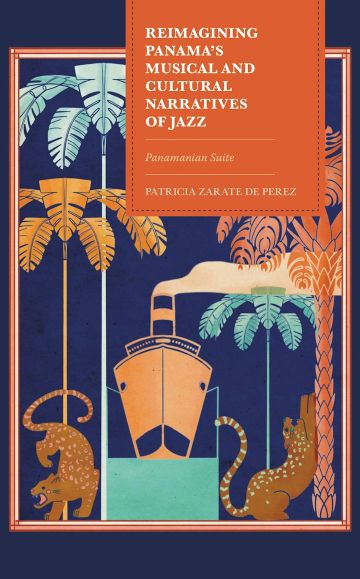 Reimagining Panama's Musical And Cultural Narratives Of Jazz
 Patricia Zarate de Perez
203 Pages
ISBN: 9781793621832
Lexington Books
2026
A young but precocious music, jazz thrust its way into almost every corner of the planet in double time, shaping and, in turn, being shaped by every culture it has touched. Little wonder then, that the history of jazz—much like the music itself—is an ongoing process of discovery, recalibration, acknowledgment and debate. With Reimagining Panama's Musical and Cultural Narratives of Jazz, musician, educator and musical therapist Patricia Zarate de Perez makes the case for Panama as an important though hitherto overlooked protagonist in jazz's historical discourse.
Jazz in Panama is a complex picture. Its history, argues Zarate de Perez, is one of colonialism and nation building. In her telling, it is a story of individuals and of mass movements of people. It is a tale defined by racism and protest—all seen through a Pan-Afro-Latin-American prism. Like a recurring musical motif, the author posits that the contribution of Panama to the development of jazz has been downplayed and even concealed by those with nationalist, racist and colonial agendas.
Structurally, this relatively short but rich book follows the form of a musical suite. The first part traces Panama's musical and wider cultural development from its pre—jazz roots in the mid-19th century. The second part relays the growth of Panamanian jazz, profiles its chief figures, and examines its relationship with jazz in the USA. The third part narrates the story of the Panama Jazz Festival, the educational and humanitarian work of the Danilo Perez Foundation, and concludes with a chapter on global jazz—that is to say, the emergence of new forms of musical globalization since the 1990s.
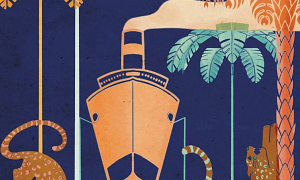
For Zarate de Perez, the roots of jazz in Panama—and its development—were inextricably linked to its location—a bridge between two oceans. First the French and then the Americans, with their massive railroad and canal projects, hastened Panama's emergence as an important geopolitical crossroads.
Drawing on a wide range of sources, the author relates how labor for these mega projects came from the Caribbean, Europe and Asia, bringing with it political ideas, trends, goods and culture. Immigrants brought their songs and instruments, too. Multiethnic, multicultural Panama was, the author posits, "a melting pot that had been brewing for centuries." The Panama Canal in particular created an expansive entertainment industry, with attendant brothels, cabarets and touring bands. Though academic in rigor, Zarate de Perez's writing never lacks color. She paints a vivid picture of the ways in which a broad range of musical styles—emanating from far and wide—bled into each other, informing jazz's evolution wherever musicians travelled.
Against this background, Zarate de Perez writes, "it would be naïve to think that Panama made no difference in the development of jazz and had no influence on modern popular music in the United States." She makes a compelling case for jazz as a cultural hybrid that flowed back and forth between Panama, Central America, the Caribbean, Europe and the USA. If jazz in the USA was to take on many forms, she states, jazz in Panama forged a distinctive "tambo" sound based on Afro-Panamanian folk rhythms.
With forensic precision, Zarate de Perez dissects American popular songs as they pertained to Panama around the time of the great canal's construction. The lyrics to 21 songs are printed in an appendix, a valuable addition that reinforces the breadth of her research. American popular songs, we learn, were used as a tool to create racist and belittling gender stereotypes. Lazy Panamanian men and sexualized women abound in song after song. Such powerful and enduring imaginaries, the author suggests, were effectively manipulated to justify American colonial expansion. A recurring theme of the book is the paradox of music—an instrument of healing and uplift on one hand, a tool of destruction and oppression on the other. As regards the latter, the author's depiction of the US military's use of music as a psychological weapon during its invasion of Panama in 1989 makes for morbid though fascinating reading.
But if Zarate de Perez explains popular Panamanian jazz as an influential hybrid music, one that absorbed and travelled, she also frames it as a music of resistance. In Panama, music assumed political importance early on, with Panamanian bands formed in the 1860s to assert nationalism and voice the desire for independence and political freedom. In the first half of the 20th century, "tambo" jazz—based on Panamanian folk rhythms of tambor drums—manifested not dissimilar messages of ethnic identity and cultural resilience.
One of the book's most important claims is that Panamanian jazz has suffered historical erasure at the hands of White supremacy. Academia, the author asserts, has been shaped by the power that serves its interests, creating a single dominant jazz history to the exclusion of other, important narratives. Nor do the Panamanian powers that be escape Zarate de Perez's criticism, with racism in Panama driving the omission of Afro-Panamanian folk culture from the country's musical history.
Panama's jazz pioneers in the 1920s are briefly essayed, with attention paid to their contribution to jazz in America. Vernon Andrade, a Panamanian of West Indian descent, was the first Black musician to establish a residency in New York. Luis Russell, from Bocas del Toro, moved to New Orleans where he worked with King Oliver, Louis Armstrong, Jelly Roll Morton and Sidney Bechet. Alfonso Teofil Brown, drummer, tap dancer and singer, led bands in France and briefly ran a jazz club in Toulouse. Brown's life story merits a film biopic. Born in Colón to an African-American father and a Panamanian mother, Brown was also a world champion boxer who was fluent in five languages. A gay man, he was in a relationship with Jean Cocteau, and lived in both Paris and New York.
Many are the prominent American jazz musicians, the author points out, whose Panamanian parentage is rarely noted in jazz histories. Among these are Randy Weston, Eric Dolphy, Frank Anderson, Carlos Garnett and Billy Cobham, to cite but a handful. Zarate de Perez suggests that the relative lack of detailed research into the Latin contribution to jazz may be because the emergence of another narrative "could undermine the supposed Americanness of jazz and the idea that America's classical music was developed solely within the borders of the United States without significant foreign influence. Whilst the book boasts an extensive bibliography, the absence of a Panamanian jazz discography or a listening guide feels like the suite's one bum note.
If colonialism and historical erasure pervade the telling of Panama's story during the first and second movements of Zarate de Perez' suite, the re-emergence of jazz in the period after the 1989 American invasion of Panama is a story of cultural reclamation and affirmation. Pianist-composer Danilo Pérez spearheaded this revival, taking tambo-jazz into the new millennium and expanding its vocabulary to embrace emerging folk and jazz forms. Zarate de Perez's husband, Danilo Perez, founded the Panama Jazz Festival in 2002. The controversies surrounding the festival—some questioned the appropriateness of promoting jazz so soon after the American invasion—and the exemplary, and perhaps unique, manner in which it has been run make for fascinating reading. More than just a music festival, Perez' philosophy of music as a holistic and political force for good guides decision making, both big and small. This philosophy—spiritual, humanitarian and political—is also at the heart of the Danilo Perez Foundation and the Berklee Global Jazz Institute, organisations whose inspiring educational work the author highlights in some detail.
Since the 1990s, international jazz academia has invited much rethinking about jazz—its history, its protagonists and its meanings. With Reimagining Panama's Musical and Cultural Narratives of Jazz, Zarate de Perez invites fresh thinking on the roots of jazz and on Panama's contribution to this art form. As she puts it: "without an understanding of the history of these Panamanians in jazz, an understanding of the music as a whole remains inadequate." Whether or not readers accept every aspect of her thesis, Zarate de Perez has produced a thought-provoking and persuasive work that broadens the conversation about jazz history and Panama's place within it.
 FOLLOW Ian Patterson
and get notified whenever a new article published.
FOLLOW Ian Patterson
and get notified whenever a new article published.
Ian is dedicated to the promotion of jazz and all creative music all over the world, and to catching just a little piece of it for himself.
About Danilo Pérez

Tags
PREVIOUS / NEXT

Danilo Pérez Concerts
Become a Sustaining Member

Since 1995, All About Jazz has championed jazz as an art form and supported the musicians who create it. Over three decades, it has grown into one of the world's leading jazz resources, serving hundreds of thousands of readers, musicians, presenters and industry professionals each month.
Help Build the Future of All About Jazz
Your support helps us continue building All About Jazz for the next generation—expanding our editorial coverage, preserving jazz history, developing new community features and creating better ways to discover the music and the people behind it.
Become a sustaining member for as little as $20 per year and you'll immediately enjoy an ad-free experience along with access to subscriber features and future articles for a full year.
Together, we're not simply sustaining All About Jazz—we're building its future. Thank you for being part of the journey.