Home » Jazz Articles » Interview » My Conversation With Sonny Rollins
My Conversation With Sonny Rollins
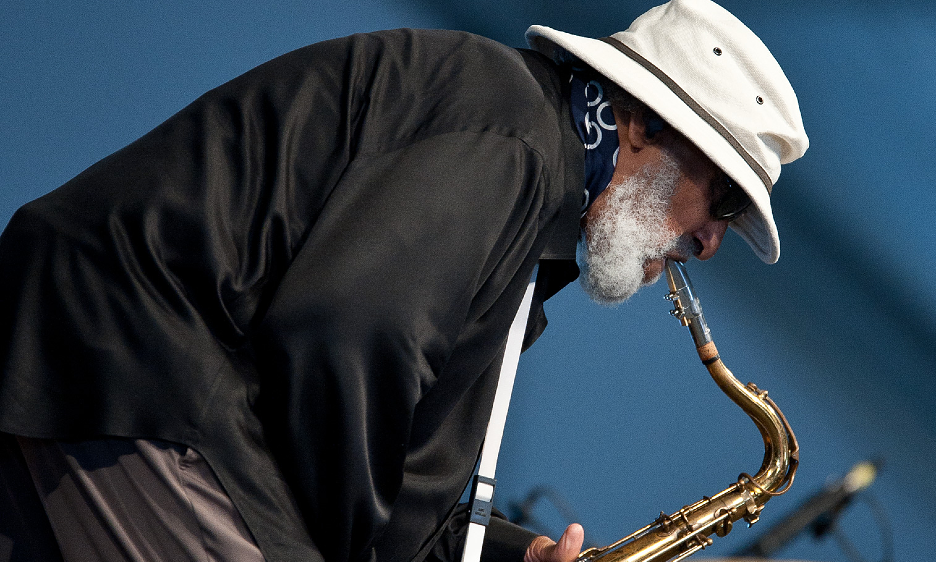
Courtesy Steven Sussman
That's one of the most important contributions that jazz has made to the social progress of this nation. Even many years ago when guys started playing together, there were always groups of musicians playing together, appreciating each other. Guys were able to be appreciated for what they could do, how they played. America can take a lesson from jazz.
What can be said about Sonny that hasn't already been said or hasn't already been written? It was nice to chat with him again and get some more of his insight on issues, his playing, and his life. This is a unique look into the man and the myth, uncut and in his own words.
All About Jazz: Let's start by touching on your latest record on Milestone, Global Warming.
Sonny Rollins: Well, I think I had some very good cast members (Stephen Scott, piano; Bob Cranshaw, electric bass; Clifton Anderson, trombone; Idris Muhammad, drums; Perry Wilson, drums; Victor See Yuen , percussion). Some of the work was conceived in the studio and everybody contributed on some of the work. They all did a good job in my estimation. Of course, as you know, the concept of the album is that it hopes to draw the attention of the country, the world, I should say, not just the country, the world, to the way we are destroying our planet, the place where we live, our trees, our water, air, at a fast pace. If we want to leave something here for our children and for the next generation, we have to straighten up and fly right and realize we can't just use up, use up, use up, use up, use up. We have to try and think a little more about the condition of our planetary home. It's one planet. It's small. They used to say it's one world. This is true. It's one world. Somebody drops an atomic bomb and the air comes over to the United States. They had an accident in Russia, the Chernobyl, and the air went over into Finland. A lot of people got contaminated, so it's one world we're living in now. We have to get together and try to be more cognizant of that fact and take care of our planet. Another thing to go along with that, but this album was about the environment. It's a little small contribution from me. Who knows how many people it might have an effect on? A lot of people said that they agree, so it has some effect. I feel that it's something that, in my state of consciousness, I have to do something about because I know about it. I know what's happening. I've studied the situation. That's the story of Global Warming.
AAJ: People always tend to frown on entertainers preaching any social messages in the context of their entertainment, do you feel apprehension because of that?
SR: It's difficult for a musician because you really can't preach at people. People come to see you and they want to, supposedly they want to hear your music. A lot of people don't want entertainers and musicians to be involved in social problems. They want to hear a person's music and so on and so forth. It's difficult to try to make social, political statements of that kind as a performer. It's very difficult and something you've got to be very careful about doing. I don't want to preach to people because I think it would be counterproductive to try to tell people what to do, "You should do this, or you should do that." If people hear the album, I have very little to, I think I say a few words at the end of one song, "Clear-Cut Boogie," which is about the clear-cutting of forests. I say in that, "There were no more trees," at the end of one track, that's about all, and I have a short poem in the beginning on the CD cover that I wrote, that's it. It was two lines and that was it. People don't associate artists with social issues. You've got to be careful about blending them together. I respect that. I'm not a politician and I do not want to go in there and deliver political speeches. I'm not an ecologist, so I have to keep the areas apart. The point is that they are all connected. Everything's connected. That's where they got this idea bout holistic medicine that came out recently. Everybody began to realize that it's not just one little part of your body that has no effect on another part of your body, it's all connected. It's all whole. This world of ours, our climate, and our music, everything, it's all a whole and it's all connected and not separate parts that have nothing to do with each other. That's the false thinking. Music is involved in the environment. I just think it's difficult project, proposition rather, to try to bring home that point to people, and I don't want to do it. I do want to make a social statement about it like I did many years ago with Freedom Suite back in the '70s. It's nothing new for me. I've always made these social statements in my music, but my music has always been instrumental. I'm not writing songs or anything, telling people about my environmental concerns through lyrics. I'm doing it all through music. That's where I'm at.
AAJ: Where do you feel you are in terms of the quality of your playing and the quality of your music?
SR: That varies because it doesn't have anything to do with the fact that I've been out here a long time. I think that has very little to do with it. It's mainly a matter of any particular moment, how you are relating to your instrument, and the music that you happen to be playing, and the band that you're fronting, and so on. It has nothing to do with a particular period in one's career. So I would say that I could be at any place. I would probably consider myself to be, sort of, in the middle. I would put myself in the middle. Ten, I would consider an unattainable goal, so I would feel I will never really get to what I consider a ten, but I'm somewhere in the middle, up and down depending on a lot of factors.
AAJ: Let's talk about your work with Jim Hall on the 1962 RCA recording, The Bridge.
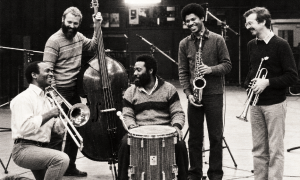
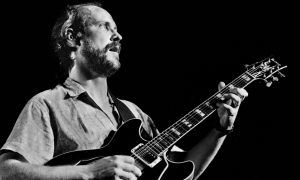
SR: Well, I'm very pleased about that. I'm really happy that the music is still liked today. Jim is a very fine musician and I always liked playing without a piano. Jim was able to provide a harmonic background without having a piano. Being the guitarist that he is, he was able to do that. The sound of the group had a lot of space, a lot of air. We had a lot of space in there because of the fact that we had room to do things. I'm very happy that people occasionally come up to me and appreciate that period and that group that we had. I think we called it Sonny Rollins and Company, or something like that. Jim was a very important part of it and it was great playing with Jim while that group lasted. It was really a nice period. Also, it was good because it was an interracial group, not that every group has to be interracial. You don't have to be, but it's always good to try to strike a blow for equality. A guy is good and he belongs. He can play. That's all we go by, we don't care about anything else. That group was also good because we could demonstrate that at a time when there was a lot of tension in this country, of course, there always is, unfortunately. I look back on that group, not only in a musical way but I think we also had a good social commentary to make with that group.
AAJ: Why do you think jazz tends to rise above petty things that divide people, such as race or religion?
SR: That's one of the most important contributions that jazz has made to the social progress of this nation. Even many years ago when guys started playing together, there were always groups of musicians playing together, appreciating each other. Guys were able to be appreciated for what they could do, how they played. America can take a lesson from jazz. That's why I'm so proud to be associated with jazz. It's an extremely deep subject on how we can make this relevant to all of the different eras that we go through. We're going through another era now. We're going into the 2000s and all of that. Jazz still has a big, fat role to play. To me, it's the greatest music of all, of course, I'm prejudice about it, but it is. It's got everything. It's got the intellect. It's got the creative spontaneity. It's got everything about it. It also has the power to affect social conditions in the country, which is a great, great thing. It's a great thing. It's a great thing to have people playing together. As you know, we jazz musicians go all around the world and we have fans all over the world, in India, in Japan, in Russia, all over the world, there are people who love jazz. They love jazz. They love the music. As I said, the United States has to take more a lesson from the way jazz has been able to bring people together.
AAJ: It's fair to say you are one of the giants of jazz and a living legend for most listeners of the music, influencing generations of musicians. The expectations must be enormous; is that cumbersome to you?
SR: Well, I find that it's a challenge to myself. It's a responsibility on myself because I have to, I've been associated with some of the great musicians of our century. Recording with a lot of them. Playing with a lot of them. It's somewhat of a burden for me to make sure that I keep those standards high, that I represent that era that I came from and those people, most are not here anymore and so on and so forth, and then there are my own standards. As you know, I am a very self-critical person. I really practice my instrument every day, so I have a standard which I don't want to, I can't allow myself to fall below certain levels. In a sense, yes, it is a burden in that sense, but it's a burden that I happily go out to meet every night. If I felt that I couldn't do it, I don't want to, not only disappoint people, I don't want to disappoint myself. I don't want to be involved in this great music, if I feel I really couldn't do it. It's a burden to me to try and keep my art on a high level and to represent all the wonderful people that I've been involved with over the years, great guys, Clifford Brown, Miles, and Coltrane, Bud Powell, Monk, all these people I've played with. Yes, I want to keep my standards high. I want to make people feel something when they come to see me. In a way, it's a burden, but it's a happy burden. It's an obligation, but I'm happily obliged to do it.
AAJ: I have seen you play live a handful of times over the years and there is always a genuine excitement and appreciation for your music and your playing, so is it disappointing to you that your new album was not as well received as it should have been by members of the media, because of those expectations that we just talked about?
SR: A person like me that's been around for so long, after all, I started recording when I was eighteen years old, back in 1949, I guess, or '48, anyway, it's a long time. The critics and the people that write about the music and my fans, they have certain periods of my work that they like and the public is very, they feel very possessive about their artists. So, a lot of them will like certain things and like certain periods and that's OK. I've made so many records that, that's OK. Fortunately, in jazz, it's not about having a hit record. I don't have to go out there and compete with Celine Dion or anything like that.
AAJ: Who's Celine Dion?
SR: (Laughing) For me, it's just a matter of trying to set aside myself in a way of speaking and keep my standards high. As I said, I'm still searching for what I'm trying to best. I'm still in the middle of my craft. I'm still practicing daily, writing my music, and so on and so forth. I'm in the middle of trying to find something. If the people don't like a particular album, I don't find any, I don't get upset about that because I've got so many albums out there. As long as I feel that I'm trying to do something, maybe it's some experiment in some way, something I haven't done before and people are not willing to accept that, that's OK. Maybe the next time, I'll get my experiment to a point where they will understand. Then they will see what I was doing then. This is the freedom, in a way, that a jazz artist has. You don't have to be, especially a jazz artist like myself, who's been around for so long. I don't have to come out with a hit or feel that I'm competing in that sense. I have no criticism for any listener of mine who might not be, that might like some sides of mine better than others. I have no criticism of that at all.
AAJ: Are your listeners today more knowledgeable in that sense, because they have more recordings readily available?
SR: I find that there are a lot of young people who have a lot of recordings available. The recordings have acquainted a lot of people with a lot of the music. This is a good thing. Probably, yes, I would say so, because of the availability of these recordings, I would say that they sort of have a wider knowledge of all of the developments that have taken place over the years. So I would say, probably so.
AAJ: When you go overseas, do you find the reception is better than what you would find domestically?
SR: At one time, I felt that that was true. If you go back to the 1920s and even in the teens, probably all the way up to the 60s, the people in Europe had a more advanced conception of music and therefore they were more willing to accept jazz as a music. You found a lot of people went to Europe and they were received well over there. I think that that changed a little bit around the 1980s, that the American audiences began getting more knowledgeable about the music, so that there were more festivals, more jazz festivals over here and, of course, the media explosions with the CD. I found that it began to even out a little bit. In my case, I have a lot of fans in Europe and I'm very grateful to them, but I also have a lot of fans here in the States and we play a lot of venues here in the States and I find the people quite enthusiastic. I wouldn't say that's as true as it once was. At one time, it was true. Musicians had to travel to Europe and Europeans were aware of their musical culture and everything. They accepted jazz, but now, I think it's evening out quite a bit. I don't think Europe leads as much as it once did in the appreciation of the music. Now, that's not to say that jazz shouldn't receive more recognition here at home. No, I think it needs to get more recognition and it should get more recognition. I lament the fact that there's not a weekly or monthly television show on one of the networks or one of the cable shows, a regular, it doesn't have to be daily, but it could be daily as far as I'm concerned, but let's say weekly. There's not a weekly jazz show. There should be a weekly jazz show somewhere in America and it's not. I go to other countries, Japan and everything. They have these great music shows on television where they play the records and they've got, maybe, a few still shots of the artists and attractive sets and the disc jockeys are just sitting there and playing the music. They've got some graphics and there are ways to play the music without just spinning records. There should be a weekly jazz show in the United States, where you have live performances, perhaps, as well as records. Jazz should be more represented in the mainstream media. In no way am I saying jazz isn't appreciated over here, at least on an official level. What I meant when I said that it's catching up to Europe, I meant that the audiences over here seem to be enthusiastic, in many cases, as much as the European audiences, but as far as official recognition, no. I think we woefully are not doing what we should be doing as far as this great music is concerned.
AAJ: You're still garnering one award after another, what's your secret? How do you keep the level of consistency so high?
SR: I guess it's that I still have the same enthusiasm, although, as you showed me a minute ago, not all my offerings are well received. As far as I'm concerned, my enthusiasm is still there. I'm still very much involved. I'm still trying to turn out a good jazz show and good jazz music. My enthusiasm is still there. I feel that I am a work in progress. Certainly, I don't feel that I've reached the most I can do, at least I hope not, because I want to do a lot more. That's why if people appreciate me, that's probably what it is. That's what they feel coming out. I just have to keep that and I will keep that because I love the music and regardless of whether I'm received well or not, I'm still going to be doing it to the extent that I feel that I'm still on the right track, I'm going to be doing it. Again, I can't worry about winning awards or being number one, that kind of stuff, you can't get too caught up in that. It's not about that. It's about the music itself. It's about your own standards, keeping your own standards high. Of course, I'm happy when somebody gives me an award or something. It's gratifying and all of that, but you can't be serious about your music when you focus on just that. Maybe when I was a youngster, that was more important to me, but at this point, I'm a veteran player and I'm not interested in awards anymore. I think I've got enough awards to, I've always said that my basement is full of plaques and all this kind of stuff and so it's not about that. It's not about getting awards. It's about trying to make my music more perfect, make my contribution, my expression, my musical expression, I'm trying to reach something. That's what it's about. It's not about being appreciated. If I am appreciated, then good. I've had my appreciation during my life and I'm very grateful for it. Fortunately, I'm still interested in the music. I want to do more and play better. That's the spark that still lies within me. That's what works for me now. With everything you do, people aren't always going to like it, but if you're really going to be a musician who is trying to play a music like jazz, you just have to accept that. You have to be your own drummer and, of course, being a veteran player, you also have some idea of, at least you have that experience to be informed that what you're doing is not completely off the wall. You have to have that much confidence, not overconfidence. You have to follow your conviction and try to do something. That's where I'm at now. That's what I'm trying to do. I try to do that in my career. I'm glad that I get awards and I'm very gratified, but my awards will come when I'm really happy with the music. That's my reward. It's a quest. It's a struggle to try to get to the creative high point. That's the type of music that jazz is. That's the type of artist that I fall into. It's always spontaneous. I thank my fans and the industry people. I'm quite pleased with it and thank them for it.
AAJ: You mentioned that it should be about the music, how much time are you spending on continuing the development of your music and your playing?
SR: Well, when I, for instance, when I am here at home like I am here now, we're getting ready to go back to work. We're coming out to California, of course. We usually take the end of the year off and I'm getting ready to go back to performing, but when I'm here at home, I would say that I would spend a good three hours practicing, then I feel content. It could be more, depending on the amount of energy. If I can get in three hours a day, during that time I may spend some of it composing, if I have a specific project or if I have something in particular that I'm working on, then I would spend some time composing. A lot of times, I'm practicing and composing meld into one thing. I come across something while I'm trying to fix something else and things come to me in that way. Other times, when I go to the keyboard and sit down and try to compose that way. Other times, when I'm just in an airport or traveling around, then I always manage to take some paper with me and I write down an idea that I have that comes to me. Practicing and composing, when I have the luxury to do that, when I'm at home like I am right now and I have the luxury to go in my studio, then they very much come together. I compose and I practice and they all melted together. I would say, these days, if I could manage to get three hours of work in the studio, of actually playing, that's very good. I do a lot of studying non-playing also, but if I could get three good hours of blowing, I always consider myself to have a productive day.
AAJ: What's an average day like for Sonny Rollins?
SR: Well, I wake up around seven in the morning and if not around six-thirty in the morning. I get ready to take out my dog, take my dog out, and I'll walk her around. Then I feed my animals. We have a farm, but we don't have farm animals. We do have a lot of large pets that I feed. I feed them in the morning around that time. After that, then I come back and I may do a few exercises. I have some exercises that I do. I have some weights, dumbbells that are very, very light. I do that to keep myself in shape. Then I get into the business of the day. My wife usually goes out in the morning, but she comes back around eleven. After she comes back, she goes to the store, she may come back around eleven, I go out to my studio. I'm out there, I stay out there until about six. My studio is not in my house. It's a couple minutes' walk away. I try to get three hours of blowing when I'm in the studio and I do some writing and so on and so forth. I go for an evening walk and I feed some pets that are in the house. Then I get ready to retire for the night, so that I would say we're in bed by about eight in the evening. This, of course, varies sharply when we're on the road. When I go back to work, I schedule changes quite a bit. Then I'm working at night. I have hotel rooms and all this stuff, so it's quite different, but my average day at home is the one I just described to you.
AAJ: You have been one to know when enough is enough, and taken time off when you deemed it necessary. Do you attribute that time off to your longevity as an entertainer?
SR: I've always been a musician that's liked to have time to myself, as you might remember. There have been periods when I took off by myself and went to the beach to practice and leave the scene, the music scene, for a while. So I have often been a person who likes to recharge by batteries, so to speak. In the situation that I have now, I no longer have to take any hiatuses, because I have my schedule worked out in a way that I have a regular hiatus at the end of the year. It works good for me. You want to have your energy available to you. Now, there was a time when I was a little bit concerned about it, because the more you play the faster you are able to, sort of, do things with your music. I found that in order to keep my health, I'm not twenty-five years old anymore, it's important to have a little bit of time to myself. I've been doing this for some time now and it's worked. If it turns out that for some reason I have to change this particular style of living, well, I'll have to deal with it then, but as of now, it seems to be working out to my, health-wise, working out to my advantage, to take some time off at the end of the year. That's how we've been doing it and it seems to work out. There are drawbacks. You have to really get back in shape when it comes time to get back to work. As much as you practice, there's nothing like playing because it's a completely different discipline, so there's nothing like actually performing. As much as you practice, it's not like really performing, so you have to take a risk of losing something you might have gotten performing, since you took off three months at the end of the year. Who knows? That's not to say this is where I'm going to be forever; who knows how long forever is? But for the time being, it's working. As I said, I'm staying relatively healthy and trying to eat right. My wife is relatively healthy and we're both trying to get ready for a rigorous schedule, because when we do go back, it's quite a tough schedule and the people expect a lot from me. They expect me to be, I've gotten this reputation now of exuding so much energy so people really expect that. I can't get up there and act like I have no energy. I'm lucky in that respect, because playing music usually energizes me so that's usually taken care of. I have to give them something worthwhile also. The time at the end of the year has to be well spent if I want to pick up where I left off when we go back. Sometimes that takes a few jobs or something, but this has been working for awhile. We'll see what happens.
AAJ: How would you describe your life and your playing?
SR: Working for understanding.
AAJ: What would you like your musical legacy to be?
SR: As a musician, I would like to be known as a person who was dedicated to his work. Now how people assess my work and what people think about it is beyond what I can, it's some place where I have no right to be. I have no right to be judging how people think of me, think of my music. How I would like to be thought of is as a person who was conscientious about his work and tried to be a better human being. That's exactly what I'm trying to be, I'm trying to a perfect human being. I'm trying to be like all of the great people that we read about. All the great religious figures through history, have set the examples of how we should be as people who live on this earth for such as short period of time. I'm trying to be like that. I'm trying to be a better person, and again, the operative word is trying. I'm also trying to be conscientious about my music and trying to make it better. That's about all I can say for myself. As far as how the people judge me, again, I don't know. That's up to the people who listen to me and so on.
 FOLLOW AAJ Staff
and get notified whenever a new article published.
FOLLOW AAJ Staff
and get notified whenever a new article published.
Various staff members.
About Sonny Rollins

Tags
PREVIOUS / NEXT


Become a Sustaining Member

Since 1995, All About Jazz has championed jazz as an art form and supported the musicians who create it. Over three decades, it has grown into one of the world's leading jazz resources, serving hundreds of thousands of readers, musicians, presenters and industry professionals each month.
Help Build the Future of All About Jazz
Your support helps us continue building All About Jazz for the next generation—expanding our editorial coverage, preserving jazz history, developing new community features and creating better ways to discover the music and the people behind it.
Become a sustaining member for as little as $20 per year and you'll immediately enjoy an ad-free experience along with access to subscriber features and future articles for a full year.
Together, we're not simply sustaining All About Jazz—we're building its future. Thank you for being part of the journey.