Home » Jazz Articles » Album Review » Caleb Wheeler Curtis and Jason Moran: Incantation
Caleb Wheeler Curtis and Jason Moran: Incantation
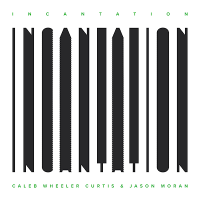
Curtis's soprano saxophone can turn sinuously lyrical, while the stritch—the straight alto saxophone associated with Rahsaan Roland Kirk—offers a darker, reedier, slightly off-center color. On "Archaeology," he switches to trumpet, placing himself in a deliberately exposed position. The trumpet remains a relatively new voice in his arsenal, and that unfamiliarity is part of the track's pleasure: he is more at risk, undertaking a public act of discovery. Curtis has described the environment in which he first took up the instrument, with Ember, as one in which "failure was an acceptable option"; that spirit of risk is audible in the music's tension and freedom.
To appreciate the album's depth, it rewards three separate hearings. The first should attend to Moran: the subtlety and drama of his straight-ahead playing and the intelligence of his accompaniment. The second should follow Curtis: the range of timbres he draws from soprano, stritch, and trumpet, together with the lyricism of his improvising. The third should listen to the duo as a whole—to how their voices meld and to how a musical conversation develops, diverges, and resolves.
Curtis has spoken of playing as a means of summoning the musicians who made this music before him: Thelonious Monk, Eric Dolphy, Johnny Hodges, Duke Ellington, Cannonball Adderley, Jaki Byard and Arthur Blythe. Yet the album's historical awareness never becomes merely reverential. Its respect is demonstrated through use: the past is honored by being made newly audible.
"Big Small," composed by Orrin Evans, opens with a deliberate statement from Moran and a piercing line from Curtis. There is real thought in the pairing. A blues-inflected pulse gives the piece a fresh perspective on the form, as Moran's rhythmic drive propels Curtis's improvisation; gradually, Moran's down-home inflections take over. The result is a muted celebration of jazz's basic pulse—at once timeless and new.
"Flotation Device and the Shivers" begins with a repeated note from Moran, embroidered by Curtis. Much of its drama arises from Moran's control of intensity, but the onus falls on Curtis to answer, extend, and transform it. The tension is generated with remarkable economy by the power of their combined creativity.
On "Gangsterism on a River," Moran revisits his "Gangsterism" motif, weaving its blues-tinged angularity around Curtis's vocalic horn phrasing. "Tiramisu for Two," by Noah Garabedian, is lighter and playfully syncopated, foregrounding the duo's sharp rhythmic interplay and shared sense of humour.
"Restin,'" another Moran composition, explores the sonority of the piano's lower register. Its beauty is deepened by Curtis's saxophone as it moves above Moran's sporadic, bell-like notes. The track has genuine profundity: the two musicians probe the abstractions inherent in the material, with the piano's resonant low tones set against the saxophone's more human, vocal presence.
Two free improvisations provide the album's sharpest contrast. "One Hundred Years" is tumultuous and angular, its title suggesting both historical weight and the pressure of inheritance. "Archaeology," by comparison, is stark and searching. Its trumpet-and-piano dialogue has the quality of excavation: sounds are tested, withdrawn, and examined for what they might reveal. Its success lies in its refusal to force a climax.
"Miss Nancy" emerges from Curtis's admiration of Arthur Blythe. The rhythm and the humor are another aspect of the duo's work.
Curtis's own repertoire also gives the album valuable continuity. "Ain't No Storm" and "Flotation Device and the Shivers" connect Incantation to his work with Ember, while the brief "Storm (reprise)" closes the sequence in meditative form. The program therefore feels less like a collection assembled for convenience than a map of Curtis's musical relationships: mentors, peers, collaborators, and artistic ancestors brought into dialogue with Moran's own lineage.
Incantation is a landmark in contemporary duo improvisation. Caleb Wheeler Curtis and Jason Moran have created a recording that feels simultaneously ancient and immediate.
 FOLLOW Jack Kenny
and get notified whenever a new article published.
Jack was turned on to jazz by a mixture of Stan Getz, Lee Konitz and Earl Bostic.
Track Listing
That Which Cannot Be Replaced; Ain’t No Storm; Gangsterism on a River; One Hundred Years; Tiramisu for Two; Restin’; Incantation; Archaeology; Big Small; Flotation Device and The Shivers; Storm (Reprise).
Personnel

Caleb Wheeler Curtis
saxophone
Jason Moran
pianoAlbum information
Title: Incantation | Year Released: 2026 | Record Label: Imani Records
About Caleb Wheeler Curtis
Tags
PREVIOUS / NEXT

Become a Sustaining Member

Since 1995, All About Jazz has championed jazz as an art form and supported the musicians who create it. Over three decades, it has grown into one of the world's leading jazz resources, serving hundreds of thousands of readers, musicians, presenters and industry professionals each month.
Help Build the Future of All About Jazz
Your support helps us continue building All About Jazz for the next generation—expanding our editorial coverage, preserving jazz history, developing new community features and creating better ways to discover the music and the people behind it.
Become a sustaining member for as little as $20 per year and you'll immediately enjoy an ad-free experience along with access to subscriber features and future articles for a full year.
Together, we're not simply sustaining All About Jazz—we're building its future. Thank you for being part of the journey.