Home » Jazz Articles » Live Review » Hua Hin Jazz Festival 2006
Hua Hin Jazz Festival 2006
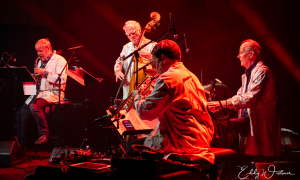
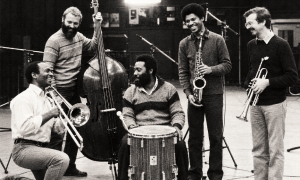
With lightning flashing out at sea, Bill Bruford's Earthworks kicked up a storm all of their own on day one.
Aziza Brahim, vocals (Western Sahara)
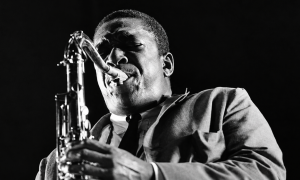
 John Coltrane is one of the most important musicians of the 20th century because, in a relatively brief period of approximately 15 years, he helped music in general, and jazz in particular, progress significantly. He had one foot in tradition and the other in modernity. His artistic curiosity and knowledge of his instrument led him to search for elements in the music of other cultures to enrich his compositions, and this is a great inspiration for me.
 My favorite John Coltrane album, and the one I have listened to the most, is Blue Train (Blue Note Records, 1958) because it recalls the authentic jazz scene of its time. It is like a sound picture of that era. When I listen to it, I am transported to a New York jazz club in the late 1950s. But I am also very interested in his mystical work, A Love Supreme (Impulse! Records, 1965), which I often listen to because I think it is an amazing example of the combination of faith and music. It is an album of extraordinary sensitivity.
Sometimes I feel that the notes of his solos suggest words, verses, and poems that his tenor saxophone recites like whispers or authentic screams. John Coltrane is one of the African American musicians I admire most, due to his passion for the freedom to create music.
Mahan Mirarab, guitar (Iran)
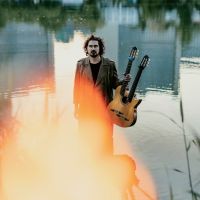 For me, John Coltrane showed the world that jazz belongs to everyone, transcending cultural and geographic boundaries. He approached music with an open mind and an open heart, drawing inspiration from musical traditions far beyond the American jazz canon. His curiosity led him to explore the blowing techniques and expressive qualities of wind instruments from Eastern cultures, incorporating new sounds and ideas into his artistic language.
By embracing different musical traditions so deeply and respectfully, Coltrane expanded the possibilities of jazz and demonstrated that it could be a truly global art form. His influence continues to be felt throughout the world of jazz saxophone playing, inspiring generations of musicians to listen broadly, learn openly, and seek connection through music.
Sigurður Flosason, saxophone (Iceland)
 Growth. When I think about John Coltrane the first word that comes to mind is growth. I think about his amazing journey during his relatively short life—how he continued to explore and grow at an astonishing rate all through his career, always searching, never slowing down.
I think about his strong personal voice which, in a way, remained consistent even though his style changed rapidly. I think about his ever-seeking mind, and I think about the spiritual depth of his expression. Finally, I think about his incredible work ethic, which was at the foundation of his achievements. To this day Coltrane remains unparalleled in these aspects. He is, and will be, an inspiration and a model to be lived up to by all of us who try to play improvised music.
Harold López-Nussa, piano (Cuba)
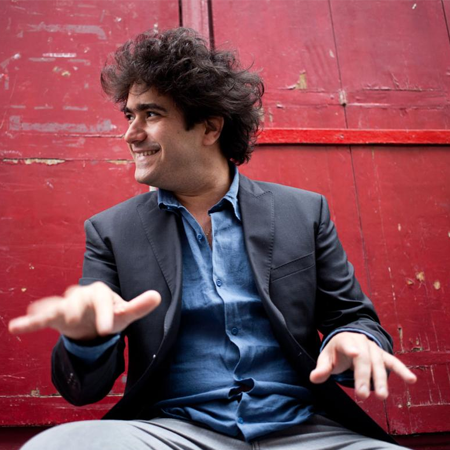 For me, John Coltrane represents far more than a musical genius; he embodies a relentless search for truth, freedom, and transcendence through music. His spiritual intensity, fearless artistic evolution, and ability to transform emotion into sound have deeply inspired my own artistic path.
In my music, his influence is not necessarily reflected in a literal way, but rather in the constant desire to push beyond stylistic boundaries, embrace risk, and approach improvisation as an act of honesty and deep expression. Like Coltrane, I strive for each project to be a journey—an evolution that seeks to connect tradition, exploration, and emotion in an authentic and meaningful way.
Youn Sun Nah, vocals (South Korea)
 My journey with John Coltrane began with "My Favorite Things."
My mother was a musical actress and performed in The Sound of Music in Korea. As a child, I often sat in the audience listening to her sing "My Favorite Things" in Korean. Without realizing it, that song became part of the soundtrack of my childhood.
Then, in my mid-twenties, I discovered John Coltrane's version. I was completely overwhelmed by what I thought was an entirely new piece of music. Imagine my shock when I realized it was the very same song I had heard countless times as a child—and that a familiar melody could be transformed into something so completely different.
I believe that was the day John Coltrane opened a door to a part of my soul I didn't even know existed.
It was as if he were whispering in my ear: No matter the theme. No matter the melody. Let the music flow through you.
That is what I hear throughout his recorded legacy. Whether in the lyrical intimacy of Ballads or the boundless freedom of Olé Coltrane (Atlantic, 1961), he always reminds me that music isn't meant to be controlled. Every time I listen, I simply let it wash over me and breathe in the scent of freedom.
Perhaps that is what A Love Supreme truly is: above all, a love for music itself.
So, my journey with John Coltrane began with "My Favorite Things." And, in many ways, it is still only just beginning.
Carlo Muscat, saxophone (Malta)
 At the age of 16, after four years of playing the alto saxophone, I managed to get my hands on a tenor saxophone. This moment defined my musical path because, as I later realized, I had been mostly listening to tenor saxophonists and that was the sound developing in my ears. John Coltrane was one of those major influences. As a teenager, I had already discovered Giant Steps (Atlantic Records, 1960), an album on which he played lines so complex that my ears could not grasp them, so I was content to just bask in these sounds.
Eventually, as I expanded my listening library, I understood that there was another side to the saxophone giant; I discovered gems such as Duke Ellington & John Coltrane, John Coltrane's Ballads (Impulse!, 1963), and John Coltrane and Johnny Hartman (Impulse!, 1963). The main thing John Coltrane taught me is that intensity is non-negotiable; it is an integral part of this music, a foundation of artistic expression that has nothing to do with speed or volume. Even in his ballads, Coltrane defined intensity.
Conti Bilong, drums, (Cameroon)
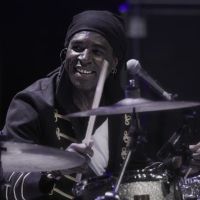 John Coltrane is a great source of inspiration for me. His work, particularly A Love Supreme (Impulse!, 1965), moves me through its African influences, its sometimes abstract world, and its profound spiritual dimension. Through his music, I feel a kind of inner revolution and liberation. His legacy continues to inspire many people around the world.
Tri Pham, guitar (Vietnam)
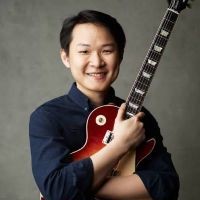 I first heard Trane when I was 15, listening to "In a Sentimental Mood." That led me to the Duke Ellington & John Coltrane album (Impulse! Records, 1963). I still remember Duke Ellington's impressionistic piano introduction and the way Coltrane entered with the melody— so expressive, profound, and spiritual that I was completely hypnotized.
From there, I discovered more of his work, beginning with his recordings with Miles Davis and later exploring the different stages of his career, especially his later music. The deeper I went, the more I admired not only his mastery of the saxophone but also his relentless search for new sounds and new ways of expression.
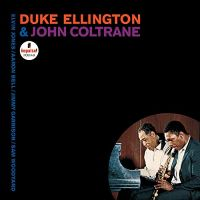 Later, I realized that the Duke Ellington & John Coltrane album was a true miracle. I still wonder how two musicians from different generations of the jazz lineage could come together so effortlessly and create something so beautiful. There is a sense of mutual respect, openness, and deep musical understanding throughout the entire record.
To me, Trane represents the highest ideal of a jazz artist. He was never content to stay where he was. He kept pushing the limits of jazz and the saxophone, always searching, always growing. More importantly, he went beyond the mechanical side of music in pursuit of something spiritual. He was a true jazz master, a true innovator, and above all, a seeker.
As a musician, I hope to be a little more like Trane every day.
Melissa Aldana, saxophone (Chile)
 John Coltrane has always reminded me that music is not something we conquer...it is something we surrender to. Every time I return to his recordings, I hear someone listening beyond the notes, beyond the instrument, reaching for something that cannot quite be named.
What moves me most is not only his brilliance, but his willingness to remain a seeker. Even after changing the course of jazz, he kept walking into the unknown with humility, allowing doubt, faith, love, and curiosity to exist in the same breath. That has become one of the greatest lessons of my own life as a musician: that our voice is never finished, and that the search itself is the music.
As I've grown, I find myself listening less to what Coltrane played and more to why he played. His sound carries an honesty that feels almost disarming—a reminder that vulnerability is not the opposite of strength, but its deepest expression. His music invites me to trust intuition, to embrace uncertainty, and to believe that every note can be an act of compassion. More than a century after his birth, his legacy continues to live not only in the language of the saxophone, but in every artist who chooses to keep asking questions, to keep listening, and to believe that through sound we can become a little more human.
Izabella Effenberg, harp (Poland/Germany)
 I still remember when I first heard John Coltrane. It was his album Coltrane's Sound (Atlantic Records, Rec.1960, Rel.1964). And the song the most fascinated me was "Equinox,." I still play it today sometimes, because I feel the freeness and openness there. His duo work with Rashied Ali on Interstellar Space (Impulse!, Rec .1967, Rel.1974) was a huge influence and inspiration for me. His spirituality, soulfulness and transcendence always made a great impression on me. My album Impressions in Colours, (Fine Music, 2024) with a lot of rare instruments like glass harp was notably inspired by him.
Jeremy Rose, saxophone (Australia)
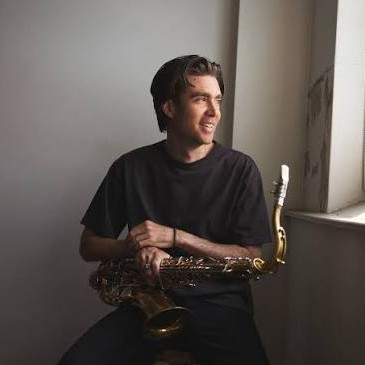 John Coltrane's influence and legacy stems not just from his harmonic devices and melodic lines, but his dedication to the art form and how he treated improvisation as an evolving science over exhibitionism. I remember listening to Miles Davis' 'Round About Midnight (Columbia Records, 1957) when I was a kid, marveling at the power of his solo on "Round Midnight." His entry was like a monumental force or a bright light—an entry into another world of sound.
After digging deep into his catalogue, you realise you can hear his searching from very early on. He was always figuring things out on the horn, in the moment, never being completely resolved. As a saxophonist and composer, that's the standard I measure my own work against: whether the music is actually reaching for something.
There's also something to be said for how relentless he kept moving. It's quite staggering to think of his development as a composer and player from Giant Steps to A Love Supreme, to the freer territory of his final years in the space of less than a decade. Imagine what he would have achieved if he had lived as long as Sonny Rollins! It's a source of inspiration that as an artist, the journey is never complete, we should continue to keep pushing our vocabulary and compositions in new directions, keep asking what can come next. Discovering that the journey is the destination is the real inheritance that Coltrane leaves us.
Ayumi Tanaka, piano (Japan)
 John Coltrane took his first and only tour of Japan in July 1966, a year before he passed away. It is remembered through the live album Concert in Japan (Impulse!, 1973). The album captures not only the music but also the energy of the audience and the hot, humid atmosphere of Japan in July. The excitement of that time seems to become a part of the music itself.
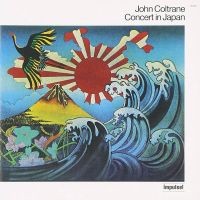 When Coltrane arrived at Nagasaki Station, he went straight to the Peace Park at the site of the atomic bomb hypocenter. A photograph shows him offering flowers and praying for the victims of the bomb. Someone who was with him said he stood quietly for a long time, looking up at the sky. He didn't even wipe away his sweat, and his calm, respectful presence deeply moved everyone around him.
Listening to John Coltrane feels like searching for light. At certain moments, it hits you like a bolt of lightning, awakening something deep inside. The way the musicians play together in his music shows a kind of harmony that feels like an example of how we should live together with each other, with the world, and with nature. His music carries a message that we need to listen to closely.
Lao Dan, saxophone (China)
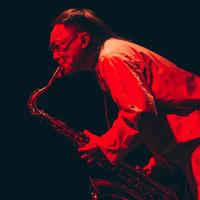 Nearly all jazz practitioners and fans around the world are familiar with John Coltrane, and his music can be heard everywhere in China as well. What lingers most in my memory is that in 1966, one year before Coltrane's death, he undertook the only Japanese tour of his career, which was likely the closest he ever came to Asia.
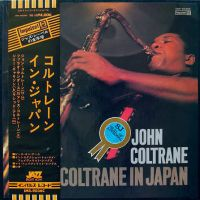 I first encountered these live recordings through the Japanese-released vinyl box set Coltrane in Japan (Impulse!, 1973) where every piece is stretched into sprawling, extended improvisations. Certain passages feature wild, explosive playing that strikes with tremendous force, yet these are exactly the elements I hold in particular fondness and esteem. May his music continue to inspire and empower future generations.
Jure Pukl, saxophone (Slovenia)
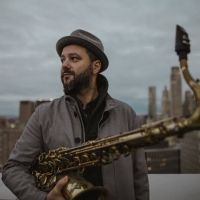 Picking just one favorite John Coltrane album is impossible because my appreciation of his music grew as my ears developed. I started with Africa/Brass (Impulse!, 1961) and later discovered the long live versions (Pablo Live) of "Impressions," "Lonnie's Lament" and "My Favorite Things." Since then, I've come to love every period of his career—from the orchestral vision of Africa/Brass, the lyrical beauty of Ballads and John Coltrane and Johnny Hartman, to the explosive creativity of Live at the Half Note (Impulse!, Rec. '63, Rel, '05) If I had to choose one favorite solo, it would still be "My Favorite Things" on soprano sax, as it was one of the first pieces that truly drew me into his music.
More than any other musician, Coltrane shaped me spiritually. Through his music I began to understand that spiritual music isn't necessarily religious—it carries an intention beyond itself. Every note he played seemed to serve something greater than the performer, and that had a profound influence on both my musical and personal life.
His legacy is unmatched. He expanded the technical and harmonic possibilities of the tenor saxophone with works like "Giant Steps," "Countdown," and "Satellite," while constantly pushing music forward instead of settling into comfort. His classic quartet with McCoy Tyner, Jimmy Garrison, and Elvin Jones was a once-in-a-lifetime band whose individual voices became part of the language of jazz.
In his final years, Coltrane's music became even freer and more spiritual. I especially love the recordings with both Elvin Jones and Rashied Ali, particularly Meditations, (Impulse!, 1966) where his search for freedom and transcendence reached its most powerful expression.
Hayley Kavanagh, saxophone (Ireland)
 As a saxophonist, I always seem to come back to John Coltrane. Whenever I'm looking for inspiration—whether it's artistic, technical, or even philosophical—his music is never far away. It's almost impossible to put into words the impact he's had on generations of musicians around the world, and I doubt I could ever do it justice.
So, I'll simply say that what continues to draw me to him isn't just his extraordinary command of the instrument; it's the complete dedication he brought to his craft and the spiritual depth that runs through his compositions and improvisations. That's not something you can imitate or recreate, nor should you try. But it's something I've always admired and aspired to in my own development as a musician—not to sound like Coltrane, but to approach the music with the same sense of curiosity, exploration and commitment.
Robert Unterköfler, saxophone (Austria)
 Thinking of John Coltrane, the first thing that pops into my head is his sound. Seldom can you tell who is playing after just one note. But with John Coltrane, this is exactly the case. Every note is loaded with so much meaning. Take "Naima," for example. If you are searching for a beautiful D (concert C), just listen to his first note over and over again. The same goes for F (concert Eb), his first note on "I Want To Talk About You."
From a tenor player's point of view, a great example is his A (concert G), the second note on "You Don't Know What Love Is." This note has the tendency to be a bit weaker than others on the horn. But not if you keep this particular A from Coltrane in your mind.
I could go on and on with examples of notes played by Coltrane that are loaded with meaning, because that is true of basically every note he ever played.
The same sense of significance also applies for his solo arcs. Especially in his own projects, his solos possess an extraordinary logical and vital structure. This becomes increasingly evident throughout his career and provides another great example for musicians today.
Makram Aboul Hosn, double bass (Lebanon)
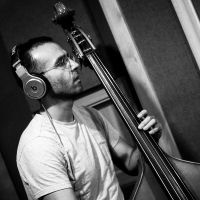 It's difficult to try and condense the vastness of John Coltrane into a few lines. One thing I have noticed about all my heroes is that they are capable of a wide range of emotional and spiritual expression with their art. Coltrane played love songs like a true lover, wild and intense improvisations like a fierce warrior, spiritual meditations like an old sage.
He expressed grief, tenderness, anger, urgency, protest, and love with equal value. He employed his knowledge and technique, both in their highest development, to the expression of what is too grand for the human mind to bring forth in words. His work and collaborations shaped the modern sound that so many Jazz musicians have picked up and built on as an indispensable tool to express in sound what our modern world is telling us.
Efrem Roca, saxophone, founder-director Andorra Sax Fest (Andorra)
 John Coltrane's Blue Train (Blue Note Records, 1957) is probably the album of his that I have listened to the most. It was also through the title track that I transcribed one of my first complete jazz solos, an experience that taught me a great deal about phrasing, sound, rhythm and musical direction.
What has always fascinated me most about Coltrane is not only his extraordinary musicianship, but his relentless desire to search for new paths. He was never satisfied with repeating what he already knew. Throughout his life, he constantly explored new forms of expression, challenged himself, and pushed beyond his own musical boundaries.
As a classical saxophonist, I have always felt a strong connection with that way of thinking. I believe that music should never become a comfortable place where we simply repeat what has worked before. We should always remain curious, keep learning, and continue searching for new ways to express ourselves. That philosophy has guided me throughout my career, both as a performer and as the founder and director of Andorra Sax Fest.
For me, John Coltrane's greatest legacy is not only the extraordinary music he left behind, but also the example he gave us: never stop searching.
Perico Sambeat, saxophone (Spain)
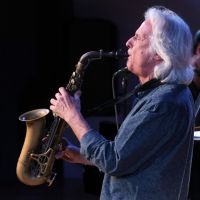 Although my instrument is the alto saxophone, I have always spent more time studying tenor players, trying to absorb the legacy of the great tenor saxophonists: Sonny Rollins, John Coltrane, Stan Getz, Joe Henderson...
Of them all, I have to admit that Coltrane is the one I feel most drawn to. And I am referring not only to his technical mastery and extraordinary fluency. I believe his greatest quality was his profound spirituality—the deep beauty that radiates from his musical voice.
I have transcribed almost all of his solos from Crescent (Impulse!, 1964), my favorite album. Coltrane remains an example, a guiding light, and a mentor in understanding the true meaning of music.
Timóteo Cuche, saxophone (Mozambique)
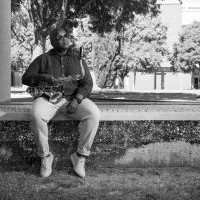 John Coltrane had a profound influence on my career as a saxophonist. When I went to study jazz at the Sibelius Academy in Finland, the first piece I was unexpectedly asked to play in a jazz repertoire class was "Moment's Notice." I wasn't prepared for its harmonic complexity, rapid changes, and technical demands. That experience was both a shock and an awakening. From that moment on, I began to study Coltrane more seriously and to listen closely to his recordings.
Playing Coltrane's music taught me the importance of pouring all my feeling, energy, and conviction into every note I play on the saxophone. His strong and powerful tenor sound has deeply influenced my own approach to the instrument, particularly my quest for an expressive, intense, and personal tone. Coltrane showed me that technique becomes truly meaningful when it serves emotion, intention, and spiritual depth. Albums such as Blue Train, África/Brass, and A Love Supreme reveal an artist in constant transformation.
As an African musician from Mozambique, I am particularly moved by his engagement with ancestral African sounds. His legacy reminds me that artistic growth requires discipline, courage, sincerity, and the freedom to continue seeking the truth through sound.
Anais Drago, violin (Italy)
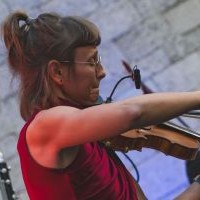 Things that come to mind when I think of John Coltrane:
The first time I heard his name, I immediately went out and bought Lewis Porter's monumental biography. I never actually read it, though, because as soon as I came across the first mention of a particular tune, I thought, "Yes, but maybe I'd better listen to it if I really want to understand." So, I started listening—and never went back to the book. Every time I walk past the bookshelf at home, I know it's watching me and silently judging me.
The sense of wonder I felt the first—and only—time I listened to A Love Supreme. The memory of that listening experience is so vivid and profound that I'd like to preserve it forever exactly as it is. To me, it may be the ultimate expression of the duende that García Lorca wrote about—a pantheistic prayer.
The crazy and hilarious vocalese I wrote during the pandemic on his iconic "Giant Steps" solo, in which I sing about the Italian social security system, performers' employment certification, and withholding taxes. Beside me sits a little LEGO accountant.
Clinging to his performance of "Soul Eyes," transcribing and studying every single inflection, helped me reconnect with jazz during a period when life was leading me to play something entirely different.
Things John Coltrane taught me:
That you can play without vibrato. That when you feel an overwhelming need to cry something out, you have to do it. And if you can do it through music, so much the better.
Suren Kyaruns, saxophone (Turkmenistan)
 I did not get Coltrane when I first heard his music, but when I was finally ready to hear it. Sometimes great works enter our lives too early—we may play them, study them, but only years later begin to understand their true meaning. Sometimes music reveals itself to a person gradually. There are works we hear in our youth, study, and perform, yet are not fully able to grasp in their depth. For me, John Coltrane became such a musician.
During my studies at music college and conservatory—first at the Turkmen State Music College and the Turkmen State Conservatory, and later at the Komitas State Conservatory of Yerevan and its postgraduate program—his works were a fundamental part of jazz education. We performed his standards because they were essential to every young jazz musician's repertoire. Yet at that time, much of his music did not fully resonate with me, as my understanding of harmony was still developing. I was more drawn to modal compositions with fewer harmonic changes, such as Impressions, where I felt more space, freedom, and inner meditation. This preference is likely connected to my cultural background. I was born and raised in Turkmenistan, I am Armenian, and my musical perception was shaped by Eastern traditions. The sound of mugham, modal systems, and the depth of Eastern music have always been close to me, so Coltrane's modal period naturally resonated with my inner world.
In contrast, works such as Giant Steps felt like a true Everest—a peak of harmonic thinking that I was not yet prepared to climb. My development as a musician was shaped not only by the complexity of this music but also by my environment. In my country, there was no developed jazz educational system, and access to information and modern resources was limited. The internet came into my life much later, and with it a broader view of the global jazz scene. Later, my studies in Armenia and my postgraduate training played a decisive role. There I received a solid classical and jazz education and met musicians with deeper access to international musical culture.
Eventually, the internet opened a new stage in my understanding of Coltrane. I immersed myself in recordings, masterclasses, interviews, and analyses by other saxophonists, approaching him not only as a performer but also as a composer, innovator, and musical thinker. This immersion gradually reshaped my musical language and understanding. As my knowledge of harmony and my experience as a musician grew, Coltrane's music revealed itself more clearly. At the same time, he seemed increasingly distant—in the best sense of the word. I became more aware of the scale of his thinking and the freedom with which he transformed modes, harmony, and improvisation into entirely new musical worlds. Studying Coltrane became less a technical exercise and more a search for his philosophy—his relationship to music and to life. He was not only a great saxophonist, but an artist in constant motion, always searching and pushing beyond familiar boundaries. My favorite album, A Love Supreme, reflects this understanding.
For me, music is not only technique or virtuosity, but a spiritual path—a continuous search and an attempt to express through sound what cannot be said in words. That is why, years after my first encounter with Coltrane's music, I continue to return to him. Each stage of my development reveals new meanings in his work.
Gregory Wong, trombone (Macau)
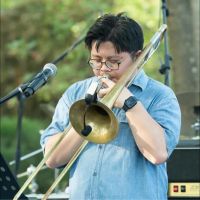 Growing up where I did in Macau, jazz was almost nonexistent. Even today, it remains a relatively rare art form. Opportunities to study jazz were scarce, so listening to records became my only way of learning and exploring this music. Among the many jazz musicians who have inspired me, John Coltrane has always been one of the artists I admire and continue to learn from. I still vividly remember the first time I heard A Love Supreme. The fearless and uncompromising spirit in his playing left me in awe and made me long to pursue music with the same sincerity and dedication.
Yet the album that has influenced me most deeply is Coltrane Plays the Blues (Atlantic, 1962). Whenever I find myself searching for new inspiration, I return to that recording. Every time I listen, I discover something new. To me, that is one of John Coltrane's greatest gifts, music that continues to reveal new possibilities every time I hear it.
Samir Langus, singer (Morocco)
 John Coltrane's music has always felt bigger than jazz to me. It is a search for truth, for freedom, for something sacred. As a musician from Morocco whose musical roots are in the Gnawa tradition, I feel something deeply familiar in his work. The repetition, the trance, the intensity, and the spiritual intention behind every note. Reminds me of my first encounter with music. It has always been a form of healing and connection.
When I listen to A Love Supreme, obviously I know that this is a recognized masterpiece of jazz music, but like everyone I hear it as a prayer I think we call it a masterpiece because the work is prayer. It is a work, the transcendence of culture and language. Coltrane shows that the technical brilliance means little without honesty and purpose, and that the deepest music comes from a place of complete sincerity.
His later explorations were especially inspiring because they demonstrated fearlessness. He never stopped searching or questioning, even when it meant leaving behind what audiences expected. That courage continues to inspire musicians across the world to find their own voice instead of simply repeating tradition.
For me, John Coltrane's greatest legacy is not simply the music he left behind, but the way he lived as an artist: always searching, always listening, always growing. As I continue my own path, I hope to carry that same spirit, honoring my Gnawa roots while remaining open to new conversations, new sounds, and new ways of connecting through music.
Štěpán Flagar, saxophone (Czechia)
 I vividly remember the first time I heard John Coltrane. I was maybe 14 or 15 years old. It was on YouTube, and it was his album recording of "My Favorite Things." To be honest, I did not like it at first, although somehow I could not stop listening to it. I could not tell why, but it had a magnetic impact on me. The beginning, the tone of his soprano, and his improvisation—I literally could not stop listening to it over and over again. From then on, I started to explore his music.
Years later, during my university studies, my friends and I performed A Love Supreme at our school festival. Even though I knew a lot of his music by then and had transcribed several of his solos, this performance was a completely new encounter with the depth of his work—one I had never experienced before. While preparing for the concert, I printed out the words to "Psalm," which Coltrane plays as a musical narration on his iconic recording. I had already known that fact, but actually trying to play those words myself made me realize the true depth of his music, as well as the meaning and power of art. There is just something magical about his sound and his approach to music that has had a profound effect on who I want to become as an artist.
Many people admire his technical abilities, harmonic sophistication, or perhaps his melodic flexibility. Obviously, I do too. But for me, it has always been his relentlessness in the search for freedom of expression. Life is full of distractions, temptations, and conflicting voices that can easily pull your focus and lead you off your intended path. Recognizing these is the first step toward staying grounded. This is exactly what I hear in his music—his mission and his focus...immensely inspiring!
Josean Jacobo, piano (Dominican Republic)
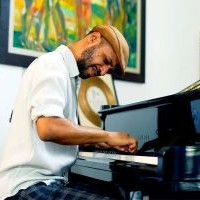 John Coltrane has been a profound inspiration, not only to musicians but to humanity more broadly. These are exactly the kinds of values I look for in other artists, because they offer us the tools to inspire meaningful change in both ourselves and others. What is it that truly moves people and encourages them to reflect on their own lives and strive to become better each day?
Coltrane influenced countless musicians, and we were deeply inspired by him as well. While many admire and have sought to develop his extraordinary improvisational approach, I was personally captivated by his gift for composition. That is the aspect of his artistry with which I connect most deeply.
Crescent (Impulse!, 1964), for example, is an album that profoundly moved me in this respect. His ability to convey such melodic depth and tell a compelling story without uttering a single word is something that will endure forever.
Ricardo Andres Narváez Herrera, saxophone (Colombia)
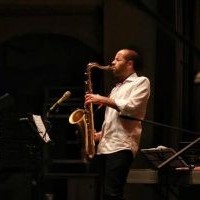 John Coltrane represents one of those musicians whose influence seems to grow the more deeply one listens to his music. His legacy lies not only in his extraordinary mastery of the instrument, but also in the profound honesty of his sound. He managed to take music to extraordinary levels of complexity while, at the same time, making even the most demanding passages seem natural and effortless.
One of the most remarkable things about him is his ability to capture your attention with just two or three notes. There is something about his sound that is difficult to explain through technique alone. There is something deeply human and spiritual in the way he constructed a phrase, in the way he approached each note, and in the intensity with which he sought meaning through the saxophone.
Listening to him can feel less like hearing someone play an instrument and more like listening to someone speak with absolute honesty.
For any artist, studying Coltrane is also a lesson in dedication. His extraordinary musical freedom was built upon an equally extraordinary commitment to his instrument, to study, and to constant exploration. His evolution—from bebop and hard bop, through modal music and the development of his own harmonic and melodic language, to his profound spiritual exploration—reveals an artist who never accepted any territory he had already conquered as definitive.
Perhaps that is where the true strength of his legacy lies. Coltrane did not simply show us how far the saxophone could go; he showed us how far an artist can continue to search. His music reminds us that technique is only the beginning, that freedom requires discipline, and that the deepest musical expression comes from the search for something beyond ourselves.
Rachel Musson, saxophone (Wales)
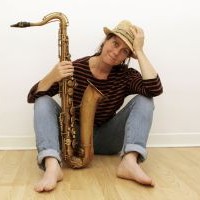 My introduction to John Coltrane was through the first jazz album I bought—Miles Davies' Kind of Blue (Columbia, 1959) as a teenager. I was already playing alto saxophone, and perhaps because it was so early in my exposure to jazz, I remember being completely blown away by the tonal quality of his sound and presence on that record. He then became a significant influence in subsequent years, and I was drawn to different periods of his work at different times, and of course his work from the mid-'60s on has had a big influence on what I and the musicians I play with do now.
To describe him as a giant doesn't really do his phenomenal contribution justice. I've always had a particularly soft spot for Coltrane's work in the late '50s, though. During my twenties and into my early thirties I took a long break from playing for several years, and the headteacher in the school I was working in, on hearing I was thinking about picking up saxophone again, mentioned the relatively recent release of Coltrane and Monk At Carnegie Hall (Blue Note Records, Rec. '57, Rel. '05), and once again I was blown away—somehow that recommendation came at exactly the right time and before long I was back in it all again.
Luc Joly, saxophone (Reunion Island)
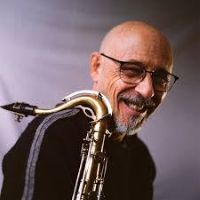 It is difficult to say what I like about John Coltrane, because there are so many incredible elements in his playing. His energy, his phrasing, his harmonic knowledge, his commitment and sincerity, his instrumental mastery, his velocity, his sensitivity, his listening, his imagination, which seems limitless...
But above all, it is the sound of his saxophone that hypnotized me from the very first time I heard it. On both tenor and soprano, his tone is extraordinarily rich— complex and complete—magically bringing together characteristics that might otherwise seem contradictory.
To be at once hard and tender, rough and silky, harsh and gentle: that is the miracle of John Coltrane, the greatest "J.C." in human history.
 FOLLOW Ian Patterson
and get notified whenever a new article published.
Ian is dedicated to the promotion of jazz and all creative music all over the world, and to catching just a little piece of it for himself.
About Bill Bruford

Tags
PREVIOUS / NEXT
Become a Sustaining Member

Since 1995, All About Jazz has championed jazz as an art form and supported the musicians who create it. Over three decades, it has grown into one of the world's leading jazz resources, serving hundreds of thousands of readers, musicians, presenters and industry professionals each month.
Help Build the Future of All About Jazz
Your support helps us continue building All About Jazz for the next generation—expanding our editorial coverage, preserving jazz history, developing new community features and creating better ways to discover the music and the people behind it.
Become a sustaining member for as little as $20 per year and you'll immediately enjoy an ad-free experience along with access to subscriber features and future articles for a full year.
Together, we're not simply sustaining All About Jazz—we're building its future. Thank you for being part of the journey.