Home » Jazz Articles » Live Review » Jill Scott with Freeman and the Future of Soul R&B
Jill Scott with Freeman and the Future of Soul R&B
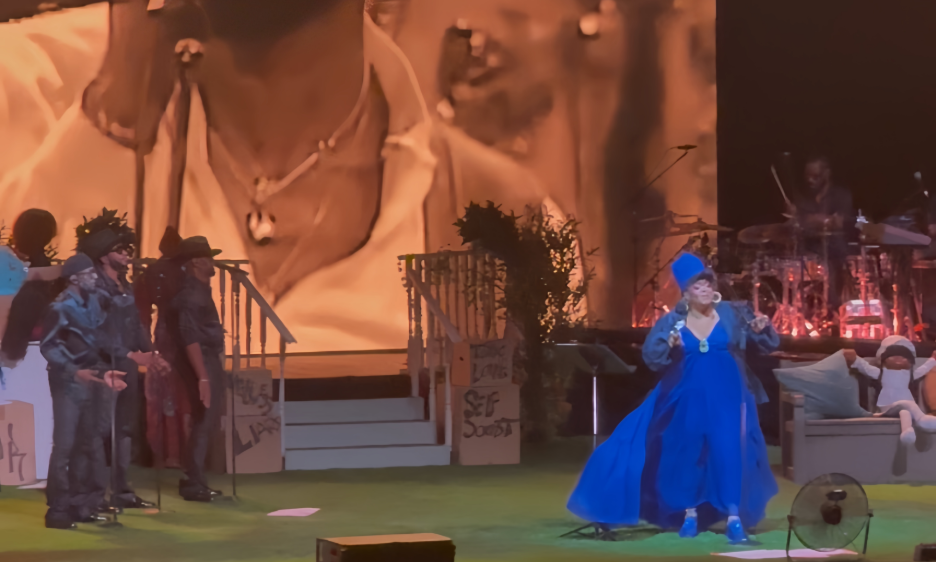
Courtesy Acacia Grace
At Paris's Zénith, Jill Scott's performance was a celebration of Black culture, musical excellence, and the next chapter of contemporary soul.
—Acacia Grace
Zénith
Paris
October 14, 2026
Jill Scott arrived at Zénith Paris—La Villette with the presence of a woman who understood both her artistry and her message. Opened in 1984, the venue sits within a cultural district with a long-standing relationship to jazz and popular music, including La Villette's jazz-festival tradition dating to 1986. On this evening, Scott brought that spirit of musical exploration into a performance where neo-soul, jazz, blues, and the rhythms of Black American culture converged. More than a showcase for an established artist, the concert offered a glimpse of what happens when a powerful artistic vision meets an exceptional ensemble—and when the next chapter begins to emerge from within it.
A Vision in Royal Blue
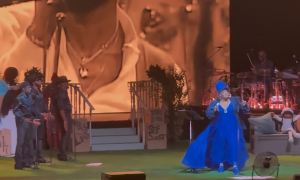
Dressed in royal blue, Scott looked every bit the goddess. Her presence commanded the stage as confidently as her voice, which remained soulful, clear, and expressive throughout the performance. She opened with an introduction to her newer music, setting the tone for an evening that balanced personal reflection with a broader celebration of Black identity and cultural expression.The visuals were integral to that vision. Historical Black figures appeared on the screens, while imagery of historically Black colleges and universities (HBCUs), including marching bands and majorettes, evoked a distinctly American cultural experience. The imagery of HBCU marching bands and majorettes evoked the spirit of Black American culture, bringing a distinctly American experience to the Parisian stage. These were not decorative interludes placed behind the music; they were deliberate statements woven into the performance, the mere definition of cohesion.
Themes of Black empowerment, sexuality, self-reflection, and unapologetic authenticity emerged through the imagery and the music. Each visual seemed to reinforce the larger message: identity is something to claim, not something to dilute for the comfort of others. Scott created a space where Black culture was celebrated in its complexity, from its traditions of collective expression to the freedom of individual self-definition.
The Band: Where Jazz Meets Soul
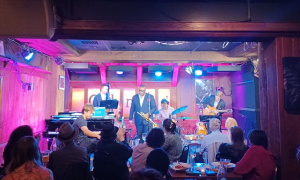
Scott's voice was the focal point, but the band supplied the musical architecture that made the performance so dynamic. Under the musical direction of bassist Dwayne "DW" Wright, the ensemble moved comfortably between the deep pocket of R&B and the improvisational possibilities of jazz.Adam Smith's guitar work was a particular highlight. His blues-inflected rhythms added grit and texture, while his solos seemed to open a separate musical conversation within the larger performance. They were compelling enough to stand as performances in their own right, balancing technical fluency with the expressive vocabulary of the blues. Rather than simply filling the spaces between vocal passages, Smith gave those spaces their own character.
At the keyboards, Eric Wortham II delivered a jazz piano solo that was bright, fluid, and smooth. For a moment, the scale of the arena seemed to recede, evoking the intimacy of a late-night jazz café. The passage provided a welcome reminder of how naturally jazz language can live inside contemporary soul, particularly when musicians are given room to stretch beyond the arrangement.
The horn section brought another essential dimension to the sound. Damon "Mr. Dizzy Fingers" Bennett moved between flute and bass flute, while Theljon Allen's trumpet and flugelhorn added color and presence. Their contributions helped balance the ensemble, giving the arrangements additional harmonic depth and a sense of movement. The horns were not merely embellishments; they were part of the musical conversation, enriching the textures around Scott's vocals.
David Chiverton's drums and Dom Thomas's percussion anchored the performance, while the congas brought an especially invigorating dimension to the rhythm. At moments, the percussion evoked the infectious pulse of Washington, D.C.'s Go-Go tradition, a distinctly regional Black musical language finding new life in Paris. The crowd remained energized and in motion, responding to rhythms that encouraged participation rather than passive listening.
What made the ensemble effective was not simply the individual talent onstage, but the way the musicians served the music while retaining their own voices. Jazz improvisation, blues phrasing, and R&B groove coexisted without competing for attention. Each element had space to breathe.
The Sound of Every Voice
An honorable mention belongs to the sound engineer. In a venue of this scale, background vocals can easily become buried beneath the lead voice and instrumental mix. Here, they were remarkably clear. Even from the back of the room, the sound retained definition and balance, allowing the supporting harmonies to register as an integral part of the arrangement rather than a distant wash behind Scott's voice.The clarity made it possible to appreciate the vocal interplay throughout the concert. The background singers complemented Scott's phrasing, adding layers of color and depth while preserving the intimacy of their harmonies. Whether the result came from the singers' precision, the engineering, or the combination of both, the mix did justice to the ensemble's musicianship.
That attention to vocal detail also prepared the ground for one of the evening's most intriguing developments.
Freeman: A New Chapter in Harmony
Toward the end of the program, Scott introduced Freeman, a vocal trio featuring Gene Noble, Bluu Suede, and Deonis Cook. The singers had already been touring with Scott as background vocalists before stepping forward as a group in their own right. Their emergence gave the evening a narrative beyond the performance itself: musicians whose voices had helped shape Scott's live sound were beginning to establish a collective identity of their own.Their three-part harmonies were striking. The blend showcased not only vocal power, but also the precision, artistry, and showmanship required to make three distinct voices function as a unified instrument. Throughout the concert, their contributions had already added rich layers to Scott's arrangements. Seen together as Freeman, those same vocal qualities suggested the possibilities of a larger creative life beyond the supporting role.
There was an ease to their harmonizing that made the transition feel natural. Their voices complemented one another without sacrificing individuality, and the trio's presence left me wanting to hear more. Their introduction was a reminder that the evolution of R&B does not always begin with an entirely new sound or a sudden departure from tradition. Sometimes it begins with musicians who have spent years listening, responding, and building chemistry together before finding a name and direction of their own.
Freeman's appearance did not need to be framed as a passing of the torch. Its significance lay in the opportunity to witness an established musical relationship opening into something new. What comes next for the trio remains to be seen, but their harmonies and chemistry as a group offered a compelling reason to follow their development.
Beyond the Performance
By the end of the evening, Scott had delivered more than a display of vocal command and stage presence. The music, imagery, and ensemble worked together to articulate a philosophy grounded in self-respect and personal freedom. The message was direct: respect your boundaries, disregard the unnecessary noise, speak your truth, and do not take everything personally. Above all, be unapologetically yourself.The strength of the concert lay in how that message was delivered. It was present in Scott's commanding performance, in the cultural references that filled the screens, in the instrumental exchanges that connected jazz and soul, and in the harmonies that gave Freeman room to emerge.
Scott's legacy in neo-soul is already established. What made this evening particularly engaging was the sense that her musical world remains active and generative. The band was not simply supporting a celebrated singer; it was helping create a living, breathing sound shaped by individual artistry and collective purpose. Freeman, meanwhile, offered a glimpse of another story beginning to unfold.
In Paris, the celebration of Black American music felt both deeply rooted and open to possibility. Jill Scott commanded the stage, her musicians brought the arrangements to life, and Freeman left no crumbs with their performance.
The performance was complete, but the music's next chapter may only just be beginning.
 FOLLOW Acacia Grace
and get notified whenever a new article published.
FOLLOW Acacia Grace
and get notified whenever a new article published.
Introspective soul singer from the east coast.
About Jill Scott

Tags
PREVIOUS / NEXT

Become a Sustaining Member

Since 1995, All About Jazz has championed jazz as an art form and supported the musicians who create it. Over three decades, it has grown into one of the world's leading jazz resources, serving hundreds of thousands of readers, musicians, presenters and industry professionals each month.
Help Build the Future of All About Jazz
Your support helps us continue building All About Jazz for the next generation—expanding our editorial coverage, preserving jazz history, developing new community features and creating better ways to discover the music and the people behind it.
Become a sustaining member for as little as $20 per year and you'll immediately enjoy an ad-free experience along with access to subscriber features and future articles for a full year.
Together, we're not simply sustaining All About Jazz—we're building its future. Thank you for being part of the journey.