Home » Jazz Articles » Live Review » Hua Hin Jazz Festival 2006
Hua Hin Jazz Festival 2006
Lakecia Benjamin, saxophone (USA)
 John Coltrane has always represented fearlessness to me . The willingness to keep searching, spiritually and musically, no matter where that search takes you. A Love Supreme is one of those records that feels bigger than music; it feels like testimony. His sound, his discipline, and his constant evolution gave me and generations of musicians permission to dig deeper and tell the truth through their instruments. I'm still learning from that example everyday I'm alive.
Hervé Samb, guitar (Senegal)
 I discovered Coltrane at fourteen, in Dakar, the year my mentor Pierre Van Dormael opened the door of jazz to me. "Impressions" was one of the first themes I played, again and again, in the jam sessions around the city. It was my entry into the modal world, and I never really left it.
Around 19, my bond with him turned into an obsession, especially the final period of his life. I was overwhelmed by the power of his notes, by the emotional and spiritual intensity pouring out of them. It was as if he had become the voice of the divine. He went past all the technique, all the harmony, until only pure expression was left.
Later, travelling to New York, I met saxophone players who were true disciples, who tried to live the way he lived, who played far more than they spoke. That example of devotion pushed me to work, and to search for a kind of letting go, that absolute joy you reach only when you finally surrender to the music.
"Giant Steps" is the piece I always come back to. Years later, on holiday in Dakar, I was working through my standards and returned to it once more. That day I realized something that stopped me: its structure fit perfectly over the sabar, the traditional Senegalese percussion. I recorded that jazz sabar version on my album Teranga (Cristal Records, 2018), and the beauty of it was that I never had to bend Coltrane's writing. It respected every note. It was as if the piece had been waiting for those rhythms the whole time.
That is what Coltrane gave me: not a technique, but a direction. Music passes through us. Our job is just to be ready when it comes.
Visar Kuçi, Concertmaster, Kosovo Philharmonie (Kosovo)
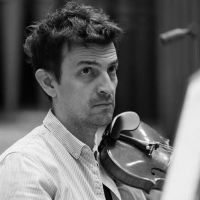 I am always fascinated and inspired by John Coltrane's commitment to seeking a deeper understanding and spiritual meaning in what he creates, and of why he creates it. His approach and his musical depth remind me more of J.S. Bach and other great composers rather than his contemporaries. The interconnectedness between the spiritual, musical, theoretical and the technical is for me one of the highest levels and a rare example.
His song "Locomotion" from the Blue Train album has become one of my family's soundtracks as it was the first song our first baby "Lum" danced to. I feel we are blessed to have the opportunity to be able to listen to John Coltrane's music any time and feel that powerful energy and musical love and respect.
Yuhan Su, vibraphone (Taiwan)
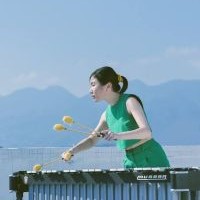 As I began writing these words, I was on a train headed to the MacDowell Residency in New Hampshire, listening to the album Dear Old Stockholm (GRP-Impulse!, Rec. 63, '66, Rel. '93)—one of my favorite John Coltrane records. Looking back, Coltrane has always held an important place in my memories of residencies. To me, his music is sacred and timeless, and that's the reason I always try to reconnect with it when my mind has the most space—not merely to learn his language, but as a reminder of his spirit.
Last time, in the spacious highland cabin at Ucross Residency in Wyoming, I was composing the music for my album Over the Moons (Endectomorph Music, 2025)—about the tides and madness brought on by the two moons inside of my brain, one from my home country Taiwan and one from the United States. Besides the time spent working on compositions, I began practicing Coltrane's solo on the song "Crescent." There's an idiom in Mandarin that goes, "parting the clouds to see the sun," which means you gradually figure something out; this beautiful improvisation gave me the exact sensation of parting the clouds to see the "moon." As the musical phrases continued to deepen and develop throughout the piece, we were able to see the moon's various forms up close—its mysterious, serene, and immensely powerful nature. During my previous residency at the Cité des Arts in Paris, I was accompanied by the album Thelonious Monk Quartet with John Coltrane at Carnegie Hall—the brilliant convergence of two masterful composers and performers, each with their own unique style.
Eighteen years ago, I left Taiwan—the country where I grew up—and came to the East Coast of the United States to study jazz. To this day, John Coltrane's music has remained a constant presence on this long journey and will continue to guide me; his pursuit of possibility, excellence, and beauty serves as the ultimate North Star for how I approach music and improvisation.
Dimitrij Golovanov, piano (Lithuania)
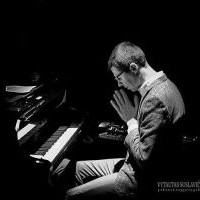 To me, John Coltrane was much more than a jazz musician. I see him as a person who, through both his life and his music, tried to replace fear with faith, darkness with light, and indifference with complete dedication. His music changed the history of jazz, but I believe the real reason was not only his talent. It was also the way he lived. His deep love for music, his humility, and his constant search for something deeper made him a truly unique artist.
What inspires me most is his courage to follow his own musical path, even when many people did not understand it. Coltrane never stopped searching—for deeper meaning, new sounds, and a more honest way to express himself through music. He did not try to become a legend; he simply stayed true to what he believed in. To me, this is his greatest lesson: real artistic greatness comes not from the wish to be successful, but from giving yourself completely to something greater than yourself.
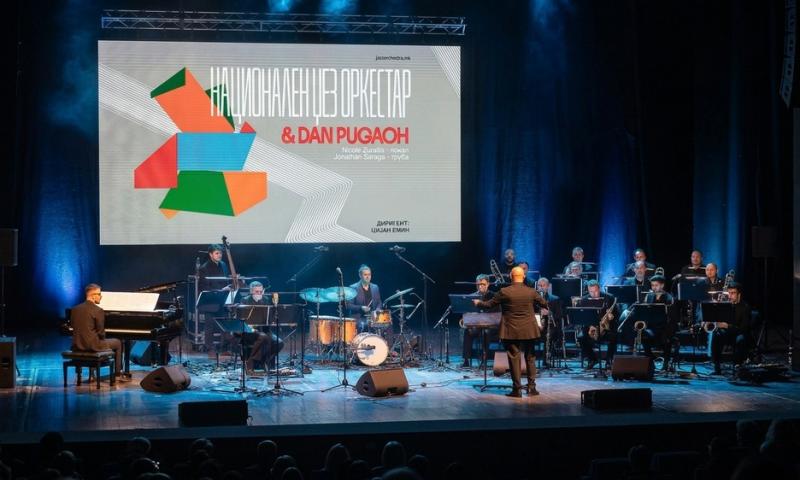
Manuel Huizar, flute, General Director of the National Jazz Orchestra of Mexico (Mexico)
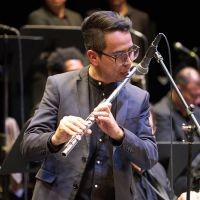 At one point, I started studying "Pursuance" from the album A Love Supreme. I was very excited to study that piece because it was very revealing for me at the time and for the sound I was searching for in my solos.
Coltrane has always been an innovative figure, and his level of energy has continually inspired musicians.
Mamadou Ba, bass (Senegal)
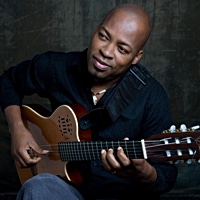 John Coltrane's influence on me as an African musician is very personal. When my brother and I were younger, we used to listen to John Coltrane's records at home. At first, I didn't like his music or understand it.
But as I grew older and listened carefully, I started to feel something different in his rhythm and the way he played. To my ears, there was something deeply African in his rhythmic language, something that connected with me in a way that I didn't hear as strongly in many other jazz musicians. That's what first attracted me to Coltrane. Later, I began to feel the spiritual dimension in his music as well, and that opened another door for me. That's really how I fell in love with Coltrane's music.
In fact, one of my best friends, Mbaye Ndiaye, who used to listen to Coltrane with us, was so inspired by him that he named his son after Coltrane: Ndiagua Coltrane Ndiaye. I'm pretty sure he may be the only Senegalese person who has given his son that name.
Sanjay Divecha, guitar (India)
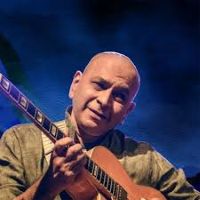 When I hear his music I feel he is drawing from the universal spirit. It's beyond style and genres and his music has transcended time. Each time I hear the music it still feels fresh and innovative. A sound that's so unique—honest and fearless expression.
Trish Clowes, saxophone (England)
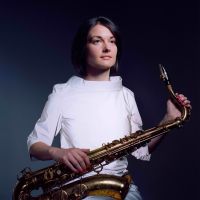 John Coltrane's 'In a Sentimental Mood' with Duke Ellington is one of my earliest memories of jazz, and I started on tenor saxophone, not alto. Blue Train is another of the first albums I listened to, and early on in my saxophone studies I attempted to transcribe the beginning of his solo on 'Blue Train' (which I finished years later...!).
His iconic playing on Miles Davis's Kind of Blue is again one of my earliest listening experiences, along with the '58 Sessions (Phoenix Records, 2004) featuring "Stella by Starlight." For my eighteenth birthday, to my friends' surprise (and possibly dismay in some cases!) I asked for my group present from them to be Ashley Kahn's newly released book on Coltrane's A Love Supreme, and not a piece of jewelry, as was the case for everyone else!
Over the years, I have transcribed and returned again and again to Coltrane's artistic statements for deeper and deeper learning. I have many of his solos in my head and under my fingers and return to them regularly. I have also learned so much from hearing his influence on other players, in particular Joe Henderson. One of my favorite examples is Henderson's playing on 'Out 'N' In' from his album Joe Henderson in Japan (Milestone, 1973), where I can hear fragments / abstractions of Coltrane's solo on "Take the Coltrane" (from the same record with Ellington, mentioned above). These are just a few reflections on the impact that this great, great artist has had upon me thus far in my life.
Kristina Barta, piano (Czechia)
 John Coltrane has always inspired me with his endless search for something beyond the obvious. I especially love A Love Supreme. For me, it is much more than a great jazz album; it feels deeply personal and spiritual. What I admire most about Coltrane is his courage to keep evolving and searching, never settling for what he had already achieved. His music reminds me that being a musician is not about finding the final answer, but about remaining curious and open to what comes next.
Lolivone de la Rosa, guitar (Puerto Rico)
 Imagine what this art form would be without John Coltrane's contribution... How would music sound? A new harmonic world wouldn't exist, and many artists shaped by his sound, spirituality and vision, would've been molded by other—probably more scattered—sources. Even today, six decades after his passing, when you walk into a jazz club and listen to a rising star, it's clear that his influence remains dominant.
As a guitarist, I've always been attracted to the idea of phrasing and breathing like a saxophonist. Ballads (Impulse!, 1963) is one of his records I keep coming back to.
His influence on my playing is more about his approach to music itself -being inventive, studious and true to yourself in the search for your own sound!
Batuhan Aydın, kaval (Turkey)
 I come to John Coltrane from a very different musical geography, and this may be precisely why I have always felt so close to his sound. As a kaval player, I belong to a tradition in which notes are never simply pitches; they live through breath, inflection, ornamentation, and the subtle microtonal spaces between them. To me, Coltrane's music embodies a similar understanding of sound as something physical and alive. In A Love Supreme—especially in "Psalm," where his saxophone becomes a kind of recitation—the distinction between instrumental sound and the human voice seems to dissolve completely. For a wind player, this is deeply resonant: breath becomes syntax, and tone itself begins to carry meaning.
What I have personally taken from Coltrane is not a set of phrases or harmonic devices, but a way of searching. His journey toward modality, spirituality, and musical worlds beyond the established language of jazz showed that curiosity does not dilute one's identity; it deepens it. This resonates strongly with my own work with the kaval, Anatolian and Balkan melodic traditions, microtonality, and contemporary improvisation. The goal is never to combine traditions for superficial effect, but to absorb them deeply enough that they eventually become part of your own voice.
A century after his birth, this restless integrity remains Coltrane's greatest legacy: the refusal to stop searching for a truer sound.
Karin Hammar, trombone (Sweden)
 I first encountered John Coltrane through his trombonist, Curtis Fuller; as a 17-year-old when I heard the track "Blue Train" and transcribed Fuller's solo. Later, I discovered his legendary compositions—"Impressions," "Naima," "Moment's Notice," and "Giant Steps"—all of which, along with so many other Coltrane works, have since secured an essential place in the modern jazz repertoire. What jazz student around the world hasn't grappled with the advanced chord progression of "Giant Steps"—a progression so characteristic of Coltrane, shifting tonal centers in a way that, to my knowledge, had never been done before in the genre?
Then I discovered Coltrane the saxophonist, improviser, and innovator! With his utterly unique sound—on both tenor and soprano saxophone—and his groundbreaking harmonic and melodic language, he has had a profound impact on all jazz musicians who followed, and naturally, on saxophonists in particular. His mark on the history of jazz and music is indisputable; there is a "before" and an "after" with John Coltrane.
Cher Siang Tay, piano (Malaysia)
 My first impression of John Coltrane's music wasn't exactly positive; in fact, I was somewhat resistant to it. During my teenage years, while looking for a way to get into jazz, I would buy whatever jazz-related books I could find at prices I could afford. During a school holiday trip to Singapore, I picked up a copy of Essential Guide to Jazz on CD—compiled by John Fordham—at a bookstore for a bargain price. It was a hefty, treasure-filled volume, and to top it off, it even came with a CD! For someone with very limited spending power at the time, stumbling upon that felt like winning the lottery. I couldn't wait to listen to the compilation once I got home.
The first track was a live recording of Duke Ellington's "Take the 'A' Train"—it was incredibly swinging and the improvisation was brilliant. The second track was John Coltrane's "Naima." To a jazz novice like me, the sound was earth-shattering and jarring—almost like wailing ghosts. I thought to myself, "If this is jazz, I'm going to have a hard time liking the genre..." Fortunately, the tracks that followed—Coleman Hawkins playing "Indian Summer" and Wes Montgomery playing "'Round Midnight"—restored my enthusiasm for jazz. Of course, even then, I realized my own lack of experience was the issue; if I couldn't appreciate that music, it wasn't the music's fault—I simply hadn't yet reached the level of understanding required to truly grasp it.
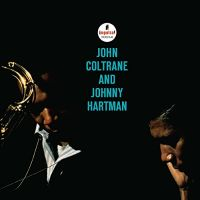 Fast-forward a few years to my college student days: I took a job at Tower Records specifically so I could listen to jazz every day. I was particularly captivated by the beautiful cover art of the John Coltrane & Johnny Hartman album (which Impulse had just reissued at the time) and by Hartman's voice, which had gained new exposure thanks to Clint Eastwood's film The Bridges of Madison County. I listened to that album almost daily and frequently recommended it to customers visiting the "Jazz Room." During this time, I grew familiar with Coltrane's distinctive tone and developed a deep admiration for McCoy Tyner's innovative improvisational passages. It remains an album I cherish; I still listen to it often and know it inside out.
Shortly after arriving in the U.S. for college, one of the first things I bought was A Love Supreme, simply because I had read so many jazz reviews hailing it as an undisputed classic. My initial impression wasn't exactly one of awe; the chanting of "A Love Supreme, A Love Supreme" left me wondering what on earth was going on. It wasn't until years later—after I had lived more and accumulated more life experience—that I truly came to love the album.
Compared to Malaysia, the sheer abundance of books available while I was studying in the U.S. was staggering. I devoured everything that interested me—including biographies of Coltrane by authors such as Lewis Porter, Ashley Kahn, Eric Nisenson, Ben Ratliff, Frank Kofsky, Chris DeVito, and Bill Cole. I voraciously absorbed information about this musical giant while listening intently to his work. I was struck by how—during his all-too-brief life—he seemed to sense his time was running out, burning the candle at both ends as he constantly explored and pushed his boulder up the mountain. He practiced and contemplated ceaselessly, delving deep into musical concepts until he tore apart the very worlds that sound could construct, reaching out to outer space for inspiration.
Coltrane's career coincided with the perfect cultural moment, and Impulse Records producers Bob Thiele and Creed Taylor seemed to give him free rein; consequently, the massive volume of recordings left behind from those few short years offers a glimpse into the experimental music he created in his prime. My personal favorites are the recordings from 1963—1964: Ballads, Coltrane and Johnny Hartman, A Love Supreme, Both Directions at Once, Crescent and Blue World. Listening closely to these albums has been deeply enriching; I am particularly captivated by Coltrane's rich, full-bodied tone and his emotionally charged phrasing. The rhythm section—McCoy Tyner, Elvin Jones, and Jimmy Garrison—thrills me; the dynamic energy woven into their groove resonates deep within my very core. Ah, this is the true beauty of jazz!
I am glad that, back when I didn't yet grasp Coltrane's music, I didn't dismiss it outright. Instead, I patiently explored other sounds, and when I reached a certain point in my journey, the music I had once set aside suddenly became clear and meaningful. It is a wonderful feeling—realizing that this is music one can spend a lifetime understanding and experiencing.
Kossi Mawun, drummer (Togo)
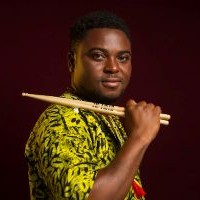 What strikes me about John Coltrane is that his music gives the impression of a spiritual quest. You really feel that he's connected. He's not just trying to play more notes or demonstrate his skill. In his piece, A Love Supreme, I, as an African jazz drummer, feel an African touch, like a kind of ceremony. In fact, I'm thinking of covering this piece on my third album. Coltrane is an avatar, I'd say. My favorite pieces are "My Favorite Things" and A Love Supreme.
Ada Rave, tenor saxophone (Argentina)
 I first heard John Coltrane on his 1962 album Coltrane, a gift I received when I turned seventeen. I was already playing tenor saxophone. What captivated me first was his sound—as if he were singing through the tenor saxophone. The flowing rhythm of Elvin Jones and Jimmy Garrison, the blues, and the extraordinary sound of the quartet awakened a passion in me, and I listened to that cassette over and over again. That recording marked the beginning of a journey I could not yet imagine. I did not know where it would lead me, but I knew I had fallen in love with Coltrane's music. The album opened the universe of jazz to me. Only much later did I begin to understand that what had moved me so deeply was not only the music itself, but the spirit that inspired it.
Looking at his career decades later, what fascinates me most is his willingness to keep transforming. Having mastered one language, he kept moving, absorbing new influences and experiences, questioning the language he had already forged. From A Love Supreme to Ascension (Impulse!, 1966) and the music of his final years, he continually expanded his own expressive possibilities.
He was not alone in this transformation. Musicians such as Ornette Coleman, Cecil Taylor, Sun Ra, Albert Ayler, and many others were also pushing jazz beyond its established boundaries, each following a different path. Coltrane took that language somewhere else, driven by an extraordinary impulse—a life devoted to the search for sound, where musical exploration became a form of spiritual discovery. That is what makes Coltrane so unique to me.
His music reminds me that creating is not always about reaching a final result, but about committing oneself fully to the search. In his life, the search for sound became a way of living—a continuous process of listening, questioning, transforming, playing, sharing, and remaining open to what we do not yet know. The intensity of that search gave his music a spiritual force that could profoundly move and transform those who heard it.
Marven Jean, piano/keyboards (Haiti)
 John Coltrane is not only a legend in music; his life is also a testimony of resilience and new birth. He only lived for 40 years but the music he created will keep touching and inspiring people for years and that is only because he was sincere in his love for the music and the way he expressed himself through it. His story reminds me that music can be a reflection of transformation, faith and the desire to become something greater than we once were.
Yacine Malek, piano (Algeria)
 I discovered John Coltrane at the age of 22 through the album Olé, released in 1962, alongside a group of wonderful musicians.
John Coltrane is one of the greatest musicians in the entire history of modern jazz, thanks to his creativity and his style, with its extraordinary sonic universe. His spaces for improvisation and his creativity continually pushed the boundaries of a jazz that, for me, became modern for its time.
I consider John Coltrane a researcher in pursuit of sonic experimentation, taking music towards a humanistic and spiritual dimension, making him also one of the greatest composers in the history of jazz.
His compositions have allowed so many others to grow, learn and immerse themselves in this jazz that influenced an entire generation of musicians and artists. Coltrane had a gift for transforming standards and ballads ("My Favorite Things). John Coltrane's music was marked by a creativity that went far beyond the avant-garde.
Tuva Halse, violin (Norway)
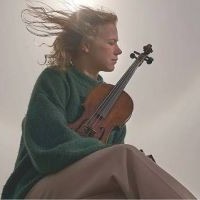 For me, John Coltrane has in many ways become a reflection of my own journey into jazz. I first immersed myself in jazz when I was eighteen, and Coltrane initially represented much of what felt overwhelming and foreign about this new musical world. During my years at the conservatory, I even found myself distancing myself from Coltrane, as he came to represent a side of jazz culture that I experienced as macho—playing fast and loud, shredding, and proving yourself through technical virtuosity. I was drawn instead to space, simplicity and melody.
Only later did I begin to hear Coltrane differently. I realized that I had often heard the intensity of his playing as something mechanical and impressive, rather than as a vehicle for emotion and spiritual searching. Today, I think he has one of the most unmistakable identities in jazz. His sound and his ability to communicate emotion with such extraordinary intensity are deeply inspiring. Perhaps most inspiring to me is his relentless work ethic—the sense that he was never satisfied, constantly working to reach a deeper musical meaning and spiritual truth.
Salomão Soares, piano (Brazil)
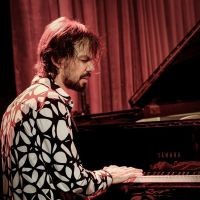 John Coltrane is synonymous with energy, creativity, sensitivity, virtuosity, and endless inspiration. I still remember the first time I heard him improvise —I wasn't just struck by his mastery of the instrument, but by how he and the music seemed to become one single thing. It made me ask myself: how does anyone reach that level of connection with music? How is that even possible?
I have a deep love for Thelonious Monk: With John Coltrane (Jazzland), the album he shares with my hero Thelonious Monk. Recorded in 1957 during Coltrane's time in Monk's quartet—before either of them had become the towering figures we know today—it's a record I keep returning to. It sits permanently on my nightstand, so to speak; I never tire of revisiting it.
Yiorgos Bereris, piano (Greece)
 Every time I return to one of John Coltrane's albums, it feels like entering a place I've never quite been before. There is always something new waiting to be heard, understood or felt.
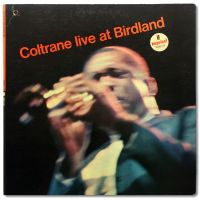 The album that has touched me the most is Live at Birdland (Impulse!, 1964). The whole atmosphere of the record feels both grounding and uplifting, as if the music somehow manages to ground you to the earth all the while it elevates you.
"Alabama" struck me deeply when I first heard it. It felt like a profound, almost sacred prayer and at the same time, a fierce song of resistance. Only later, when I learned the story behind it, did everything fall into place. The weight of the music became clearer, and so did the feeling I had when I first heard it.
Mario Canonge, piano (Martinique)
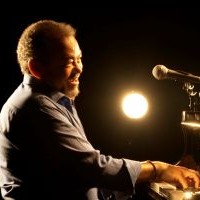 The first words that come to mind when I think of John Coltrane are: innovation, spirituality, and sound.
The first Coltrane album I listened to, when I was only 16 years old, was My Favorite Things (Atlantic, 1961). I listened to the track over and over again, with Coltrane playing soprano saxophone alongside that legendary, intoxicating rhythm section—McCoy Tyner, Jimmy Garrison, and Elvin Jones—without ever tiring of it.
Coltrane emancipated himself from Dexter Gordon, another great master whom he admired, developing his modal approach to its ultimate expression in A Love Supreme. And what can one say about compositions such as "Giant Steps" and "Countdown," which were revolutionary in their time?
An absolute master who will never cease to inspire us.
Tony Whyton, jazz academic-author (England)
 I got into jazz through playing jazz piano, but it was the sound of John Coltrane that has had the most profound impact on me through the years.
When I wrote Beyond A Love Supreme over 10 years ago, I tried move beyond the usual fan-based literature (even though I remain a fan!) to explore why Coltrane has meant so much to so many people, to examine the way in which different groups have sought to claim him as one of their own, and to highlight how Coltrane's representation changed both during his lifetime and after his untimely death.
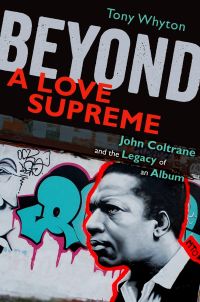 In writing that book, I continued to be drawn to Coltrane's sound world—for me, the work of the Classic Quartet remains amongst the most thrilling, sensuous, and engaging sounds in the history of recorded music—but I also wanted to convey the presence of Coltrane in everyday life; how his music and persona had inspired subsequent generations of musicians, artists, filmmakers, writers and poets.
In my world, good academics strive to distill complex ideas into meaningful and understandable outcomes. Coltrane's music does this. Scholars try to reach audiences by encouraging critical reflection and a deeper understanding of all things human. Coltrane's music strives for this too. Whilst there might be messages that some find difficult, good academic work has the potential to change people's views of the world and of others, to encourage empathy and mutual understanding. Coltrane offers an approach to life from which we can all learn.
In today's turbulent and politically divisive world fueled by hatred, self-interest and anti-empathic sentiment, I suggest that we need Coltrane now more than ever.
Vladimir Kostadinovic, drums (Serbia)
 John Coltrane has been one of the most important musical influences on me, not only as a jazz musician, but also as a human being searching for something deeper through music.
As a drummer, I have always felt a very special connection to Coltrane's quartet with Elvin Jones. Elvin's playing taught me that rhythm does not have to be a cage that contains the music, it can be a force that gives it freedom. His interaction with Coltrane was almost like a spiritual conversation: sometimes explosive, sometimes delicate, but always deeply connected. Listening to them, I learned that a drummer's role is not simply to keep time, but to listen, respond, challenge and inspire.
Among all of Coltrane's recordings, A Love Supreme has had perhaps the deepest impact on me. There is something about that music that goes beyond jazz, beyond technique and even beyond composition. It feels like a personal prayer. You can hear a human being searching, struggling, giving thanks and reaching towards something greater than himself.
That is what makes Coltrane so meaningful to me. His music reminds me that being a musician is not only about playing more notes, becoming more technically accomplished, or finding your own sound. It is also about finding your own truth. And perhaps the older I become, the more I understand that the most important thing in music is not what we play, but what we are trying to say through it.
Coltrane showed me that improvisation can be a form of spiritual exploration. Every time I sit behind the drums, I try to remember that music is ultimately about communication between musicians, with the audience, and sometimes, in the most profound moments, with something within ourselves that cannot really be put into words.
That is why Coltrane's music continues to live for me. I don't listen to A Love Supreme only as a jazz musician listening to a masterpiece. I listen to it as a human being. And every time I return to it, I discover something new not necessarily in Coltrane's music, but in myself.
Keenan Ahrends, guitar (South Africa)
 I first heard John Coltrane's music when I started learning jazz as a seventeen-year-old. I purchased one of my first jazz CDs which was the album Giant Steps. I remember not understanding much about the aural complexities I heard but what did stand out to me was Trane's melodic sense. All his solos were singable. This is a quality that I find in all his albums. This melodic quality can be heard throughout the various jazz genres he was pivotal in shaping on albums like Round About Midnight, Blue Train, Kind of Blue, Crescent, Live at the Half Note: One up, One Down, etc.
Trane's music has always been a beacon for me throughout my musical career. I always come back to him and each time I do, I find something new yet familiar. The sincerity in Coltrane's performances along with his continual reaching in this art form inspires and humbles me.
Ali Riaz Baqar, guitarist in Jaubi (Pakistan)
 John Coltrane has always been a musical hero of mine. What I admire most about him is that his music feels like a lifelong search, not only for new sounds, but for something deeper and spiritual. He was an incredibly studious musician, constantly exploring scales, harmony and different musical traditions, while never losing the emotional and spiritual core of his playing. His openness to Eastern music and spirituality has particularly resonated with me and has been a major influence on my own musical journey.
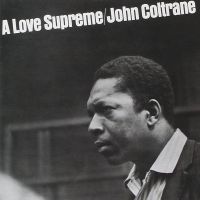 A Love Supreme is my favorite Coltrane album and one of the records that has influenced me most deeply. There is something incredibly powerful about hearing an artist use music as an expression of devotion and a search for inner peace. My favorite Coltrane solo is on "Resolution," while "After the Rain" is perhaps my favorite individual piece of his.
Coltrane's influence also found its way directly into Jaubi's music. The title track of our album Nafs at Peace was inspired by A Love Supreme and dedicated to Coltrane. "Nafs" is an Arabic term referring to the self or soul, and the idea of the nafs at peace reflects a state of spiritual tranquility. In many ways, Coltrane showed us that jazz could be more than a musical language: it could become a vehicle for spiritual exploration, transcendence and the search for peace. That is a legacy that continues to inspire me profoundly.
Nidhal Jaoua, qanun (Tunisia)
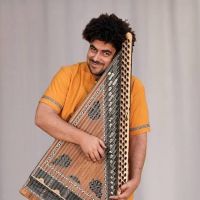 John Coltrane has a very special place in my musical journey, particularly because my own work has always been connected to the meeting point between different musical traditions. I come from the Tunisian and broader Arab musical tradition, with the qanun as my main instrument, but jazz has been an essential part of my musical language for many years.
I studied Arabic music and qanun at the Conservatory of Tunis and later studied jazz and musicology, before moving to France. Since then, I have devoted much of my work to exploring the dialogue between Eastern musical traditions and jazz, particularly through Jazz Oil, the group I co-founded in Tunis with bassist and composer Slim Abida. Our music was born from the encounter between the qanun and jazz, and from the idea that musical traditions should not be separated by borders, but should be allowed to meet, transform one another and create something new.
This is one of the reasons why Coltrane's music resonates so deeply with me. Beyond his extraordinary virtuosity, I am fascinated by his constant search—his exploration of sound, harmony, modes, improvisation and, above all, the spiritual dimension of music. His journey showed that jazz could be much more than a musical language: it could become a way of searching, questioning and connecting with something universal.
Coming from Tunisia, a country at the crossroads of Mediterranean, Arab, African and European cultures, I feel particularly connected to this idea of music as a bridge between worlds. The qanun itself carries centuries of musical history, and my own artistic journey has been about bringing that heritage into conversation with contemporary jazz and other musical traditions.
Raphael Pannier, drums (France)
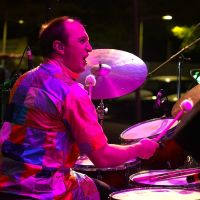 What I love about John Coltrane is the depth and integrity he inspires. An uncompromising integrity, of course: in intensity and in beauty. And a depth so profound that it brings us all closer to a spiritual state. A state of grace: fully connected to outer and inner elements alike—his group, his endless personal imagination, his audience, his community, his culture, his roots, his history, his faith. And like all masters: deeply connected to his past, but just as deeply connected to a future rooted in his imagination. That depth is especially what inspires me about him, and what pushes me to always dig deeper—within myself and in the world around me—to create something ever more beautiful.
And speaking of connection with the group... as a drummer, of course, what I love about John is also Elvin Jones—the emotional power, the humility, the inevitability of every note, of every decision made. The freedom: on the instrument, in the interaction, in the music, in the conception of time, in the overall conception of improvisation. As a Frenchman, I can say he inspired an entire generation here, with drummers like Christian Vander and Simon Goubert, who had a considerable impact on the whole scene.
My favorite albums are all the live recordings—official and unofficial!—from the early '60s with Elvin and Eric Dolphy... like Live Trane: The European Tours. To me, they represent John's connection with everything I've described above.
Raul Sööt, saxophone (Estonia)
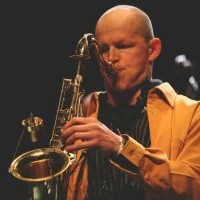 The first Coltrane album was A Love Supreme. I must have listened to it hundreds of times, from beginning to end, without stopping. Everything about it felt perfect to me—including its imperfections. The whole album is like a living, breathing organism. To this day I find it almost inappropriate to analyze it, because how do you analyze a living organism? By dissecting it, right? So I never really did.
Over the years, however, I learned to appreciate many other Coltrane albums and his sideman appearances, particularly his playing on Milestones, 'Round About Midnight, and Kind of Blue. These I could—and did—analyze: by learning some solos and by delving deeper into the harmonic structures, the use of scales and chromaticism, and the composition and arrangement of the musical material. I find Coltrane's playing, especially on his 1950s albums, very accessible. It's no wonder that he is one of the most studied and copied musicians in the realm of jazz improvisation.
 FOLLOW Ian Patterson
and get notified whenever a new article published.
Ian is dedicated to the promotion of jazz and all creative music all over the world, and to catching just a little piece of it for himself.
About Bill Bruford

Tags
PREVIOUS / NEXT
Become a Sustaining Member

Since 1995, All About Jazz has championed jazz as an art form and supported the musicians who create it. Over three decades, it has grown into one of the world's leading jazz resources, serving hundreds of thousands of readers, musicians, presenters and industry professionals each month.
Help Build the Future of All About Jazz
Your support helps us continue building All About Jazz for the next generation—expanding our editorial coverage, preserving jazz history, developing new community features and creating better ways to discover the music and the people behind it.
Become a sustaining member for as little as $20 per year and you'll immediately enjoy an ad-free experience along with access to subscriber features and future articles for a full year.
Together, we're not simply sustaining All About Jazz—we're building its future. Thank you for being part of the journey.